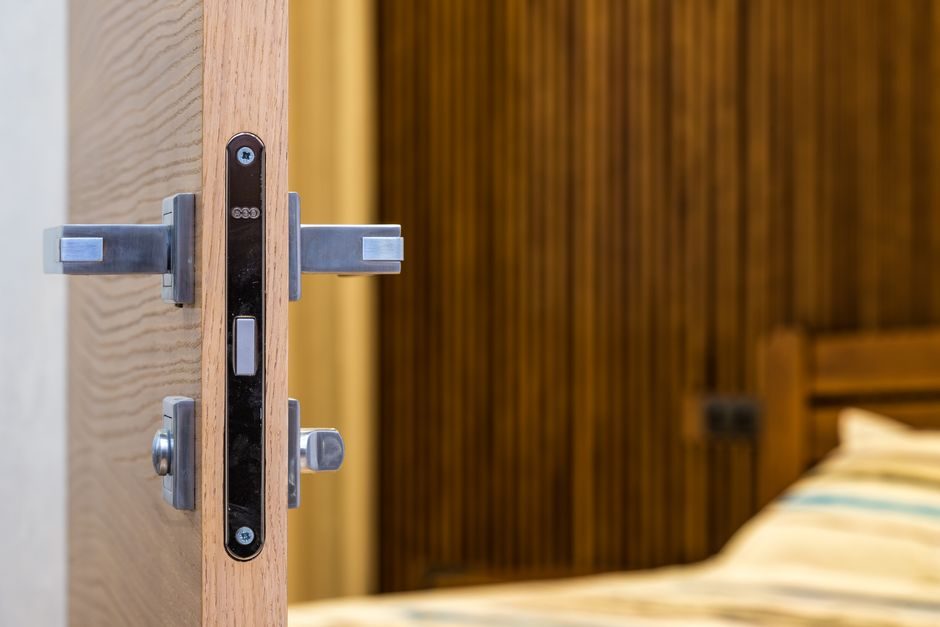
Architectural hardware TCO analysis is a cost engineering discipline, not a procurement spreadsheet: on a typical commercial build, the purchase price of door hardware (locks, closers, hinges, exit devices, seals) represents roughly 20-40% of the 10-year cost, while installation labour, finish-driven re-coating, and corrective maintenance absorb the balance [S1].
This article breaks the cost-driver stack into substrate, finish grade, fire/smoke rating, certification (ANSI/BHMA A156.x, UL 10C, EN 1634), and volume tier, then maps each driver to a procurement decision, with reference numbers from public industry guidance and the supplier market as of 2026-07-28 [S5].
TCO component stack for a single door opening
The five-line TCO model used in facilities engineering — Acquisition, Implementation, Operation, Maintenance, Decommissioning — applies directly to architectural hardware, but the weight shifts versus IT assets [S1]. Acquisition (the unit price of the lockset, closer, and hinges) typically lands at 20-40% of the 10-year total on a high-traffic commercial door. Implementation covers frame preparation, fastener selection, and certified installer time, and it is where most over-spec'd projects bleed margin (see the substrate-fastener-code spec map for the underlying build rules).
Operation for hardware is unusual because the door is a passive asset: there is no power, no bandwidth, no SaaS line item. The cost hides in operator behaviour, wear on closers, and finish degradation from cleaning chemistry. Maintenance is where the model punishes cheap builders: a Grade 2 cylindrical lever spec'd on a 500-cycle-per-day corridor door can burn through two warranty replacements and an average of 4-6 service calls before the 10-year mark, while a Grade 1 mortise lock on the same opening rides a 1-million-cycle BHMA A156.13 duty rating with one re-lubrication per year. Decommissioning is a real line item on a 30-year retrofit because spec drift between generations of ANSI/BHMA standards forces re-boring and strike-plate rework on every replacement [S1][S5].
Finish grade and substrate as cost multipliers
Finish is the single most mispriced line item in architectural hardware TCO. A US26D (satin chrome) or US32D (stainless) finish on a Grade 1 mortise lock roughly doubles the unit price versus a painted US3/US4 equivalent, but the lifecycle math favours it on any opening exposed to cleaning chemicals, coastal air, or hand-contact frequency above ~50 cycles/day. PVD-coated US10B (oil-rubbed bronze) hardware sits in the 2-3x price band of US3 and offers the best abrasion resistance for high-touch hospitality and healthcare corridors [S5].
Substrate drives the corrosion math on a separate axis. Zinc die-cast levers (common on Grade 2 locksets) corrode visibly within 18-36 months in coastal or pool-adjacent environments; forged brass or 304/316 stainless bodies extend the same opening's service life to 10+ years, but at a 1.8-2.5x unit-price premium. The same rule governs architectural hardware selection for exit devices, where stainless steel or bronze components are the only realistic option above 1,000 daily cycles. The procurement shortcut: a 2x finish-grade premium that buys 3-5x maintenance interval is almost always a net TCO win over a 10-year horizon.
Fire rating, certification, and code-driven cost gates

Code compliance is a non-negotiable cost gate, not a discretionary line. Fire-rated assemblies (UL 10C / ULC-S104 in North America, EN 1634 in the EU) require listed closers, listed exit devices, and self-latching bolts; substituting an unlisted residential-grade product voids the rating and triggers remediation on inspection failure, which typically costs 10-20x the original hardware saving. Smoke-rated doors add gasketing and intumescent seals (UL 10C positive-pressure tested), and the seal-and-gasket set alone can equal 8-15% of the opening's hardware cost [S1].
ANSI/BHMA A156 grade certification is the second gate: A156.2 (auxiliary), A156.13 (mortise), A156.3 (exit devices), A156.4 (door closers), A156.5 (cylindrical), A156.36 (multi-point) each carry defined cycle and force tests. Grade 1 is the 1-million-cycle duty tier; Grade 2 is 400,000 cycles; Grade 3 is 100,000 cycles. For a busy commercial opening, the price gap between Grade 2 and Grade 1 is normally 40-80%, but the cycle-life gap is 2.5x, which is the textbook case for moving up a grade. The procurement trap is specifying Grade 2 on a hospital, school, or transit opening to chase 30-40% first-cost savings and then re-issuing the spec inside 5 years [S5].
Volume tier, supplier tier, and lead-time as TCO variables
Volume tier reshapes unit price in steps. Chinese architectural hardware exporters with US$50-100M annual output and 1,000-3,000 m² factory footprint (the Reliance Hardware profile is representative) offer tier-1 brand-equivalent product at 30-50% below US/EU list on volume orders of 500+ openings, with 30-45 day lead times on stocked finishes [S5]. Tier-2 OEMs with sub-US$10M output sit 15-25% above that, often with 60-90 day lead times on custom finishes. Tier-3 trading houses are 5-10% below tier-1 but carry elevated quality-variance risk and no direct warranty recourse.
Lead-time is itself a TCO variable because it ties up general-contractor float. A 90-day lead on a non-stocked finish can push handover by one billing cycle on a 200-opening hotel build, and the carrying cost of the delay routinely exceeds the entire hardware budget for the project. The mitigation is the spec-side lever: pinning finish codes (US26D, US32D, US10B) and grade tiers in the bid documents, not the schedules, so volume-tier pricing is unlocked at tender instead of at change-order. For deeper context on how finish, grade, and code stack into a single line item, the architectural hardware types and classifications map is the working reference.
10-year TCO worksheet: three opening profiles
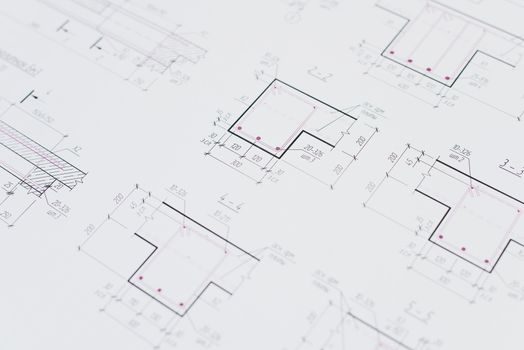
The cleanest way to put numbers on this is a side-by-side for three door profiles over a 10-year service life, all costed as the same opening (single-leaf, 90-min fire-rated, accessibility-compliant) but with different spec choices. The cost-engineering output: spec grade and finish account for 60-75% of the variance between the three lines, and the cheap-first-cost option ends up the most expensive at year 10. [S5]
Profile A — Grade 2 cylindrical lever, painted US3 finish, standard closer, single-point exit where code allows. Unit hardware (hinges, lockset, closer, seals, kickplate) ~$180-240 per opening. Installation labour ~$220. Year-5 re-lubrication + 1 closer rebuild ~$80. Year-7 lever return-springs replacement + re-finish touch-up ~$120. Year-10 full replacement before end of useful life ~$220. 10-year TCO per opening: $820-880. Profile B — Grade 1 mortise lock, US26D finish, heavy-duty surface closer, 3-point exit device. Unit hardware ~$480-580. Installation ~$260. Year-3 and Year-7 re-lubrication only ~$40 each. Year-10 minor closer adjustment ~$50. 10-year TCO per opening: $870-970. Profile C — Grade 1 mortise lock, US32D stainless body, cast-iron closer body, continuous hinge. Unit hardware ~$720-900. Installation ~$300. Year-3/Year-7/Year-10 re-lubrication only ~$40 each. 10-year TCO per opening: $1,140-1,320, with the offset that the same opening typically survives 20-30 years before replacement [S1][S5].
The non-obvious read: Profile A and Profile B land within 10-15% on 10-year TCO, despite A costing 50-60% less at purchase. The reason is cycle-rated service life: Grade 2 at 500 cycles/day hits its 400,000-cycle BHMA A156.2 limit inside 2.2 years, so the field economics only work if you treat the hardware as a consumable, not a capital good. The cross-reference to chemical anchor TCO is intentional, because the same lifecycle logic drives the substrate-side cost of the door frame the hardware is mounted into.
Who TCO discipline is for, and where it does not apply
TCO discipline is for facility owners, general contractors, and specifying architects on any commercial, institutional, healthcare, or transit build with a planned service life above 10 years and an opening count above ~50. It is also the right framework for any retrofit where the alternative is "replace the same Grade 2 hardware with the same Grade 2 hardware" on a 5-7 year cycle, which is a slow-motion budget leak that most facilities teams never quantify. The 5-year cycle on cheap hardware is the dominant TCO failure mode in K-12 and mid-market hospitality, and it is the easiest line item to fix with a one-time spec upgrade. [S5]
TCO discipline is NOT for: residential single-family work (no cycle load, no fire-rated assemblies), temporary construction (service life under 2 years), or any opening where the building programme will change function inside 5 years. In those cases, the discount-rate logic of TCO collapses to a first-cost problem and the higher-grade spec is pure waste. The split is roughly: residential and temporary work should buy on first cost with UL/ANSI minimums; commercial and institutional work should buy on grade and finish with TCO as the audit tool. The supplier-side signal worth tracking is whether tier-1 Chinese OEMs (Reliance-class, 1,000-3,000 m², 100+ export countries) continue to absorb the 30-50% price gap to US/EU list through 2026-Q4, because that margin is the single largest variable in any 10-year cost projection [S5].
The underlying component specifications are covered under total station, and pressure transmitter.