
Architectural hardware is the working metal — knobs, levers, hinges, locks, pulls, grilles, pocket-door frames — that turns a door, cabinet, or window into a functional assembly, and the trade commonly catalogs it under CSI MasterFormat Division 08 (Openings) and adjacent Division 10 specialties [S3]. The Construction Specification Institute's 16-division MasterFormat remains the indexing backbone most US distributors, including eBuildersSource, use to organize "tens of thousands of product descriptions" online [S3].
North American stockists such as Katonah Architectural Hardware (New York, Chicago, Katonah CT showrooms) group the trade into four super-classes — Door Hardware, Cabinet Hardware, Decorative Grilles, and Lighting + Furnishings — with Window Hardware and Gate + Barn Doors sitting under a fifth "Other" bucket [S1]. UK suppliers such as Atlantic Handles organise the same trade around Door Handles, Mortice Knobs, Pocket Door Systems, Cabinet Hardware, and Door Packs, stocking more than 450 designs across roughly 30 finishes [S2].
MasterFormat placement and the Division 08 / 10 split
Division 08 is the Openings division and carries the bulk of door-related architectural hardware: sectional overhead doors, door hardware, entrances, automatic entrances, specialty doors, folding doors, sliding glass doors, operable partitions, and blast-resistant doors. Adjacent cabinet, drawer, and countertop hardware typically falls under Division 12 (Furnishings) or Division 11 (Equipment) depending on project context, with specialty items such as detention locks or folding gates crossing into Division 10 specialties [S3].
MasterFormat's 16-division scheme is the practical reason a specifier can search by division number on platforms like eBuildersSource, which surfaces Division 08, 10, 12, 15, and 16 catalogs from a single Quick Jump bar [S3]. This is also the structure Autodesk Architectural Desktop's legacy "classifications" system targeted when assigning finish or hardware classes to ADT door/window styles [S4]. For a working primer on how hardware interacts with doors and entrances inside the broader building-systems taxonomy, see the architectural hardware encyclopedia entry.
Functional sub-types inside door hardware
Door hardware itself splits into operational and locking sub-families. Katonah's published taxonomy lists Door Knobs, Door Levers, Door Hinges, Door Locks, Doorstops, Bolts + Catches, Pocket Door kits, Entry Door sets, Multipoint locking systems, and Screen Door hardware as distinct SKUs within Door Hardware [S1]. Atlantic Handles mirrors that breakdown for the UK market with Door Handles, Mortice Knobs, Accessories, and a full 5-Lever Lock range built to British Standard sashlock and deadlock profiles in 3" case sizes [S2].
Locking sub-types follow the cylinder geometry: mortice sashlocks, mortice deadlocks, rebate kits for double-leaf doors, and BS-compliant 5-lever key operations are the most frequently specified residential/light-commercial SKUs in the UK [S2]. Multipoint locking — a single long strike that engages at multiple points along the door stile — is the dominant specification for European-style entry doors and is now a standard offering from US custom distributors as well [S1]. For load-path and torque considerations on automatic entrance hardware, the related architectural hardware reference covers the spec gates that interact with PLC-driven access systems.
Cabinet, grille, and lighting adjunct classes
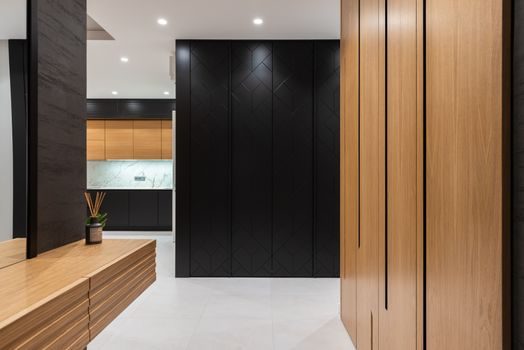
Cabinet hardware is its own sub-trade: Cabinet Knobs, Cabinet Pulls, Appliance Pulls (longer reach for integrated fridge and dishwasher panels), Cabinet Latches, Drop Pulls, and Cabinet Hinges are typically specced separately from door hardware because the clearances, mounting hole patterns, and finish-wear expectations differ [S1]. Atlantic Handles runs a parallel British lineup, framing the category as "Cabinet Hardware inspired by iconic architectural landmarks and classic British architectural heritage" with the Forme Olimpia and Forme Asti lever lines as the design anchors [S2].
Decorative grilles are classed by geometry rather than function: Diamond, Square, Elliptical, Interwoven, Perforated, and Mesh-Only are the six families a custom grille shop will quote against, with a separate Grille Finishes library and a dedicated Grille Quote Form for non-standard openings [S1]. Lighting + Furnishings is increasingly being bundled into the same procurement package as door and cabinet hardware — Ceiling Fixtures, Sconces, Lamps, Lanterns, Seating, Tables, and Case Goods are now routinely sourced alongside the knobs and pulls to keep finish continuity on a single purchase order [S1].
Finish systems, custom work, and classification parameters
Finish is a first-class classification parameter, not an afterthought. Atlantic Handles explicitly markets on the point: "we truly believe the finish matters! whether it is levers, hinges, latches, locks or even door stop remember the finish matters" [S2]. The supplier lists around 30 standard finishes — Satin Chrome, Satin Brass, Polished Brass, Black Nickel, Antique Brass and PVD variants are the most commonly stocked in their 450-design catalog [S2]. Custom work, by contrast, is the differentiator for bespoke US shops: Katonah advertises "Custom hardware to meet any specification" backed by "over 35 years of experience in residential, hospitality, and commercial projects" across modern, traditional, transitional, and ornate style categories [S1].
When classifying hardware for a spec book, the practical axes are: (1) application class — door, cabinet, window, gate, grille, pocket; (2) operational class — knob, lever, pull, hinge, lock, latch, catch, bolt, multipoint; (3) lock rating — BS 5-lever sashlock, BS deadlock, CE-marked EN 12209 grade, or ANSI/BHMA A156 grade; (4) finish — PVD brass, satin chrome, oil-rubbed bronze, powder coat over stainless; (5) MasterFormat division — 08, 10, 12, or specialty. British Standard sashlock and deadlock ranges dominate UK specifications, while ANSI/BHMA grades dominate US commercial work [S2][S1].
Comparison: stock UK range vs custom US range

A specifier choosing between a stock UK distributor and a custom US shop is really choosing between breadth of catalog and flexibility of fabrication. Atlantic Handles offers 450+ designs across 30 finishes with same-line BS-rated 5-lever locks, rebate kits in both satin brass and antique brass, and a built-in pocket-door (Ermetika) range — all from stock or short lead time [S2]. Katonah Architectural Hardware works the opposite end: smaller catalog depth but full custom capability across door, cabinet, grille, and lighting, with showroom-supported specification in NYC, Chicago, and Katonah CT and style coverage from modern through ornate [S1].
On decision criteria — catalog depth, finish range, lock rating coverage, custom capability, and lead time — the trade-off is: Atlantic Handles scores higher on catalog depth (450+ designs) and standardized BS lock ratings [S2]; Katonah scores higher on custom fabrication and style breadth (modern, traditional, transitional, ornate) plus bundled lighting/furnishings sourcing [S1]. For a project where all openings are standard and need BS-rated 5-lever locks, the UK distributor is the lower-risk path; for a heritage restoration or designer-led commercial fit-out with non-standard door thicknesses, the custom shop is the right call.
Limitations, sourcing, and what to track next
The honest limits of the trade: most "custom" hardware still has to be drawn against a finite library of base metals (solid brass, stainless steel, bronze, zinc die-cast) and standard PVD or lacquer finish stacks — a shop cannot electroplate a proprietary alloy cheaply in single-unit quantities. Stock-availability disclosures such as Atlantic's "Login to see prices" gating indicate that the trade still runs on dealer-tier pricing, not transparent consumer catalog pricing [S2]. Autodesk's 2007-era ADT classification system itself noted that classifications could "only be applied to ADT styles at this time," a reminder that BIM-side classification of architectural hardware is still catching up to the product taxonomy the specifiers actually use on paper [S4].
Trackable signals over the next quarter: (1) whether UK suppliers expand the Ermetika frameless-swing-door and flush-skirting product line beyond the 15 July 2026 announcement window [S2]; (2) whether US custom shops add ANSI/BHMA A156.2 or A156.13 grade ratings to online SKU data to make BHMA-grade selection filterable the way BS ratings already are in the UK [S1][S2]. For procurement context on adjacent fasteners and anchors used to mount heavy hardware back to structure, the chemical anchor installation spec map covers the substrate-side decision gates that pair with hardware specification.
Spec-level background on the components involved: pressure transmitter, and flow meter.