
ASTM C216 classifies facing brick as FBS, FBX, or FBA: select FBX for tight dimensional control, FBS for general use, and FBA for deliberate size and texture variation [S1].
Each type must be paired with Grade SW or Grade MW, plus the specified manufactured size and appearance requirements, so a type designation alone does not define the brick [S1][S3].
Decision matrix: type, precision, appearance, and exposure
FBX is the specification choice when course height, alignment, reveal lines, or a regular veneer elevation control the outcome. It carries the tightest dimensional and distortion tolerances of the three C216 types [S4][S6]. FBS carries average dimensional precision and remains the normal specification for general facing-brick work [S4][S5]. FBA permits greater non-uniformity in size and texture to create architectural effects, and its reduced consistency means it does not carry the same performance guarantees as FBX or FBS [S4][S7].
The comparison should be made on installed appearance, not only purchase price. Tighter tolerances can reduce layout adjustments, but specification language must identify the exact type, grade, size, finish, and any project-specific appearance limits [S1][S3].
Grade and exposure must be specified separately
ASTM C216 separates appearance precision from weathering resistance: Grade SW covers severe-weathering exposure and Grade MW covers moderate-weathering exposure [S4]. Neither FBS, FBX, nor FBA is a durability grade, so specifying an FBX brick does not establish severe-weathering performance by itself [S1][S4].
These limits relate to physical performance, not façade precision. A project in a severe freeze-and-thaw environment should specify Grade SW regardless of whether the architectural intent favors FBX, FBS, or FBA, while a moderate exposure can use Grade MW when otherwise permitted by the project documents [S1][S4].
Where each brick type performs
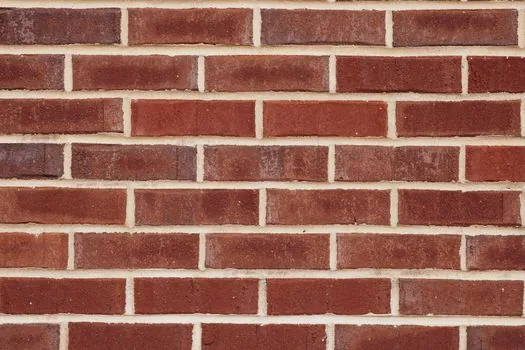
Use FBX when the design depends on the tightest dimensional and distortion control, including prominent commercial elevations, modular coordination, parapets, and other areas where small unit-to-unit variation would be visible [S4][S6]. FBX does not change the clay, firing, or masonry design basis; it changes the manufacturing classification and associated tolerances [S1][S3].
Use FBS for standard facing-brick applications where average production precision is sufficient. It is the general-use classification within ASTM C216 and is a practical default for residential and commercial veneer [S4][S5]. One manufacturer lists standard modular dimensions of 2-1/4 by 7-5/8 by 3-5/8 inches, confirming that a named size must accompany the type and grade [S2].
Use FBA for walls where broad color, texture, size, or deliberately rustic effects are part of the design. Do not use it for a high-exposure location merely because its intended irregularity matches the architectural concept. The weathering grade remains a separate requirement, and FBA’s reduced performance guarantees make it a poor default for exposed work [S1][S7].
Appearance, chippage, and installation control
ASTM C216 addresses appearance and finish through its Finish and Appearance provisions, including allowable chip dimensions and evaluation distance. The type controls the dimensional and appearance tolerance level: FBX is the most restrictive, FBS is intermediate, and FBA permits deliberate variation [S4]. Chip allowances should not be interpreted as permission to install damaged units in prominent locations.
Initial rate of absorption, or IRA, affects mortar selection and the need to prewetting before installation.
Manufactured clay and shale brick is used in masonry construction for interior and exterior applications [S2]. A Type FBX facade brick is still a wall unit, not a paving unit.
Specification language and procurement checks

Write the specification in the sequence ASTM C216, grade, type, manufactured size, finish, and any project-specific appearance requirements. A representative modular clause is ASTM C216, Grade SW, Type FBS, 2-1/4 by 3-1/2 by 7-5/8 inches, or 57 by 90 by 190 mm [S5]. This structure prevents a procurement team from treating Type FBS as a complete product designation.
Require the supplier to state the ASTM C216 compliance for the actual product and grade rather than relying on a generic “face brick” description. Manufacturer literature identifies custom shapes and arches as available, and Cleveland County Plant production can meet FBX, FBS, or FBA tolerances under ASTM C216 [S2].
Before approving samples, check the manufactured size, tolerance class, face texture, color range, chip criteria, and weathering grade. The referenced manufacturer guidance recommends reviewing samples and mixing units from different skids because slight batch-to-batch color variation can occur [S2].
Limits that affect the final wall
ASTM C216 controls the brick unit, not the complete wall system. Mortar selection, joint thickness, flashing, copings, substrate, workmanship, and crack-control detailing still govern alignment and moisture performance. A tighter brick type cannot compensate for inconsistent mortar placement or poorly coordinated openings [S2][S3].
Direct exposure to de-icing compounds is a service limitation for clay brick masonry, and caps and copings require attention because additional horizontal mortar joints can become moisture entry paths. Proper flashing below copings or longer cap components reduce those vulnerable joints [S2].
The practical rule is straightforward: specify FBX for manufacturing precision, FBS for balanced general use, and FBA for intentional architectural non-uniformity. Add Grade SW or Grade MW for exposure, then control the wall detail and workmanship around the unit.