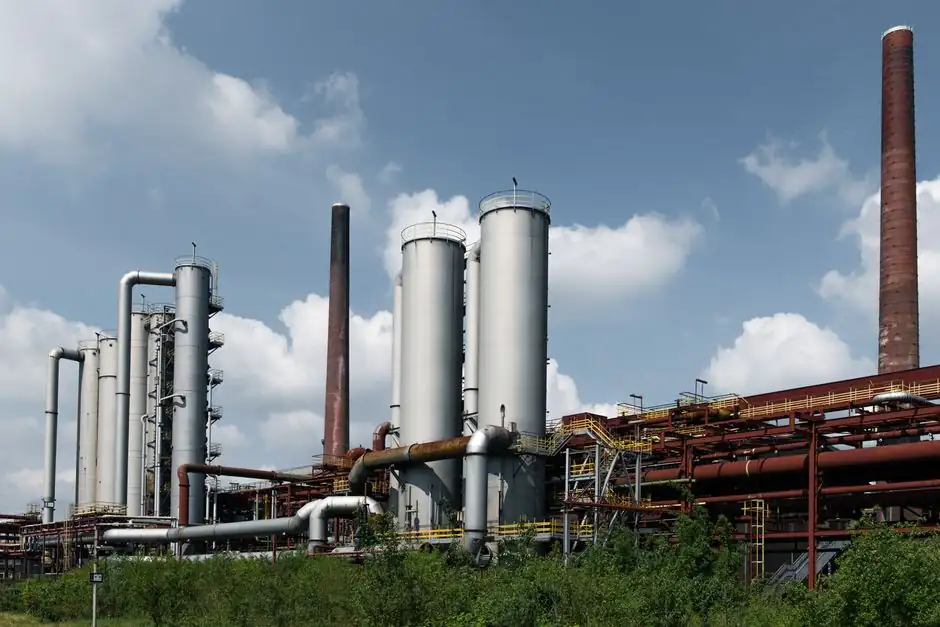
ASTM A106 Grade B is seamless and minimum tensile strength 60,000 psi, making it the default for elevated-temperature steam, process, refinery, and power piping [S2].
ASTM A53 covers NPS 1/8 through NPS 26 carbon steel pipe in Type F, Type E, and Type S forms for water, mechanical, fire-protection, and structural duty, while ASTM A333 addresses low-temperature service [S2].
Manufacturing route and service scope
ASTM A106 requires seamless pipe manufactured by hot rolling or cold drawing, with Grades A, B, and C available; ASTM A53 permits Type F furnace-butt welded, Type E electric-resistance-welded, and Type S seamless pipe in Grades A and B [S2]. The distinction is not cosmetic. A106 removes the longitudinal weld as a geometric discontinuity, while A53 gives the purchaser a broader manufacturing and cost choice [S1].
A53 suits general mechanical piping, water distribution, fire protection, and structural members, including low- and medium-pressure air, water, steam, and oil service [S1][S4]. A106 is intended for elevated-temperature and higher-pressure process systems, including refineries, power plants, oil and gas facilities, and continuous industrial service [S3][S4]. Neither standard alone establishes a complete pressure-temperature rating; wall thickness, joint, code, and service conditions still govern the piping system.
For a broader view of the shared carbon steel family, see the carbon steel pipe reference before fixing the material class. A106 should not be described as merely “better A53.” It is a different procurement scope with a narrower manufacturing route and higher-temperature design intent [S1].
Grade and chemical requirements
ASTM A106 Grade A has maximum carbon content of 0.25%, manganese of 0.27–0.93%, minimum tensile strength of 48,000 psi or 330 MPa, and minimum yield strength of 30,000 psi or 205 MPa [S2]. A106 Grade B permits carbon up to 0.30%, manganese of 0.29–1.06%, and requires minimum tensile strength of 60,000 psi, approximately 415 MPa, with minimum yield strength of 35,000 psi, approximately 240 MPa [S2].
ASTM A53 Grade B limits carbon to 0.30%, manganese to 1.20%, phosphorus to 0.05%, and sulfur to 0.045%; the cited values also list chromium, copper, nickel, and molybdenum at 0.40% maximum each, and vanadium at 0.08% maximum [S2]. A106 includes a specified silicon requirement that supports elevated-temperature performance, whereas A53 does not impose the same minimum silicon requirement [S1][S3].
The practical decision is straightforward: specify A106 Grade B when the design basis calls for 60,000 psi minimum tensile strength and seamless construction. Use A53 Grade B only where its manufacturing type, mechanical properties, and intended service fit the design.
ASTM A333 and low-temperature service
ASTM A333 is the relevant starting point when carbon steel pipe must remain ductile under low-temperature exposure. Unlike A53 and A106, A333 is selected for low-temperature service and requires impact-testing provisions appropriate to the material grade and test temperature. The specific impact energy, specimen orientation, test temperature, and supplementary requirements must be read from the governing ASTM A333 edition and the project purchase specification. [S2]
A106 Grade B and A53 Grade B can have similar nominal tensile and yield requirements, but similar strength does not make them interchangeable for cold service. Impact toughness is a separate acceptance criterion from tensile strength. A purchase order stating only “carbon steel pipe” is therefore incomplete if low-temperature service is involved [S1][S2].
Do not use A333 merely because a project has outdoor piping. First establish the minimum design metal temperature, required impact-test temperature, and whether the line is liquid-filled, gas-filled, or subject to liquid hammer. A106 remains appropriate when the service temperature is above the low-temperature toughness concern and its elevated-temperature design basis governs, but it does not replace the A333 impact-testing regime for cold service.
Decision matrix by service and risk
For cost-driven water, fire-protection, plumbing, and structural work, A53 is the normal candidate: it permits welded or seamless production, is available as black or galvanized pipe, and covers NPS 1/8 through NPS 26 [S2][S4].
For elevated-temperature steam or process piping, A106 Grade B is the stronger choice: seamless construction, carbon no greater than 0.30%, minimum tensile strength of 60,000 psi, and minimum yield strength of 35,000 psi [S2]. For refinery, power-generation, and oil-and-gas systems, A106 provides the applicable manufacturing and mechanical-property basis, but wall thickness still requires separate pressure and temperature design [S3][S4].
For cryogenic or low-temperature service, A333 is the candidate because impact toughness, not nominal tensile strength, controls acceptability. A53 is favored for economy, A106 for seamless high-temperature service, and A333 for verified cold-service toughness. Manufacturing route, grade, size, schedule, coating, inspection class, and code compliance must all appear on the requisition.
Welding, testing, and fabrication constraints
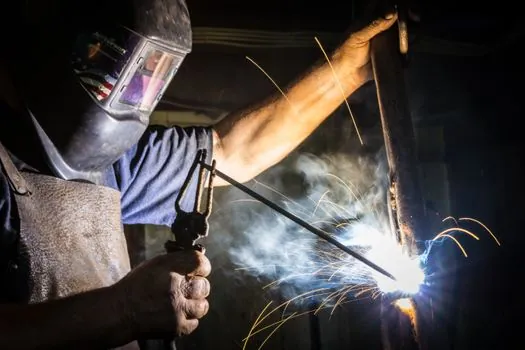
A53 Grade B ERW pipe must have its weld seam heat-treated at a minimum of 1,000°F, equivalent to 540°C, to avoid untempered martensite [S2]. A53 Type F is not used for flanging according to the cited guidance, while cold expansion of Grade B pipe must not exceed 1.5% of the required outside diameter [S2]. These details affect flanged assemblies, bending, and dimensional acceptance.
A53 provides two elongation-calculation methods: Method A uses e = 625,000 × A^0.2 / U^0.9, while Method B refers to ASTM A53 elongation tables X4.1 or X4.2 for different specimen areas [S2]. A106 requires seamless Grade A, B, or C material and provides a different route for hot-rolled and cold-drawn pipe [S2]. Do not approve a substitution based on a matching NPS and schedule.
For welded A53 pipe, confirm Type F or Type E explicitly, grade, end condition, coating, hydrostatic or nondestructive test requirements, and any post-weld heat treatment. For A106, state seamless Grade A, B, or C and the applicable service code. For A333, add the grade and impact-test temperature. The cited comparison lists A106 as killed steel and notes that A106 surface finish is often rougher because of heat treatment, while A53 can be bare, oiled, or galvanized [S3].
Procurement specification and failure controls
A compliant requisition should state standard, grade, manufacturing type, NPS and schedule or wall thickness, length, finish, coating, testing, marking, and any supplementary requirements. For A106, “seamless” is already inherent, but Grade B and service code still need to be explicit [S2]. For A53, manufacturing type changes the product materially: Type F is furnace-butt welded, Type E is ERW, and Type S is seamless [S3].
The main failure mode is procurement by generic description. “Carbon steel pipe” can conceal a welded versus seamless mismatch, an A106 versus A333 low-temperature mismatch, or a strength-grade mismatch. A53 Grade B and A106 Grade B share nominal strength values in the cited comparison, yet their manufacturing scope and service intent differ [S2]. Material substitution should require written review of chemistry, strength, toughness, dimensions, welding procedure, pressure design, and applicable code before release.
Use carbon steel terminology consistently in the material take-off, but identify the governing ASTM specification on every line item. A53 Grade B welded pipe may be correct for a buried water main, while A106 Grade B seamless pipe may be required for a hot steam header and A333 may be required for a cold process line. The service condition determines the grade, and the grade determines the purchase specification.