
ASTM C91/C91M classifies masonry cement as Type N, Type S, or Type M, with corresponding ASTM C270 laboratory-mortar compressive-strength requirements of at least 750 psi (5.2 MPa), 1,800 psi (12.4 MPa), and 2,500 psi (17.2 MPa), respectively [S1][S2].
These classifications apply to the masonry-cement binder and the mortar made from it, not to the strength of an installed wall; project drawings, the masonry-unit manufacturer, exposure conditions, and locally adopted code govern the final selection [S2][S3].
Type N, S, and M: strength and intended use
Type N is the general-purpose choice for ordinary above-grade masonry, including many veneer walls and interior partitions; its ASTM C270 laboratory-mortar requirement is a minimum average compressive strength of 750 psi (5.2 MPa) at 28 days [S2][S3]. Type S is the intermediate strength class, specified for reinforced or loadbearing exterior masonry and work requiring greater compressive or flexural-bond capacity, with a 1,800 psi (12.4 MPa) minimum average at 28 days [S2][S3].
Type M is the highest-strength classification, with a 2,500 psi (17.2 MPa) minimum average at 28 days, and is commonly used for exterior foundation, retaining-wall, sewer, and manhole work when specified [S2][S3]. The ASTM C91 scope covers three masonry-cement types intended for use where mortar for masonry is required.
Do not select Type M merely because its compressive-strength number is largest. Mortar must also bond to the masonry unit, retain water, remain workable, and accommodate movement; structural drawings and locally adopted masonry requirements override a general application table [S2].
Decision matrix for masonry-cement selection
Compare the three options by strength, exposure suitability, workability demand, and project integration. Type N offers the lowest strength class at 750 psi and generally the best economy for ordinary above-grade work; Type S raises the laboratory-mortar benchmark to 1,800 psi for loadbearing or reinforced exterior masonry; Type M reaches 2,500 psi for specified foundation or retaining applications [S2].
Type N is the appropriate default for most veneer and interior walls where exposure and loading permit, Type S is the practical selection for structural exterior masonry, and Type M should be used where the drawings specifically require its higher performance or where the exposure and unit system justify it [S2][S4]. The cement type—N, S, or M—should be selected according to the plans, masonry units, exposure, and locally adopted code.
The strength values are minimum average results for laboratory-prepared mortar evaluated under the ASTM C270 property specification, not guaranteed values for a jobsite mixer or completed masonry [S2]. The resulting mortar is governed by ASTM C270, which provides separate proportion and property specifications for unit-masonry mortar.
Masonry cement is not ready-to-use mortar

A standard masonry-cement bag contains a factory-blended binder made from portland or blended hydraulic cement, plasticizing material such as limestone or lime, and additives that modify workability, water retention, setting, or durability; it is not mortar containing aggregate [S2][S5]. For a typical proportion-specified batch, combine 1 volume of masonry cement with 2¼ to 3 volumes of damp, loose masonry sand, then add clean water for workable consistency [S2].
A product labeled mortar mix or masonry cement and sand already contains the sand and normally requires only water; adding another 2¼ to 3 parts sand would change the specified proportion. ASTM C91/C91M-05 states that values in SI units are standard and that values in other units shall be converted using the Rules for Conversion and Rounding given in IEEE/ASTM SI 10.
Sand for field-proportioned mortar should comply with ASTM C144, while the finished mortar falls under ASTM C270. ASTM C270 provides separate property and proportion specifications, so a project may specify either laboratory-verified mortar properties or a proportions-based construction requirement rather than relying only on the cement bag label [S2].
Composition and performance tradeoffs
ASTM C91 defines masonry cement as a hydraulic cement consisting of portland or blended hydraulic cement, plasticizing materials such as limestone or hydrated or hydraulic lime, and other ingredients intended to improve setting time, workability, water retention, or durability [S5]. The standard addresses physical performance including compressive strength, air content, soundness, and water retention, together with sampling and testing [S1][S3].
Masonry cement may contain additional ingredients that improve workability, bonding, and durability. These formulation tendencies explain why Type N remains common for veneer, but they do not permit substitutions without project approval because the finished mortar also depends on sand grading, water content, mixing, curing, and the masonry unit [S2][S4].
ASTM C91 refers to C270 for Type N mortar and Type S mortar without further addition of cement or hydrated lime, demonstrating that the cement type and mortar classification are connected but distinct requirements [S5]. Selecting a higher masonry-cement type does not, by itself, establish compliance with the specified mortar property or proportion requirements.
Where each type is appropriate
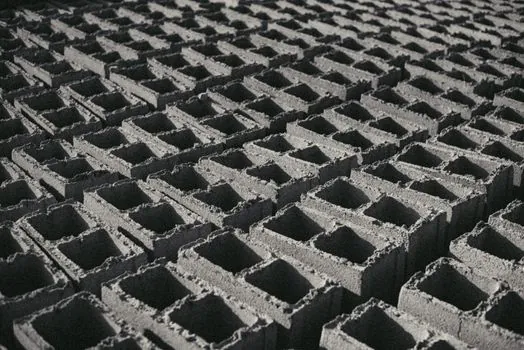
Use Type N for normal above-grade brickwork, many veneer assemblies, and interior walls that do not require the higher strength class, provided the plans and code permit it [S2][S4]. Its 750 psi laboratory-mortar benchmark is appropriate where load transfer, exposure, and unit characteristics are modest.
Use Type S for reinforced or loadbearing exterior brickwork, foundations or retaining walls where the project specifies it, utility structures, and masonry exposed to greater structural or environmental demands [S2][S4]. Type S can be used for walls exposed to soil pressure or severe service conditions, but exposure alone does not override the structural design or the locally adopted building code [S4].
Use Type M for exterior foundation and retaining-wall work, sewer and manhole construction, or other specified applications requiring 2,500 psi laboratory-mortar strength [S2]. It is not the automatic choice for every below-grade condition, and it is not intended to replace structural masonry units, reinforcement, waterproofing, drainage, or code-required detailing.
Verification, testing, and project controls
Verify ASTM C91/C91M compliance on the cement bag and require conformity with the specified type; ASTM C91 covers Type N, Type S, and Type M masonry cement, while ASTM C183 governs sampling [S1]. The 2023 edition of ASTM C91/C91M remains the ASTM document identified in the supplied standard record, and ASTM C91/C91M-25 is identified as the applicable edition on the research date for cement classification [S1][S2][S7].
ASTM C270 is the central mortar specification, with 2026 identified in the research material for its separate proportion and property requirements [S2]. ASTM C780 provides field evaluation procedures, while ASTM C144 applies to masonry sand; neither a higher cement strength nor a delivery ticket establishes that the installed mortar meets the project specification [S2].
Fresh hydraulic cementitious mixtures can be caustic and may cause chemical burns after prolonged skin contact, so the standard places responsibility on the user to establish appropriate safety and health practices [S5]. Specify the cement type, mortar classification, sand, water, batch proportion, mixing, curing, testing, and allowable substitutions before procurement.