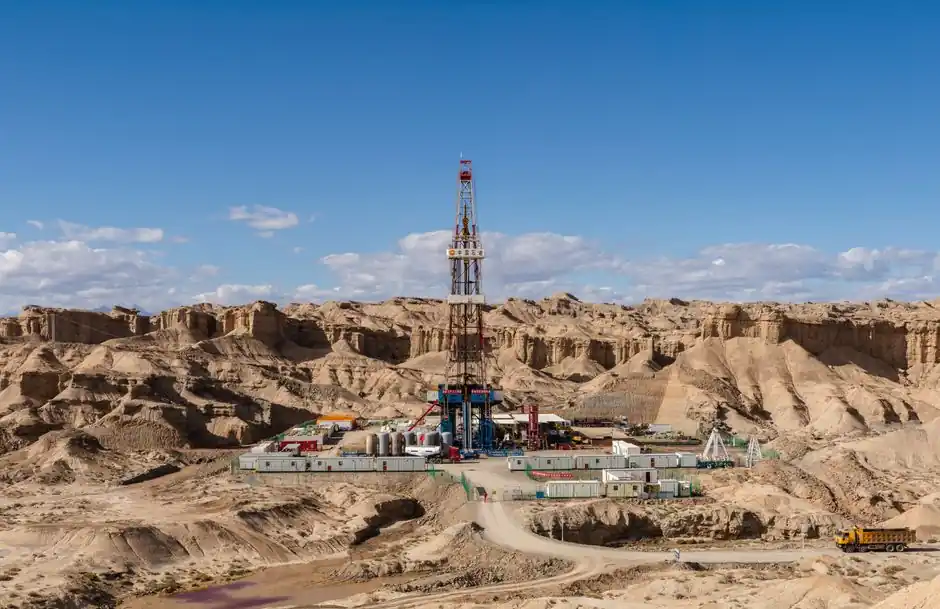
Rio Tinto operates 40 autonomous drills on 5 platforms across 7 Pilbara mine sites, while more than 130 autonomous trucks run under central supervisory control [S1].
The deployments cover haulage, drilling, charging, trains and remote operations, with autonomous haulage using pre-defined GPS routes and live vehicle location, speed and direction data [S1][S2].
What Autonomous Haulage and Drilling Actually Cover
Autonomous haulage systems automate material movement within a mine, while autonomous drilling automates blast-hole positioning and drilling. Remote or teleoperated equipment can perform tasks such as inspecting high walls, checking equipment and mapping open pits [S1][S2].
Rio Tinto's AutoHaul autonomous rail system has travelled more than 7 million kilometres.
The distinction between automation levels matters. Mining automation spans controlled, supervised, tele-robotic, semi-automatic, automatic and fully autonomous operation, with the defining variable being the degree of human intervention [S5].
Control Architecture Behind Scaled Deployment
Rio Tinto's autonomous trucks are directed by a supervisory system and central controller rather than an on-board driver, using pre-defined GPS courses for haul roads and intersections [S1]. The fleet architecture also records actual vehicle locations, speeds and directions, giving the control room a live fleet-state view rather than relying only on individual vehicle telemetry [S1].
Rio Tinto runs more than 130 autonomous trucks across its Iron Ore operations, with the trucks operated by a supervisory system and a central controller using pre-defined GPS courses.
This remote-control design makes electrical automation a core part of the production architecture rather than a simple vehicle modification. It also links fleet supervision, route execution, drilling coordination and explosive charging into a controlled operational workflow [S1][S2].
Haulage Versus Drilling: Decision Criteria
Autonomous haulage and autonomous drilling address different production constraints. Haulage systems must manage route compliance, traffic interaction, payload movement and fleet availability, whereas drilling systems must control hole positioning, drilling accuracy and coordination with charge trucks [S1][S2][S5].
Rio Tinto runs more than 130 autonomous trucks across its Iron Ore operations. On labor exposure, both categories remove personnel from collision zones around heavy machinery, while drilling also removes the operator from the blast-hole work area [S1][S5].
On operating model, haulage uses a supervisory system and central controller, while drilling can be coordinated through a single operations-centre console [S1].
The comparison favors a combined approach when the mine wants remote coordination across drilling, charging and material movement. A truck-only project addresses haul-road productivity but leaves blast-hole preparation and explosive charging outside the same operating model [S1][S2].
Drilling Accuracy and Charge-Control Benefits
Automation removes operators from exposure to dangerous environments by automating trucks, drills and trains.
The Sandvik AutoMine Concept Underground Drill is a fully autonomous twin-boom development drill capable of drilling without human interaction [S6]. This represents a different application from Rio Tinto's remote Pilbara fleet, where a central controller supervises multiple production drills across mine sites [S1].
Rio Tinto lists autonomous drills and charge trucks among the automation technologies used in its mining operations. Epiroc's open-autonomy portfolio similarly spans drilling, blasting, haulage and teleoperation rather than limiting autonomy to a single machine [S2].
Safety Case and Operational Constraints
Powered haulage incidents remain a substantial mining-safety concern, with collisions, rollovers, operator errors and blind spots among the documented failure modes. Automated haulage reduces exposure to these hazards by removing operators from dangerous environments, but it does not by itself guarantee a fatality-free operation [S5].
Long-duration duty is a core operational advantage, although fatigue and cyber or communications failures move into the control-system domain rather than disappearing with the driver. The reviewed safety framework includes real-time monitoring, machine-learning predictive models and automation frameworks intended to improve hazard detection and response time [S5].
Site geometry, route quality, fleet scale, maintenance support and remote-operations capability therefore belong in the business case before equipment is ordered.
Where Autonomous Systems Fit, and Where They Do Not
Large open pits with repetitive haul cycles, defined routes and centralized control are the strongest candidates for autonomous haulage. Mining fleets include self-operating haulers, drills, loaders and support units that move along pre-defined routes, while AHS platforms typically combine GPS, radar, lidar and onboard computing for navigation and obstacle detection [S3][S7].
Small, irregular operations may gain less from the infrastructure cost. AHS deployment requires route definition, a dependable communications and supervisory architecture, maintenance planning and trained control-room personnel. It is not a substitute for road engineering, traffic management or a defensible production plan [S4][S5].
The technology is not yet mature enough for every drilling task to be treated as fully autonomous. The literature identifies drilling and blasting as having undergone automation while noting that full autonomous operation had not been achieved across every mining process [S5]. Brownfield projects should separate automatable activities from tasks that still require controlled human judgment, especially at setup, intervention and recovery points.
Procurement and Integration Requirements
An autonomous fleet should be procured as a system, not as isolated trucks or drills. Epiroc's automation scope covers drilling, blasting, haulage and teleoperation, while Rio Tinto's architecture combines central control, predefined routes, fleet telemetry, remote drilling and automated charging [S1][S2].
Minimum technical due diligence should cover route and intersection design, positioning coverage, obstacle-detection coverage, network availability, control-room workflow, onboard diagnostics, maintenance access and a tested operating mode for degraded communications. Validation should include vehicle interaction with loaders, graders, water trucks and mobile maintenance crews, not only isolated route performance [S1][S3][S5].
No single performance metric is sufficient. Hours per truck, availability, cycle time, tonnes hauled per operating hour, drilling-position accuracy, blast-hole completion, intervention frequency and total cost per tonne reveal whether autonomy is improving the mine rather than merely removing the cab occupant [S1][S5].
Labor productivity should be measured at fleet level through labor productivity per hour, because fewer exposed operators do not automatically mean fewer total support hours once dispatch, maintenance, data handling and control-room staffing are counted [S5].
The defensible investment test is a site-specific comparison of conventional and autonomous operating hours, maintenance burden, intervention rate, production output and unit cost over a defined campaign. Trackable signals are truck availability above the baseline fleet, drilling variance against design coordinates and the frequency of manual interventions per operating hour.