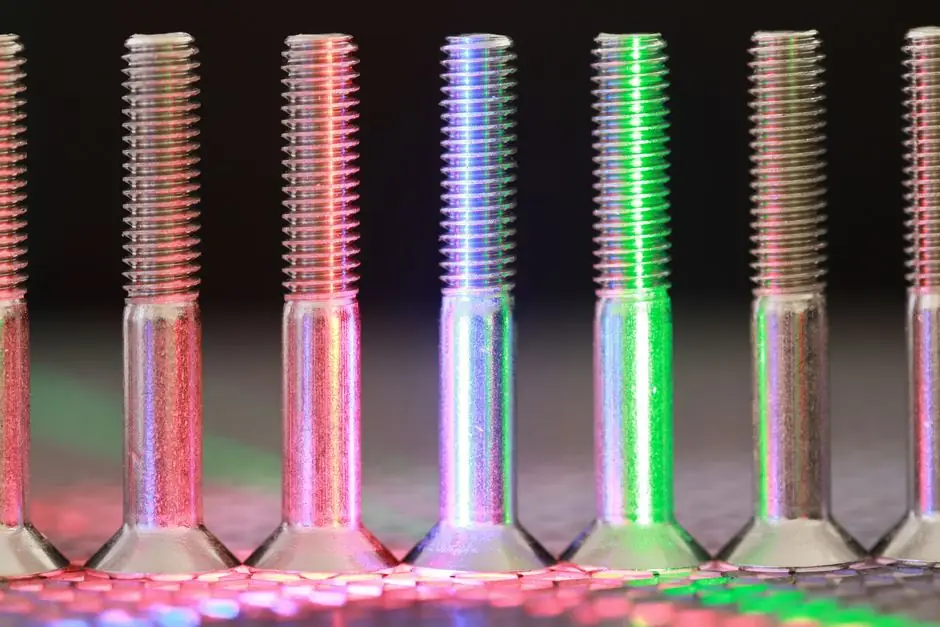
Oil is generally the stronger choice for sustained high-speed ball-screw operation because it provides cooling, and circulation can filter debris from the oil.
The decision depends on speed, load, temperature, contamination control, and maintenance capability: oil needs metering and filtration, while grease simplifies supply but can migrate and collect abrasive debris.
Grease or oil: the high-speed decision
Ball screws accept either grease or oil, but the operating regime determines the result. Oil is favored when frictional heat or positional stability limits performance, because circulating oil removes heat and can be filtered to remove wear particles [S1]. Grease remains appropriate where a simple, periodically serviced installation is more important than maximum thermal control [S1][S2].
Use oil with the proper viscosity and quantity, because excessive viscosity or too much oil can generate excessive heat [S1]. This is why “oil versus grease” cannot be resolved from screw diameter alone: average speed, load, and temperature must be evaluated together [S1].
For a high-speed axis, specify oil if the application requires sustained heat removal, clean recirculation, or stable positioning. Consider grease when its retention and simple delivery are advantageous and when grease loss and debris accumulation can be managed [S1]. A ball screw with an integrated lubricant fitting is not automatically oil-lubricated, because the fitting type and lubricant delivered must be confirmed separately.
Comparison by heat, maintenance, contamination, and load
Oil scores best on heat management and metering control. It can flow directly to the ball nut, wash out moisture and contaminants, and, when circulated externally, transfer heat away from the screw [S1][S2][S3]. Its disadvantages are the pump and metering equipment, process-fluid contamination risk, and sensitivity to wrong viscosity or over-supply [S2][S3].
Grease scores best on installation simplicity and first-cost. It costs less to apply, needs no oil-circulation equipment, and is less likely to contaminate cutting fluid [S3].
It can accumulate at the ends of ball-nut travel, where it attracts chips and abrasive particles; excess grease must be removed so that only a thin lubricating film remains [S2]. Clean the ball screw before lubrication and avoid applying excess grease [S2][S7].
That threshold is a selection guideline, not a universal lubricant rating, and it does not replace the manufacturer’s viscosity, temperature, and speed limits.
Build the lubricant specification around the duty cycle
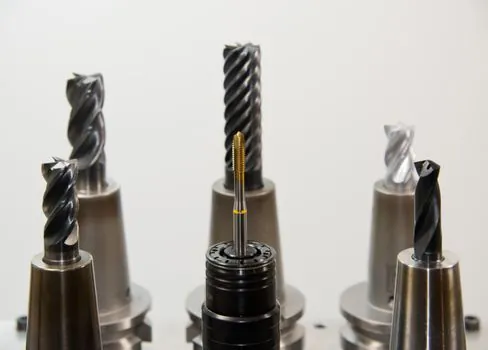
Specify oil viscosity against screw average speed, diameter, load, and operating temperature, then verify the selected grade against the screw manufacturer’s limits [S1]. The oil delivery rate is equally important: insufficient oil raises friction and accelerates wear, while excessive or overly viscous oil increases operating temperature [S1][S2].
Oil circulation adds cost because it requires a pump, metering device, and usually filtration, but it enables controlled delivery, contaminant removal, and significant cooling [S1][S2]. Filtration also improves lubricant homogeneity and removes particulate matter when precise or quiet motion is required [S2].
For grease, document the base oil, consistency grade, additive package, temperature range, speed compatibility, and compatibility with the lubricant used previously.
In a preloaded system, the lubricant must support the specified preload without film collapse, excessive drag, or loss of controlled slip.
Application methods, intervals, and contamination control
Apply grease directly to the threads near the root of the ball track or pump it into the nut through lubrication holes. Apply oil at a controlled flow rate to the raceway region [S2][S3]. Before either lubricant is installed, clean the assembly thoroughly, remove old residue, and wipe away rust-preventive oil used for shipping or storage [S3][S5].
These are maintenance planning references, not universal life guarantees; duty, environment, retention, and the manufacturer’s instructions take precedence.
Oil requires more deliberate quantity control. Its lower viscosity can allow it to leave the intended lubrication zone, while a poorly maintained system can mix lubricant with cutting fluid and carry contamination through the axis [S2][S3]. Grease also needs deliberate control because excess deposits near travel limits can become a debris trap [S2].
For a compact installation, compare the ball-spline equivalent lubrication arrangement only if the machine also contains a ball spline, because its lubricant retention and service requirements may differ from those of the ball screw. The ball screw itself remains the governing component.
Use cases and failure modes

CNC machining favors oil where cooling, flushing, and repeatable low-torque motion justify a pump and filtration system. The primary risks are lubricant loss, incorrect viscosity, excess supply, and contamination from cutting fluid [S2][S3]. A grease-lubricated CNC axis is simpler to service but should include wipers and periodic removal of displaced grease [S2][S7].
Semiconductor, laboratory, and clean-motion equipment may favor filtration or specialized grease because particulate control and smooth, quiet travel matter more than minimum installation cost. Food, vacuum, or temperature-controlled environments require a lubricant grade expressly qualified for that environment [S3].
Failure modes are identifiable. Overheated oil or an overly viscous oil increases temperature and can impair positional accuracy through thermal expansion [S1][S2]. Under-oiled contact increases friction and wear [S1][S2]. Grease starvation or loss exposes the raceways, while excess grease retains chips [S2][S3]. Incompatible old and new greases can also compromise the relubricated assembly [S2][S3].
Oil is not the automatic answer for every high-speed screw. It is the preferred choice when heat removal, filtration, controlled flow, and long unattended operation justify the added equipment. Grease is the preferred choice when low complexity, low lubricant cost, and infrequent manual service outweigh the higher thermal and retention risks [S1][S2][S3].
Final specification checklist
Record the screw diameter, lead, accuracy class, average and peak speed, axial load as a percentage of dynamic load rating, ambient and permitted screw temperature, duty cycle, and required service interval. These values determine whether oil can maintain the required film and whether grease will remain in the ball nut under inertia and heat [S1][S2].
Then specify the lubricant delivery system: grease quantity and interval for a grease design; oil viscosity, flow rate, filtration, and contamination isolation for an oil design. Verify compatibility with seals, wipers, lubrication fittings, and any cleaning agents, and require a documented startup procedure that cleans the nut before adding lubricant [S3][S5].
Validation should measure screw temperature under the highest specified speed and load, lubrication consumption, end-of-travel grease accumulation, and contamination around the return path. The related comparison Ball Bearing Speed Limits: Grease Versus Oil provides a useful cross-check for rolling-element speed limits, but the ball-screw manufacturer's nut and lubrication specification remains the controlling document.