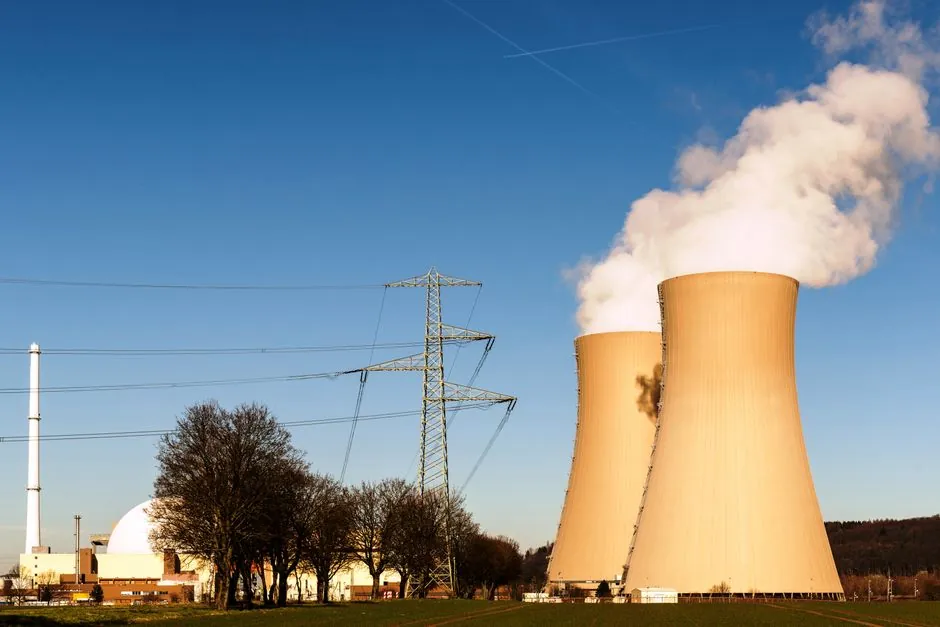
The best motor protection relay for pulp and paper combines overload, phase-loss, phase-unbalance, locked-rotor, jam, undercurrent, ground-fault, and differential functions with plant communications.
It must also survive high humidity, conductive dust, washdown exposure, vibration, and the long accelerating periods imposed by fans, pumps, refiners, conveyors, and rolls.
Pulp-and-paper failure modes dictate the relay functions
A pulp-and-paper installation has to protect against sustained overload, single phasing, phase unbalance, locked rotor at start, running jams, excessive heat, and repeated starts. The selected relay should match those failure modes rather than simply provide the largest number of functions [S4][S10].
Large fans, pumps, and rotating equipment can draw high inrush current during acceleration, so one fixed overload threshold is operationally weak. A protection system needs separate starting delay and running overload timing, or an inverse thermal model that represents accumulated heat [S4].
For wet-process areas, a relay with ground-fault detection and sensitive earth-fault input is more useful than a basic overload relay. Bender identifies personnel, equipment, and fire protection as distinct benefits of ground-fault equipment in pulp, paper, and packaging manufacturing [S6].
The motor protection relay should therefore be specified from the motor and load data, not from the number of terminals or menu screens advertised for the device.
Use a criteria-based relay comparison
Microprocessor motor relays are the strongest fit for critical pulp-and-paper drives because they can combine protection, metering, fault records, and communications in one platform. ABB, Siemens, Schneider Electric, GE Vernova, and L&T appear in a six-manufacturer comparison covering large industrial projects, advanced automation, scalable systems, global support, and harsh-site equipment [S2].
Electronic overload relays are generally more accurate and less temperature-sensitive than bimetal or magnetic alternatives. Concord identifies separate starting and operating delays, definite-time and inverse thermal characteristics, phase-current display, and trip-cause indication as practical selection criteria for modern relays [S4].
Schneider Electric provides compact PowerLogic P3 relays for medium-voltage applications, P5 relays with features such as arc-flash protection, LPCTs, LPVTs, and IEC 61850, and MiCOM P211 and P24x rotating-machine relays. These product families are materially different from a panel-only thermal overload device [S3].
Medium-voltage drives need protection beyond overload
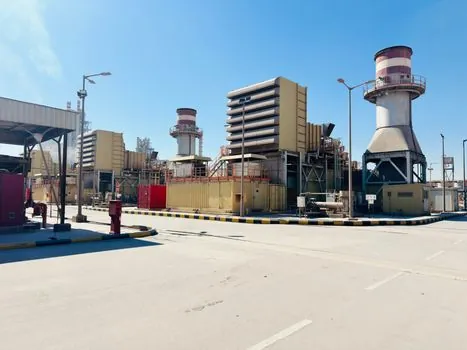
Medium-voltage motors in pulp and paper may require arc-flash protection, low-voltage current transformers, low-voltage voltage transformers, and Ethernet communications. Schneider Electric identifies those capabilities across its P3, P5, and P7 protection platforms, while the P7 platform uses a 7-inch colour touchscreen [S3].
For critical production assets, the relay should be coordinated with the medium-voltage switchgear, protective relays, arc-flash mitigation system, and grounding arrangement. An overload relay does not clear a short circuit, so the motor protection scheme still requires correctly rated upstream fault-clearing equipment [S4].
SEL positions motor protection as a custom-fit system suitable for both retrofit and new applications. Its published portfolio includes a 10-year warranty and a calculated MTBF metric exceeding 1,000 years, with that calculation made in December 2025 [S1].
Process continuity also affects source selection. A plant with two incoming supplies can use automatic bus transfer to move critical motor loads to an auxiliary feeder after a primary-feeder fault, avoiding a cold start and reducing shutdown exposure [S1].
Confirm current, voltage, control, and network interfaces
The relay must match the motor full-load current, CT ratio, rated voltage, control-supply range, frequency, and fault-clearing arrangement. A 5 A secondary CT is common for larger motors, while a 600 A upper application is available in the cited EOCR comparison, so current-range flexibility can reduce spare-parts duplication [S4].
Communication is a purchasing criterion, not decoration. Eaton EMR 3000, EMR 4000, and EMR 5000 variants support combinations of RS-485, Ethernet RJ45, D-sub, and fibre-optic interfaces, with selected models providing IRIG-B, URTD, sensitive ground input, and differential protection [S5].
Eaton lists control-power ranges of 19–300 VDC and 40–250 VAC across these motor relays. Product options also include 50/60 Hz operation, removable or projection mounting, and conformal-coated circuit boards [S5].
For larger plants, a microcomputer protection relay can provide IEC 61850, Modbus TCP, or DNP3 TCP/UDP communications in the Eaton EMR 5000 portfolio. That network capability helps connect protection events to plant historians, alarm systems, and maintenance workflows [S5].
Environmental and functional fit matter more than brand rank
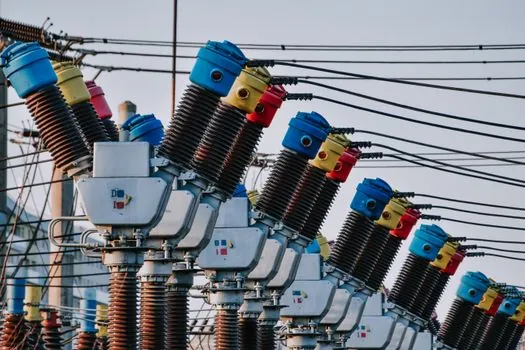
Pulp-and-paper motor rooms can contain humidity, condensation, conductive dust, washdown residue, and temperature variation. Enclosure selection, corrosion resistance, conformal coating, heater and cooling design, and cable glands must therefore be checked alongside the relay settings. [S4]
ABB's REM615 and REM601 series are described for protection, control, measurement, and supervision of asynchronous motors, while its CM-MSx family uses PTC temperature sensors for motor overheating protection [S2]. Schneider Electric's MiCOM P24x is positioned as a rotating-machine management relay, and Littelfuse's advanced protection portfolio covers overload, jams, phase loss or unbalance, heat, heavy starts, and excessive operating cycles [S3][S10].
The functional decision is straightforward: use a thermal relay only where simple overload protection is justified, an electronic overload relay for individual motors with documented starting and running faults, and a microprocessor relay for critical or medium-voltage drives that need records, differential protection, ground-fault detection, and communications [S4][S5].
One electrical fire monitor or temperature-monitoring device does not replace the motor relay. It complements a complete protection layer that combines ground-fault, temperature, overload, and power-system monitoring.
Commissioning evidence separates usable protection from feature lists
Commissioning should prove the relay settings against the motor nameplate, transformer ratio, actual starting current, stable running current, and expected jam conditions. CT polarity, phase rotation, trip delay, overload class, ground-fault pickup, and communication addressing all require recorded test results before the drive is released to production. [S4]
Digital EOCR models can display phase currents, trip cause, and load factor, while phase-loss detection in the cited product comparison operates within 3–4 seconds and reverse-phase detection within 0.1 seconds on applicable models [S4]. Those timing values are product-specific and must be checked against the selected relay, not treated as universal requirements.
For staged acceptance, verify the relay event log, alarm transfer to the control system, local reset permissions, and loss-of-control-power behaviour. A power monitoring system can then correlate voltage loss, phase disturbance, and motor trips, while still leaving the relay responsible for the protection decision.
Practical selection for pumps, fans, and production drives
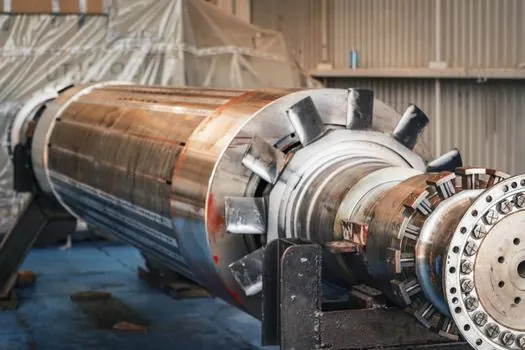
For pumps, configure phase loss, phase unbalance, undercurrent for dry-run detection, and a starting delay matched to acceleration time. For fans and high-inertia loads, extend the starting delay or select a thermal model that accepts the required inrush without weakening protection during steady operation [S4].
For refiners, rolls, and critical production drives, specify microprocessor protection with voltage, current, and sensitive ground input, plus differential protection where required by the machine and system design. Eaton's EMR 4000 and EMR 5000 families include models with those functions and communication options including Ethernet RJ45, RS-485, LC duplex fibre-optic Ethernet, IEC 61850, Modbus TCP, and DNP3 TCP/UDP [S5].
The procurement shortlist should include the motor list, CT and VT schedules, protection philosophy, upstream coordination study, approved communication protocol, environmental conditions, and required certifications. A relay is the best fit when every selected function maps to a documented failure mode and every interface maps to an existing plant network [S1][S3][S5].