
For chemical processing service, the correct sight glass is selected by four hard numbers on the data sheet: maximum operating pressure, peak process temperature, wetted material compatibility, and the relevant cleaning or sterilisation regime (CIP/SIP vs solvent flush) [S1].
Commonly stocked industrial sight glasses for chemical and pharmaceutical duty cover DN 8 to DN 200 (0.5 in to 10 in) bodies, with pressure ratings from full vacuum to 400 bar and temperature ceilings between -60 °C and +400 °C depending on the glass type, seal material, and body construction [S1]. For background on the component itself, see the sight glass reference page.
Borosilicate vs Fused-Metal vs Sanitary Stainless: The Three Workhorses
Borosilicate sight glasses (DIN/ISO 3585 Type 3.3 borosilicate) are the default choice for chemical reactor and pipeline viewing ports, with published temperature ratings to 400 °C and pressure ratings of 6, 10, or 16 bar depending on the gasket and frame spec, and DN 50 to DN 200 body sizes [S1]. Glass-blowing specialists such as AGI Glassplant report 70 years of engineered borosilicate and quartz system experience for reaction, filtration, evaporation, and distillation service, with global shipments to over 100 countries [S2].
Metal-fused (sintered) sight glasses, sold as the Metagras / NA-Connect system, are specified where cleanability and mechanical shock resistance matter: the published range is DN 8 to DN 100, -60 °C to +300 °C, and 0 to 7 bar, with full CIP/SIP compatibility thanks to the flush-mounted metal-glass bond [S1]. The contrast in envelope is sharp: borosilicate reaches 400 °C but borosilicate-to-metal seals usually cap at 16 bar, while the high-pressure dual-sided flow sight glass (Type 521) reaches 400 bar but at a more limited 80 to 300 °C window and a DN 25 to DN 200 body range [S1].
Sanitary stainless sight glasses (DIN 11851-style fittings, "type 81") are designed for hygienic and pharmaceutical service, rated to 40 bar, DN 32 to DN 150, and screw into the same hygienic unions used for pipelines and reactors [S1]. Where higher purity or more aggressive chemistry is in scope, quartz engineered systems are offered as an upgrade path for high-purity chemical processing applications [S2]. For related material selection context, the glass fiber and glass quartz encyclopedia entries cover the underlying material grades.
Pressure, Temperature, and Chemical Compatibility: A Criteria Comparison
Pressure rating is the first hard cut. Fused-metal units are limited to roughly 7 bar because the sintered glass-to-metal bond is the weak link [S1]. Borosilicate framed sight glasses step up to 6, 10, or 16 bar depending on the build, with the published data showing all three ratings available on the same product family [S1]. Sanitary sight glasses reach 40 bar in DIN 11851 form, and the high-pressure Type 521 dual-sided flow unit covers 63 to 400 bar for the most aggressive process headers [S1].
Temperature is the second hard cut. Borosilicate sight glasses are commonly rated to 400 °C when paired with high-temperature gasket materials such as PTFE or graphite [S1]. Fused-metal and most sanitary designs cap at 150 to 300 °C, with the Type 521 unit at 80 to 300 °C and the Metaglas at -60 to +300 °C [S1]. Cold service is covered too: the plastic-bodied GFT PSG pharma sight glass lists a -40 °C to +150 °C window in PVDF, PP, or UHMW-PE with a 10 bar pressure limit, and offers a 5 mm lining option for lined-pipe service [S1].
Chemical compatibility is set by wetted material, not glass type alone. Stainless steel bodies (typically 304 or 316/316L) with EPDM, FKM, or PTFE seals are the standard chemical-service build, while all-PVDF or PTFE-lined bodies are used for halogens and strong oxidisers. For the broader chemical-resistance picture, the chemical material encyclopedia page covers wetted material families. For reagent-specific compatibility tables used during selection, see chemical reagent. Anchor and fastener selection for the body flange or saddle is covered under chemical anchor.
Who Sight Glasses Are For, and Where They Are the Wrong Tool
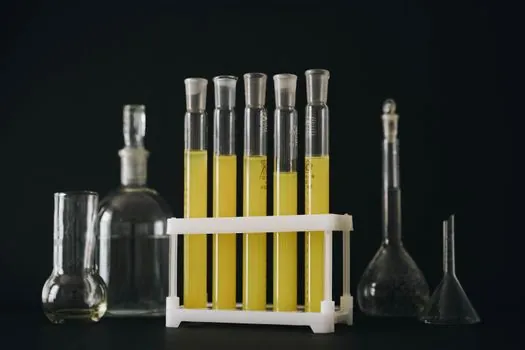
Sight glasses are the right call for visual verification of phase, colour, level, or foam in reactors, pipelines, separators, and storage tanks where the operator needs a direct look at the process [S1]. They are also specified on glass-lined steel reactors and on pilot reactor skids for process development work, where borosilicate and quartz vessels provide full visual access to reactions, filtrations, distillations, and extractions [S2].
They are the wrong tool for service above 400 °C, for high-pressure headers above 400 bar, for opaque or fouling slurries where the window would coke over, or for ultra-high-purity semiconductor wet benches where any extractables are unacceptable. In those cases, level instrumentation, sample loops, or quartz inline cells replace the sight glass. Sight glasses are also a poor choice for lines carrying strong caustics above 150 °C in stainless bodies, where the seal and the metal will fail before the glass does.
Real Configurations on the Market in 2026
Current OEM data shows the GFT PSG pharmaceutical sight glass at DN 0.5 in to 10 in, -40 °C to +150 °C, 10 bar, in PVDF, PP, or UHMW-PE, with options including 5 mm lining, an integrated ball check valve with sight glass, and a cylindrical 360° view glass [S1]. The Type 521 high-pressure dual-sided flow sight glass is offered in DN 25 to DN 200, 80 to 300 °C, and 63 to 400 bar for demanding industrial high-pressure applications [S1]. The Metaglas fused-metal line covers DN 8 to DN 100, -60 to +300 °C, and 0 to 7 bar with the NA-Connect flush-mounted mount for cleanability and sterilisation [S1].
AGI Glassplant, founded on 70 years of glass processing experience, ships engineered glass systems and full pilot reactor skids from manufacturing sites in Japan, the USA, the UK, Switzerland, and India, with the new Sakura and Sakura Mini pilot reactor lines positioned for laboratory-to-pilot scale-up [S2]. General-purpose tank and pipe sight glasses for industrial service are offered in DN 50 to DN 200 with temperatures to 400 °C and pressure ratings of 6, 10, or 16 bar [S1]. For custom chemical-reactor and storage-tank fabrication in stainless steel that interfaces with sight glass flanges, see custom fabricators such as SENLYON IND [S3].
Selection Workflow: 5 Steps to a Defensible Spec

Step 1: List the worst-case operating pressure, the peak process temperature, and the minimum design temperature (including CIP/SIP peaks, which are commonly 121-150 °C steam) [S1]. Step 2: Build a wetted-material compatibility matrix for the body, the gasket, and the glass against the full chemical inventory, including trace chlorine and any water-of-reaction acids, and pick the most aggressive combination as the design case.
Step 3: Match the body to the line size, DN 8 to DN 200 across the common industrial sight glass range, and pick the connection style: flanged, screwed DIN 11851 sanitary, or NA-Connect flush mount [S1]. Step 4: Decide between borosilicate (to 400 °C), fused-metal (to 300 °C and 7 bar, easier to clean), or the high-pressure Type 521 dual-sided unit (63 to 400 bar) [S1]. Step 5: Lock the spare parts list: gasket material, glass disc, wiper, and light fitting, so the unit is maintainable rather than a single-use component.
Standards, Sourcing, and Common Failure Modes
Borosilicate sight glasses used in European chemical plants are typically specified to DIN/ISO 3585 for the glass composition (Type 3.3), with body connections to EN 1092-1 flanges or DIN 11851 sanitary unions. Sanitary sight glass fittings are commonly supplied to DIN 11851 for food, cosmetic, and pharmaceutical use, as in the "type 81" screwed fitting example [S1]. Pilot reactor glass systems from established glassblowers such as AGI Glassplant are routinely integrated with OPC-UA compliant controllers, a direction the vendor has publicly discussed in Manufacturing Chemist for futureproofing pilot labs [S2].
Common failure modes: thermal shock from cold quench on a hot glass disc, pressure spike hammering a plastic-bodied unit, gasket extrusion on a 16 bar framed sight glass running at the upper temperature limit, and clouding or etching of the glass from trace HF or hot concentrated caustics. Each maps back to the same four numbers on the data sheet, which is why a spec-first selection is non-negotiable on this category. Track two signals: the next AGI Group move on high-pressure chemistry after the 2022 Premex Solutions and Premex Reactor acquisitions [S2], and the broader shift in pharmaceutical pilot skids toward OPC-UA native controllers on glass reactor systems [S2].
Related analysis: Jib crane price and cost guide for 2026 buyers.