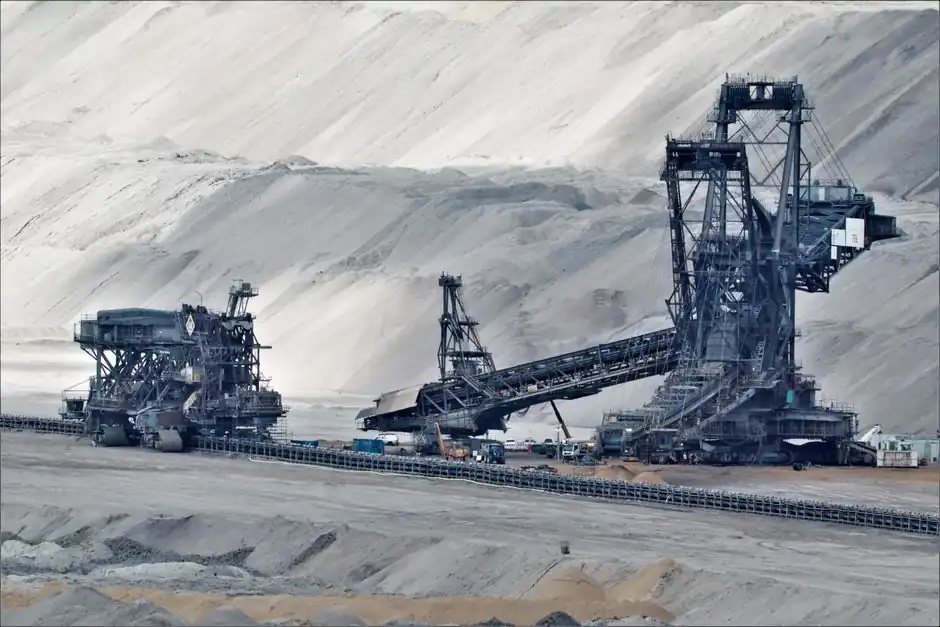
Centrifugal bucket elevators use wider bucket spacing and higher operating speed for free-flowing material, while continuous discharge elevators use closer spacing and lower speed for sluggish, fragile, or abrasive material [S3].
The correct selection depends on material flow, discharge method, capacity, bucket style, belt speed, pulley diameter, head profile, outlet position, particle size, density, and angle of repose [S5].
Spacing Rule: Fast-Flowing Versus Sluggish Material
Free-flowing, coarse material is compatible with centrifugal action and high-speed discharge, while sticky or fragile material needs a discharge arrangement that does not depend on throwing the load from the bucket [S1].
Continuous bucket elevators operate at lower speed with closely spaced buckets. Material can flow over the backside of the preceding bucket, and extended bucket sides guide the load toward the discharge spout, limiting aeration and reducing breakage of friable material [S3].
Centrifugal elevators reverse that arrangement. They run at higher speed with buckets spaced farther apart, improving bucket fill and reducing interference between adjacent buckets [S3]. Continuous-discharge chain elevators are also specified for free-flowing dry or sluggish materials containing medium to large lumps, provided the material is handled within the elevator’s stated duty [S2].
Centrifugal and Continuous Options Compared
Centrifugal discharge normally begins at about the 10 o’clock position and continues in an arc around the head pulley, a discharge pattern suited to grain and other free-flowing products handled at medium to high belt speeds [S5].
Centri-gravity discharge starts at top dead center, or 12 o’clock, and continues for approximately 50 degrees. It is used for powders, sand, cement, and wood chips at slower speeds, with CC-S, Starco, AA, and AC bucket styles identified for this method [S5].
Gravity discharge typically occurs near 2 o’clock and suits fragile material that falls from the buckets. Slow-running continuous MF and SC buckets support gentle handling, while positive-discharge elevators invert the bucket to release sticky, damp, cohesive loads that would otherwise remain on the bucket walls [S4][S5].
Bucket and Elevator Configuration
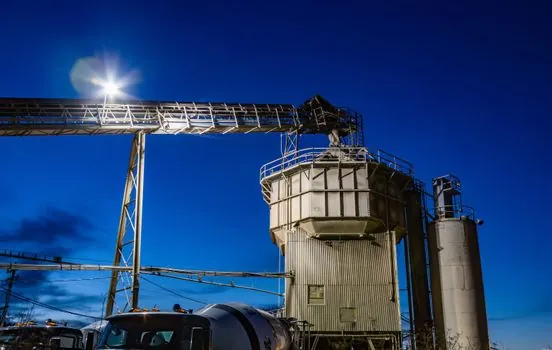
Bucket style is not independent of spacing. The C Type bucket is a shallow-profile centrifugal discharge bucket for fragile, lightweight, and free-flowing bulk materials, while continuous designs depend on the bucket profile and extended sides to transfer material gradually [S7][S3].
The catalog framework separates standard centrifugal and continuous elevators, high-speed grain elevators, super-capacity continuous chain elevators, and mill-duty centrifugal elevators. Mill-duty units target severe service in cement, rock, fertilizer, lime, gypsum, coal, and fine-ore applications; super-capacity continuous chain elevators use SC buckets between two chain strands for higher capacity, severe duty, or greater shaft centers [S2].
For a new selection, bucket style, spacing, belt speed, pulley diameter, head profile, and outlet position should be evaluated together because incorrect belt speed, spacing, or head-profile design is identified as a common cause of lost capacity [S5].
Capacity, Fill, and Outlet Constraints
Capacity is governed by more than elevator speed. The governing inputs include bucket style, belt speed, pulley diameter, head profile, outlet position, material particle size, shape, density, angle of repose, coefficient of friction, and terminal velocity [S5].
Bucket fill depends on how material enters the loading side. Straight-sided buckets do not fill as effectively as tapered-sided buckets, because tapered sides direct material deeper into the bucket and support fuller loading and cleaner discharge [S5].
The outlet must be sized and positioned for the required capacity. For grain and free-flowing particles, the stated positioning is at least 45 degrees from the head shaft; meals, cement, sticky material, and wood chips require separate outlet treatment because they do not follow the same free-flowing discharge path [S5].
Head-cover construction also affects discharge. A smooth cover helps material slide toward the outlet, while a flat top, gap, or vent can promote rebound onto the pulley and loss of material down the leg casing [S5].
Suitability and Failure Modes
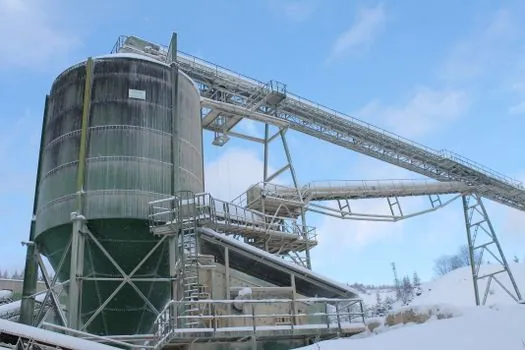
A bucket elevator is suitable when the material is dry and can be picked up in the boot, carried vertically, and discharged at the head without unacceptable breakage, dust, or residue. Common applications include aggregates, animal feed, fly ash, frac sand, lime, potash, woodchips, and coal [S3].
Free-flowing material is not automatically a good candidate for any high-speed design. A C Type bucket is intended for fragile, lightweight, free-flowing bulk materials, so speed and bucket projection still need to support the specified discharge sequence rather than maximizing rpm alone [S7].
Sluggish material creates the opposite failure mode. If buckets are too widely spaced for continuous transfer, the material may not cascade over the preceding bucket. If speed is too high, fragile material can break, sticky material can remain attached, and abrasive material can increase wear. Continuous spacing, lower speed, guided bucket sides, and a suitable outlet address these constraints [S3][S5].
Continuous elevators are available with belt, single chain, or double chain, while centrifugal elevators are available with belt or single chain. The chain conveyor variant therefore provides another routing and load-path decision beyond spacing alone [S3].
Specification Data for Equipment Selection
A complete vendor request should define material type, maximum lump size, free-flowing or sluggish behavior, bulk density, required capacity, elevator height, belt or chain preference, discharge location, and acceptable dust or breakage level [S4][S6].
Three discharge descriptions provide a defensible comparison point: centrifugal discharge begins around 10 o’clock, centri-gravity discharge begins at 12 o’clock and continues approximately 50 degrees, and gravity discharge occurs around 2 o’clock [S5]. These clock positions are useful for checking bucket profile, head geometry, and discharge sequence, but they are not a substitute for a manufacturer’s capacity calculation.
Martin’s selection material identifies bucket style, elevator type, head platform, take-up arrangement, and required operating information as separate parts of the configuration process. Its elevator ranges include continuous chain, belt-mounted continuous, centrifugal belt, and mill-duty chain or belt arrangements [S2].
Trackable selection signals are the measured discharge position, bucket fill behavior at the boot, carry-back or residue at the head, dust generation, and capacity deviation from the calculated duty. These operating observations show whether spacing and speed are aligned with the material rather than merely whether the elevator moves product upward.