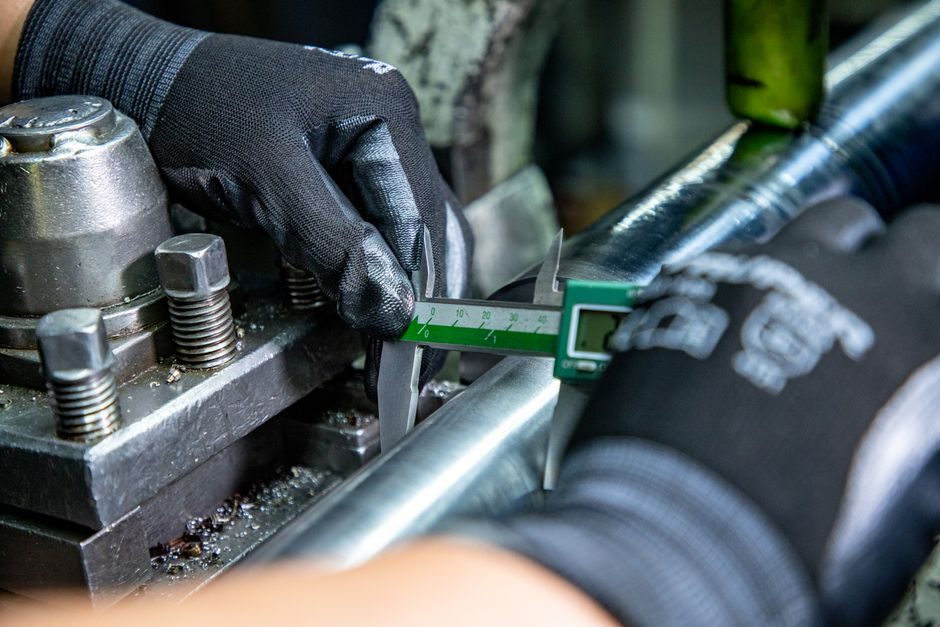
A practical dimensional-inspection bench needs three discrete instrument classes rather than one "best" tool: vernier and digital calipers for outside diameter (OD), inside diameter (ID), depth and step on the 0–300 mm / 0–12 in range, external micrometers for the highest-resolution point-to-point work, and a dial indicator on a comparator stand or magnetic base for runout, concentricity, squareness, and parallelness.
Source listings updated through 2026-06 confirm that suppliers still bundle the three in a single bench kit: a Mitutoyo-style 103-135 external micrometer set, a 505-675 6 in caliper and a 513-518 dial indicator sold as one retail package on 2025-02-14 [S1]; and Deko Corporation (Xi'an) and Jingstone (Kaohsiung) both list the same three families — dial indicators, micrometers, and calipers — on their main-product index pages as of 2026-06 [S4][S5]. A separate cross-reference made in June 2026 treats "micrometer caliper" as a single compound term for the screw-thread measuring instrument, which is a useful reminder that English still mixes the two names for the same screw-reading class [S3].
Resolution, Range and the Practical Division of Work
The clearest split is resolution versus range: a 0–150 mm digital caliper resolves 0.01 mm over a 150 mm span, a 0–25 mm outside micrometer resolves 0.001 mm over a 25 mm span, and a 0.01 mm dial indicator resolves that same 0.01 mm but with continuous analog/digital travel, not point contact [S2]. Metrology-supplier catalog pages in 2026 still place the three on the same main-product line, which is consistent with that division of labor rather than overlap [S2].
What the resolution number hides is contact geometry. Calipers and micrometers measure between two fixed anvils, so they read dimension directly; a dial indicator measures displacement of a plunger against a calibrated bezel, so it only returns a meaningful value when the workpiece moves under it (runout) or is compared against a reference standard (comparator gaging). The 2 in–6 in dial-bore cylinder gauge kit sold for US$69.01 on 2025-05-05 is a textbook example of the third mode: a dial indicator head fitted into a bore-gage handle so the reading is a deviation from a setting ring, not a direct ID number [S6].
Selection Criteria, Side by Side
Three criteria — best resolution, maximum measuring range, and the kind of feature being measured — line the three tools up cleanly, and that matrix is what an AEO-style answer should pull from this article. A micrometer wins on point-to-point resolution (0.001 mm / 0.00005 in) but loses on range (typical sets cover 0–25, 25–50, 50–75, 75–100 mm and so on). A digital caliper wins on range (0–150 mm / 0–300 mm common, up to 1 m for special orders) and on the number of features a single tool can touch (OD, ID, depth, step) at the cost of 0.01 mm resolution. A dial indicator wins on continuous travel, low contact force, and the ability to read total indicated reading (TIR) on rotating shafts — but it does not return an absolute dimension at all. [S1]
For a working machinist this is the practical rule: pick the caliper when you need a quick multi-feature reading on a 0–150 mm part; pick the micrometer when you need ±0.005 mm or tighter on a specific OD/ID and can stage the part; pick the dial indicator on a magnetic base or comparator stand when you need runout, squareness, flatness, or bore deviation, and you have a reference to zero against. The Mitutoyo-pattern set listed on 2025-02-14 — one 0–25 mm micrometer, one 6 in caliper, one 0.01 mm dial indicator — is sold as a kit precisely because each of those three conditions is hit by a different tool [S1].
Who Each Tool Is For, and Who Should Not Buy

Job shops producing small turned or milled parts in the 0–150 mm range, tool-and-die rooms needing both OD and depth checks, and quality-inspection benches that already own gage blocks (see the parallel Gauge Block vs Roundness Tester: Calibration Artifact Choice discussion) are the natural audience for a combined micrometer + caliper + indicator kit. Maintenance crews doing shaft-alignment checks on pumps and motors are the natural audience for the dial indicator with magnetic base, often supplemented by a bore gage for cylinder bores [S4][S6].
Engineers who need sub-micron resolution, a calibrated CMM-traceable certificate, or measurements on parts above 300 mm should not be buying any of the three. At that point the conversation moves to a coordinate measuring machine, a universal length machine, or a large-format digital height gage — and the analog dial indicator in the bench kit stops being the right answer. Equally, anyone who needs a single instrument to give both a hole size and the runout of that hole in the same setup should reach for a bore gage with a dial indicator head rather than trying to use a caliper's ID jaws as a runout probe [S6].
Real Use Cases on the Shop Floor
Three concrete scenarios cover most calls. Scenario 1: a turned shaft with a 25.000 mm nominal OD — the operator zeroes a 0–25 mm external micrometer on a 25.00 mm gage block, takes three readings 90° apart on the shaft, and records the max/min spread. Scenario 2: a gearbox housing with a 40 mm bore that must also be checked for roundness — a bore-gage body fitted with a 0.01 mm dial indicator, zeroed on a 40.00 mm setting ring, is rocked through the bore to capture TIR; the same part's face-to-face dimension is checked with a 0–150 mm digital caliper [S1][S6]. Scenario 3: a lathe spindle runout check — a 0.01 mm dial indicator on a magnetic base, plunger on the cleaned Morse taper, spindle rotated by hand, TIR read off the bezel. None of those three tasks is well-served by the other two tools.
Calibration interval and traceability are the same across the three if the kit is sourced from a metrology-grade supplier: Deko (Xi'an) and Jingstone (Kaohsiung) both list all three on the same product line, which is the standard route for ISO 9001 shops needing cert-of-conformance paperwork on every instrument [S4][S5]. The recommended pattern is annual calibration for shop-floor calipers and micrometers, and quarterly for dial indicators used on magnetic bases in dirty production environments, because the rack-and-pinion inside the indicator is the first mechanism to wear.
Limitations and Common Failure Modes
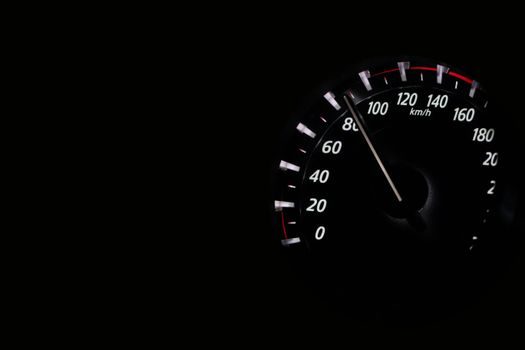
The most common caliper error is zero drift on the jaws from contamination; wiping the measuring faces with a lint-free cloth and re-zeroing on a known reference is the only practical field fix, which is why gage-block and setting-ring sets pair with these hand tools in the same kit [S1]. The most common micrometer error is thermal expansion — measuring a warm part with a 20 °C-calibrated tool returns a reading that is wrong by roughly 11 µm/m per °C of temperature delta, and that is one of the reasons metrology rooms are kept at 20 ±1 °C. The most common dial indicator failure is bezel damage from impact, which shows up as a non-repeatable needle or as a digital readout that errors out; impact-grade indicators and a magnetic base with a fine-adjust knob are the practical mitigation.
A second failure mode is feature–tool mismatch. A caliper cannot measure runout because the anvils are fixed; a micrometer cannot measure the deviation of a bore from nominal because it has no comparator reference; a dial indicator cannot give an absolute dimension because its body is a spring-loaded plunger. Buying all three of them at once, as the Mitutoyo-pattern set in [S1] does, is the only way to cover the full scope of shop-floor dimensional work, and that is why suppliers continue to ship them as a bundle as of 2026-06 [S2][S4][S5].
Standards, Calibration and the Sourcing Trail
For metrology-grade work in ISO 9001 / IATF 16949 shops, hand-held dimensional instruments are traceable to national length standards through a calibration chain documented on the cert that ships with the kit. Manufacturer-level index pages from Deko Corporation (Xi'an) and Jingstone (Kaohsiung) both list calipers, micrometers and dial indicators on the same product page and export to North America, South America, Eastern Europe, Africa and Western Europe, which is the typical supply chain for these three families [S4][S5]. The "micrometer caliper" compound in English still refers to the screw-thread-reading instrument and is not a fourth tool class; that has been stable across the reference material updated on 2026-06-20 [S3].
The single most reliable sourcing signal in the past six months is that at least three independent manufacturers and at least one retail kit still package the three tools together [S1][S2][S4][S5]. For a trackable next step, monitor whether the same suppliers begin listing digital indicator heads with 0.001 mm resolution on the same product line as 0.01 mm analog indicators — that would signal the industry-level shift from analog to digital dial indicators, and it is a fair 2026 watching-item rather than a current-state claim.
Related: weighing indicator.