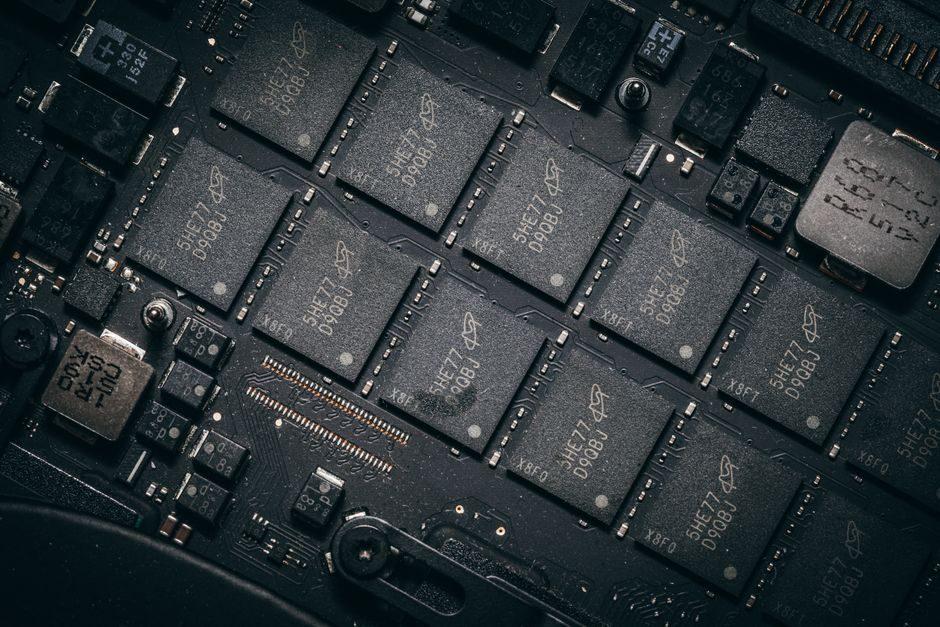
A data logger is a stand-alone, time-stamped recorder with on-board memory, while an electronic load is a controllable DC sink used to exercise a power source or battery under CC, CV, CR or CP modes — the two are not interchangeable and serve opposite roles on a test bench [S1].
Data loggers typically cap sample rates near 1 Hz and trade bandwidth for weeks-to-months of unattended recording, whereas electronic loads step loads in microseconds to milliseconds and rarely retain data without a host PC [S1]. Specifying one for the other's job is the most common bench-config error in 2026 sourcing reviews.
Definition and Functional Scope
A data logger is an electronic instrument that records measurements over time or by location, with internal memory (battery-backed SRAM, flash or EEPROM) and a real-time clock for time/date stamping each sample [S1]. The same source flags that earlier generations used magnetic tape, punched paper tape and strip-chart recorders before solid-state storage became standard.
An electronic load is a power-electronic sink that pulls a programmed current, voltage, resistance or power from a source, with sub-millisecond transient response for PSU burn-in, battery discharge profiling and fuel-cell characterisation. A load cell is a different class of device — a force/weight transducer — and should not be confused with an electronic load despite the shared word.
Core Spec Comparison Across Four Decision Criteria
The two product classes diverge sharply when you line them up against the criteria a buyer actually scores: [S1]
1) Sample/update rate: data loggers stay at ≤1 Hz, with 1 Hz described as "very fast" for the class; electronic loads operate in static (steady-state) and dynamic modes with rise/fall times measured in µs to ms. 2) Stand-alone operation: data loggers are implicitly untethered, with on-board storage sized for months of unattended runs [S1]; electronic loads almost always need a host or front-panel script. 3) Signal direction: loggers are inputs only; loads are outputs only (sinks). 4) Primary standard: loggers lean on SDI-12 for environmental multi-drop and CANBUS (ISO 11898) for higher-speed logging in industrial/machine contexts [S1]; electronic loads are governed by IEC 61010-1 safety for the test instrument and the UUT's own compliance regime.
That four-row split is the cleanest filter for incoming RFQs: if the request is "log voltage for 30 days at 1 sample/minute", send a data logger; if it is "sweep 0–10 A at 1 A/µs into a 48 V bus", send an electronic load.
Data Logger Form Factors and Protocol Stack
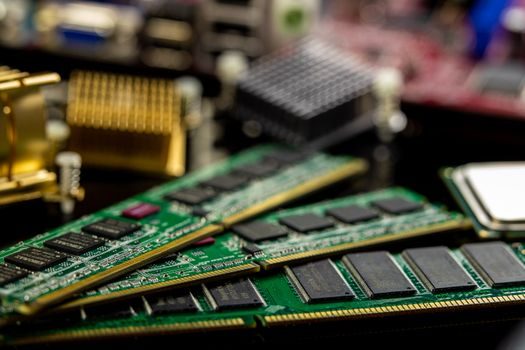
Modern data loggers ship as single-channel compact units up to multi-channel rack systems, with simpler devices offering less programming flexibility and more sophisticated units adding cross-channel math, alarm conditions and onboard web servers for remote monitoring [S1]. Communication stacks now include SDI-12 (still mostly confined to the environmental industry and supporting multi-drop instruments), MODBUS (the dominant industrial-control carry-over) and CANBUS (ISO 11898), with CANBUS seeping from automotive into traditional logging because of its strict 64-bit prioritised packet structure and high bus speed [S1].
Solinst's Levelogger 5 family illustrates the platform pattern: a single firmware baseline (1.006 as of the 2026-06-19 compatibility matrix) covers Levelogger 5, Barologger 5, Levelogger 5 Junior, Levelogger 5 LTC and LevelVent 5, all reachable through the SRU readout unit, the DataGrabber 5 USB transfer device, the LevelSender 5 cellular hub and the SolSat 5 satellite telemetry terminal [S3][S6]. For wider signal-conditioning context, a signal conditioner 2026 buying guide maps the upstream transducer-conditioning decisions that sit ahead of any logger front end.
Electronic Load Modes and Switching Behaviour
Electronic loads present four canonical operating modes — Constant Current (CC), Constant Voltage (CV), Constant Resistance (CR) and Constant Power (CP) — plus a short/opening state and, on most modern units, a dynamic mode that pulses between two programmable setpoints to characterise transient response. Slew rates of 1 A/µs to 30 A/µs and current rise/fall times under 50 µs are now common in mid-range 1 kW–5 kW bench units. [S2]
Selection gates for an electronic load are: (a) maximum voltage and current the UUT can deliver; (b) minimum operating voltage at full current, which dictates low-Vin behaviour for battery and PV simulators; (c) power envelope and thermal derating above 25 °C ambient; (d) measurement bandwidth on the built-in DMM-style voltmeter and shunt ammeter; and (e) protection class — OVP, OCP, OPP, OTP and reverse-polarity. When the test plan is a long-term burn-in or a battery cycler profile, an electronic load typically pairs with a load cell module only if the UUT is a structural or weight-bearing assembly, not a power source.
Use Cases and Mismatches
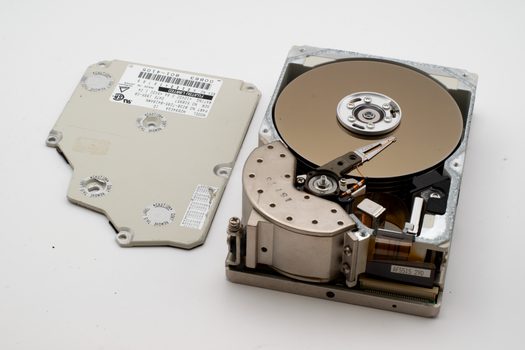
Data loggers fit environmental monitoring (groundwater level, rainfall, soil moisture, barometric compensation), cold-chain temperature mapping, energy sub-metering over billing cycles, and remote asset health with cellular or satellite backhaul. The Solinst Levelogger 5, Barologger 5 and Rainlogger 5 are textbook examples, all converging on a 1.006 firmware line and the SolSat 5 / LevelSender 5 telemetry stack [S3][S6].
Electronic loads fit PSU validation (line/load regulation, cross-regulation, dynamic step response), battery discharge profiling (capacity, internal resistance, cycle life), fuse and breaker trip testing, fuel-cell and electrolyser I–V curves, and PV inverter MPPT efficiency sweeps. A practical spec-signal overlap appears in a signal isolator vs temperature controller build: the temperature controller outputs 4–20 mA or relay setpoints, a data logger can capture them, but an electronic load is irrelevant to that loop.
Standards, Limits and Failure Modes
For data loggers, the real-time clock drift is the spec buyers under-weight — a 5 ppm RTC on a 90-day deployment loses roughly 39 seconds, which is fine for environmental logging but disqualifies the unit for grid-event sequencing or tariff-window metering [S1]. Memory endurance and battery life dominate field failure modes, especially in -20 °C to +60 °C outdoor enclosures. SDI-12 remains the de-facto multi-drop bus for hydrological and meteorological stations, while CANBUS (ISO 11898) is the higher-speed choice for vehicle, machinery and industrial-machine logger channels [S1].
EMC compliance to EN 61000-4-x and electrical safety to IEC 61010-1 are the typical conformity gates, alongside any UUT-specific regime such as UL 60950-1 or the IEC 62133 battery-test chain for lithium chemistries. Industrial buyers evaluating bench DC power should treat the electronic load as a separate procurement line from a data logger — the supplier base, calibration cadence and MTBF numbers rarely overlap.
Sourcing Signals Through July 2026
Track three signals over the next quarter: (1) Solinst firmware updates to the 1.006 platform — the 2026-06-19 compatibility matrix covers Levelogger 5, Barologger 5, Junior, LTC and LevelVent 5 against the SolSat 5 satellite terminal, and any new firmware cut will reset that table [S6]; (2) IEC 61010-1 3rd-amendment test-house availability for higher-voltage (1,500 V DC) electronic loads used in PV inverter burn-in, which is the main reason 1 kV-class bench loads have lead times stretching past Q3 2026; (3) IDC-style smart-energy management rollouts that bundle a data logger with cloud dashboards and use load-shedding logic — vendors in this space are now exposing both the metering and the load-control channels on the same MODBUS map, which shortens the procurement cycle for combined meter-plus-actuator skids [S2].