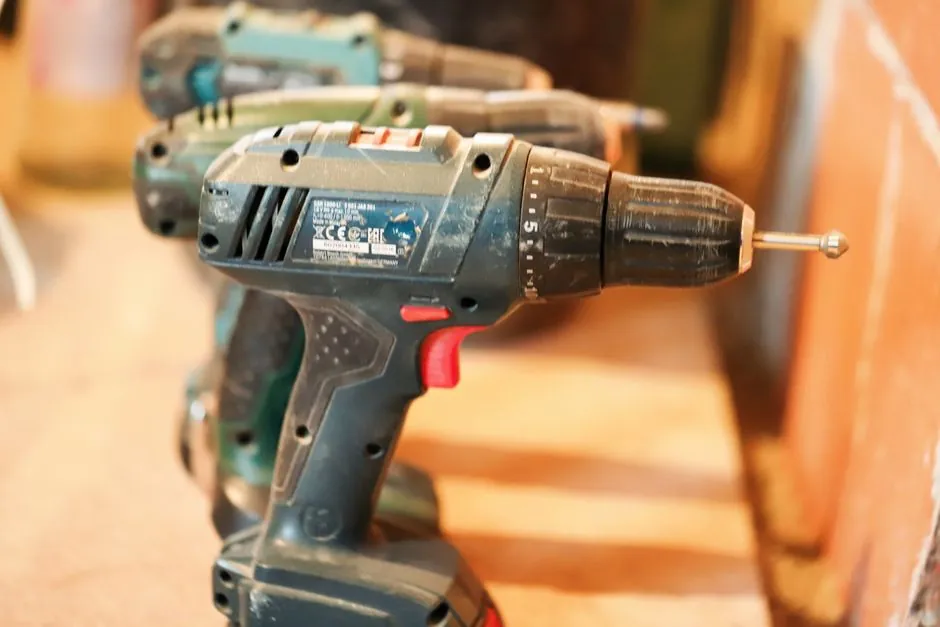
A cordless drill can mix small quantities of thin-set mortar, but a dedicated power mixer is the better tool for sustained or high-volume mixing.
The deciding factors are drill torque, paddle geometry, batch size and mixing time, not simply whether the tool is corded or cordless.
When a Cordless Drill Can Mix Thin-Set
A cordless drill is conditionally suitable for thin-set when it has adequate power, accepts the required paddle and is used for small batches [S1]. Cordless operation does not by itself make the drill unsuitable, but battery-powered and corded tools still have different thermal limits, gearboxes and torque characteristics.
Historical field accounts support the need for a substantial tool: one installer used a DeWalt 18 V drill for thin-set and grout without difficulty, while another reported burning out a 1/2-inch drill during the initial, relatively dry mixing stage [S4]. A separate recommendation favored a good 1/2-inch drill with a spade-handle body over 3/8-inch drills because of greater wear tolerance [S4].
The initial water-to-powder stage is demanding because the mixture is stiff and dry before it becomes more fluid. Any smell of burning, excessive heat or a sudden loss of speed is a stop signal, not a reason to continue mixing [S2][S4].
Drill Selection by Torque and Speed
Thin-set mixing requires sustained torque at low speed, while an ordinary drill drive is optimized primarily for speed [S2]. Published drill comparisons list professional spade-handle models with 8.5–9.0 A draw, 500–700 rpm maximum speed, 13–16 mm chucks and weights from 6.0 to 8.8 lb, or 2.7–4.0 kg [S5].
The comparison below separates the main tool choices by the factors that affect mixing control rather than treating every drill as interchangeable.
Lower rotational speed is preferable when mixing heavy material because it limits unnecessary stresses on the paddle, gearbox and motor [S5]. A variable-speed trigger is useful because it gives the operator a practical means to reduce paddle speed as the mortar becomes more viscous.
Paddle Choice Changes the Result
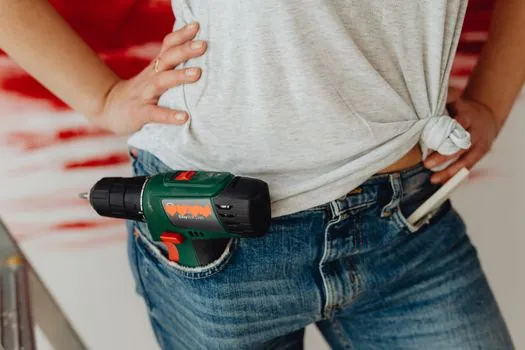
A paint-mixer paddle is not a mortar paddle: paint paddles are not designed for the viscosity and abrasive loading associated with tile mortar and grout [S3]. A purpose-built mortar paddle should be long enough to reach the material near the bottom and side of the bucket while leaving enough clearance to prevent wall contact.
Attachment diameter must match the drill chuck. The reviewed professional drills use 13 mm, or 1/2-inch, chucks on several models and a 16 mm, or 5/8-inch, chuck on another [S5]. A larger chuck may accept more paddle types, but chuck capacity alone does not establish torque capacity.
Unlike an impact drill, which adds hammering action for drilling, a mixing drill should normally run in an ordinary driving mode. The impact mechanism adds no benefit to mortar mixing and can add unnecessary vibration and mechanical loading.
Small Batches Versus Sustained Production
Drill-powered paddles can work for thin liquids in small amounts, but they are generally unsuitable for dense mortar, large grout batches and extended mixing [S2]. The tool must supply enough force to move the paddle through the material without stalling or overheating.
For a small residential patch, a capable drill, a mortar-rated paddle and controlled speed can be a practical combination. For repeated buckets, a full bag of dry material or production-tile work, a power mixer reduces motor strain and operator fatigue. These limits concern work output and consistency, not whether cordless technology can physically turn a paddle.
One Milwaukee cordless drill, model 2810-20, was called highly rated in a mixing-drill comparison that did not feature it in the main review lineup [S5]. The example shows that model identity alone is insufficient; the drive train, output, paddle and duty cycle still determine suitability.
Failure Modes and Work Practices
Overheating is a primary failure mode because drill motors and their relatively small gearboxes are optimized for drilling rather than prolonged paddle work [S2]. Smoke or an excessively hot tool housing indicates overworking, and continued operation can turn a serviceable drill into a failed tool [S2].
Another failure mode is a paddle striking the bucket wall. Contact can impose sudden radial loads on the shaft and gearbox, while a poorly shaped paddle can leave unmixed pockets at the bottom and perimeter [S3]. The operator should keep the paddle immersed, move it around the bucket, and avoid lifting it through dense material.
Hand mixing also carries a material risk because a person may under-mix a batch by hand, producing uneven water distribution, color variation or inconsistent mortar performance. A powered tool reduces physical effort, but it does not replace the need to follow the mortar manufacturer’s specified water addition, mixing time and rest period.
Evidence, Limits and Purchase Decision
The strongest engineering distinction is simple: drill drives prioritize speed, while purpose-built electric mixers provide the power and torque required to move heavy or viscous material [S2]. The comparative drill data include four tested-class machines at 8.5–9.0 A, 500–700 rpm, 13–16 mm chucks and 2.7–4.0 kg mass, providing a concrete baseline for a dedicated drilling-and-mixing platform [S5].
Published evidence also includes a field account in which a smaller drill smelled as though it was burning during thin-set mixing, followed by a recommendation for an 18 V system [S4]. These accounts are operational evidence rather than controlled laboratory tests, but they reinforce the thermal-load concern documented in the equipment analysis [S2].
Choose a cordless drill when the batch is small, the paddle is mortar-rated and the drill has sufficient torque and thermal capacity. Choose a power mixer for heavy mortar, grout, prolonged cycles or large production batches. Keep the paddle clear of the bucket, run at controlled low speed, and stop if the tool overheats or begins to smell [S2][S3].