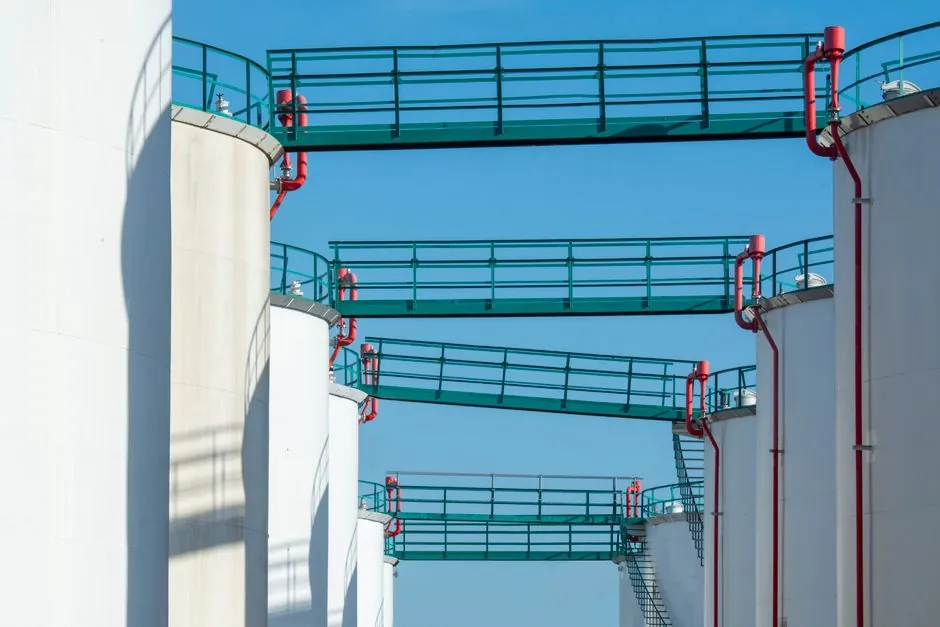
A capacitance level transmitter for industrial service in 2026 is typically specified as a 4-20 mA loop-powered device with a stainless steel probe, PTFE insulation for conductive media, and a measuring range of 0.2 m to 3 m for rigid rods or 1 m to 20 m for flexible rope designs [S2][S7]. Process-side ratings cluster around -25 to +200 °C medium temperature, 5 kg/cm² pressure, and ±0.5 % FS accuracy with 5 mm resolution, which is the working envelope most Indian OEM datasheets publish [S1][S2][S4].
Selection is driven by media conductivity, tank geometry, mounting thread or flange class, hazardous-area certification, and whether the vessel wall can act as the reference electrode. Buyers comparing across capacitance level transmitter suppliers should treat probe length, process connection, and output protocol as the three gating decisions before evaluating price.
Operating Principle and Sensor Architecture
Capacitance probes form a variable capacitor between the sensing electrode and either the metal tank wall or an auxiliary reference probe, with the change in dielectric as the medium rises driving a 4-20 mA analog output [S2][S8]. In conductive liquids the probe must be fully insulated (typically PTFE sleeved) so the conductive medium does not short the electrode to ground; in non-conductive media either insulated or bare electrodes are usable [S2][S9].
Most 2026 OEM offerings use a 15 kHz excitation frequency, a 2-wire loop-powered 12-30 V DC supply, and a 500 Ω maximum loop load, with optional 3-wire and 4-wire isolated versions for sites where a multi-drop or HART-style reading is required [S1][S4][S7]. Die-cast aluminium enclosures rated weatherproof or flameproof are the industry default, and the electronics are commonly rated -25 to +65 °C ambient independent of the process temperature class [S1][S2].
Probe Type and Length: Rigid Rod vs Flexible Rope
Rigid rod capacitance probes are published from 200 mm up to 3,000 mm in mainstream datasheets, with probe diameters of 0.5–8 mm, and are the correct pick for short, narrow tanks and for agitated vessels where a flexible cable would swing [S1][S2][S7]. Flexible rope versions extend the practical measuring range to 15,000 mm (15 m) on entry-level models and 20,000 mm (20 m) on Trumen Technologies' high-end units, making them the standard for silos, water reservoirs, and bulk-solids hoppers [S1][S4][S7].
For chemical or hygienic service, PTFE-insulated 316L SS probes are the dominant choice; the SHLT smart flange series from Silver Instruments also offers Hastelloy C276 and Tantalum diaphragms for aggressive media [S3]. When the tank is non-metallic or when the geometry rules out a ground reference through the wall, an auxiliary reference probe is added, which materially changes both pricing and calibration [S1][S4].
Comparison of Main Capacitance Probe Options

The four realistic variants a buyer will see in 2026 quotations are rigid rod bare, rigid rod PTFE-insulated, flexible rope bare, and flexible rope PTFE-insulated; below is the spec comparison a process engineer can use as a first-pass gate. [S2]
Decision criteria across the four: measuring range, max medium temperature, conductive-liquid suitability, and typical tank height. Rigid rod bare: 0.2–3 m, up to 100 °C, not for conductive media (no insulation), short tanks to 3 m [S1][S2]. Rigid rod PTFE-insulated: 0.2–3 m, up to 200 °C special build, yes for conductive (acids, bases, water-based solutions), short tanks to 3 m [S2][S3]. Flexible rope bare: 1–20 m, up to 100 °C, limited conductive use, tall silos and water reservoirs to 20 m [S2][S7]. Flexible rope PTFE-insulated: 1–20 m, up to 300 °C on Trumen's 20 bar unit, yes for conductive, tall aggressive-service tanks [S3][S7].
For buyers comparing across the broader level transmitter family, capacitance is the lowest-cost option for tanks under 20 m but loses accuracy on foaming, sticky, or highly viscous media where guided-wave radar or hydrostatic displacer is the better pick.
Process Connection, Flange Class, and Hazardous Area
Threaded process connections on entry-level capacitance probes are ½", 1", and 2" BSP or NPT, while flange options span 1" to 4" in ANSI 150 lb, ANSI 300 lb, and DIN PN 16/40 ratings, with 3" 150 lb and 4" 150 lb being the two most-commonly stocked flanges [S1][S3][S4]. The Silver Instruments SHLT model code covers single flush, single extended, and custom flanges up to DN100 PN40, with bolt-circle diameters from 121 mm (2" 150 lb) to 200 mm (4" 300 lb) [S3].
Hazardous-area options on Indian-OEM datasheets are explosion-proof Ex d IIB T5 and intrinsically safe Ex ib IIC T5, with ELECALL publishing an explosion-proof capacitive design for rod-type insertion as a 2026 line addition [S3][S6]. Maximum process pressure on the rigid-rod commercial line is typically 5 kg/cm² (about 0.5 MPa), while the Trumen flexible probe is rated 20 bar and Sunflow's flange-mount units cover up to 4.0 MPa [S1][S4][S7].
Output Protocol, Accuracy, and Calibration
Standard output across all surveyed 2026 datasheets is 4-20 mA, with the most common wiring being 2-wire loop-powered at 12-30 V DC; 3-wire and 4-wire isolated 0-10 V DC and 4-20 mA versions are available where the DCS or PLC requires a non-loop-powered signal [S1][S2][S4]. Loop load is rated at 500 Ω maximum, and supply is 24 V DC nominal on the entry-level 4-wire units [S1][S4].
Accuracy is published as ±0.5 % of full scale with 5 mm resolution on the JMI, Manometers, and Apsan datasheets, and the tank-empty (4 mA) / tank-full (20 mA) trim is done either by a field-calibration button on 4-wire units or by a multi-turn trimpot on 2-wire units [S1][S4][S8]. HART is available on the smart SHLT-3300/4400/4500/4600/4700 series, which also offer 0-100 % linearity or digital indication and a choice of 316L, Hastelloy C276, or Tantalum wetted parts for high-temperature or corrosive service [S3].
Materials, Media Compatibility, and Failure Modes
Stainless steel 304 or 316 is the default wetted material on Indian-OEM capacitance probes, and PTFE is the dominant insulation; Sunflow specifies PTFE fully or partially insulated rod or rope, while Spink Controls' ELTRAN SC/L-700 accepts stainless, PTFE, and exotic alloys for acids, bases, and solvents [S1][S2][S4][S5]. Media-temperature operating windows are -25 to +100 °C standard, with a +200 °C special build on Sunflow's PTFE-insulated version and a +300 °C / 20 bar rating on Trumen's flexible probe [S2][S7].
Common failure modes buyers should engineer around: coating build-up on the probe in oily or crystallising media, which shifts zero and requires periodic re-calibration; reference-electrode loss in non-metallic tanks if the auxiliary ground probe is shortened or coated; and temperature drift when ambient electronics are mounted in direct sunlight above the +65 °C rated ceiling [S2][S7][S8]. Capacitance is also unsuitable for media whose dielectric constant is too close to air (e.g. very light hydrocarbons) without a reference probe, and for high-viscosity or foam-heavy services where wetted coating dominates the reading [S2][S9].
Application Sizing by Tank and Industry
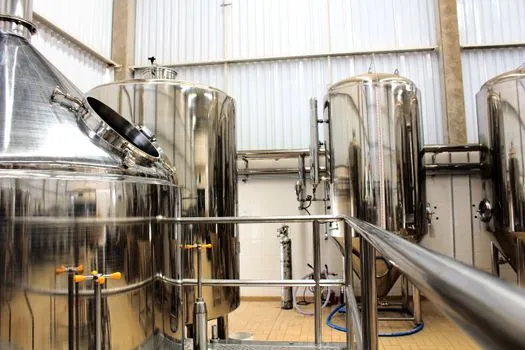
For water, diesel, oil, and chemical storage in tanks up to 3 m, specify a rigid PTFE-insulated 316L rod probe with 2-wire 4-20 mA output, threaded 2" BSP or NPT process connection, and ±0.5 % FS accuracy at -10 to +70 °C [S1][S2][S10]. For aggressive chemicals (acids, bases, solvents) above 100 °C or in pressurized reactors, move to the SHLT-4710 smart flange series with Hastelloy C276 diaphragm, 0-400 to 2500 kPa range, Ex ib IIC T5 rating, and 4-20 mA + HART output [S3].
For tall silos storing cement, fly ash, sand, grain, or plastic pellets, the correct pick is a flexible rope probe in the 5–20 m range, with PTFE insulation if the bulk solid is conductive or hygroscopic, and a flanged top mounting on DN80 or DN100 PN16 [S2][S7]. Buyers already standardising on magnetostrictive level transmitter technology for high-accuracy hydrocarbon service should still consider capacitance for cost-sensitive water and bulk-solids tanks where ±0.5 % FS and 5 mm resolution are acceptable. The related magnetostrictive level transmitter sizing guide covers the alternative technology for buyers comparing both options on the same spec sheet.
Track before ordering: confirm the actual medium dielectric constant (water ≈ 80, oils ≈ 2–4, solvents 2–20), verify the tank wall is reliably grounded or plan for a reference probe, and lock in the process connection class (ANSI 150 lb vs 300 lb) against the vessel's pressure-temperature rating. For cross-vendor shortlisting against other level instruments, the level switch suppliers spec map is a useful adjacent reference.