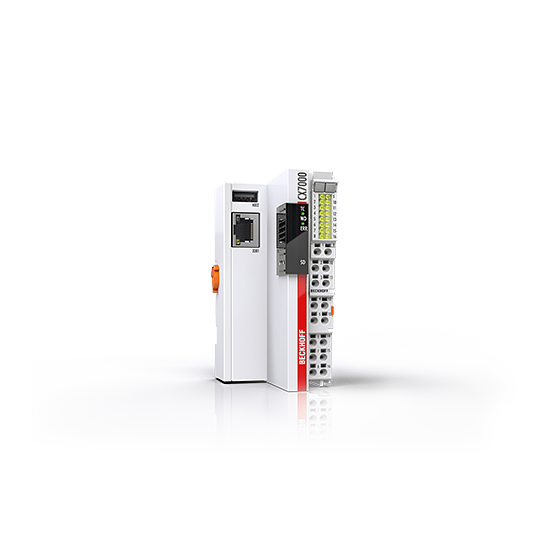
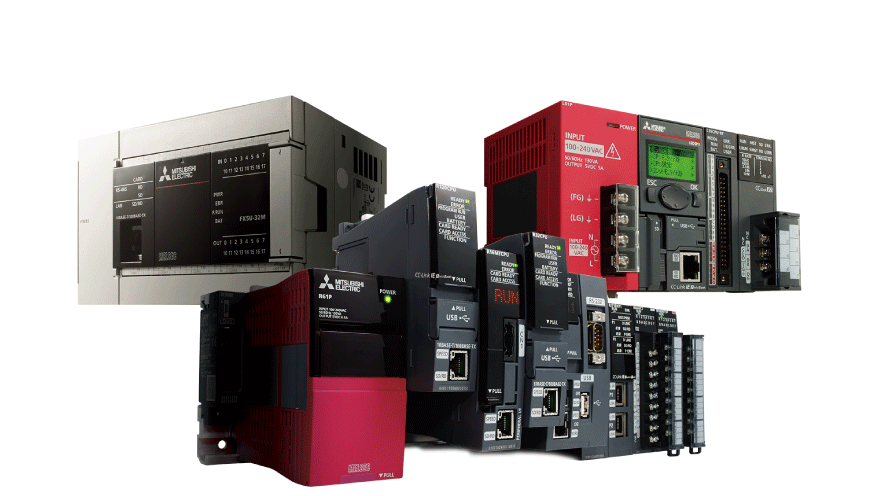
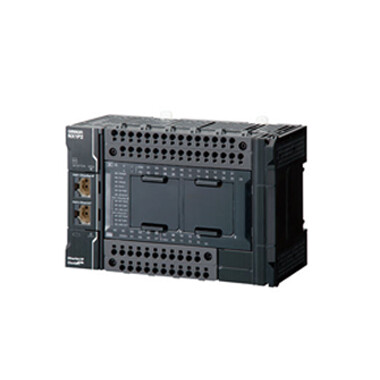
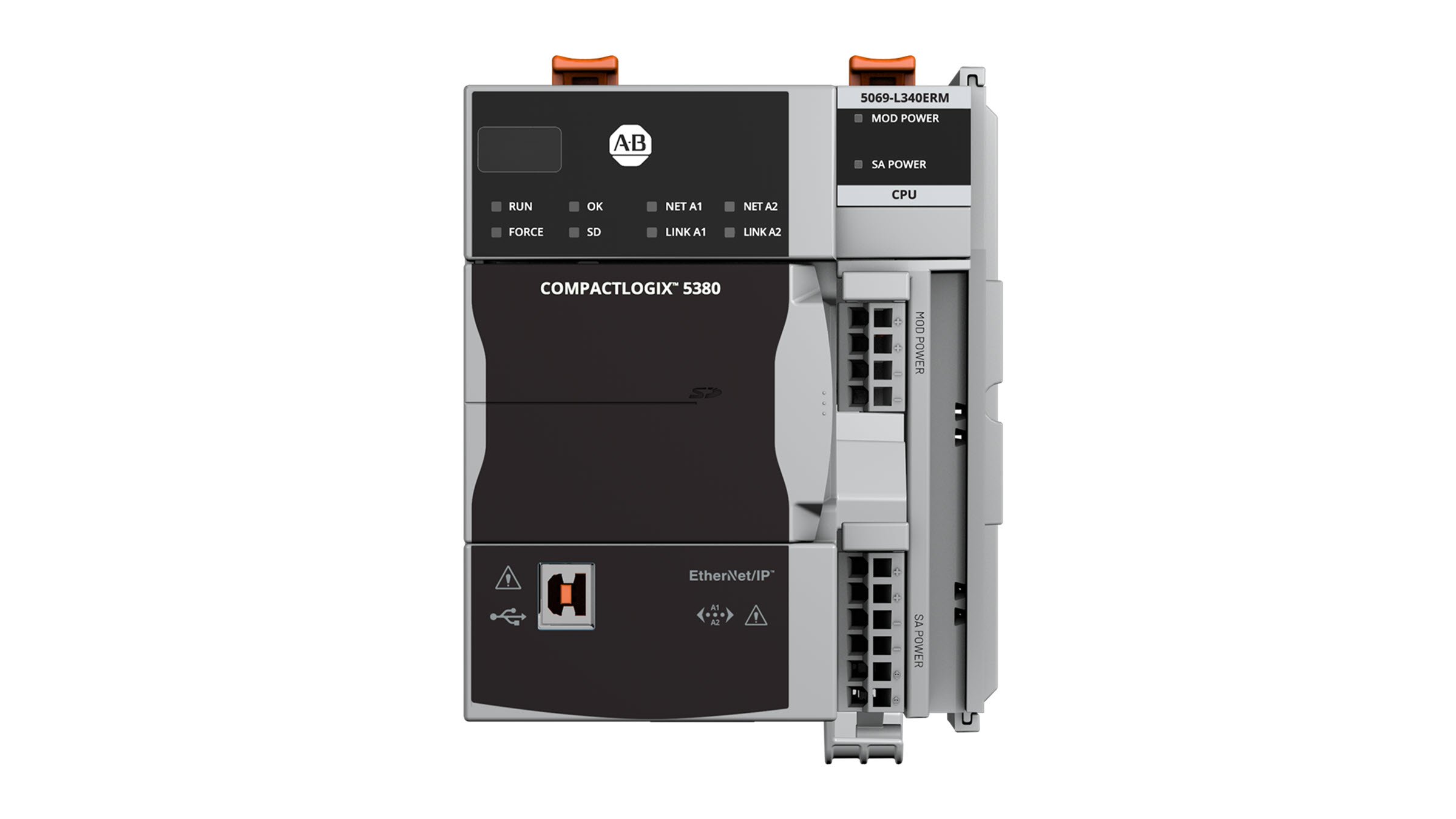
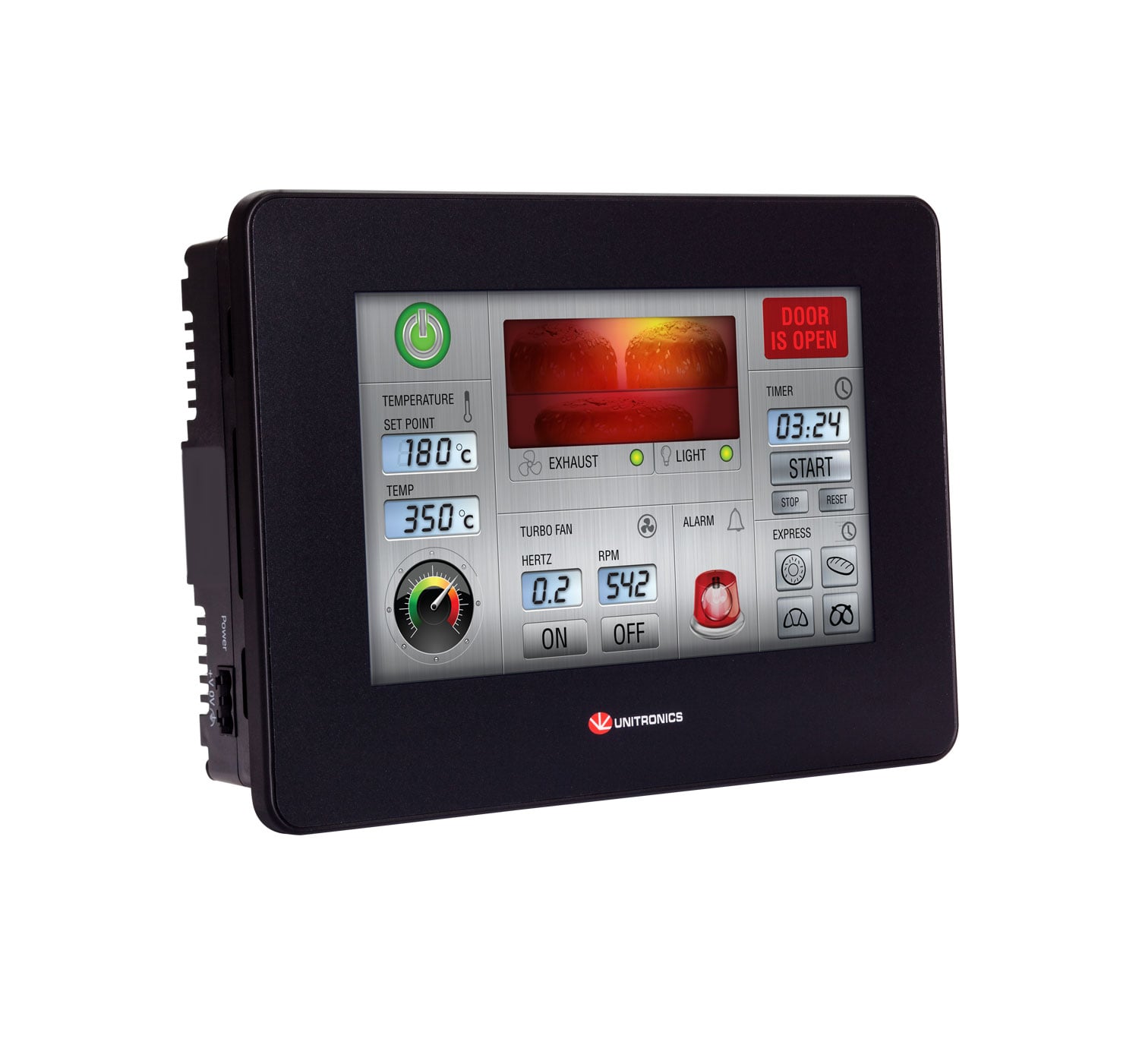
A PLC (Programmable Logic Controller) is a ruggedized industrial digital computer that continuously reads field inputs, executes a stored user program, and drives field outputs in a deterministic scan loop. It is the core control unit for both discrete (machine and line) and process automation. This guide compares the three reference platforms engineers most often shortlist (Siemens SIMATIC, Mitsubishi MELSEC, and Rockwell ControlLogix) alongside Schneider, Omron, and ABB, so you can map a real machine to a real model.
Photo: Palatinatian, CC BY 3.0, via Wikimedia Commons
This guide is aimed at industrial purchasing engineers and design engineers. It covers 6 chapters from controller types, the scan-cycle operating principle, IEC 61131 programming languages, signal media and I/O electricals, key specification parameters, to selection decisions, with 7 procurement FAQs and a Siemens / Mitsubishi / Rockwell comparison, helping you turn a machine requirement into a defensible model choice in 30 minutes. All parameters reference the IEC 61131, IEC 61508, IEC 62061, and ISO 13849 public standards.
Chapter 1 / 06
What is a PLC
A PLC, or Programmable Logic Controller, is a ruggedized industrial digital computer that continuously reads field inputs, executes a stored user program, and drives field outputs in a deterministic scan loop. Unlike a desktop computer optimized for throughput and rich user interaction, a PLC is optimized for repeatable, real-time control: it survives vibration, electrical noise, and wide temperature swings on a factory floor, and it executes the same logic in the same order every cycle so that machine behavior is predictable. This determinism is what makes the PLC the core control unit for both discrete automation (individual machines and production lines) and process automation (continuous plants).
Functionally, a PLC sits between the field and the control room. On the field side it connects to sensors, push-buttons, limit switches, encoders, and analog instruments through input modules, and to actuators, valves, contactors, and drives through output modules. On the system side it connects to HMIs, SCADA, drives, and other controllers through industrial networks. The user program, written in a standardized language family, defines how inputs are transformed into outputs. The hardware itself is built and tested to the equipment requirements of IEC 61131-2, which is the qualification standard covering service conditions, power supply and memory, digital and analog I/O requirements, environmental, vibration, and drop type tests, and EMC requirements.
The PLC market is concentrated. Siemens led with roughly 20 percent share in 2025, and the top five vendors (Siemens, Rockwell Automation, Schneider Electric, Mitsubishi Electric, and ABB) together held the majority of the global market. This concentration matters for selection: an installed base, a spare-parts pipeline, and an engineering-tool ecosystem follow each major brand, and the practical cost of switching ecosystems is often higher than the price delta on any single CPU. That is why most plants standardize on one or two families rather than buying the cheapest controller per project.
Photo: Elmschrat, CC BY-SA 3.0, via Wikimedia Commons
Fig. 1.1 A PLC sits between the field and the control room: sensors and switches feed input modules, the CPU executes the user program in a scan loop, and output modules drive valves, contactors, and drives.
It is worth distinguishing the device class from the page title. This is a single product type (the PLC) presented as a selection guide; the three brand names in the title (Siemens SIMATIC, Mitsubishi MELSEC, and Rockwell ControlLogix) are the flagship platforms engineers benchmark against, not separate product categories. Throughout this guide, a reference to a specific model (for example, the Siemens S7-1500 CPU 1518 or the Mitsubishi iQ-R R120CPU) is included to anchor an abstract parameter to a real, purchasable part number.
Chapter 2 / 06
PLC Types and Variants
PLCs are categorized two ways: by physical architecture (how the CPU, power supply, and I/O are packaged) and by functional class (what disciplines the controller is built to handle). The architecture decision sizes the hardware; the functional-class decision determines whether a standard controller is enough or whether a PAC, a safety controller, a motion controller, or a redundant pair is required. The table below summarizes the three packaging architectures.
Architecture
Construction
Typical I/O
Representative Models
Compact / unitary / brick
CPU, power supply, and fixed I/O in one housing
~10 to 40 points
Siemens S7-1200, Mitsubishi FX5U, Omron CP1
Modular
CPU and power supply on a base/backplane; I/O and function modules added
Into the thousands
Siemens S7-1500, Mitsubishi MELSEC iQ-R
Rack-mounted
Card-cage chassis; CPU, power, comms, and I/O cards on a common backplane; hot-swap
Highest counts
Rockwell ControlLogix 1756 chassis
Compact (unitary or brick) PLCs integrate the CPU, power supply, and a fixed set of I/O in one housing, with little or no expansion. They target small machines, typically around 10 to 40 I/O points. Examples include the Siemens S7-1200, the Mitsubishi FX5U, and the Omron CP1. The brick form factor trades expandability for low cost and a small cabinet footprint, which suits fixed-function equipment where the I/O count is known and unlikely to grow.
Modular PLCs place the CPU and power supply on a base or backplane and let the engineer add I/O and function modules as needed. They serve mid-to-large machines and lines where the I/O mix evolves over the equipment's life. The Siemens S7-1500 and the Mitsubishi MELSEC iQ-R are the canonical modular families. Rack-mounted PLCs push this further with a card-cage chassis where CPU, power supply, communication, and I/O cards plug into a common backplane; they support the highest I/O counts and hot-swap, and are used for large or distributed control. The Rockwell ControlLogix 1756 chassis is the reference example.
By functional class, the most basic is the standard or general-purpose PLC, which handles discrete and analog logic. A PAC (Programmable Automation Controller) is a high-end controller that blends PLC determinism with PC-class data handling and multiple disciplines (logic plus motion plus process plus safety) in one platform; the Rockwell ControlLogix 5580, the Schneider Modicon M580 (marketed as an "ePAC"), and the Omron NJ/NX belong here. A safety PLC or safety controller is TUV-certified for functional safety and rated to SIL or PL (covered in Chapter 5); the Siemens S7-1500F and the Rockwell GuardLogix 5580 are examples.
Motion or machine controllers integrate multi-axis motion tightly, typically over EtherCAT, as with the Omron NX/NJ and Siemens Technology CPUs. Redundant or process CPUs run as hot-standby pairs for high-availability process control, such as the Mitsubishi Process/Redundant CPU and the Schneider M580 HSBY. Finally, distributed or remote I/O places remote I/O stations near the field devices and links them to the CPU over industrial Ethernet to cut wiring; the Siemens ET 200 and the Rockwell FLEX/POINT I/O are the reference families. Many real systems combine these: a modular CPU with safety, motion, and remote-I/O drops on the same backplane network.
Chapter 3 / 06
Operating Principle and Programming
Every PLC runs the same fundamental loop, the scan cycle, repeated continuously. Typical scan time is roughly 1 to 50 ms (the textbook range is cited as 1 to 100 ms), depending on program size, I/O count, and network load, and drops below one millisecond on motion CPUs. The four phases are: (1) read inputs, copying all physical input states into the input process image in memory; (2) execute program, solving the user logic top-to-bottom against the frozen input image; (3) write outputs, transferring the computed output image to the physical outputs; and (4) housekeeping, handling communications, diagnostics, self-test, and I/O update of remote nodes.
The key property is timing: inputs are sampled only at the start of the scan and outputs change only at the end of the scan. Freezing the input image for the whole program pass guarantees deterministic, repeatable behavior, which is exactly what a machine builder needs to certify a sequence. The underlying performance metric is CPU instruction speed. The Siemens S7-1500 CPU 1518 executes roughly 1 ns per bit instruction, 2 ns per word, and 6 ns per floating-point operation; the Mitsubishi iQ-R R120CPU executes roughly 0.98 ns per LD instruction. Faster instructions mean shorter scans for the same program, which translates directly into tighter machine response.
Programming is governed by IEC 61131, the IEC standard family for programmable controllers, first published in 1993. Its parts split cleanly by concern: IEC 61131-1 covers general information, terms, and functional characteristics; IEC 61131-2 covers equipment requirements and tests (the hardware and qualification standard PLC hardware is built to); and IEC 61131-3 covers programming languages. The 3rd edition of IEC 61131-3 is dated 2013, and a new edition was published in 2025.
IEC 61131-3 defines five languages. Two are textual: IL (Instruction List, deprecated in the 3rd edition) and ST (Structured Text). Two are graphical: LD (Ladder Diagram) and FBD (Function Block Diagram). The fifth, SFC (Sequential Function Chart), is used for structuring program organization. Common practice mixes them in one project: LD for discrete I/O logic, ST for math and algorithms, and SFC for sequencing. The choice usually follows who maintains the machine; LD remains popular precisely because plant electricians can read it. PLCopen maintains certification and portability around 61131-3, which helps move logic between toolchains.
Each major vendor wraps these languages in its own engineering tool, and the tool is part of what you are buying. Siemens uses TIA Portal, Rockwell uses Studio 5000 Logix Designer, Mitsubishi uses GX Works3, Schneider uses EcoStruxure Control Expert, and Omron uses Sysmac Studio. Licensing, learning curve, library availability, and version-management discipline differ across these tools, and they are a real factor in total cost and maintainability, not a footnote.
Chapter 4 / 06
Signal Media and I/O Electricals
A PLC's "media" is not a fluid but the electrical signals it exchanges with the field, and getting the I/O electricals right is as consequential as choosing the CPU. Two decisions dominate: the polarity convention for digital points (sinking versus sourcing) and the signal type and resolution for analog points. A mismatch here does not corrode a diaphragm, but it does mean a sensor that never registers or an analog loop that reads noise, and these errors are discovered late, during commissioning.
For digital I/O, the electrical type is defined by current direction. A sinking input draws current into the PLC and therefore pairs with NPN, negative-switching sensors; a sourcing input pushes current out of the PLC and pairs with PNP, positive-switching sensors. Outputs follow the same logic and are specified as relay or transistor (sink/source) types. Relay outputs tolerate mixed AC/DC loads and provide galvanic isolation but switch slowly and wear mechanically; transistor outputs switch fast and last longer but are polarity- and voltage-specific. Standardizing one polarity convention plant-wide simplifies spares and reduces the most common wiring error in the panel.
For analog I/O, the dominant current signal is 4 to 20 mA, which is a live-zero standard: 0 mA flags a wiring fault rather than a valid zero reading, and current transmission gives the best noise immunity over long cable runs. Voltage signals are also common, including 0 to 10 V, plus-or-minus 10 V, 0 to 5 V, and plus-or-minus 5 V, but they are more susceptible to voltage drop and noise over distance. Temperature inputs are a special analog class: RTD inputs accept Pt100, Pt1000, Cu, and Ni elements, and thermocouple inputs accept types J, K, E, R, S, T, B, N, and C.
Resolution sets the smallest change a card can resolve. ADC/DAC resolution is typically 12-bit (4096 steps), 14-bit, or 16-bit. At 12-bit resolution, a 4 to 20 mA span resolves to roughly 3.9 µA per count, which is adequate for most loop control but coarse for precision measurement, where 14-bit or 16-bit cards earn their cost. The table below summarizes the field-signal types a PLC I/O subsystem handles.
The practical takeaway is to specify the I/O subsystem at the same time as the CPU, not after. Counting digital and analog points, fixing the sink/source convention, listing the analog signal types and required resolution, and noting any RTD or thermocouple needs together define the module list, the channel density, and a meaningful share of the controller's cost.
Chapter 5 / 06
Key Specification Parameters
Reading PLC spec sheets is a fundamental skill for purchasing engineers. Vendors list dozens of parameters, but a manageable set truly drives selection: CPU work/program and data memory, instruction execution time, scan/cycle time, I/O capacity, digital I/O electrical type, analog signal types and resolution, communication protocols, safety rating, motion-axis count, redundancy, environmental rating, and price tier. The flagship comparison below anchors the headline parameters to real Siemens, Mitsubishi, and Rockwell models.
Parameter
Siemens S7-1500 (CPU 1518)
Mitsubishi iQ-R (R120CPU)
Rockwell ControlLogix 5580 (1756-L8x)
Architecture
Modular
Modular
Rack-mounted / PAC
Program memory
≈ 6 MB program
≈ 1200 K steps (≈ 4800 KB)
L81E 3 MB / L83E 10 MB / L85E 40 MB
Data memory
≈ 60 MB
Included in user memory
Shared user memory
Instruction speed
≈ 1 ns/bit, 2 ns/word, 6 ns/float
≈ 0.98 ns/LD
PAC-class throughput
Max I/O points
Into the thousands (modular)
Up to 4096
Highest (rack/distributed)
Native protocol
PROFINET IRT/RT, PROFIBUS
CC-Link IE
EtherNet/IP (CIP)
Safety variant
S7-1500F (SIL 2/PL d, SIL 3/PL e)
Process/Redundant CPU options
GuardLogix 5580 (SIL 2/PL d, SIL 3/PL e)
Engineering tool
TIA Portal
GX Works3
Studio 5000 Logix Designer
CPU work/program memory and data memory range from kilobytes to hundreds of megabytes. The Siemens S7-1200 CPU 1214C carries tens-to-hundreds of KB; the S7-1500 CPU 1518 carries about 6 MB program plus 60 MB data; the Mitsubishi R120CPU carries about 1200 K steps (roughly 4800 KB); and the Rockwell 1756-L81E/L83E/L85E carry about 3 MB / 10 MB / 40 MB of user memory respectively. Memory is what runs out first when a plant adds data logging or extra communications mid-life, so headroom is bought, not hoped for.
Instruction execution time (ns per instruction, with bit, word, and floating-point figures) and scan/cycle time (typically 1 to 50 ms, sub-millisecond on motion CPUs) together describe responsiveness; lower numbers mean faster scans. I/O capacity spans compact bricks at about 10 to 40 points to large systems in the thousands, with the Mitsubishi R120CPU supporting up to 4096 I/O points. Digital I/O electrical type (sinking versus sourcing, relay versus transistor) and analog signal types and resolution (4 to 20 mA, 0 to 10 V and the bipolar voltage variants, RTD and thermocouple inputs, at 12-, 14-, or 16-bit) were detailed in Chapter 4.
The remaining headline parameters are communication protocols (covered next), safety rating (SIL and PL for safety CPUs, covered below), number of motion axes for machine controllers, redundancy support for high-availability process control, environmental rating per IEC 61131-2, and the price tier. No single CPU optimizes all of these at once, so the spec sheet is read against the specific machine, not in the abstract.
Functional safety deserves its own framing because safety PLCs are rated on dedicated scales. IEC 61508 is the base functional-safety standard for E/E/PE systems and defines SIL 1 to SIL 4 (SIL 4 highest; general machinery typically needs at most SIL 3). IEC 62061 applies the 61508 family to the machinery sector using a probabilistic SIL method. ISO 13849 (evolved from EN 954-1) rates machinery safety by Performance Level PL a to PL e (PL e highest) on a category basis. The scales were formally aligned around 2010 and are accepted as equivalent under the EU Machinery Regulation (EU) 2023/1230: PL e is approximately SIL 3, PL d is approximately SIL 2, and PL c is approximately SIL 1. Safety PLCs such as Rockwell GuardLogix and Siemens S7-1500F are commonly marketed as SIL 2 / PL d and SIL 3 / PL e capable.
Communication protocols are the last headline group, and industrial Ethernet is the current mainstream. PROFINET (Siemens-led) runs about 1 ms RT and about 250 µs IRT for clock-synchronized motion via reserved time slots. EtherNet/IP (Rockwell/ODVA, built on CIP) is general-purpose, with CIP Sync for time synchronization. EtherCAT (Beckhoff/Omron motion) processes frames in hardware on the fly with cycle times down to about 31.25 µs, ideal for many servo axes and sub-millisecond sync. CC-Link IE (Mitsubishi/CLPA) is Ethernet-based and runs at 1 Gbps. Modbus TCP is simple and widely interoperable. Legacy fieldbus includes PROFIBUS DP up to 12 Mbps (a strong European installed base), serial Modbus RTU, and serial CC-Link. The general rule is that industrial Ethernet starts at 100 Mbps (up to 1 Gbps) while fieldbus caps in the low-Mbps range, and modern CPUs such as the S7-1518-4 PN/DP carry several interfaces at once: a PROFINET IRT 2-port switch, PROFINET RT, plain Ethernet, and PROFIBUS.
Chapter 6 / 06
Selection Decision Factors
To turn the preceding chapters into a specific model, follow the decision sequence below. Most selection mistakes come not from a single wrong step but from deciding at the wrong level too early, for example locking in a brand before counting I/O or before confirming the safety requirement. These eight steps can serve as a fixed RFQ template.
I/O count and mix: Count digital and analog points, fix the sink/source convention, and list signal types (4 to 20 mA, voltage, RTD, thermocouple). This sizes the CPU and the rack and is the foundation of every later step.
Required scan/response time and instruction throughput: Derive the needed scan time from the machine's fastest event, then choose a CPU performance class whose instruction speed meets it with margin.
Architecture fit: Compact for a small fixed machine, modular for an expandable line, rack or PAC for large or distributed control, and redundant (hot-standby) for process high-availability.
Application discipline: Pure logic, motion (axis count and EtherCAT), process, or safety. A SIL/PL requirement forces a safety PLC; a multi-axis requirement points to a motion or machine controller.
Protocol and ecosystem alignment: Match the plant standard (PROFINET to Siemens, EtherNet/IP to Rockwell, CC-Link IE to Mitsubishi, EtherCAT to Omron/Beckhoff) and verify clean connectivity to HMI, SCADA, and drives.
Memory headroom: Size for program plus data plus realistic future expansion, so a mid-life retrofit or added data logging does not force a CPU swap.
Environmental and EMC, plus certifications: Confirm the hardware meets IEC 61131-2 service conditions and required certifications (UL, CE, hazardous-area where needed).
Software tool, licensing, and lifecycle: Account for the engineering tool (TIA Portal, Studio 5000, GX Works3, EcoStruxure Control Expert, Sysmac Studio), maintainability, spare-parts availability, lifecycle support, and total cost.
One dimension teams underweight is ecosystem lock-in over the equipment's life. Because the market is concentrated and each brand carries its own tool, library, and spare-parts pipeline, the cost of mixing brands across a plant compounds over 10 to 20 years of operation through training, stock, and integration. Standardizing on one or two families (most often anchored on Siemens SIMATIC, Mitsubishi MELSEC, or Rockwell ControlLogix, with Schneider Modicon, Omron Sysmac, or ABB AC500 where the application or installed base favors them) usually beats per-project optimization. Decide the ecosystem first, then choose the specific model inside it using steps 1 through 8.
FAQ
What is the difference between a PLC and a PAC?
A standard PLC is a general-purpose controller built for discrete and analog logic in a deterministic scan loop. A PAC (Programmable Automation Controller) is a high-end controller that blends PLC determinism with PC-class data handling, combining multiple disciplines (logic plus motion plus process plus safety) in one platform. Rockwell ControlLogix 5580, Schneider Modicon M580 ePAC, and Omron NJ/NX are marketed as PACs. In practice the line is blurred: a modern controller like the Siemens S7-1500 already carries PAC-class memory and integrated motion, so the decision is driven by required disciplines, memory headroom, and ecosystem rather than the label.
How does the PLC scan cycle work and what scan time should I expect?
A PLC repeats a deterministic loop continuously: (1) read inputs, copying all physical input states into the input process image; (2) execute the user program top-to-bottom against the frozen input image; (3) write outputs, transferring the computed output image to physical outputs; (4) housekeeping for communications, diagnostics, self-test, and remote I/O update. Because inputs are sampled only at scan start and outputs change only at scan end, behavior is deterministic and repeatable. Typical scan time is roughly 1 to 50 ms (textbook range 1 to 100 ms) depending on program size, I/O count, and network, with sub-millisecond scans on motion CPUs. The underlying metric is CPU instruction speed: the Siemens S7-1500 CPU 1518 runs about 1 ns per bit, 2 ns per word, and 6 ns per floating-point instruction, while the Mitsubishi iQ-R R120CPU runs about 0.98 ns per LD instruction.
Which IEC 61131-3 programming language should I use?
IEC 61131-3 defines five languages: two textual (IL, Instruction List, deprecated in the 3rd edition; and ST, Structured Text) and two graphical (LD, Ladder Diagram; and FBD, Function Block Diagram), plus SFC (Sequential Function Chart) for structuring program organization. Common engineering practice mixes them within one project: LD for discrete I/O logic that maintenance electricians can read, ST for math and algorithms, and SFC for sequencing of steps and transitions. The 3rd edition of IEC 61131-3 is dated 2013 and a new edition was published in 2025; PLCopen maintains certification and portability around the standard. Match the language mix to who maintains the machine, not just to personal preference.
What is the difference between sinking and sourcing digital I/O?
Sinking and sourcing describe the direction of conventional current at a digital I/O point. A sinking input draws current into the PLC, so it pairs with NPN (negative-switching) sensors; a sourcing input pushes current out of the PLC, so it pairs with PNP (positive-switching) sensors. Outputs follow the same logic and come in relay or transistor (sink/source) types. Mixing the wrong polarity is one of the most common wiring errors: a PNP sensor on a sinking-only input card simply will not register. Confirm the card type, the sensor type, and the common (24 V or 0 V) reference before wiring, and standardize one convention plant-wide to simplify spares.
How much CPU memory and I/O capacity do I need?
Memory spans from kilobytes on compact CPUs to hundreds of megabytes on large controllers. For reference, the Siemens S7-1200 CPU 1214C carries tens-to-hundreds of KB; the S7-1500 CPU 1518 carries about 6 MB program plus 60 MB data; the Mitsubishi R120CPU carries about 1200 K steps (roughly 4800 KB) and supports up to 4096 I/O points; and the Rockwell 1756-L81E/L83E/L85E carry about 3 MB / 10 MB / 40 MB of user memory respectively. I/O capacity ranges from about 10 to 40 points on compact bricks to thousands on modular and rack systems. Size the CPU for the current I/O count and program, then reserve memory headroom for data logging, communications, and future expansion so a mid-life retrofit does not force a CPU swap.
What do SIL and PL mean for safety PLCs, and how do they map?
Functional safety for machinery uses two rating scales. IEC 61508 is the base standard for electrical/electronic/programmable safety systems and defines SIL 1 to SIL 4 (SIL 4 highest; general machinery typically needs at most SIL 3); IEC 62061 applies that family to machinery using a probabilistic SIL method. ISO 13849 (evolved from EN 954-1) rates machinery safety by Performance Level PL a to PL e (PL e highest) on a category basis. The scales were formally aligned around 2010 and are accepted as equivalent under the EU Machinery Regulation (EU) 2023/1230: PL e is approximately SIL 3, PL d is approximately SIL 2, and PL c is approximately SIL 1. Safety PLCs such as Rockwell GuardLogix 5580 and Siemens S7-1500F are commonly certified as SIL 2 / PL d and SIL 3 / PL e capable.
How do I match the communication protocol to my plant standard?
Match the controller ecosystem to the plant network standard. Industrial Ethernet is the current mainstream and starts at 100 Mbps, up to 1 Gbps: PROFINET (Siemens-led) runs about 1 ms RT and about 250 us IRT for clock-synchronized motion; EtherNet/IP (Rockwell/ODVA, CIP) is general-purpose with CIP Sync; EtherCAT (Beckhoff/Omron) processes frames on the fly with cycle times down to about 31.25 us for many servo axes; CC-Link IE (Mitsubishi/CLPA) runs at 1 Gbps; and Modbus TCP is simple and widely interoperable. Legacy fieldbus includes PROFIBUS DP up to 12 Mbps (large European installed base), Modbus RTU, and serial CC-Link. As a rule of thumb pick PROFINET with Siemens, EtherNet/IP with Rockwell, CC-Link IE with Mitsubishi, and EtherCAT with Omron/Beckhoff, then verify the controller connects cleanly to your HMI, SCADA, and drives.
Programmable Logic Controller Manufacturers
Source-backed product routes. Open a company dossier for procurement scope and cited evidence.
On the SpecForge PLC channel, compare specification sheets for programmable logic controllers from leading manufacturers including Siemens (SIMATIC S7-1200, S7-1500, S7-1500F), Rockwell Automation (ControlLogix 5580 / 1756, CompactLogix, GuardLogix 5580, MicroLogix/Micro800), Mitsubishi Electric (MELSEC iQ-R, iQ-F / FX5U, Q-series), Schneider Electric (Modicon M580 ePAC, M340, M221/M251), Omron (Sysmac NX/NJ, CP1/CJ), and ABB (AC500). Coverage spans compact, modular, rack-mounted, PAC, safety, motion, and redundant controllers, with parameters for CPU memory, instruction speed, scan/cycle time, I/O capacity, digital sink/source and analog signal types, communication protocols (PROFINET, EtherNet/IP, EtherCAT, CC-Link IE, Modbus TCP, PROFIBUS DP), and SIL/PL safety rating. Each model page provides complete specifications, typical applications, and one-click RFQ comparison, helping buyers and design engineers complete selection decisions within 30 minutes.