Prepreg and resin infusion (commonly VARTM or vacuum infusion) are both mature composite manufacturing routes, but they answer different engineering questions: prepreg buys material certainty at high capex, while infusion buys process flexibility at lower mechanical repeatability [S4].
Across the two routes, autoclave-cured prepreg typically reaches fiber volume fraction (Vf) above 60% and cured void content below 1%, the benchmark that aerospace primary structure is still qualified against [S4]. Vacuum-infused laminates land below those ceilings, with mechanical performance and void content driven by how cleanly resin wets the dry stack before gelation [S1][S4].
Process Logic: When Resin Enters the System
Prepreg controls resin content before layup, with a partially cured (B-stage) epoxy already metered onto the fabric at typically 30–35% resin by weight, so the manufacturing problem reduces to consolidation and cure, not impregnation [S4]. Resin infusion (VARTM) introduces low-viscosity epoxy, vinyl ester, or polyester only after the dry stack is vacuum-bagged, so the manufacturing problem is flow control: getting resin through every fiber bundle before the resin gels, without trapping air or starving a race-track [S1][S4].
That sequencing cascades into storage, tooling, and qualification. Prepreg rolls must stay in freezers to suppress B-stage advance, then pass through controlled thaw, debulk, and autoclave cycles; infusion fabric can sit on the shop floor at room temperature, with resin mixed at the point of use and pulled by vacuum [S1][S4].
Material Form and Resin Systems
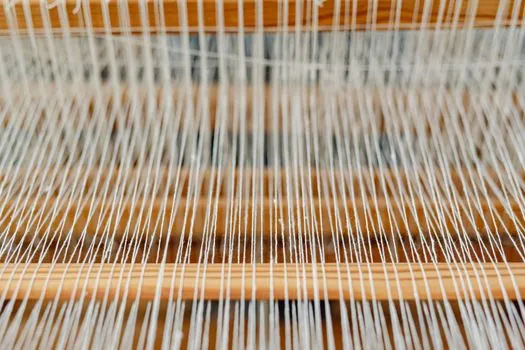
Both routes consume the same fiber families: standard-modulus T300 and T700, intermediate/high-modulus IM7, M46J, and M55J, in unidirectional tape, woven fabric, or stitched non-crimp fabric (NCF) formats [S4]. The difference is what holds the fiber stable: in prepreg, resin tack pins every ply in place during layup; in infusion, the dry fabric is mobile until the resin front arrives, which directly drives fiber waviness, thickness variation, and dry-spot risk [S4].
Prepreg resins are high-performance epoxies qualified against long aerospace databases with tightly defined cure windows; infusion resins are very low-viscosity systems optimized for vacuum-driven flow, sensitive to ambient temperature, mix ratio, and pump-down quality [S1][S4]. If a program needs traceability to existing allowables, prepreg is the safer pick; if the geometry outgrows autoclave capacity, infusion becomes the only practical pick [S4].
Equipment Reality and Capex Gap

A prepreg line needs cold storage, ply-cutting tables, clean layup rooms, vacuum bagging stations, and an autoclave or heated press capable of programmed ramp/soak cycles at 6–7 bar typical aerospace pressure [S4]. The autoclave alone is the single largest capex line item and is often shared across a region.
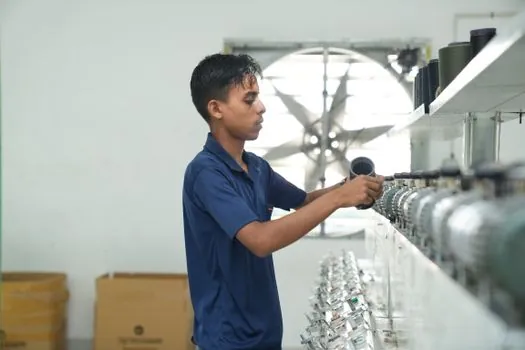
An infusion line needs a vacuum pump, resin trap, flow media, spiral tubing, a leak-checked mold, and temperature control limited to room-temperature or modest oven cure; a release film and peel ply complete the consumables set [S1][S2]. From a capex standpoint, infusion lines cost orders of magnitude less than autoclave-based prepreg lines, which is the structural reason wind blades, marine hulls, and many infrastructure parts default to infusion [S4].
Mechanical Performance: Where the Gap Sits
Autoclave prepreg remains the benchmark: fiber volume fraction regularly above 60%, void content under 1%, and repeatable stiffness and in-plane strength backed by coupon allowables [S4]. Wet layup and standard infusion produce laminates with higher void content and lower Vf, which translates into lower specific stiffness and knock-down factors for fatigue-driven design.
Resin infusion is not a single mechanical target though; VARTM with proper flow media, bleeders, and a well-designed inlet/outlet layout can push Vf into the mid-50s with single-digit void percentages, which is acceptable for most marine, wind, and many automotive structural parts [S1][S4]. The qualifier is always process control: resin viscosity, vacuum integrity, and ambient temperature at the moment of infusion decide whether a part lands in the middle of the allowable band or at the bottom of it.
Decision Matrix: Prepreg vs VARTM by Criterion
On fiber volume fraction, prepreg wins (above 60% vs mid-50s) [S4]. On capital cost, infusion wins (no autoclave, room-temperature cure available) [S1][S4]. On part size, infusion wins (only limited by mold and vacuum-bag geometry; prepreg is bounded by autoclave chamber diameter) [S4]. On aerospace qualification, prepreg wins (decades of allowables, frozen B-stage material, traceable cure cycles) [S4]. On cosmetic Class-A surface finish, prepreg wins because the B-stage resin produces smoother skin plies and tighter thickness control, while dry-fiber parts often need a gelcoat or secondary surfacing layer for show quality [S5].
For high-volume programs where the autoclave becomes the bottleneck, automotive and Tier-1 suppliers increasingly bridge the gap with press-cure prepreg or HP-RTM (high-pressure resin transfer molding) for cycle-time reduction, but those routes are not equivalent to autoclave prepreg on void content and Vf [S4][S5].
Typical Applications by Route
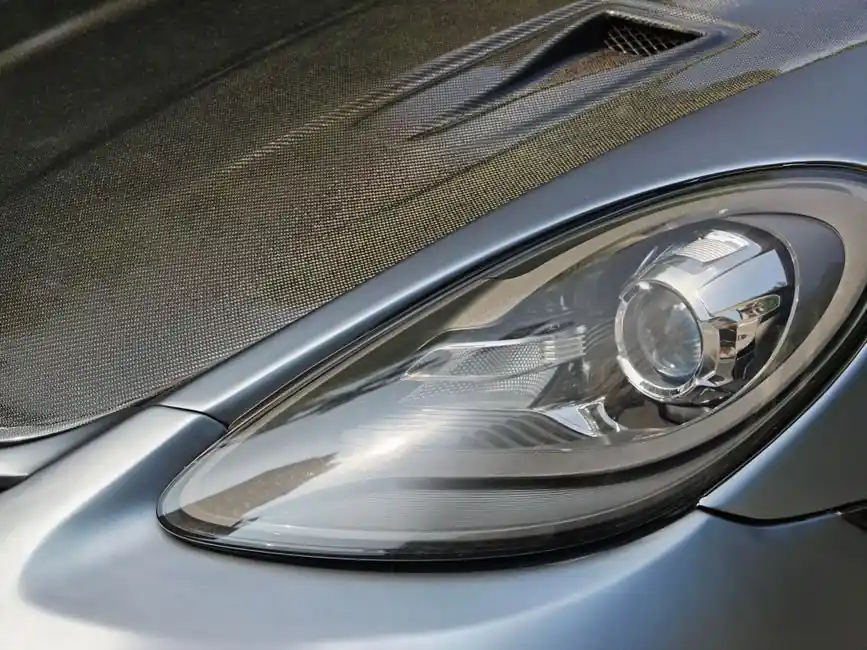
Prepreg is the default for aerospace primary and secondary structure, aircraft interiors and flooring, high-performance and luxury automotive body panels and chassis, and premium sports equipment where weight, stiffness, and cosmetic finish are paid for in material cost [S1][S3][S4]. The same is true of many wind turbine blade components where certified prepreg skins are specified, although the spar caps and root joints of large blades often shift to infusion for size reasons [S1].
Resin infusion dominates large marine structures (boat hulls and decks), wind blade shells, automotive body panels on non-luxury platforms, and bridge or architectural components where one-shot seamless construction outweighs the small mechanical knock-down versus prepreg [S1][S2]. The same line is used for aftermarket carbon fiber parts where tool cost and lead time are the controlling factors [S5]. For a deeper look at how carbon fiber reinforcement itself is selected before the resin route is even chosen, see the 3K vs 12K vs 24K tow selection guide.
Defects, Rework, and Inspection Reality
Prepreg defects show up as porosity, ply wrinkles, and B-stage advance if cold-chain discipline breaks, and most of them are caught by NDI (ultrasonic or thermographic scanning) of the cured laminate [S4]. Infusion defects look different: dry spots, race-tracking, and voids clustered at flow boundaries, where resin arrived too late to wet out the fabric before gelation [S1][S4].
Both routes respond to disciplined tooling, leak-checked vacuum bags, and calibrated thermocouples; the difference is that infusion failures are usually visible on the part after demold, while prepreg failures are usually hidden inside the laminate and require NDI to find [S1][S4]. For a YMYL-grade reference on how the resin system itself is selected upstream of either process, the epoxy curing temperature and time trade-off reference maps the cure-window side of the same decision.
Who Should Pick Which
Pick prepreg when the program is aerospace or safety-critical, when frozen allowables and traceable cure cycles are non-negotiable, when part size fits inside an autoclave, and when the customer is paying for Class-A finish and minimum weight [S1][S3][S4]. Pick resin infusion when part size exceeds autoclave capacity, when capex must stay low, when geometry is large and complex (boat hulls, wind blade shells, bridge decks), or when lead time and tooling cost dominate the business case [S1][S2][S4].
Hybrid programs (autoclave prepreg skins over an infusion-foam core, or prepreg patches locally reinforced onto an infused shell) are common in motorsport and high-end marine, and they explicitly trade the prepreg capex burden for the infusion geometry envelope [S4]. In every case, the resin system, fiber format, and cure cycle must be qualified together; swapping resin between the two routes without re-qualifying allowables is the most common source of field failures.
Track the next signal: large-tow (24K+) carbon fabric pricing and B-stage prepreg out-time allowances, both of which are moving as wind-energy tonnage scales and as automotive programs push for press-cure prepreg cycle times under 10 minutes; either shift will redraw the cost line that currently separates the two routes.