
SiroSilo carton erectors can form and seal boxes ranging from L/250mm × W/150mm × H/150mm to L/650mm × W/500mm × H/400mm.
BestPack lists carton erectors with throughput rates of up to 20, 15, and 6 cartons per minute.
Machine Purchase Price Range and Cost Per Carton
That purchase range is too broad to establish a universal cost per carton because machine capacity, automation level, box geometry, and sealing configuration materially change the operating result [S1][S3].
For an operating-cost comparison, divide the machine's purchase price, installation cost, annual maintenance, tape or adhesive consumption, and labor by the number of saleable cartons produced during the same period. A lower-cost machine can generate a higher cost per carton if it runs at 6 cartons per minute, while a higher-priced machine at 20 cartons per minute may recover its premium through output and reduced manual handling [S4].
The machine price must also be distinguished from the cost of the carton box itself. A pre-formed case requires no case erector but still consumes storage space for assembled cases, while a flat blank requires storage volume, machine time, and sealing consumables [S1][S4].
Pre-formed Cases Remove Forming Work but Add Logistics
Pre-formed cases arrive ready for loading, eliminating the blank pickup, case opening, erecting, bottom-flap folding, and bottom-sealing steps performed by a carton erecting machine [S1]. This makes pre-formed cases practical where case volume is low, labor is available, or upstream box assembly can be performed more efficiently.
Pre-forming cases can centralize assembly and reduce work at the filling station, but the assembled cases must be stored, transported, and replenished. Flat blanks occupy a different storage profile and can be loaded directly into an erector magazine [S1].
They replace manual assembly with capital equipment, utilities, maintenance, and machine-controlled forming. Pre-formed cases trade that equipment burden for higher logistics and labor requirements, making the economically correct option dependent on line volume and case format [S3][S5].
Throughput Separates Low-Cost and High-Cost Machines
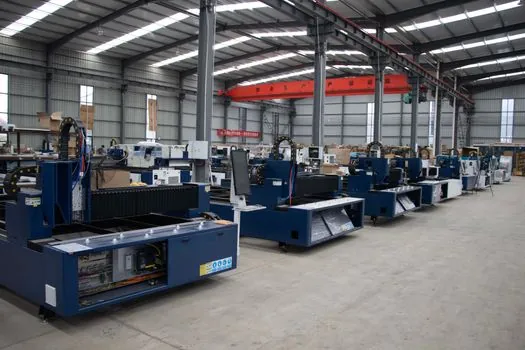
BestPack lists carton erectors with throughput rates of up to 20, 15, and 6 cartons per minute.
At an uninterrupted eight-hour shift, the theoretical maximum is 2,880 cartons at 6 cartons per minute, 7,200 at 15 cartons per minute, and 9,600 at 20 cartons per minute. These are rate ceilings, not guaranteed output, because loading, changeover, product availability, and stops reduce saleable output.
This spread changes the capital-cost calculation. The calculation excludes labor, energy, tape, maintenance, rejects, and downtime, so it illustrates capacity effects rather than actual unit economics [S1].
Speed must also be matched to the case packing machine downstream. A 50-carton-per-minute erector feeding a slower packing station creates work in process and does not improve finished-case output. Line balance matters more than the headline speed of the erector alone.
Automatic Versus Semi-automatic Erection
A case erector automatically opens and erects flat cardboard box blanks. The distinction changes both labor exposure and achievable consistency.
The equipment picks up the flat box blank, shapes it into a square, folds the bottom flaps, and seals those flaps with tape or glue. The available BestPack models also differ in features such as powered hopper, suction-cup handling, jam detection, quick changeover, and low-hopper detection [S4].
Case erectors are described as vital for businesses handling high volumes of products. The purchase decision should therefore use cost per saleable carton and labor minutes per carton, not merely machine speed or acquisition price [S3][S5].
Sealing and Failure Modes Set the Real Cost

An erector opens the blank, folds the bottom flaps, and seals them with tape or glue before the open-top case reaches product loading [S1]. Tape and adhesive therefore enter the operating-cost calculation, and the selected sealing method must be compatible with the corrugated material and expected case loads.
The CF-50T can process corrugated cases ranging from double-wall construction to recycled material [S2]. The cited SiroSilo range extends from 150 mm minimum length, 150 mm width, and 150 mm height to 650 mm maximum length, 500 mm width, and 400 mm height, with custom engineering offered outside that range [S1]. Matching a machine to those dimensional limits reduces changeover work, misfeeds, and unnecessary customization.
Jam detection and low-hopper detection are distinct control functions that can interrupt production when a case fails to form or supply falls short [S4]. If the line has no intermediate accumulation, a brief erector stop can stop downstream packing. Pre-formed cases avoid those machine-specific forming failures, but damaged or misshapen assembled cases can still disrupt loading.
Total Cost Comparison for Buyers
The principal cost drivers are machine price, customization, installation, production capacity, labor, sealing consumables, energy, maintenance, and changeover frequency [S1][S4]. Material choice also affects machine selection because double-wall corrugated and recycled cases are more demanding than a single-wall standard format for some forming and folding mechanisms [S2].
On a simplified eight-hour basis, a $3,000 machine has a gross capital allocation of $1.04 per carton at 6 cartons per minute, $0.42 at 15, $0.31 at 20, and $0.125 at 50. A $20,000 machine ranges from $6.94 at 6 cartons per minute to $0.83 at 50 cartons per minute. These figures use published speed ceilings and exclude utilization losses, so they are screening calculations rather than quotations [S1][S4].
For lower-volume operations, pre-formed cases can be the more economical choice because they avoid the capital requirement of an erector and the machine energy, maintenance, and jam exposure attached to it. For high-volume lines, an automatic erector may lower labor and increase throughput, but only when the erector can feed the downstream case packing machine without causing a bottleneck. The defensible purchase metric is total cost per saleable, sealed case over the intended shift and annual demand profile.
Before ordering, record the required case dimensions, wall material, sealing method, target output, labor availability, and downstream rate; then validate each candidate with a paid or production trial using the actual blanks [S1][S2][S4]. Track saleable cartons per labor hour, tape or adhesive per case, changeover minutes, and jam stops per shift, because those operating records expose errors hidden by the $3,000 to $20,000 purchase-price range [S1].