
A pattern number is the foundry's internal identifier for a specific mold design and is cast into the iron during pouring, not stamped afterward, with Wagner using a four-digit series such as 1058T for a No. 8 skillet and Griswold using three- or four-digit codes such as 704 for the same nominal size [S5].
Collectors routinely confuse pattern numbers, size numbers, heat numbers, and date marks, even though the four mark classes serve different masters: pattern = mold design, size = stove-eye/diameter class, heat number = melt traceability, and date = production run [S2][S3][S5].
What a Pattern Number Actually Identifies
A pattern number is assigned to a unique mold design at the foundry and stays with that design for its entire production life, which is why Wagner's 1058 series and Griswold's 704 series both describe No. 8 skillets but share no numerical relationship [S5]. The mark is raised or incised into the casting because it is physically part of the mold cavity; the location varies by foundry and era, with Wagner typically placing the four-digit number plus letter suffix on the skillet bottom near the handle, and Griswold placing a three- or four-digit code in the same handle-gate area [S5]. Pattern numbers are not date codes, not size numbers, not serial numbers, and not quality grades, and cross-referencing them between foundries is a common analytical error in the collector record [S5].
What a Heat Number Covers in Metallurgical Practice
A heat number, in industrial cast iron production, identifies a single furnace melt and links the finished casting back to a chemistry and mechanical test record, with austempered ductile iron (ADI), ductile iron (DI), and gray cast iron (GCI) all subject to melt-level traceability for tensile, elongation, and hardness conformance [S1]. Nodular graphite in DI and ADI is surrounded by acicular ferrite and carbon-saturated austenite forming an ausferritic matrix, and the nodule count directly governs toughness and machinability, so heat-level traceability is the practical mechanism that proves a melt met the specified ausferrite target [S1]. Because the mark lives on a piece for its service life, heat numbers are what foundries use to investigate field failures, not pattern numbers, which describe geometry rather than metallurgy.
Side-by-Side Comparison of the Four Mark Classes
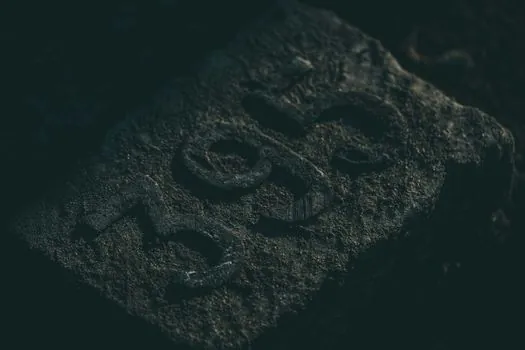
Reading the four common mark classes on a single casting against four decision criteria clarifies the confusion in one pass: pattern number vs size number vs heat number vs date mark, on what it identifies, where it sits, whether it is foundry-specific, and whether it is metallurgically meaningful [S2][S3][S5].
The pattern number identifies the mold design and sits cast into the bottom or handle area, with the mark being foundry-specific and carrying no metallurgical meaning [S5]. The size number (e.g., Wagner #8 = 8-7/8 inch bottom, Griswold #8 slightly wider) identifies the stove-eye class the pan was sold for and is also foundry-specific in exact dimensions, but is not a metallurgical mark [S2]. The heat number identifies the furnace melt and links the piece to a chemistry and mechanical test certificate, making it the only mark of the four that is metallurgically meaningful for failure analysis [S1]. A date or shift mark, when present, identifies the production period, with pre-20th-century pieces recognizable by a gate mark on the bottom and post-1973 Lodge pieces identifiable by the egg logo [S3].
Reading Marks Across the Major American Foundries
Wagner's pattern series runs 1050 through 1064 across sizes No. 0 through No. 14, with documented examples including 1053J (No. 3), 1055H (No. 5), 1056D and 1056V (No. 6), 1058T (No. 8), 1059D (No. 9), 1060A and 1060S (No. 10), 1062 (No. 12), 1063J (No. 13), and 1064 (No. 14), giving collectors a stable four-digit ladder to anchor dating against logo and bottom configuration [S5]. Griswold pieces typically carry a shorter three- or four-digit code with a letter suffix on many examples, and the SSC Ohio Foundry Directory documents pattern systems for confirmed Ohio makers beyond the two flagship brands [S5]. Where a piece carries no pattern mark, the absence itself is diagnostic: many unmarked pieces predate systematic numbering, and some foundries used letters only or skipped numbering entirely on certain product lines [S5].
Why Undersized Marks and Heat Rings Get Misread as Date Codes
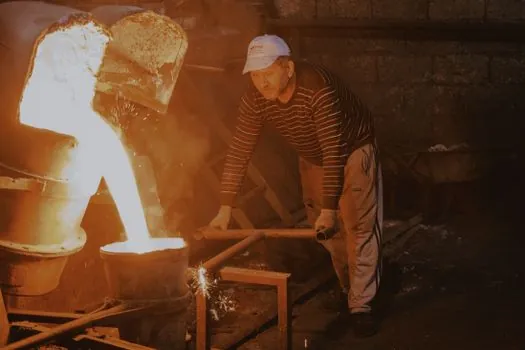
Heat rings, the rims protruding from the bottom circumference of most early cast iron pans, served as a seal against wood-stove eyes, as added stability for non-flat pan bottoms, and as a hot-spot reducer, which is why the largest pre-1920 American makers cast them as standard and why their presence is sometimes misread as a heat-numbering convention [S2]. Size marks were standardized against stove-eye openings rather than against a uniform diameter across foundries, so a 1924 Wagner #3 (5-1/2 inch bottom) and a 1918 Griswold #3 are not the same physical size, and a Martin #3 matches a Wagner #2 instead [S2]. Cast iron is also a relatively poor heat conductor compared to aluminum or copper, which is why the same piece will develop a distinct hot spot directly under a flame and a measurable temperature gradient toward the rim on a too-small burner, a behaviour that can be visualized with a flour-dust test and that has nothing to do with the foundry marks on the bottom [S4].
What a Heat Number Does and Does Not Tell a Collector
A heat number on a vintage piece is metallurgically informative but collector-neutral: it ties the casting to a single furnace pour, a recorded chemical analysis, and a mechanical test result, which matters for service-life failure analysis on ADI, DI, or GCI components but does not narrow the production date the way a pattern number cross-referenced against logo and bottom configuration does [S1][S5]. Foundries gate-mark older pieces, with a gate mark on the bottom signaling pre-20th-century methods per Lodge's identification guidance, while modern cast iron lines such as Lodge's egg-logo pieces are reliably placed after 1973 by logo alone [S3]. The practical rule for a collector or a process engineer: read the pattern number to identify the mold, read the size number to confirm the stove class, read the heat number to anchor metallurgical traceability, and read the logo to date the piece, with each mark doing exactly one job and no mark substituting for another [S2][S3][S5].
For reference work, three trackable signals in the next reporting cycle are worth monitoring: any ASTM E-frame update that revises heat-number recording rules for iron castings, the next quarterly Ohio Foundry Directory update from the SSC archive, and any new cross-reference between Wagner 1063J and Griswold 704 that the SSC No. 3 documentation is currently flagging as a number mismatch [S5]. Engineers specifying cast iron components for service should pull the heat-number certificate before pattern-number-based identification, and those working adjacent construction machinery and equipment lines should remember that pattern and heat marks on iron castings follow the same metallurgical practice as on structural components going into heat treatment furnaces.
This topic is covered further in ASTM D2000 FE and GE Callouts for Silicone: How to Read and Apply Them.