
Cast nickel alloys provide design flexibility for complex shapes and elevated-temperature components, while wrought nickel alloys generally provide more uniform mechanical properties and higher fatigue capability.
The choice depends on geometry, section thickness, thermal exposure, weldability, pressure integrity, and whether machining or forging is practical, not on a universal cast-versus-wrought property ranking.
Core Mechanical Property Differences
Cast nickel alloys are made to perform well while molten and during solidification, whereas wrought alloys are subsequently worked by rolling, forging, or extrusion [S7]. This production route changes grain structure, defect distribution, and the consistency of properties through a part.
Wrought material is usually the stronger choice for highly loaded shafts, fasteners, pressure parts, and fatigue-controlled structures. Cast nickel alloys are usually the stronger choice for intricate housings, turbine-related castings, valve bodies, and geometries that would require excessive machining or welding. Commercial nickel and nickel alloys span wrought and cast grades, but fewer casting grades are available, and both routes are often combined within one system [S4].
Do not compare a generic “cast nickel” with a generic “wrought nickel.” For a design decision, require the exact ASTM, ASME, SAE, or other applicable material designation, product form, delivery condition, heat-treatment condition, and minimum properties. The broad nickel alloy family includes wrought and cast compositions with nickel contents from 32.5% to 99.5% [S4].
Decision Matrix by Design Criterion
For a direct property comparison, use equivalent product forms and thicknesses. Compare room-temperature yield strength, tensile strength, elongation, reduction of area, fatigue strength, impact toughness, creep or stress-rupture data, and hardness from the applicable material specification, rather than comparing unreviewed catalog values. [S2]
Alloy Chemistry and Phase Control

Nickel alloys commonly use chromium and molybdenum to develop corrosion resistance and a broad range of mechanical characteristics [S3]. Chromium commonly supports protective Cr₂O₃ scale formation in elevated-temperature service, while molybdenum strengthens the matrix and improves localized-corrosion resistance [S2].
Wrought nickel-base superalloys for aerospace turbine applications employ 9–12 wt% chromium for oxidation resistance, 12–16 wt% cobalt to stabilize the face-centered cubic matrix, 4–6 wt% each of tungsten and molybdenum for creep resistance, and aluminum and titanium that precipitate as ordered L1₂-structured γ′ particles for Orowan strengthening [S2].
Boron additions of 0.003–0.10% can improve the high-temperature mechanical properties of certain wrought and cast nickel-base alloys [S6]. Castability and pressure tightness also influence the final composition: casting alloys commonly contain added silicon and manganese that are not present to the same level in wrought compositions [S4]. For material families other than cast iron, the relevant comparison remains shape-driven processing versus property-consistent working, not a simplistic assumption that every cast alloy is weaker.
Where Cast Nickel Alloy Fits Best
Cast nickel alloys are suited to intricate parts where near-net-shape forming reduces material removal and joining operations.
The mechanical penalty is not automatic, but it must be managed. Casting can introduce shrinkage cavities, gas porosity, inclusions, hot tears, coarse local grains, and section-to-section property variation. These defects are particularly damaging under cyclic loading because they become fatigue crack initiation sites. Design should therefore use smooth transitions, generous radii, uniform sections where practical, and machining allowance positioned so that highly stressed surfaces are inspected after finish machining.
Cast grades are a poor default for long slender shafts, threaded fasteners, thin pressure membranes, or parts with concentrated fatigue loading unless the casting supplier demonstrates defect control, specimen results, pressure-tightness capability, and an adequate fatigue-life basis.
Where Wrought Nickel Alloy Fits Best
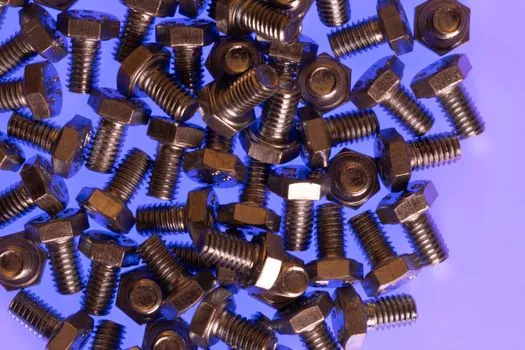
Wrought nickel alloys suit parts where section consistency, surface quality, weldability, fatigue strength, or pressure reliability outweigh the tooling and machining cost of converting billet or plate into the final shape. The working route breaks down and refines cast structure, making it a common route for demanding aerospace and energy components [S2].
One representative high-strength wrought composition contains 27.22% molybdenum, 4.73% iron, 0.47% chromium, 0.67% manganese, and 0.25% aluminum. It exhibits yield strength above 100 ksi (689 MPa), tensile strength above 120 ksi (827 MPa), and impact toughness greater than 90 ft·lb (122 J) at 0°C [S2]. These figures are alloy-specific, not a generic guarantee for all wrought nickel alloys.
Wrought sheet compositions are also tailored differently from turbine bar or forged disk compositions. Aluminum and titanium precipitate as ordered L1₂-structured γ′ (Ni₃(Al,Ti)) particles in wrought nickel-base superalloys, providing Orowan strengthening [S2]. For welded assemblies, the grade must be checked against the welding process and post-weld heat treatment rather than accepting a mill certificate alone.
Failure Modes and Procurement Controls
For cast components, specify requirements for radiographic or other nondestructive examination, pressure testing, repair limits, heat treatment records, and machining allowance. For wrought components, specify heat treatment, mechanical-test results, grain-size control where relevant, surface condition, and fatigue-critical surface finish. The distinction matters because cast quality assessment and wrought product certification examine different defect populations. [S4]
Excessive alloying can also create microstructural problems. Grade selection must therefore cover the complete service envelope, not only room-temperature tensile strength.
For procurement, do not mix designation systems. Wrought alloys are often sold under trade names such as Monel, Hastelloy, Inconel, and Incoloy, whereas cast alloys are commonly identified by Alloy Casting Institute and ASTM designations [S4]. Require the governing specification and revision, product form, dimensions, delivery condition, heat-treatment condition, supplementary requirements, and inspection document in the purchase specification.
Application Recommendations
Choose wrought nickel alloy for a fatigue-critical rotating shaft, a forged pressure part, a high-cycle spring, or a welded assembly that requires consistent section properties. Choose cast nickel alloy for a complicated turbine or pump housing, a valve body with internal passages, or a near-net-shape component whose surface machining can remove the cast skin and expose critical surfaces. [S4]
For mixed assemblies, use cast nickel where geometry and temperature dominate, and wrought nickel where load path, fatigue, or pressure integrity dominate. A qualified hybrid design can combine a cast body with wrought or machined critical features, but each material interface must be checked for thermal expansion, galvanic interaction, weldability, and property compatibility.
The practical selection record should contain four comparable fields: minimum mechanical properties at service temperature, corrosion or oxidation environment, fabrication route, and inspection method. That prevents a misleading comparison and lets the purchasing team trace every mechanical-property requirement to the exact grade and delivery condition.