
Wrought aluminum alloy provides higher tensile strength and ductility than cast aluminum alloy because mechanical working produces a finer, more uniform structure [S1][S5].
The comparison covers forming route, alloy designation, defect risk, geometry, cost, and application, with wrought alloys used for structural loads and cast alloys for complex or high-volume parts [S1][S2].
Strength Difference Comes From Processing Route
Cast aluminum is poured as molten metal into a die or pattern, while wrought aluminum is mechanically worked by rolling, extrusion, forging, stamping, bending, or drawing [S1][S3]. The distinction is fundamental: cast material solidifies directly in the mold, whereas wrought material is shaped in the solid state.
Wrought aluminum has the higher tensile strength [S1]. It also tends to retain more of the alloy’s mechanical properties through forming, while casting-related porosity and alloy segregation can reduce cast-part performance [S2]. This explains why wrought material is generally stronger, tougher, and more ductile than cast material [S5].
The strength comparison applies within the broader aluminum alloy family rather than across every possible grade. Alloy composition and temper still determine the final tensile strength, so “wrought” does not identify one fixed strength value.
Designation Systems Make the Categories Traceable
Wrought alloys use the Aluminum Association four-digit series without a decimal point, including 1XXX, 2XXX, 6XXX, and 7XXX families; examples include 1100, 6061, and 7075 [S5]. Wrought designation reflects the material system, while temper identifies its delivered condition.
Cast alloys also use four digits, but a decimal point separates the alloy number from the modification digit, producing designations such as 356.0, 319.0, and 707.0. When the final digit is zero, a cast alloy may be written with only three visible numbers, including the common A380 designation [S2][S5].
Heat treatment follows different routes within each family. Heat-treatable wrought alloys can receive additional strengthening through solution treatment and aging, while non-heat-treatable wrought alloys gain strength through strain hardening or cold working [S1]. Cast alloys may also be heat-treated, but the casting route can still leave porosity, segregation, or cracking risks that reduce useful section properties [S2].
Decision Matrix: Strength, Geometry, Cost, and Risk
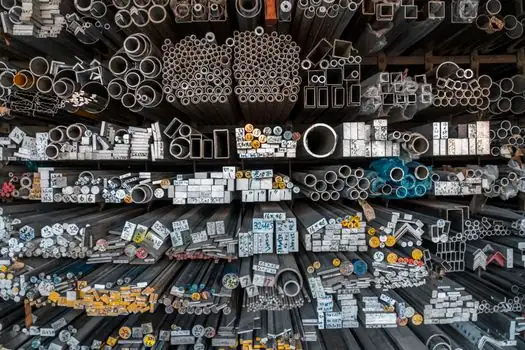
For tensile strength and ductility, wrought aluminum is the stronger option; mechanical working refines grain structure and produces more uniform properties [S5]. For complex geometry, casting is more practical because molten alloy can fill detailed molds and form near-net shapes [S3]. For production cost, cast aluminum is generally more economical, particularly when many identical parts are required [S5].
For defect control, wrought material is normally the cleaner route. Wrought alloys are usually comparatively free of internal and external casting defects, whereas cast alloys can contain porosity, segregation, shrinkage cavities, and heat cracks [S1][S2]. For shape and wall-size range, cast parts can be produced as thicker, heavier sections, while wrought products extend from bar and plate down to foil thickness [S1].
The practical selection rule is straightforward: specify wrought aluminum where load capacity, ductility, fatigue performance, or low defect risk controls the design; specify cast aluminum where geometry, production volume, and piece cost dominate. A casting that needs unusually high strength should still be compared by its specific grade and temper rather than accepted or rejected solely by process label.
Wrought Aluminum for Loaded Structures
Wrought aluminum is the stronger and more ductile family for structural and high-performance uses [S5]. Its mechanical working route supports aerospace structures, automotive frames, pressure vessels, and construction products, while 6061 is widely used for structural applications and 7075 for high-strength aerospace and defense work [S5].
Wrought products are also available as sheet, plate, bar, tube, extrusion, and forgings [S5]. This manufacturing freedom allows engineers to select a geometry that follows the load path, then use rolling, extrusion, forging, or drawing to achieve the required form. That combination of shape control and higher tensile strength favors wrought material for highly loaded components.
Cast alloys are generally not used in aircraft structures because their mechanical properties are inferior to those of wrought alloys [S6]. That restriction illustrates the consequence of material route in a safety-sensitive design: casting can still produce functional parts, but it does not automatically provide the same combination of strength, ductility, and defect control.
Cast Aluminum for Complex, High-Volume Parts
Cast aluminum is the practical choice when near-net geometry outweighs maximum tensile strength. Typical examples include engine blocks, transmission cases, housings, and decorative parts, with 319 selected for its machinability and A356 for corrosion resistance in wheel applications [S5]. These grades illustrate that cast alloys can be engineered for a specific service condition rather than used as generic low-strength material.
Casting routes include sand casting, die casting, permanent-mold casting, and investment casting [S5]. The process supports internal passages, irregular walls, and integrated features that would require multiple fabrication and assembly operations. It is also associated with lower cost for mass-produced complex shapes [S3][S5].
The trade-off is that cast aluminum has generally lower ductility and tensile strength, plus greater susceptibility to internal and external defects [S1][S3][S5]. Common risks include gas porosity, shrinkage, alloy segregation, and heat cracking, with hydrogen also identified as a concern in cast aluminum [S1]. These effects must be addressed through alloy selection, section design, mold and process control, heat treatment, and appropriate inspection.
Procurement Specifications Need More Than a Family Name
A purchasing specification should identify the alloy, product form, temper, dimensions, and governing material standard rather than order only “cast aluminum” or “wrought aluminum.” Wrought product examples include 6061 and 7075, while cast examples include 356.0, 319.0, 707.0, A356, and ADC12 [S2][S5]. Those designations allow supplier quotation and inspection against a defined material condition.
Inspection emphasis should differ with the route. Wrought material requires control of the specified temper, product dimensions, and surface condition. Cast material also requires attention to porosity, shrinkage, segregation, cracking, and other discontinuities that can reduce tensile performance [S1][S2]. For critical loaded parts, specifying minimum tensile strength, ductility, and defect acceptance criteria is more useful than relying on the family name alone.
Material standards should be selected from the exact alloy, product form, and application, then checked against the edition invoked by the drawing and procurement document. The research supports the engineering distinction between cast and wrought routes, but it does not provide a universal standard or revision date for either category, so none should be assumed.
Selection by Load and Production Priority
Choose wrought aluminum for primary load-bearing structures, thin sections, fatigue-sensitive parts, and applications requiring higher tensile strength or ductility. Choose cast aluminum for complex housings, engine or transmission components, and high-volume production where near-net forming reduces assembly work and piece cost [S2][S5].
Do not assume that changing from cast to wrought automatically solves a design problem. Geometry, wall thickness, joining method, corrosion exposure, temperature, and allowable defect size still require review. The strongest defensible selection is made from minimum mechanical properties, product form, production quantity, and inspection capability rather than process category alone.
For a specific structural comparison, 2024-T3 versus 7075-T6 alloy selection for airframe parts shows why wrought tempers must be evaluated against the loading mode. The next procurement checkpoint is the mill certificate: confirm the exact designation, temper, mechanical-property results, and product form before accepting either material route.