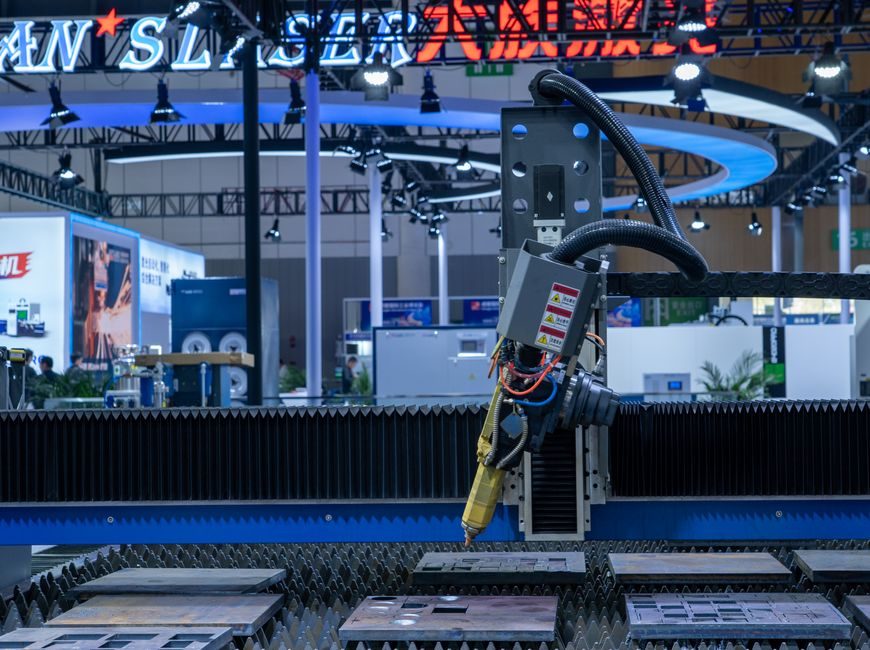
Cold chamber die casting machines are the workhorses for aluminum, magnesium and brass alloys, with clamping forces typically spanning 200 t to 900 t and shot weights from under 1 kg up to 20 kg per cycle, per Lanson IMM small-machine product line covering 200–500 t and the supplier's broader aluminum-die-casting catalogue [S1][S3].
Sourcing the right machine means matching four engineering numbers — projected area, alloy-specific injection pressure, shot weight, and tie-bar spacing — to the part, then layering in cycle, automation and safety spec. The buying map below pulls live 2026 supplier data to anchor each criterion.
What a Cold Chamber Machine Is and When It Is the Only Option
A cold chamber die casting machine feeds molten metal into the shot sleeve from an external ladle, then injects it through a gooseneck into a closed die under high pressure. The cold-chamber geometry is mandatory for alloys whose melting point and chemistry attack an immersed gooseneck — chiefly aluminum (660 °C pour), magnesium (650 °C) and copper-rich brasses (above 900 °C). [S1]
For zinc and low-melting leaded alloys under 420 °C, hot chamber die casting machines dominate because the metal stays inside a sealed gooseneck and cycle times drop into the 1–3 s range. If your alloy line is mixed, dual-line plants run both architectures — see the live Hot Chamber Die Casting Machine Suppliers: Sourcing Map and Spec Anchors article for the hot-side comparison.
Tonnage Sizing from Projected Area and Injection Pressure
Clamping tonnage must overcome the opening force generated by injected metal pressing on the die. Use the working formula: required clamp t = projected area (cm²) × specific injection pressure (MPa) × safety factor ÷ 10, with aluminum-specific pressures commonly 35–70 MPa and magnesium 30–50 MPa [S1].
Small-frame machines from 200 t to 500 t typically run shot weights of 1–4 kg and serve 3C, hardware and thin-wall structural parts; Lanson positions this band as its small-machine entry point [S3]. Mid-range 500 t to 800 t platforms handle 5–10 kg shots for transmission housings and large structural castings, while 900 t+ presses cover automotive front sub-frames, EV battery trays and large magnesium instrument panels, with hot-chamber peers topping out near 400 t [S4].
Shot Weight, Intensification and Plunger Diameter

Shot weight is the second hard number, and it is governed by plunger diameter, stroke, and the intensification ratio (typically 1:8 to 1:14 in modern cold-chamber presses). For a part with 3.5 kg finished mass, expect a 4.5–5.0 kg shot to keep biscuit and overflow tolerance, plus a plunger bore in the 60–80 mm range on a 500 t frame [S1][S3].
Specific shot pressure on the metal — the figure that drives fill, not the hydraulic line pressure — is what fills the cavity. Aluminum parts with wall thickness below 2.5 mm need 70–90 MPa metal pressure to avoid misruns, while 4 mm structural walls fill cleanly at 40–55 MPa. Longhua's "high quality casting of complex and large parts" claim is really a code for high intensification ratio and a stiff platen that holds platen parallelism across full clamp stroke [S6].
Cycle Time, Automation and Tie-Bar Spacing
Modern cold-chamber cells in 2026 run dry-cycle times of 8–14 s on 500 t presses and 12–22 s on 900 t presses, with the 8-second figure specifically claimed for Longhua rapid-prototyping cells [S6]. Die-spray robots, automatic ladling and extraction arms typically trim another 2–4 s per cycle once integrated.
Tie-bar spacing is the silent gating dimension. A 500 t press with 560 mm × 560 mm tie-bar clearance fits a die block up to roughly 700 mm wide, while 900 t presses commonly open to 900 mm × 900 mm or 1000 mm × 1000 mm. If you run a wide automotive panel die, the die-set width — not tonnage — is what rules a machine out, and the Lanson catalogue breaks models by both axes for that reason [S8].
Process Monitoring, Safety and Standards Anchor
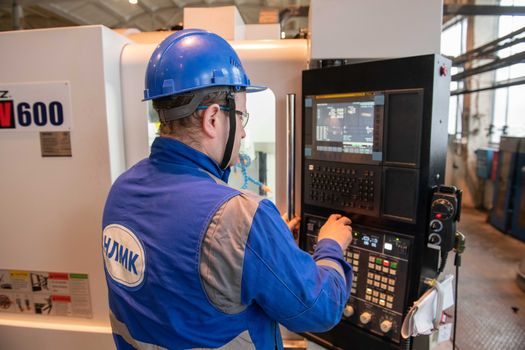
Process monitoring is no longer optional on premium cold-chamber cells. Permanent sensor stacks now ship as standard — Longhua's "permanent process monitoring via sensors" and "extensive security installations" are listed as built-in features rather than upgrades [S6]. Typical sensor suites include shot-end detection by hydraulic and position feedback, die-temperature mapping, and real-time intensification-ratio logging tied to part traceability.
Safety architecture typically follows EN 869 (die-casting machine safety) where European-spec machines are built, and CE conformity plus IEC 60204-1 electrical compliance are baseline for export cells from China-based OEM/ODM suppliers such as Taizhou Juda, registered 2009 and exporting die-casting machines, molds and injection-mould equipment [S7]. For the long-buying engineer, the spec to demand in writing is a documented shot-end repeatability within ±0.5 mm at the plunger.
Buyer-Side Comparison: Where Each Machine Class Fits
Line up the three common size classes against the four decision criteria that drive purchase: [S2]
• 200–500 t cold-chamber (small frame) — best for 1–4 kg shots, 3C and hardware, typical dry cycle 6–10 s, lowest capex, limited to thin-wall and small structural parts. Lanson positions this band explicitly for 3C and small-aluminum work [S1][S3].
• 500–800 t cold-chamber (mid frame) — best for 5–10 kg shots, transmission housings, EV motor shells, dry cycle 8–14 s with robotic spray, balanced capex and flexibility. Most OEM automotive tier-1 cells anchor here.
• 800 t+ cold-chamber (large frame) — best for 10–20 kg shots, automotive front sub-frames, large magnesium instrument-panel castings, dry cycle 12–22 s, requires reinforced factory floor and high-capacity ladling furnaces. Cold-chamber architecture is mandatory at this scale because hot-chamber plungers physically cannot survive the magnesium melt volume [S4].
Limitations and Sourcing Watch-Outs

Cold-chamber is the wrong choice for pure zinc-jewelry and toy hardware lines where cycle time dominates cost — that is hot-chamber territory. It is also the wrong choice for runs below roughly 5,000 parts/year on a 700 t+ press, because depreciation per shot becomes uncompetitive against gravity die casting or low-pressure casting for short batches. [S3]
On the supply side, the Alibaba supplier index for hot-chamber machines shows top-3 export markets concentrated in Africa (13%), Eastern Asia (10%) and South America (10%) for the listed China-based manufacturers [S4]; the cold-chamber equivalent skews more heavily toward Eastern Europe, Mexico and India for the larger tonnages. Independent supplier databases for used hot-chamber presses also confirm the spread of the technology, but buyers should still verify shot-end repeatability and platen-parallelism gauges on any secondhand unit before signing off [S5].
For 3C and high-mix low-volume work, Lanson's published industry-case data highlights how cold-chamber cells pair with vision inspection and downstream automation, and the same supplier's 200–500 t product family is the entry point for that segment [S2][S3].
Sourcing Map and What to Ask the OEM
The current China supplier cluster for cold-chamber presses sits in Guangdong (Foshan / Shunde — Lanson) and Zhejiang (Taizhou / Luqiao — Juda) [S1][S7], with Longhua operating as a further mid-frame OEM and exporter [S6]. All three ship internationally and offer model ranges covering 200 t to 900 t+.
Hard spec questions to put in the RFQ: (1) maximum and sustained specific shot pressure in MPa on the metal, (2) plunger diameter and intensification ratio, (3) tie-bar clearance and platen size, (4) shot-end repeatability in mm with documented test method, (5) standard list the machine is built to (EN 869 + CE + IEC 60204-1 baseline). Get those five numbers in writing, and the aluminum die casting machine selection narrows to two or three real candidates. For plants running vacuum die casting for high-integrity structural parts, add vacuum-chamber retrofit-ability to the RFQ as item six — not all frames accept a vacuum seal retrofit.
Trackable signals for the next buying cycle: 2026 Q3 supplier announcements on 900 t+ magnesium-ready cells, IEC 60204-1 safety updates flowing into export cells, and the spread of integrated shot-end monitoring as standard on the 200–500 t entry band. Plants evaluating magnesium die casting capacity expansion should watch how OEM intensification-ratio specs evolve on the 500 t frame, because that figure sets the floor on what the press can fill.