
Insulation board selection in a cold storage warehouse is a temperature-thickness-compression problem, not a brand problem: PUF and PIR sandwich panels dominate wall and ceiling envelopes, while extruded polystyrene (XPS) boards handle the load-bearing floor and roof assemblies [S1][S3].
Buyers working from a 2026 spec map start by locking the operating temperature band, then match panel thickness and core density to that band, and only then weigh fire class, vapor barrier behaviour, and total cost of ownership across a 20 to 30 year service life [S4][S5].
Temperature band dictates panel thickness and core density
Cold room sandwich panels are typically specified at 80 to 100 mm for chiller zones held at 2 to 8 degrees C, 100 to 150 mm for freezer zones at minus 18 to minus 25 degrees C, and 150 mm and above for blast freeze rooms operating at minus 30 to minus 40 degrees C [S1]. Chiller and freezer panel assemblies are almost always PUF or PIR foam cores bonded between two steel face sheets, with PIR chosen where fire resistance has to be demonstrated alongside thermal performance [S1][S7].
Foam density inside the sandwich is the second knob. Higher density foam raises the panel's R-value per millimetre and reduces thermal bridging at the steel face, but also increases the structural load on the building frame and the unit cost per square metre [S1][S4]. For a deeper look at how rigid foam boards compare across wall, roof, and floor applications, the broader insulation board selection spec map lays out the same temperature-versus-thickness logic in a commercial-building context.
XPS, EPS, and PIR on the floor: kPa, density, R-value per inch
Where the insulation board has to carry foot traffic, pallet jacks, or forklift wheels, the controlling spec is compressive strength in kPa, not R-value. Bulk buyers comparing rigid foam boards for cold storage floors and roofs typically work to these reference points: XPS at 150 to 500 kPa compressive strength and 28 to 45 kg per cubic metre density; EPS at lower compressive ratings and R-3.6 to R-3.8 per inch; PIR at R-6.0 to R-6.5 per inch but more sensitive to long-term moisture exposure [S3].
Cold storage floors under forklift traffic usually require 300 kPa or higher, while wall applications can often drop to 150 to 200 kPa, and XPS's closed-cell structure keeps water absorption low even under sustained hydrostatic pressure from a frozen sub-slab [S3]. For freezer floors with embedded underfloor heating to prevent frost heave, the same high-density XPS grade also acts as the thermal break between the heated slab and the frozen subgrade [S2][S3].
PUF vs PIR vs mineral wool: what the core does to fire, moisture, and weight

Three core families dominate the cold storage panel market: PUF, PIR, and rockwool (mineral wool), with glass wool used mainly for HVAC and acoustic linings rather than the building envelope [S1][S4]. PUF delivers the lowest thermal conductivity among mass-produced sandwich panels and is the default pick for most chiller and freezer rooms; PIR trades a small premium for improved fire performance; rockwool is specified only where non-combustible ratings are mandatory, accepting the weight and thickness penalty that comes with it [S4].
On moisture, PUF and PIR closed-cell foams resist water ingress, while rockwool and glass wool need a separate vapor barrier on the warm side to prevent condensation and frost accumulation inside the panel cavity [S2][S4]. The insulation board reference entry covers the closed-cell versus open-cell distinction in more detail, which matters when the same board is being evaluated for both wall and floor duty in a freezer.
Vapor barriers, underfloor heating, and the rest of the envelope
Insulation board selection does not stop at the board itself. Critical infrastructure elements that sit on top of the panel choice include a continuous vapor barrier to stop moisture infiltration, underfloor heating to prevent frost heave and slab cracking, dock seals and high-speed doors to limit warm-air ingress, and refrigeration systems sized to the actual heat load through the chosen envelope [S2].
Where the building envelope fails in service, the failure mode is usually condensation-driven: warm, humid air leaks past the panel joint, freezes inside the cavity, and then expands on the thaw cycle, degrading the seam over years [S2][S4]. Specifying tongue-and-groove panel edges, double-gasket joints, and a separate vapor barrier on the warm side of the wall is what converts a good R-value into a long service life, and it is the difference between an envelope that holds for 20 years and one that needs rework in under a decade [S2][S6].
Operational fit: what the warehouse is actually storing
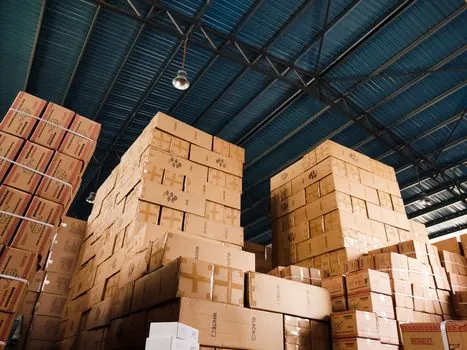
Panel thickness and core choice should be tied back to the product mix, not picked from a generic table. Fresh produce and dairy run at 34 to 40 degrees F (1.1 to 4.4 degrees C), frozen food at 0 degrees F (minus 17.8 degrees C) or below, and pharmaceutical storage may need ultra-low conditions, with each band pulling a different panel thickness and a different refrigeration sizing [S2].
Throughput also matters. A facility that runs 24 hours a day, 365 days a year pays back thicker, higher-density panels through lower compressor runtime, while a seasonal buffer store can justify thinner panels because the total energy bill is lower [S4]. The cold-chain handling context, including how storage racks and pallet handling equipment interact with the chosen envelope, is covered in the cold-chain pallet stacker spec map and applies just as much to the wall and floor spec.
Standards, sourcing, and what to confirm before a bulk PO
Two reference points anchor any 2026 cold storage board spec: confirm board density in kg per cubic metre, confirm compressive strength in kPa at 10 percent deflection, and confirm thickness in mm against the target temperature band, before talking to a factory-direct supplier rather than a distributor's generic data sheet [S3]. For sandwich panels, lock foam density, face steel gauge, and panel edge profile (tongue-and-groove with cam-lock or male-female) at the quote stage, since these are the variables that drive both thermal performance and install speed [S1][S7].
Trackable signals for the next buying cycle: PIR adoption is rising where fire-rated cold storage is required, and high-density XPS at 32 to 45 kg per cubic metre with 300 kPa+ compressive strength is becoming the default floor board under forklift aisles in new Indian cold-chain builds through 2026 [S3][S4]. The IIFIIR engineering reference remains the go-to design source for vapor barrier detailing, K-value selection, and condensation control on cold storage envelopes [S6].