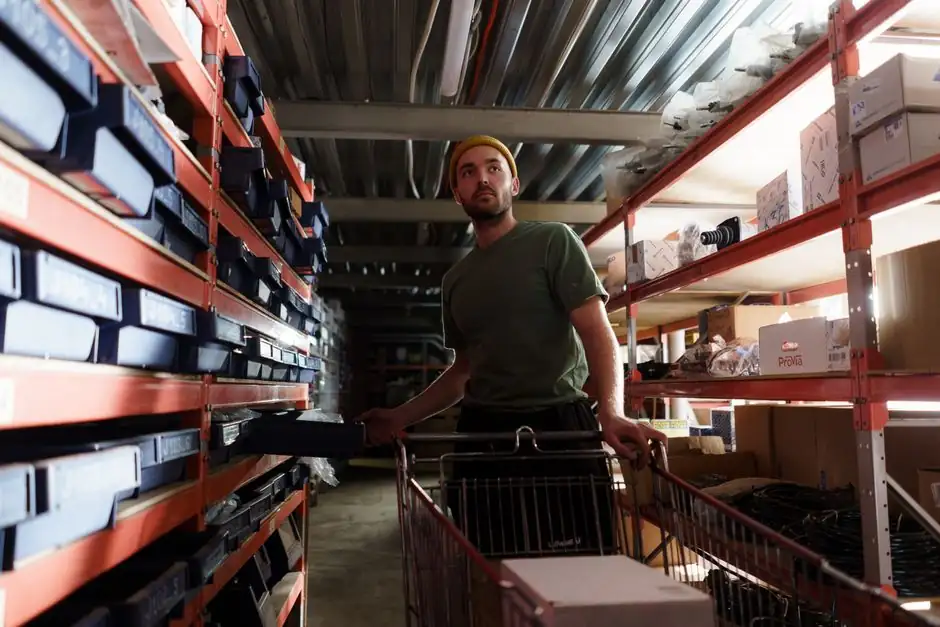
Numina Group reports that its RDS AMR Batchbot solution can empower operators to pick 350+ picks per hour.
The comparison covers picker-to-parts workflows where operators retrieve items while autonomous mobile robots transport totes, carts, or pallets, with throughput governed by team composition, robot speed, capacity, layout, and WMS performance [S2][S5].
Pick-rate comparison across the main operating models
Collaborative AMR picking can improve labor productivity by a meaningful multiple over walk-and-pick, while goods-to-person and AS/RS generally offer greater gains where their higher capital and fixed infrastructure are justified [S2].
Manual cart picking remains suitable for low-volume, irregular orders, constrained sites, and operations without a stable WMS foundation. Collaborative AMR picking fits mixed-SKU operations seeking incremental automation, while goods-to-person suits high-SKU, high-volume fulfillment and AS/RS suits pallet-heavy storage, cold storage, and manufacturing buffers [S2].
For module selection, compare conveyor, lift, and tugger functions against payload, tote geometry, floor conditions, and transfer height. The AMR top-module selection guide provides a useful engineering comparison before a fleet trial.
What determines the AMR pick-rate advantage
The reported 350+ picks per operator-hour depends on more than robot travel speed. The operator remains responsible for item retrieval, while the AMR handles transportation to the depot, so the measured result reflects the complete human-robot workflow [S1][S5].
Research on collaborative order picking identifies three coupled controls: batch size, assignment and sequencing of batches, and picker-robot routing. Its optimization model minimizes total tardiness, while numerical experiments show that team composition, AMR speed, AMR capacity, and warehouse layout all affect picking efficiency [S5].
Numina's RDS Batchbot AMR picking solution uses its Warehouse Execution Software to provide automated order release and pick-route navigation planning, while pick-by-voice commands and hands-free barcode scan validation support order picking.
Accuracy, utilization, and labor economics

Numina reports 99.9% pick-pack accuracy, productivity improvement of 40% to 70% or more, and labor-cost reduction of 50% or more for its RDS AMR Batchbot solution. These are supplier-reported results for a configured system, not universal performance guarantees.
Manual picking also carries operating costs beyond picker wages. Pickers push heavy carts through the warehouse, while the AMR model removes much of that transport work and reduces walking and fatigue [S4]. The wider business case should therefore compare cost per order, throughput per square metre, order accuracy, and cycle time, rather than relying on headcount reduction alone [S2].
A controlled pilot should record picks per operator-hour, order cycle time, picking accuracy, equipment utilization, and maintenance intervals. These five measures are recognized operational indicators for automated picking systems, and each exposes a different failure mode [S7].
Manual cart picking versus collaborative AMR
Manual cart picking has the lowest mechanical complexity and preserves flexible human judgement, but its capacity is bounded by cart payload, walking time, congestion, and picker fatigue [S4]. Collaborative AMR picking separates transport from retrieval, allowing a person to concentrate on item identification while robots move loads [S5].
Goods-to-person moves the picker to a fixed position and brings inventory to the worker. It can outperform collaborative AMR picking in dense, high-volume environments, but it carries greater capital intensity and less flexibility when the order profile changes [S2]. AS/RS provides high-density automated storage and retrieval, yet requires building height, slab capacity, longer implementation, and careful attention to single points of failure [S2].
Use collaborative AMR picking when mixed picking, incremental deployment, and moderate order-profile volatility dominate the decision. Retain manual cart picking for small or irregular operations unless its labor constraint becomes measurable. Select goods-to-person or AS/RS when stable high-volume flows justify dedicated infrastructure and a longer payback period [S2].
Where implementation gains can disappear
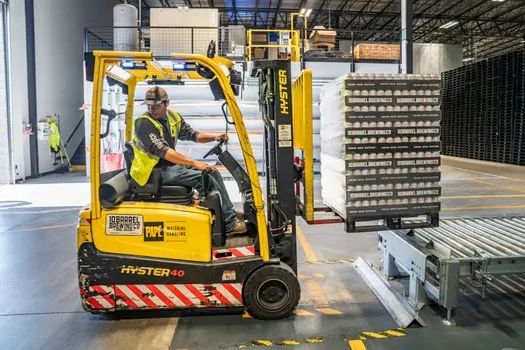
Weak floor geometry, incomplete Wi-Fi coverage, charging constraints, and poor WMS integration can prevent AMRs from reaching their rated performance. Numina's operating model assumes real-time order release, route planning, and tracking, so software integration is part of the production system rather than an accessory [S1][S2].
Order batching also creates a practical failure mode. Too many orders per robot tour can delay deliveries, while too few can waste robot capacity and increase fleet traffic. Due dates, item retrieval times, travel paths, and the number of human-robot pairs must be optimized together because faster AMR motion cannot correct poor batching or a congested layout [S5].
The AMR robot concept covers navigation and fleet roles, but validation must occur in the proposed warehouse. Grade traffic, measure walking paths, test battery and charging schedules, and run representative peak orders for at least the full shift before accepting a quoted pick rate.
Standards, evidence, and acceptance criteria
This decision compares documented operating claims and research findings rather than a single universal benchmark. The principal evidence includes a 2022 collaborative picking study, a 2023 picker-to-parts optimization study, a 2025 workflow comparison, a 2026 automation guide, and the supplier's AMR picking performance data [S1][S2][S4][S5][S7].
The 2022 study models order batching, batch assignment and sequencing, and picker-robot routing, with simulations comparing its proposed method against existing approaches. The 2023 study develops a mathematical optimization model for a picker-to-parts system involving pick-and-transport robots and order pickers, confirming that route and assignment decisions require system-level optimization [S3][S5].
For acceptance, specify measurable thresholds for picks per operator-hour, order cycle time, picking accuracy, robot utilization, charge availability, and maintenance interventions. Reconcile those tests with the baseline manual method using the same SKU mix, order profiles, staffing levels, and shift definitions; otherwise the comparison confounds automation with workload changes.
The next decision node is a representative shift trial: capture the manual baseline, configure AMR routes and batch rules, then compare labor hours, cost per order, accuracy, and utilization against the agreed thresholds [S1][S7].