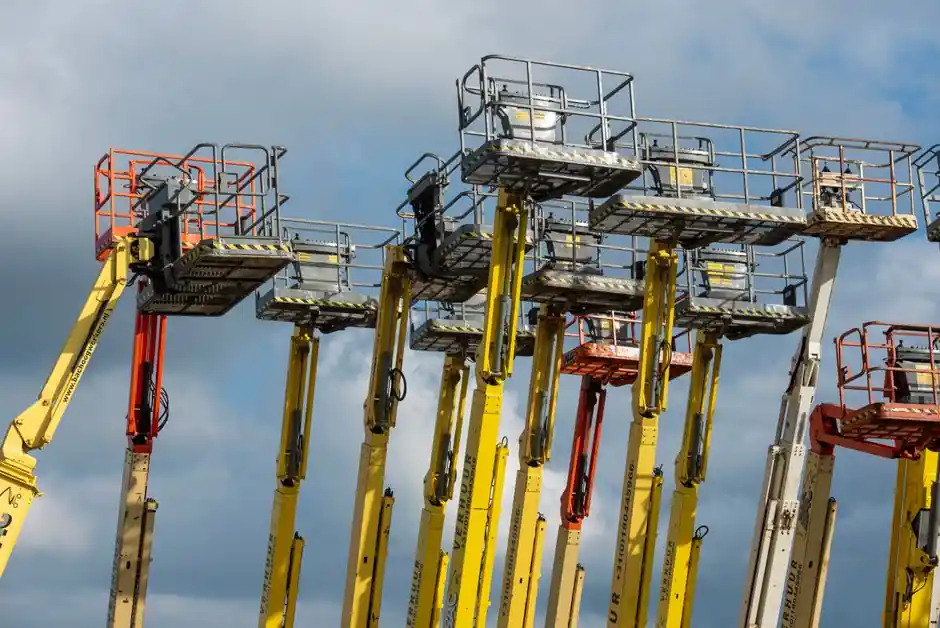
Boom pump trucks combine 30–63 m of placing-boom reach with output ratings of 85–200 m³/h, while line pumps move 20–90 m³/h through extended ground pipelines [S2][S3].
The practical choice depends on placement height, required delivery rate, access, and crew logistics: booms suit elevated and high-volume pours, while line pumps suit ground-level work in restricted spaces [S1][S4].
Boom and Line Pump Selection Criteria
A boom pump’s output and reach are separate specifications: a 30–61 m boom can place concrete at height or over obstacles, but the achieved rate still depends on the machine, pipeline layout, mix, and operating conditions [S3].
Published size bands list small booms below 90 ft at 80–130 yd³/h, mid-size booms at 90–120 ft and 100–170 yd³/h, and large booms above 120 ft at 150–200+ yd³/h. These are typical ranges, and boom configuration and setup conditions materially affect usable reach [S1].
For equipment context, a concrete pump truck includes the truck chassis, pumping system, hopper, hydraulic controls, outriggers, and articulated placing boom, whereas a truck-mounted concrete pump places the pumping unit on a carrier with a boom for remote placement [S2].
Output and Reach Compared
On output, compact trailer line pumps are listed at 15–30 yd³/h, mid-size truck-mounted line pumps at 25–50 yd³/h, and small boom pumps at 80–130 yd³/h. The line-pump comparison in metric terms gives 20–90 m³/h for line systems and 80–180 m³/h for boom systems [S1][S2].
On reach, the boom has a clear advantage. Published boom ranges span 30–61 m, 30–63 m, or 90–120+ ft depending on the source and configuration, whereas a line pump is constrained by the installed hose and pipeline route rather than a rigid placing arm [S1][S3][S4].
For access and setup, a line pump has the lower-profile arrangement and can pass through narrow lots, gates, alleys, or building openings. A boom pump needs sufficient space for the carrier, outriggers, boom deployment, and safe operator positioning, and it generally requires more setup before pumping [S1][S4].
For high-volume placement, the 85–200 m³/h boom-pump range is stronger than the 20–90 m³/h line-pump range. The comparison is categorical rather than a guarantee: delivery rate depends on pump capacity, pipeline resistance, concrete mix, pumping pressure, and crew coordination [S2][S3].
For long horizontal distribution, a line pump can remain competitive when additional pipe is acceptable. A trailer pump can handle horizontal runs above 300 ft, while a truck-mounted line pump provides longer horizontal capability; separate equipment specifications list up to 1,200 m horizontal reach for an HBT90 trailer-pump configuration [S1][S3].
Match Pump Type to the Pour
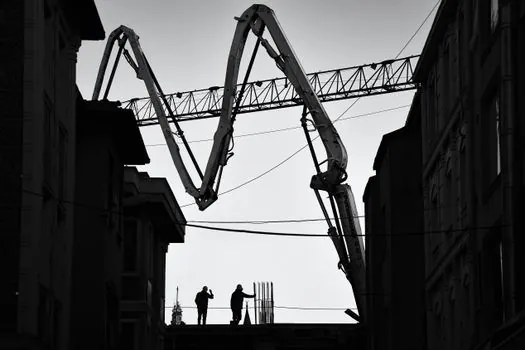
For a residential foundation, pool deck, driveway, sidewalk, or grout fill, a line pump is usually the lower-complexity choice when the placement remains at ground level. Typical volumes below 20 cubic yards and confined access favor the portable line-pump arrangement [S1].
For a commercial foundation, multi-story structure, elevated slab, bridge, or large industrial pour, select a boom pump when the concrete must cross obstacles or be placed above ground level. A 30–61 m boom range covers many foundation and elevated applications, while booms above 120 ft are intended for high-rise and infrastructure work [S1][S3].
For a high-rise, tunnel, or bridge project, review both the boom and line-pump alternatives against delivery distance rather than reach alone. Published examples include a 130 m vertical and 600 m horizontal range for a JBS50 mixer pump, up to 300 m vertical and 1,200 m horizontal for an HBT90 trailer pump, and 30–63 m placing booms [S3].
For mixed site access, a line pump can serve ground-level work while a boom handles the elevated or obstructed portion, but splitting the placement introduces equipment coordination, hose or pipeline routing, and crew-labor considerations that must be included in the pour plan [S1][S4].
Limits of Rated Performance
Rated output is not the same as sustained site output. Published specifications for boom pumps span 85–200 m³/h, while line pumps span 20–90 m³/h, but maximum aggregate size, pumping pressure, pipeline length, mix stiffness, and blockage risk all constrain usable delivery [S2][S3].
Aggregate size is a concrete selection criterion, not a boom-versus-line decision. Mixer pumps are listed with maximum aggregate sizes of 40–50 mm, and trailer and boom pumps at 40 mm; oversized aggregate can clog the pipeline, damage pumping components, and reduce efficiency [S3].
Pumping pressure also changes placement capability. Published examples include 10 MPa for a JBS40-10-82R mixer pump, 16 MPa for an HBTS80 electric trailer pump, and up to 10 MPa for large 52–61 m boom-pump models [S3]. Pressure must therefore be matched to the delivery distance and mix rather than inferred from boom reach alone.
Power and operating environment add another constraint. The cited equipment set lists diesel engines at 82–192 kW and electric motors at 37–110 kW; diesel equipment is suited to sites without stable electricity, while electric pumps require reliable power [S3].
Read Reach Charts and Pipeline Data

Reach charts should be treated as configuration data, not a single headline number. Typical boom classifications are based on reach in feet, but fold geometry, truck position, boom elevation, and setup conditions determine the usable working envelope [S1].
The fold arrangement also changes how a boom occupies the site. A technical comparison of Z-fold and roll-and-fold placing booms is relevant when the pumping envelope is constrained by obstructions, setup space, or vehicle staging.
Pipeline diameter belongs in the same review because it affects how the delivery system is assembled and how concrete moves through the line [S5]. Maintain a clear route from hopper to placement, provide adequate support and bends, and keep the pumping and delivery arrangement coordinated with the boom or hose operator.
Sources for Specification and Acceptance
For procurement, use model-specific boom charts and rated output rather than a generic class label. The cited equipment list gives concrete pump delivery rates of 30–200 m³/h, pumping distances of 120–1,200 m, and a 10–16 MPa range across representative diesel mixer, electric trailer, and large boom-pump models [S3].
Use a three-stage acceptance check: confirm required vertical and horizontal reach, match planned volume per hour to rated output, then verify access, outrigger space, pipeline route, aggregate size, power source, and operator coverage [S1][S3][S4].
Track two signals before rental or purchase: the maximum placement distance and elevation for the pour, and the required continuous placement rate after allowing for setup, pipeline changes, interruptions, and cleaning. The boom-versus-line decision is settled when those values, access constraints, and labor requirements can be placed on the same site plan [S5].