Industry News · Category

Construction Vehicles

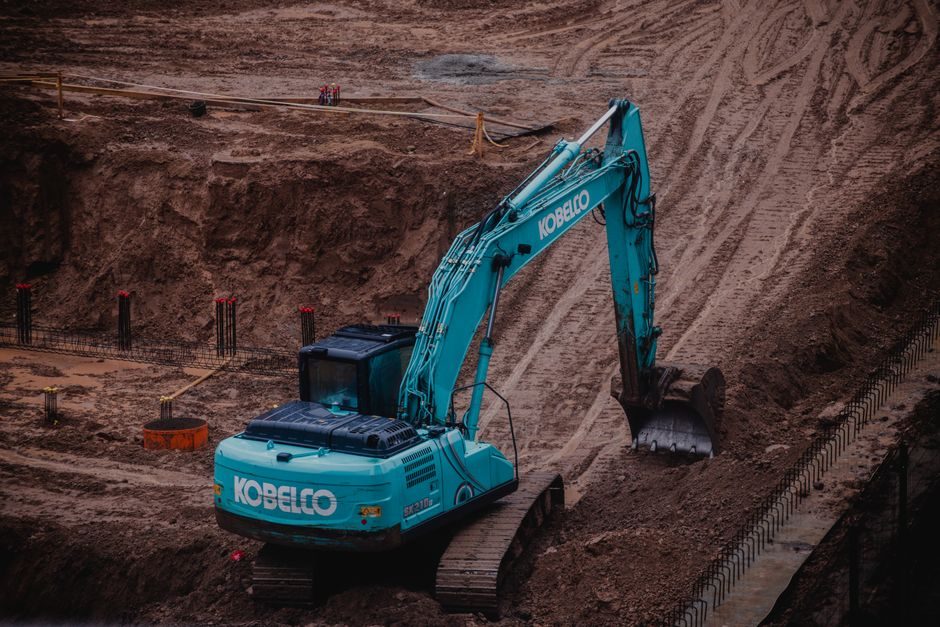
Excavator ground pressure: track width and weight calculation, 2026 spec map

Tracked excavator static ground pressure equals operating weight divided by total track footprint (2 × shoe width × tumbler-to-tumbler length), typically 35 to 80 kPa (5 to 12 psi) for 20-22 tonne machines. Track shoe width and contact length are the two levers that drop pressure for soft-ground wor

· CONSTRUCTION VEHICLES · 47 min read

Excavator bucket breakout vs arm crowd force: spec-by-spec comparison

Bucket breakout force and arm crowd force are two separate spec-sheet numbers under SAE J1179 and ISO 6015, with bucket force typically higher because of shorter leverage. Choose by job: bucket force for prying and breaking hard ground, arm force for sustained trenching. Always match standard and st

· CONSTRUCTION VEHICLES · 45 min read

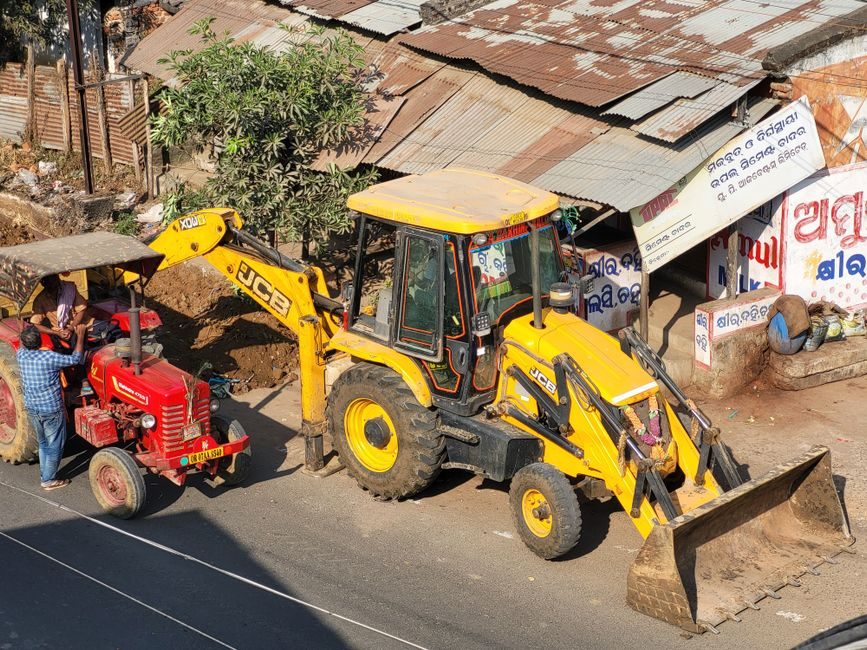
Equal-Wheel vs Unequal-Wheel Backhoe Loader: Selection Spec Map

Equal-wheel backhoe loaders use matched front and rear tyres, with the larger rear wheels giving higher tractive effort and lower ground pressure than unequal-wheel designs. Mismatched layouts keep the front bucket lighter and steering tighter, making them standard for urban utility work. Pick equal

· CONSTRUCTION VEHICLES · 38 min read

Enclosed Track Workstation Bridge Crane vs I-Beam Single Girder Crane

Enclosed track workstation bridge cranes suit light loads up to 2 tons with manual push force near 0.8 percent of suspended weight, while I-beam single girder cranes cover heavier capacities but cost more and almost always need motorization. The decision pivots on load, span, manual vs powered opera

· CONSTRUCTION VEHICLES · 45 min read

EN 16228 safety standard: 7-part scope for drilling and foundation equipment

EN 16228 (2014 + A1:2021 amendment) is the seven-part European harmonized safety standard for drilling and foundation equipment, covering common requirements, mobile rigs, HDD rigs, foundation equipment, diaphragm walling, jetting/grouting, and auxiliary attachments. Compliance is mandatory for CE m

· CONSTRUCTION VEHICLES · 65 min read

Ejector vs Tipping Body for Low Overhead: 2026 Spec Map

When overhead clearance is the binding constraint, ejector dump bodies win on safety and cycle time: a horizontal hydraulic push-out cycle takes about 19 seconds total versus ~19 seconds for a gravity raise/drop but with no vertical lift, no rollover risk on slopes, and no overhead-strike exposure.

· CONSTRUCTION VEHICLES · 36 min read

Tamper weight vs drop height: sizing energy per blow in dynamic compaction

Dynamic compaction energy per blow is the product of tamper weight and drop height (E=mgh). Field tampers typically weigh 6 to 25 tonnes and are dropped from 10 to 40 m, so a single blow can deliver roughly 0.6 to 9.8 MJ. Depth of improvement scales with the square root of that product, per Menard-t

· CONSTRUCTION VEHICLES · 51 min read

Duty cycle crawler cranes: dragline and clamshell spec map

Duty cycle crawler cranes for dragline and clamshell work span 30-300 tonne classes, with the Liebherr HS 8300.2 at 661,380 lb capacity and the SENNEBOGEN 630 E at 30 t for compact sites. Used Manitowoc 3900B lattice units remain available for legacy 100 USt dragline/clamshell conversion.

· CONSTRUCTION VEHICLES · 48 min read

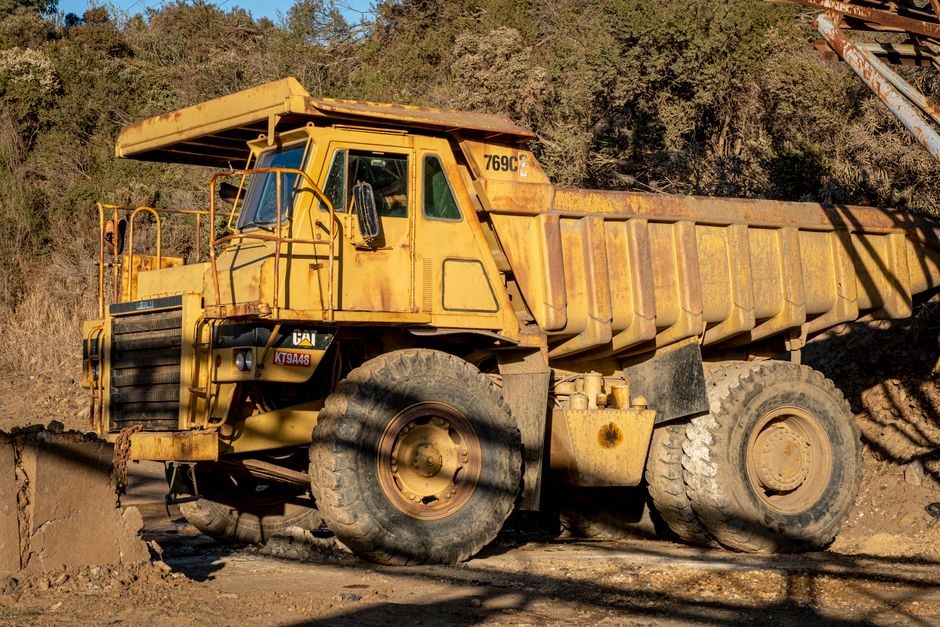
Dump Truck Payload vs GVWR vs Tare: A Spec-First Decision Map

Dump truck payload is not a separate rating, it is the arithmetic remainder of GVWR minus tare (empty/curb) weight, with Class 8 mining and highway dump trucks typically operating above 33,001 lb GVWR and payloads scaled to bed volume and material density.

· CONSTRUCTION VEHICLES · 40 min read

Dump Truck Models by Axle Count and Body Length: 2026 Spec Map

Single-axle dump trucks haul 6–8 tons at 20–22 ft overall length; tandem (10-wheeler) reaches 12–18 tons at 22–26 ft; tri-axle handles 18–25 tons at 24–28 ft; quad-axle and semi-trailer dumps extend to 30–40 tons and 30–45 ft. Axle count, wheelbase, and DOT bridge-formula spacing, not body length al

· CONSTRUCTION VEHICLES · 40 min read

Class 5 vs Class 7 Dump Truck Payload: GVWR Gap and Operating Consequences

A Class 5 dump truck (GVWR 16,001–19,500 lb) typically hauls roughly 5,000–8,000 lb of payload, while a Class 7 (GVWR 26,001–33,000 lb) moves 12,000–17,000 lb, a payload gap of roughly 7,000–10,000 lb driven by frame, axle, and brake upgrades.

· CONSTRUCTION VEHICLES · 43 min read

Dump Truck Box Dimensions vs Payload Capacity: 2026 Spec Guide

Dump truck payload spans 1 to 40 tons across single-axle pickups to semi-trailer end dumps, set by axle count, body volume, and DOT bridge-formula weight. Match body cubic yards to material density and legal GVWR, not the bed's geometric max.

· CONSTRUCTION VEHICLES · 43 min read

Dump Truck Bed Size by Axle Configuration: A Spec-First Sizing Chart

Dump truck bed size scales with axle count: single-axle bodies run 5-8 yd³ (6-8 tons), tandem 10-14 yd³ (12-18 tons), tri-axle 12-16 yd³ (18-25 tons), and semi-end dumps reach 18-26+ yd³ at 25-40 tons. Inside-bed length is the binding spec, not cubic yards alone.

· CONSTRUCTION VEHICLES · 37 min read

Tandem-Axle Dump Body: Standard Length, Width, and Side Height

A standard tandem-axle dump truck body runs 14 to 16 ft long, 96 to 102 in wide, with 48 in side height, yielding 10 to 16 cubic yards of struck volume and a legal payload of 12 to 16 tons of gravel or asphalt.

· CONSTRUCTION VEHICLES · 40 min read

Dry vs Slurry Rotary Drilling for Bored Piles: Field Decision Map

Dry rotary drilling (Kelly, above water table) suits stiff clays and stable ground with no support fluid, while slurry rotary drilling (bentonite or polymer) is required for loose, water-bearing strata and depths beyond roughly 30 m. Choice is governed by soil stability, groundwater, diameter, and s

· CONSTRUCTION VEHICLES · 37 min read

Crawler excavator track width and ground pressure specification

Crawler excavator track shoe widths span 600-900 mm on mid-size Cat machines, and ground pressure scales inversely with shoe width: a 330 with 600 mm shoes sits at 57 kPa versus 44 kPa on 800 mm shoes, all per OEM spec sheets.

· CONSTRUCTION VEHICLES · 53 min read

Crawler vs Truck Crane for Heavy Lift Foundation Work

For heavy lift foundation work above roughly 100 tons, crawler cranes deliver higher capacity at a given boom length thanks to lower ground pressure and no outrigger setup, while truck-mounted cranes win on road mobility, redeploy speed, and lower mobilisation cost on short-duration or multi-site fo

· CONSTRUCTION VEHICLES · 45 min read

Crawler Crane Track Frame: Fixed vs Removable Configuration

Fixed and removable track frame configurations on crawler cranes differ in transport width, on-site stability, and assembly time, with telescopic crawlers typically using hydraulic track extension (e.g., 3.28 m–4.80 m) while modular lattice-boom designs allow complete side-frame removal for over-the

· CONSTRUCTION VEHICLES · 44 min read

Crawler crane superstructure and undercarriage components: a 2026 reference

A crawler crane splits cleanly into a tracked lower works and a rotating upper works, joined by a single slewing bearing. The undercarriage carries track shoes, rollers, sprockets, idlers and travel motors, while the superstructure mounts the engine, lattice boom, winches, counterweight and operator

· CONSTRUCTION VEHICLES · 47 min read

Crawler Crane Size Classes: 50 to 3,000 Ton Capacity Map

Lattice-boom crawler cranes span 25-3,000+ t capacity, with mainstream 50-100 t models for general construction and 600-3,000 t units for wind, refinery, and modular lift work. Class boundaries align with boom length, transport envelope, and counterweight configuration rather than a single industry

· CONSTRUCTION VEHICLES · 36 min read

Reading a Crawler Crane Load Chart by Boom Length and Radius

A crawler crane load chart plots maximum lifting capacity as a function of working radius for each boom length, with separate curves or tables for jib and outrigger configurations. Operators read the radius (m or ft) horizontally and select the matching boom-length row to find the allowable load in

· CONSTRUCTION VEHICLES · 37 min read

Crawler crane haul road width: how track gauge, machine size, and transport envelopes

Crawler crane haul-road width scales with machine size: working roadways are typically sized at 2.5x to 3.5x the widest design vehicle, with 100 t units needing roughly 4 lowboy loads and 3,000 t super-lifts requiring 17+ loads on U.S./Canada routes capped at 2.6 m (8 ft 6 in) standard width.

· CONSTRUCTION VEHICLES · 46 min read

Crawler crane counterweight configuration for maximum lift capacity

Crawler crane counterweight configuration sets the practical lift ceiling, with 120 t carbody-style packages, Manitowoc VPC systems, and KOBELCO HL builds topping 3,000 t capacity. Match counterweight mass, radius, and VPC position to load chart, ground pressure, and transport limits.

· CONSTRUCTION VEHICLES · 45 min read

Crawler crane classification by lifting capacity and boom type

Crawler cranes span roughly 1–8 t mini units, 35–3,000 t heavy-lift models, and split into lattice-boom and telescopic-boom types, with lattice dominating above 300 t. Capacity is the primary classification axis, but boom architecture and outrigger/counterweight configuration drive on-site deploymen

· CONSTRUCTION VEHICLES · 41 min read

Behind-Cab vs Rear-Mount Crane: Spec-Driven Pick

Behind-cab and rear-mount placements for a truck-mounted crane change working geometry, deck length and axle reactions but not rated chart capacity, which is set by the OEM subframe and outrigger design. Pick the position by pickup/placement sectors, cargo workflow, and chassis ratings; treat the su

· CONSTRUCTION VEHICLES · 33 min read

Truck Crane Body Length and Crane Position Layout: Selection Spec Map

Service-truck crane body layout balances crane position (front vs rear, street-side vs curb-side), body length, and outrigger placement against foot-pound rating, with rear mount favoring capacity and front mount favoring stability. Typical service-body cranes span light electric 2,000-6,000 lb unit

· CONSTRUCTION VEHICLES · 37 min read

Continuous 360° Slewing vs Rack and Pinion on Loader Cranes

Continuous 360° slewing systems and rack-and-pinion slewing both rotate loader cranes, but integrated slew drives deliver lower failure rates (≈0.5 vs ≈2 events) and IP65/IP66 sealing, while rack-and-pinion remains the lower-cost, field-serviceable choice for high-torque articulated loader cranes ab

· CONSTRUCTION VEHICLES · 41 min read

Concrete Pump Truck Hinge Bend Pipe: Wear Mechanisms and Max-Life Replacement Specs

Concrete pump truck hinge bend pipes wear fastest at the outer radius where coarse aggregate is forced into the curve, so spec'ing a dual-layer Max-Life elbow (hardened inner wall, ductile outer shell) extends replacement intervals and cuts emergency stoppages on long-distance pours.

· CONSTRUCTION VEHICLES · 37 min read

PTO vs Auxiliary Engine Drum Drive on Concrete Mixer Trucks

A concrete mixer truck drum can be driven either by a PTO (or REPTO) tapping the truck's own engine through the transmission, or by a separate slave/auxiliary diesel engine of roughly 39-81 kW mounted on the mixer. PTO is lighter, cheaper to service, and uses one fuel source; auxiliary engines keep

· CONSTRUCTION VEHICLES · 38 min read

Concrete Mixer Truck Drum RPM: Mixing vs Agitation Specs

ASTM C94 specifies 70-100 revolutions at 12-18 RPM mixing speed for truck mixers, then drum rotation drops to 2-6 RPM agitation for transit; exceeding roughly 300 revolutions or 6 RPM agitation risks aggregate grinding, slump loss, and frictional heat buildup.

· CONSTRUCTION VEHICLES · 39 min read

8 m³ vs 12 m³ Concrete Mixer Truck: Drum Capacity Decision Map

An 8 m³ concrete mixer truck balances drum volume, chassis payload and urban maneuverability for general construction, while a 12 m³ truck moves ~50% more concrete per trip but hits gross-vehicle-weight limits and needs multi-axle chassis and stronger roads. The crossover point is roughly 9–10 m³; b

· CONSTRUCTION VEHICLES · 29 min read

Skid Steer vs Compact Wheel Loader for Tight Yards: 2026 Spec Decision

For tight yard work, a skid steer loader wins on footprint, zero-radius turning and attachment density; a compact wheel loader wins on cycle time, ground speed, ride quality and bucket-roll-back force. Choose skid steer under ~7 m corridor widths with frequent direction changes, compact wheel loader

· CONSTRUCTION VEHICLES · 50 min read

Compact 20-28 m Boom Pumps on 2-Axle Chassis: Spec, Reach, Output

Compact 20-28 m boom pumps on 2-axle chassis pair 4-section Z, RZ, or roll-fold booms with outputs of 60-96 m3/hr rod-side, 1,232-1,987 psi pressure, and 5-5.5 in delivery pipe, suiting urban and confined-site pours.

· CONSTRUCTION VEHICLES · 36 min read

Cold Planer Drum Cutting Depth and Width: A Specification Map

Cold planer drum cutting widths span 0.5 inch to 14 feet and cutting depths run from surface roughing up to 12 inches; attachment-class skid-steer planers land at 14-48 inches wide and 4.3-6.7 inches deep, gated by 12-50 GPM host hydraulics and 3,625-4,500 PSI relief settings.

· CONSTRUCTION VEHICLES · 41 min read

Cold Milling Machine Size Classes: Drum Width Tiers for Road Rehab

Cold milling machine size classes are defined by drum milling width: small (under 1 m), compact (1-2 m), half-lane (~2 m / 6-7 ft), and full-lane (3-4.4 m / 12-14.5 ft). Selection is driven by support truck capacity, transport weight limits, and target productivity, with 600-800 hp half-lane units d

· CONSTRUCTION VEHICLES · 36 min read

Cold Milling Machine Production Rate: Square Yards Per Hour by Class

Cold milling production rate spans 200 to 4,000+ square yards per hour depending on class, with 1.5-2 inch partial-depth milling averaging 1,200 SY/hr on mid-size compact machines and full-depth work dropping to 300-700 SY/hr.

· CONSTRUCTION VEHICLES · 38 min read

Cold Milling Machine Hourly Rental With Operator: 2026 Rate Map

A Wirtgen-class cold milling machine with operator rents for $150–$775 per hour in the U.S. private market and $550 per hour under Knox County IFB #3259. Daily wet rates span $2,000–$6,000, with minimum 4-hour billing and overtime at 1.5x past 8 hours.

· CONSTRUCTION VEHICLES · 41 min read

Cold Milling Pick Wear: Replacement Interval, Fuel KPI, and Toolholder Limits

Road milling carbide picks typically need replacement every 24 working hours or 7000 to 9000 m² under standard asphalt conditions, with abrasive heavy-cut jobs forcing changes as often as every 30 minutes; replacing at 15 to 20% fuel increase above baseline instead of 30 to 35% can cut fuel cost per

· CONSTRUCTION VEHICLES · 38 min read

CMAA 70 Service Class A to F for Gantry Cranes: Spec Selection Map

CMAA 70 service classes A through F map gantry crane usage from standby (2-5 lifts/hr) to continuous severe service (20+ lifts/hr at rated capacity). Class D and E are the most specified for heavy fabrication and scrap-yard work, while Class F is reserved for production-critical specialty cranes.

· CONSTRUCTION VEHICLES · 44 min read

Climbing vs Static Tower Crane Foundation: A Spec-by-Spec Decision Map

Climbing tower cranes transfer all vertical and overturning loads into the host building's floor slabs and bracing collars, so they need no standalone gravity foundation beyond a temporary base. Static (freestanding) tower cranes require a designed foundation or structural support plus a 1:500 plumb

· CONSTRUCTION VEHICLES · 35 min read

Skid Steer Chain Case Oil Level and Drive Chain Tension Check

Skid-steer chain-case oil level is checked with the machine level, fluid filled to the plug threads (11 L / 3 gal per side on John Deere units), while chain tension is verified by rotating each tire and accepting 0-6.35 mm (0-1/4 in.) tread movement before loosening the eight axle hub bolts for shim

· CONSTRUCTION VEHICLES · 37 min read

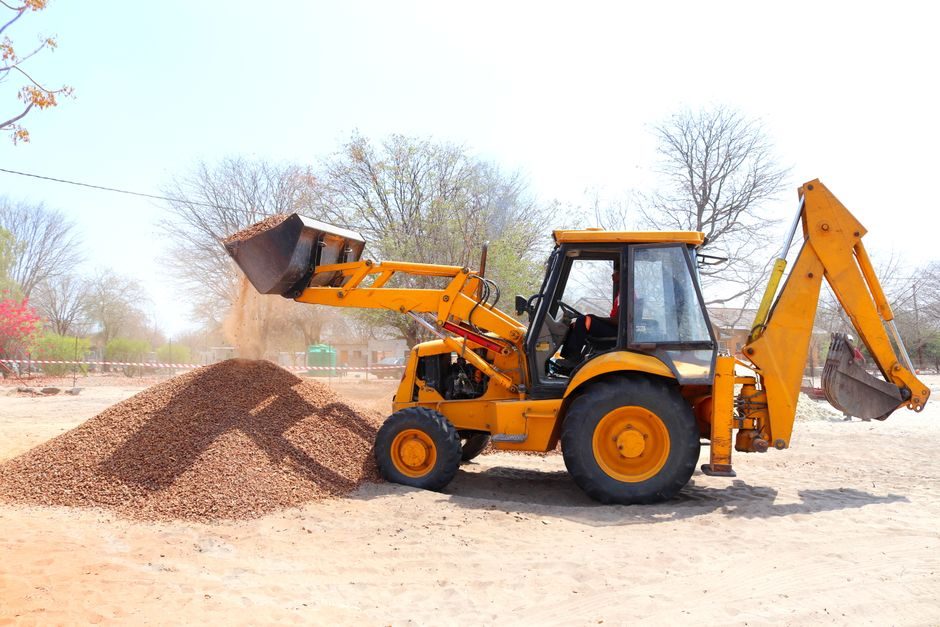
Center-Mount vs Side-Shift Backhoe Loader: Selection Map

Side-shift backhoes win tight European worksites and parallel trenching with a sliding boom and vertical stabilizers, while center-mount designs hold sway in North America for raw digging force and wider radial stabilizer stance. Both share the same tractor front half, so the real decision is worksi

· CONSTRUCTION VEHICLES · 43 min read

Class A vs Class B CDL for Dump Truck Drivers: 2026 Spec Map

For most U.S. dump-truck drivers in 2026, a Class B CDL is the correct license because single-unit dumps sit under 26,001 lb GVWR or pull trailers of 10,000 lb or less, per 49 CFR Part 383. Class A is only required when a tractor plus a dump trailer combination exceeds 26,001 lb GCWR with the towed

· CONSTRUCTION VEHICLES · 35 min read

Cast Hardened Elbow vs Fabricated Bend for Concrete Pump Lines

Cast hardened elbows and fabricated bends serve the same concrete pump line, but cast units win on wear life in high-abrasion service while fabricated bends win on geometry flexibility and lead time. Decision sits on mix abrasiveness, bend radius, angle availability, and whether the line is a fixed

· CONSTRUCTION VEHICLES · 42 min read

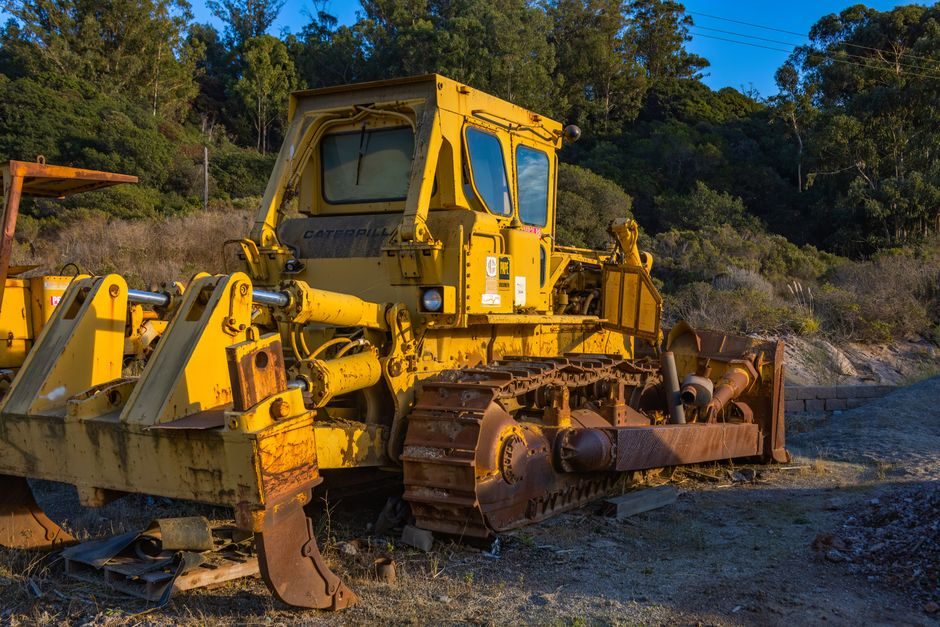
Can a Bulldozer Load Trucks Like a Payloader? Spec-Level Breakdown

A bulldozer can move and push dirt in the same yard as a wheel loader, but it cannot load a haul truck the way a payloader does: the dozer has no lifting arms, no bucket curl, and no high-dump clearance, so it needs an external aid to elevate material over a truck box.

· CONSTRUCTION VEHICLES · 38 min read

Cab-Over vs Conventional Cab Dump Truck: Spec Decision Map

Cab-over (COE) and conventional (bonneted) dump trucks split along operating environment: cab-overs give 15-20% tighter turning radius and up to 2 ft extra body length on the same wheelbase, while conventionals win on ride comfort, crash protection, and highway aerodynamics. Pick cab-over for urban

· CONSTRUCTION VEHICLES · 38 min read

Bridge Formula axle spacing for concrete mixer trucks: 427 in minimum and weight

U.S. federal Bridge Formula caps a single axle at 20,000 lb, a tandem (axles 40-96 in apart) at 34,000 lb, and gross vehicle weight at 80,000 lb, so most concrete mixer trucks need at least 427 in from front steer to rear booster axle to qualify for a 36 ft external bridge.

· CONSTRUCTION VEHICLES · 47 min read

ATEX Single Girder Crane: Hoist Spec and Zone Match

An ATEX explosion-proof hoist on a single girder crane must be specified as a system, not a retrofit: Ex d IIB/IIC T4 protection, 1-20 t capacity, and a Zone 1/2-matched gas group. Dual ATEX + IECEx certification is available from a single supplier.

· CONSTRUCTION VEHICLES · 41 min read

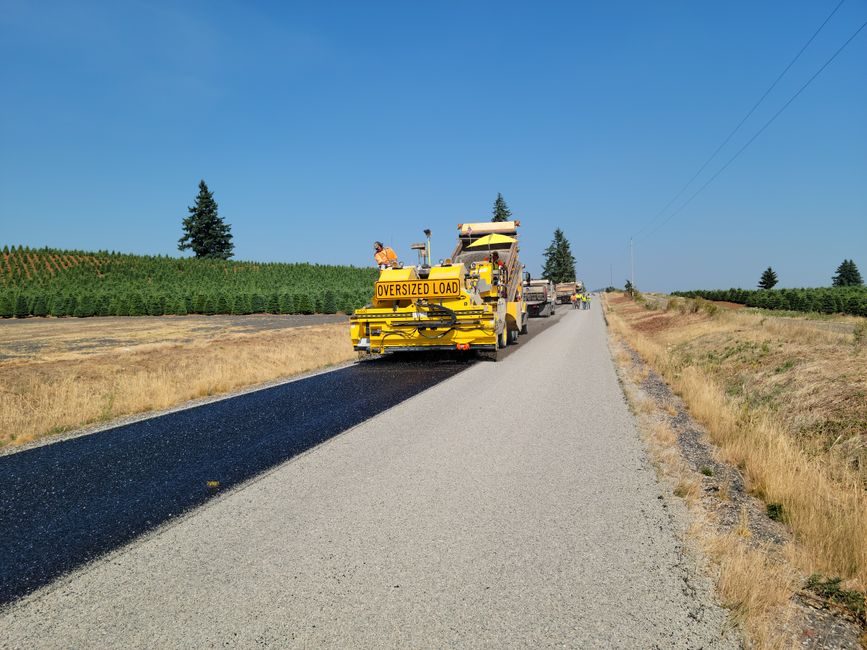
Screed Plate Temperature and Mat Density: Paver Heating Specs

Asphalt paver screed plate temperature must be held in the 250-350°F band during paving to prevent mat tearing, with rolling windows between 250-320°F, and screed pre-compaction sets the 85-95% density ceiling that rollers refine.

· CONSTRUCTION VEHICLES · 39 min read

Asphalt Paver Auger vs Screed: Function Split, Specs, and Selection

An asphalt paver splits work between two systems: the tractor's augers spread hot mix across the paving width, and the screed then compacts and levels that mix to thickness. Front-mount screeds retract faster than rear-mount units, and auger height is typically set 1 to 2 inches above the desired ma

· CONSTRUCTION VEHICLES · 51 min read

ASME B30.5 Mobile Crane Requirements: Scope, Inspection, and Rigger Rules

ASME B30.5-2025 governs mobile and locomotive cranes in the U.S., with Section 5-3 on operations and Section 5-2 on inspection carrying the binding test, inspection, and rigger rules. Key thresholds: a qualified rigger is required whenever a mobile crane over 2,000 lb capacity is at work, and wire r

· CONSTRUCTION VEHICLES · 47 min read

ASME B30.3-2025: Tower Crane Compliance Essentials

ASME B30.3-2025 governs construction and permanently mounted tower cranes, with a 60-month major inspection cycle, distinct personnel duties for owners, users, and operators, and a defined scope excluding mobile-crane tower attachments (B30.5) and self-erecting units (B30.29).

· CONSTRUCTION VEHICLES · 43 min read

ASME B30.27-2019 Inspection Schedule for Concrete Placing Booms

ASME B30.27-2019 governs manufacture, inspection, testing, and maintenance of trailer- and truck-mounted material placement systems, with mandated periodic inspections every 2,000 working hours or annually, increasing in frequency after 5 and 10 years of service.

· CONSTRUCTION VEHICLES · 45 min read

Articulated Crane Truck Folded Boom Transport Height: Spec Map

Articulated crane trucks with folded booms typically stow to 2.2–3.5 m transport height, well below standard 4.1–4.3 m bridge envelopes, but heavy knuckle models can still push overall vehicle height to 4.0 m and require route checks.

· CONSTRUCTION VEHICLES · 43 min read

ANSI/ITSDF B56.1-2020 forklift safety standard: design scope, OSHA cross-reference, and

ANSI/ITSDF B56.1-2020 (also published as ASME B56.1-2020) is the current US safety standard for low-lift and high-lift powered industrial trucks, governing design, operation, training, and maintenance. OSHA 29 CFR 1910.178 still incorporates the 2009 edition by reference, leaving a multi-year gap be

· CONSTRUCTION VEHICLES · 44 min read

75% Tipping Load Rule for Crawler Cranes: Spec-Level Breakdown

Crawler cranes without outrigger support are rated at 75% of the tipping load under California Title 8 §4923, embedding a 25% stability margin into every published load chart for boom-type mobile cranes.

· CONSTRUCTION VEHICLES · 40 min read

42 m vs 55 m Truck-Mounted Concrete Boom Pump: Reach, Output, Site Fit

A 42 m truck-mounted boom pump delivers roughly 138 ft of vertical and 124 ft of horizontal reach for mid-rise decks; a 55 m unit extends to 178 ft vertical and 166 ft horizontal, suiting high-rise and deep-footprint commercial pours. Choose by site geometry, outrigger space, and pipeline size rathe

· CONSTRUCTION VEHICLES · 36 min read

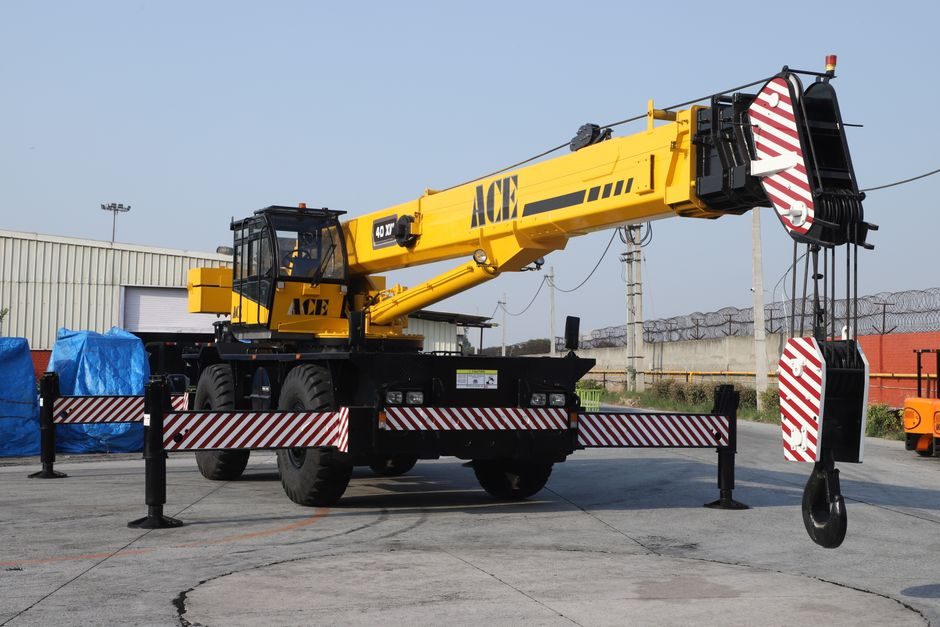
40-Ton Truck Crane: Road Weight, GVWR, and Axle Count Specs

A 40-ton truck crane typically rides on a 3- or 4-axle carrier at a gross vehicle weight of 58,000-80,000 lb; U.S. Interstate limits cap single axles at 20,000 lb and tandems at 34,000 lb, with bridge formula kicks in above 73,271 lb.

· CONSTRUCTION VEHICLES · 38 min read

40 Ton Truck Crane: Maximum Lifting Capacity and Working Radius Explained

A 40 ton truck crane reaches its 40 t (80,000 lb) nameplate only at the minimum rated working radius, typically 3 m, and capacity drops sharply with boom extension. Sany SPC400E holds 40 t at 3 m radius but falls to roughly 4.9 t at 28.5 m on a 33 m boom, per OEM charts.

· CONSTRUCTION VEHICLES · 37 min read

4-in-1 vs Standard Bucket on a Backhoe Loader: Spec-Driven Pick

A 4-in-1 bucket replaces four attachments (loader, dozer, clamshell grab, scraper) on a backhoe loader but adds 100-300 kg of tare weight and requires a second hydraulic circuit; a standard bucket is the correct pick when the work cycle is bulk truck-loading, and the 4-in-1 wins on mixed demo, brush

· CONSTRUCTION VEHICLES · 45 min read

3,000 lb vs 5,000 lb vs 15,000 lb Forklift Capacity: 2026 Spec Comparison

A 5,000 lb nameplate at a 24 in load center is the workhorse of general warehousing; 3,000 lb electric models cover light indoor pallets and narrow aisles, while 15,000 lb IC pneumatic trucks are the entry point for steel, lumber, and heavy outdoor loads. Choose by your heaviest real load, the load

· CONSTRUCTION VEHICLES · 44 min read

2-Fall vs 4-Fall Reeving on a Tower Crane Trolley: Capacity, Speed, Headroom

On a tower crane trolley, 2-fall reeving gives roughly double hook speed with half the line pull of a 4-fall block; 4-fall reeving doubles the mechanical advantage and lifts about 1.5–2x heavier loads at half the hook speed. Pick 2-fall for low headroom and frequent light cycles, 4-fall for heavy li

· CONSTRUCTION VEHICLES · 38 min read

Single Girder Crane Specs for Pipeline Construction Sites

Single girder overhead cranes for pipeline construction sites typically span 5–20 m, lift 5–15 ton under CMAA Class C/D, and need explosion-protected hoists near hydrostatic test beds. Specifying runway span, headroom, and duty class first prevents cost overruns on spool handling.

· CONSTRUCTION VEHICLES · 48 min read

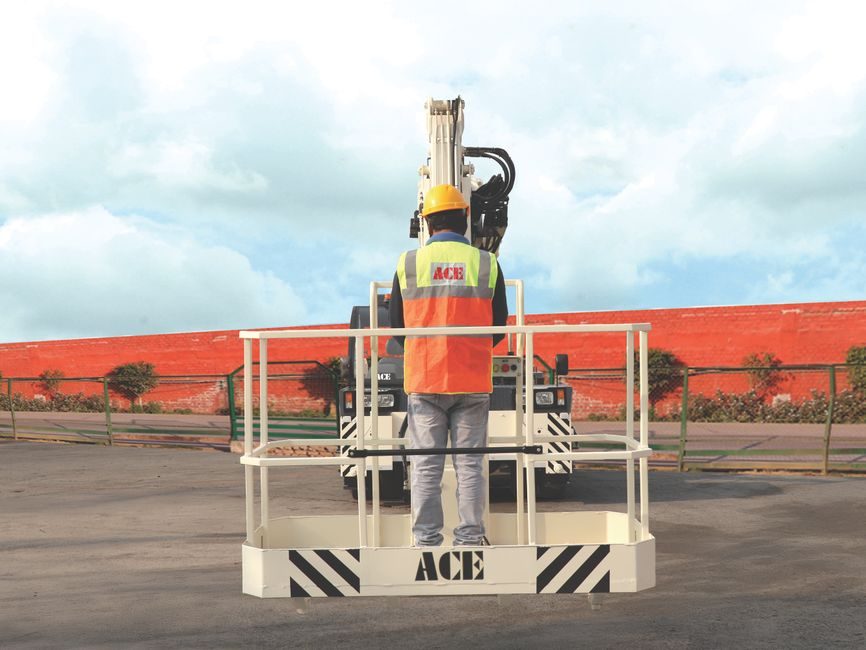
How Aerial Work Platforms Lift, Steer, and Stay Safe: A Working-Principle Breakdown

An aerial work platform (AWP) is a mechanized, mobile lift that elevates workers, tools, and materials to height, driven hydraulically or electrically. The main categories are scissor lifts, articulating and telescopic boom lifts, vertical mast lifts, and tracked spider lifts, each governed by stand

· CONSTRUCTION VEHICLES · 49 min read

Tunneling Skid Steer Maintenance: Daily Checks, Interlock Safety, and Contamination

Tunneling duty cycles expose skid-steer loaders to fine dust, water ingress, and confined-space heat, so maintenance must be tightened to daily fluid/filter checks, sealed-cab filter service, and rigorous interlock verification. With 100 OSHA-recorded skid-steer accidents between 1997 and 2007 linke

· CONSTRUCTION VEHICLES · 35 min read

Truck Crane Failure Modes: Root Causes and Prevention Specs

Truck crane failure modes cluster around boom collapse, two-blocking, hydraulic system failure, outrigger/ground failure, and rigging loss. Prevention hinges on OSHA 1910.180/1926.1400-series compliance, daily inspections, rated-capacity limiters, and operator certification.

· CONSTRUCTION VEHICLES · 37 min read

Diaphragm wall grab specs for hard-ground and quarrying cuts

Diaphragm wall grabs for quarrying-class ground excavate 2,400-3,800 mm panel lengths and 600-1,500 mm widths on 145 t carriers, with grapnel weights around 15-25 t for hard-rock impact. Selection turns on ground hardness, trench depth, and headroom, not bucket size alone.

· CONSTRUCTION VEHICLES · 34 min read

Truck Crane Spare Parts: Spec-Driven Selection and Replacement Guide

Truck crane spare parts divide into five mechanical/electrical sub-systems (lifting, traveling, driving, braking, electrical), with wire rope on a 6-12 month cycle, brake pads 1-2 years, wheels 2-5 years, and sheaves 2-4 years. Spec the part to OEM load class, duty cycle, and rail profile first; pri

· CONSTRUCTION VEHICLES · 31 min read

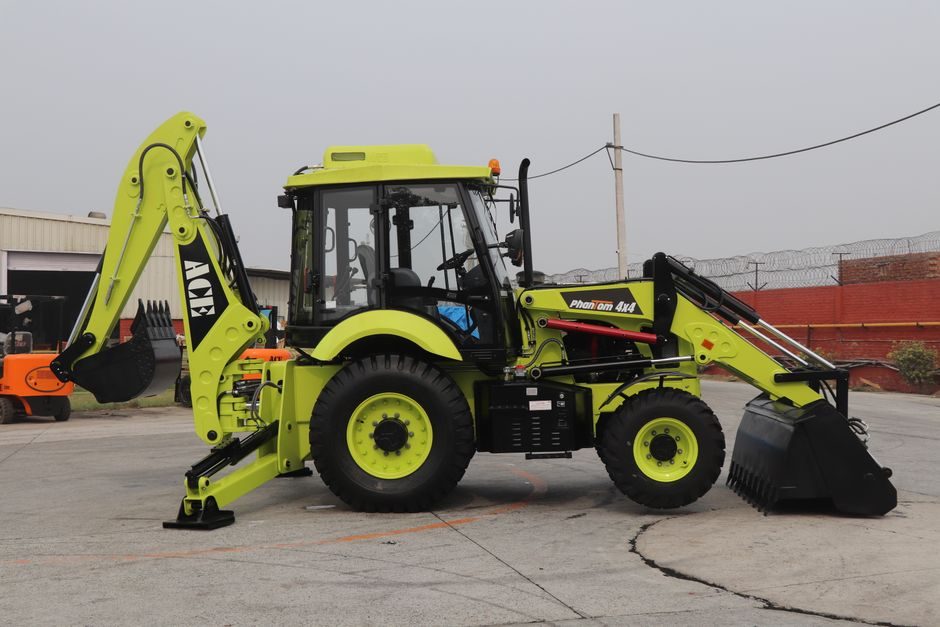
Backhoe Loader Working Principle: Hydraulic Flow, Spool Valves, and One Engine Driving

A backhoe loader is one engine, one chassis, and one hydraulic pump driving both a front loader bucket and a rear backhoe arm via spool-valve-controlled double-acting hydraulic cylinders. Operating weights span 4,000–24,000 lb, dig depths 8–20 ft, and lift capacity 1,500–13,000 lb, with 70–100 hp di

· CONSTRUCTION VEHICLES · 38 min read

Truck Crane Inspection Checklist: Tiers, Hold Points, and Failure Traps

A truck crane inspection checklist covers post-assembly, each-shift, monthly, quarterly, and annual tiers under OSHA 1926.1412, with documented hold points for boom, wire rope, outriggers, anti-two-block, LMI, hooks, and ground conditions. Programs using CMMS tracking catch recurring defects before

· CONSTRUCTION VEHICLES · 43 min read

Quarry Excavator Specs: Power, Bucket, and Dig Reach by Size Class

For quarrying, a 50-250 tonne hydraulic excavator with 300-1,500 HP engine power, bucket capacity of 12-22 m³, and dig depth exceeding 40 ft is the standard specification. Machine selection depends on rock hardness, face height, and truck match.

· CONSTRUCTION VEHICLES · 38 min read

Truck Crane Testing and Commissioning Procedure: Field Reference

Truck crane commissioning follows a fixed three-step sequence: no-load trial, static load test at 125% of rated capacity, and dynamic (movement) load test, gated by pre-test mechanical and electrical inspection per OSHA, CMAA, and ASME B30.2.

· CONSTRUCTION VEHICLES · 27 min read

Truck Crane Safety: Pre-Lift Checks, Setup Rules, and Operator Standards

Truck crane safety requires a four-stage discipline: pre-trip inspection, site setup, lift planning, and operator certification. The US Bureau of Labor Statistics recorded 487 crane-related fatalities between 2011 and 2022, roughly 41 per year, and crane incidents account for about a third of constr

· CONSTRUCTION VEHICLES · 38 min read

Telehandler Selection Guide: Capacity, Reach, Powertrain and Attachment Gates

Telehandler selection is a four-axis decision: lift capacity (typically 2.5–4.5 t), lift height (6–17 m), powertrain (diesel / electric / hybrid), and chassis class (fixed / pivot-steer / rotating). The HSE agricultural-machinery guide and JLG / Genie 2026 product releases give the boundary numbers

· CONSTRUCTION VEHICLES · 45 min read

Overhead Bridge Crane: Spec-Driven Pros, Cons, and Selection Logic

An overhead bridge crane delivers high lifting capacity and 3-axis coverage inside a fixed building envelope, but ties the user to a dedicated runway, a heavier building structure, and higher upfront civil cost than a mobile or gantry alternative.

· CONSTRUCTION VEHICLES · 33 min read

AGV selection guide: load, guidance, duty cycle and safety gates

AGV selection is dominated by six decision variables — load capacity, travel speed, guidance type, turning radius, battery duty cycle, and safety class — applied through a weighted multi-attribute method. This guide maps each variable to a verifiable spec and a 2026 sourcing path.

· CONSTRUCTION VEHICLES · 33 min read

Asphalt Paver Selection: Width, Class and Screed Specs Decided First

Asphalt paver selection hinges on paving width, laydown rate, and project class: wheeled pavers serve 1.8-6 m urban lots, tracked pavers handle 6-13 m highway work, and slope/variable-width screeds drive 70-80% of total cost. Match class to project or overspend by 30-50%.

· CONSTRUCTION VEHICLES · 41 min read

Landfill Road Roller Selection: Padfoot Drums, 4-Wheel Articulation, Spec Map

Landfill compactor selection is dominated by 4-corner articulated landfill compactors in the 20-36 t class with padfoot drums and full enclosed cabs; smooth-drum road rollers are the wrong tool past 600 mm lift. Spare-part and roller bearing logistics through Chinese OEM channels remain a key sourci

· CONSTRUCTION VEHICLES · 42 min read

Landfill Storage Rack Spec Map: 2026 Selection Guide

For landfill operations, heavy-duty galvanized steel storage rack systems with selective or drive-in configurations, hot-dip galvanization to ASTM A123, and seismic-rated anchoring on concrete pads are the standard pick for 2026 procurement. Skip light-duty welded wire or particle-board shelving, wh

· CONSTRUCTION VEHICLES · 37 min read

Diaphragm Pump vs Concrete Pump Truck: Spec Bands and Use-Case Split

Diaphragm pumps (e.g. Bran+Luebbe CEREX K, 12–1,200 l/h, 0–103 bar) handle low-flow precision chemical metering, while 47-ton concrete pump trucks (XCMG HB52 on Volvo FM440, 90–138 m³/h, 8.7–13 MPa) move aggregate-laden concrete at construction scale. Choose by flow class, pressure class, fluid natu

· CONSTRUCTION VEHICLES · 42 min read

Asphalt Paver Selection for Pipeline Construction: Width, Mobility, Subgrade

For pipeline construction access roads and right-of-way reinstatement, wheel asphalt pavers in the 4.5–9.0 m pave-width band with 8–14 t hopper capacity are the dominant spec because of mobility between spread sites, while tracked units are reserved for soft subgrade or when the paver must feed a co

· CONSTRUCTION VEHICLES · 40 min read

Tower Crane Selection for Urban Infrastructure: 2026 Site Envelope Guide

Urban tower crane selection hinges on jib length 30-70 m, freestanding height 30-60 m, and 1.6-12 t class. Flat-top, hammerhead, luffing-jib, and self-erecting variants each fit a defined site envelope; cross-check against FEM 1.001, EN 14439, and local wind zones before specifying.

· CONSTRUCTION VEHICLES · 37 min read

Magnetic Base Drill vs Rotary Drilling Rig: Spec Bands, Use Cases, Selection Map

A magnetic base drill is a portable 10-30 kg annular cutter that adheres via electromagnetic base to steel ≤50 mm thick, cutting holes 12-150 mm diameter in horizontal or vertical plate. A rotary drilling rig is a 24,000-55,000 kg crawler-mounted piling rig for 95-165 mm diameter, 30-120 m deep foun

· CONSTRUCTION VEHICLES · 39 min read

Crawler crane selection for quarrying: 2026 spec gates

Selecting a crawler crane for quarrying hinges on track-bearing pressure (typically 80-150 kPa ground bearing for soft quarry floors), lattice-vs-telescopic boom choice, and ISO 9001 undercarriage supply. Manitowoc, Liebherr, Terex, and Link-Belt dominate quarry-duty fleets, with capacities from 80-

· CONSTRUCTION VEHICLES · 37 min read

Electric Forklift vs Forklift: Spec-First Selection Map

Electric forklifts (battery, typically 24V-80V lithium or lead-acid) suit indoor warehouses and clean logistics; IC-engine forklifts (diesel/LPG/gasoline) remain the default for outdoor, heavy, and rough terrain work above ~5t. Choose by load class, duty cycle, emissions rules, and refuel vs recharg

· CONSTRUCTION VEHICLES · 39 min read

Asphalt Paver Selection for Agriculture: Width, Mobility, Screed Map

Wheel-type asphalt pavers in the 4.5-9 m paving width and 100-600 t/h laydown class fit most on-farm road, feedlot lane and greenhouse access paving jobs, while tracked 8-14 m machines suit only heavy-feed silage pads and large dairy yards. Selection hinges on pave width, mobility, screed type and m

· CONSTRUCTION VEHICLES · 49 min read

Bulldozer Spec Map for Pipeline Right-of-Way Construction

Bulldozer selection for pipeline construction centres on operating weight class, blade type, undercarriage protection and ripper availability matched to pipe diameter, ROW soil and slope. For 500-1400 mm gas trunk lines on European ROW, D6/D7 class crawler units with semi-U or full-U blades and swam

· CONSTRUCTION VEHICLES · 31 min read

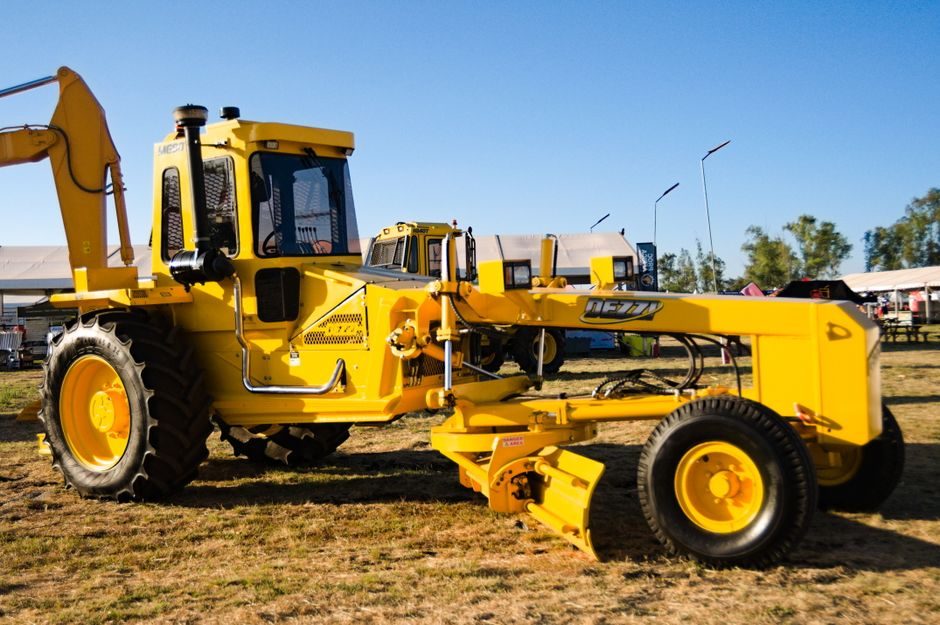
Tunneling Motor Grader Spec: Power, Clearance, and Drivetrain Match

For tunneling muck removal and floor grading, specify a 160-180 hp class motor grader with 15-16 t operating mass, Cummins 6BTA5.9 or equivalent 132 kW engine, ZF-style 6F/3R power-shift, 3965×610 mm moldboard, and all-wheel-drive option for low-clearance headings.

· CONSTRUCTION VEHICLES · 32 min read

Backhoe Loader TCO: Five Cost Lines That Decide Real Lifecycle Spend

Backhoe loader TCO over a 5-7 year ownership window is dominated by fuel (28-35%), operator wages (22-28%) and maintenance/repair (18-25%); acquisition price is typically only 15-22% of the lifetime cost, so the cheapest machine on the quote sheet is rarely the cheapest to own.

· CONSTRUCTION VEHICLES · 43 min read

Concrete Pump Truck Chassis for Snow Removal: Spec Match and Limits

A heavy-duty concrete pump truck chassis can be re-tasked for snow removal when paired with a front-mount plow, rear material spreader, and minimum 26,000 lb GVWR, but only on routes with sufficient turning radius for the boom-folded envelope.

· CONSTRUCTION VEHICLES · 37 min read

Aerial work platform selection for road construction: height, ground, and boom gates

For road construction, an aerial work platform should be selected by maximum working height (7.7-12 m self-propelled, 20-75 m truck-mounted), ground condition (outrigger pad rating, slope limit), and boom type, with scissor lifts for flat paving decks and articulated booms for live traffic lanes. Ch

· CONSTRUCTION VEHICLES · 40 min read

Luffing-Jib vs Flat-Top vs Hammerhead for Oil and Gas Tower Crane Duty

For oil and gas work, the practical "best" tower crane is a heavy-duty luffing-jib tower crane rated 8-40 tonnes at 30-80 m radius, paired with a base model that has documented module-by-module wind ratings; flat-top designs win on multi-crane interlock, hammerhead on long single-line radius. Pick t

· CONSTRUCTION VEHICLES · 41 min read

ISO Tank Container: Spec Trade-offs vs Drums, Flexitanks, and Shore Tanks

An ISO tank container is a stainless-steel cylindrical vessel mounted in a 20ft (or 10/40ft) ISO frame, built to IMDG/ADR/RID/US-DOT/AAR-600 approvals for intermodal bulk-liquid and gas transport. Compared with drums, flexitanks, and fixed shore tanks, it offers the highest payload-to-footprint rati

· CONSTRUCTION VEHICLES · 42 min read

Dump Truck Specs for Pulp and Paper Mill Service: Body, Liner, Axle and Sourcing

Pulp and paper mills handling wood chips, hog fuel, lime mud, and fly ash typically need end-dump or transfer-dump configurations with 18-30 t payload, 6x4 or 8x4 drive, steel or hardox floor liners, and tipping bodies matched to abrasive, low-density fibrous loads. The wrong body style costs 5-10%

· CONSTRUCTION VEHICLES · 38 min read

Bulldozer vs Skid Steer Loader: 2026 Spec Cut and Job-Site Match

Bulldozers and skid steer loaders occupy different rungs on the earthmoving ladder: a dozer pushes and spreads bulk material on open ground with a heavy steel blade, while a skid steer loader cycles in tight quarters with quick hydraulic attachment swaps. The right pick is driven by ground pressure,

· CONSTRUCTION VEHICLES · 36 min read

Reach Truck Types, Spec Ranges, and 2026 Warehouse Selection Map

Reach trucks are narrow-aisle electric lift trucks classified by mast reach, operator stance, and aisle width, with single, double-deep, multi-directional/turret, rider, and pantograph variants serving warehouses from 2.5 to 12 m lift heights and 1.4–2.5 t capacities. Selection hinges on aisle width

· CONSTRUCTION VEHICLES · 43 min read

Landfill Crawler Crane Specs: 2026 Selection Gates

For 2026 landfill work, spec a 100-320 t crawler crane with 64-86 m boom, ≤0.6 MPa ground-bearing pads, and Tier 4/Stage V diesel, since methane and soft cap demand enclosed cabs and wider track shoes over standard truck cranes.

· CONSTRUCTION VEHICLES · 29 min read

Skid Steer Loader Testing and Commissioning: Hour-Indexed Procedure

Skid steer loader testing and commissioning follows a four-tier hour-indexed sequence: pre-shift 15-point walkaround, 50-hour weekly service, 250/500/1000-hour PM, and 2000-hour powertrain service. Skid steers and backhoe loaders differ in steering, lift geometry, and drive system, so their inspecti

· CONSTRUCTION VEHICLES · 30 min read

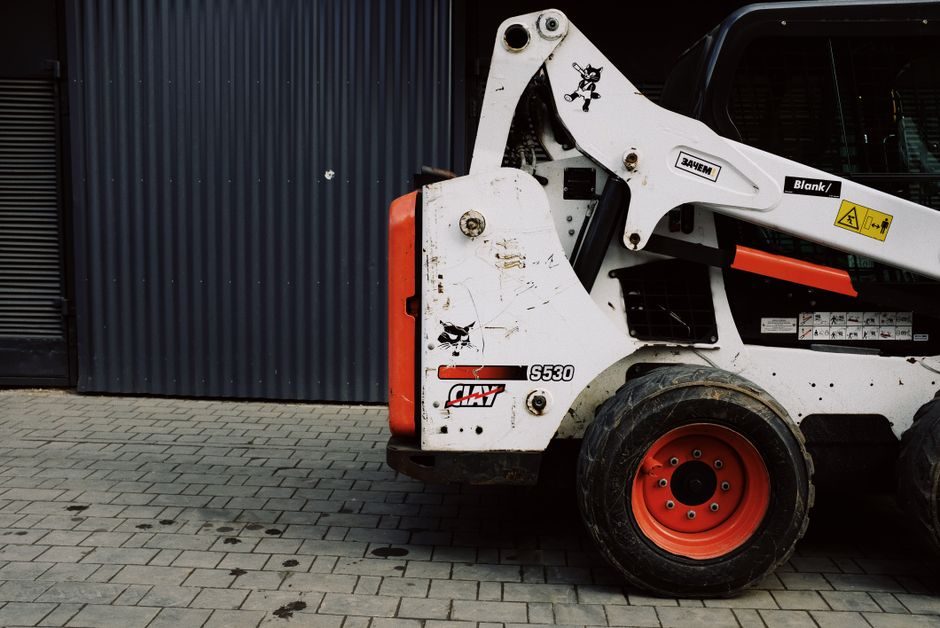
Skid Steer Loader Types and Classifications: A Spec-Driven Reference

Skid steer loaders are classified by operating weight, engine power class, lift capacity and chassis layout, spanning sub-1 t stand-on units like the Bobcat S70 (345 kg lift, 23.5 hp) up to 4.2 t diesel machines like the Bobcat S770 (92 hp, 4,224.8 kg) and tracked or triangular variants from XCMG an

· CONSTRUCTION VEHICLES · 47 min read

Wheel Loaders for HVAC: Spec Bands, 4WD Classes and 2026 Sourcing Map

Compact wheel loaders in the 0.8-2.5 t class with 4WD, CE marking and quick-coupler hydraulic lines are now the dominant HVAC rooftop and mechanical-yard handling platform, with FOB Shandong price bands clustered US$7,900-18,000 per unit in July 2026.

· CONSTRUCTION VEHICLES · 38 min read

Pipeline concrete batching plant selection: HZS60–HZS100 mobile spec gate

For pipeline construction, HZS60–HZS100 mobile or foundation-free wet-mix plants (45–100 m³/h, JS1000–JS2000 twin-shaft mixers, 3–4 aggregate bins, ±2% weigh tolerance) are the working spec band, with stationary HZS120–HZS180 justified only above 100 m³/h sustained demand. Pipeline projects usually

· CONSTRUCTION VEHICLES · 42 min read

Asphalt Paver Selection for Snow Removal: Spec Map and Misuse Boundaries

Asphalt pavers are not specified for snow removal; wheeled asphalt pavers, at 8-13 t operating weight, damage driveways and cannot push dense snow. Operators should use asphalt pavers only for summer paving, with snow handled by dedicated plows, blowers, or de-icers.

· CONSTRUCTION VEHICLES · 43 min read

Aerial Work Truck Buying Guide 2026: Height, Capacity, Boom Type

Buying an aerial work truck in 2026 starts with three hard numbers: working height (12–36 m tier), platform capacity (200–500 kg) and chassis class (2–4 t EQ1101 / HOWO / Beijun). Match them to EN ISO 12100 and CE evidence, then pick boom type.

· CONSTRUCTION VEHICLES · 7 min read

Truck Crane vs Tower Crane: Spec-Driven Selection for 2026 Job Sites

Truck cranes and tower cranes serve different lifting envelopes: mobile truck-mounted cranes win on setup speed, mobility, and short-term jobs, while tower cranes win on sustained vertical reach and heavy high-rise duty. Match the choice to project duration, lift height, and site footprint, not to a

· CONSTRUCTION VEHICLES · 31 min read

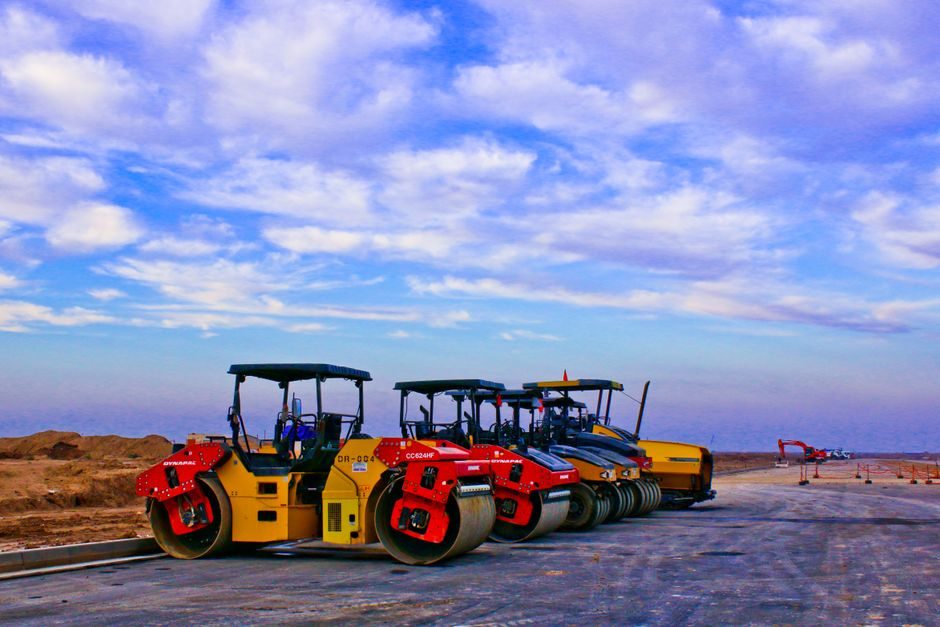
Motor Grader vs Road Roller: Spec Cut and Job-Site Match

Motor graders and road rollers are complementary, not interchangeable: a motor grader profiles a surface to fine tolerance with a 3.0–7.3 m moldboard, while a road roller densifies the lift to specification. Pair the wrong step and you re-roll material you should have cut, or compact a surface that

· CONSTRUCTION VEHICLES · 43 min read

Backhoe Loader Installation: Tractor-Mount vs OEM Frame Field Guide

Backhoe loader installation spans three phases: tractor preparation, mid-mount bracket bolting, and stabiliser leg deployment. Tractor-side backhoe kits like the TYM BY85 bolt to a mid-mount plate first, then back the tractor in parallel, while OEM frame machines such as Bobcat's 6964735 follow seri

· CONSTRUCTION VEHICLES · 38 min read

Tunneling gantry crane selection: load, mobility, and bore fit

Tunneling gantry selection is driven by load, span, ground mobility, and headroom inside the bore: rubber-tired RTGs such as CIMOLAI MST 65-19 (65 t) suit segment handling, while truss-leg rail-launched gantries like MGh120 (120 t, 35 m span) handle rail-track installation. Pick by segment mass, cyc

· CONSTRUCTION VEHICLES · 45 min read

Quarry Gantry Crane Selection: Capacity, Span, and Duty Class Tradeoffs

Quarry gantry cranes typically span 20-50 m with 5-100 t capacity, run on rubber tires or rails, and must be selected for dust, water spray, and uneven haul-road duty. Selection should begin with environment, structure type, and FEM/ISO duty class before sizing capacity or span.

· CONSTRUCTION VEHICLES · 35 min read

Overhead Bridge Crane Selection for Quarrying: 2026 Spec Guide

Overhead bridge cranes for quarrying typically run 5-50 ton capacity with double-girder top-running design, CMAA Class D or E duty, IP54/IP65 enclosures, and dust-resistant features. Selection hinges on duty cycle, span, and ambient dust load rather than capacity alone.

· CONSTRUCTION VEHICLES · 43 min read

Truck crane working principle: hydraulic force, leverage, and counterweight

A truck crane is a road-going carrier chassis fitted with a hydraulic slewing superstructure that lifts, luffs, and rotates loads using pressurized fluid acting on pistons inside cylinders. The mechanical chain is: truck PTO or engine-driven pump pushes hydraulic oil to hoist, luffing, and slewing c

· CONSTRUCTION VEHICLES · 51 min read

Tank container testing and commissioning: the 2.5-/5-year cycle, ISO 1496-3 prototype

Tank containers in intermodal service are commissioned through the IMDG-mandated 2.5-year and 5-year periodic tests, with hydrostatic shell testing at the 5-year mark and pneumatic testing at the intermediate interval. Pre-commissioning covers design approval, prototype testing per ISO 1496-3, ACEP

· CONSTRUCTION VEHICLES · 38 min read

Forklift Failure Modes and Prevention: Operator, Mechanical, and Sensing

Forklift failure modes fall into two correlated buckets: structural front-end degradation from off-centre loads, and operational accidents (rollovers, struck-by, falling loads). Roughly 24% of forklift incidents are rollovers and about 70% are classed as preventable through training, load discipline

· CONSTRUCTION VEHICLES · 38 min read

Forklift Spare Parts and Consumables: A Spec-Anchored Replacement Map

Forklift spare parts management is built around a two-track replacement logic: scheduled consumables at 250–1,500 service hours, and wear-based mechanicals (forks, brakes, lift chains, tires) replaced on inspection. A working on-hand inventory of hydraulic hoses, seals, filters, fluids, brakes, lift

· CONSTRUCTION VEHICLES · 48 min read

Asphalt Paver Maintenance in Quarrying: Daily, Weekly, and PM Discipline

Asphalt paver maintenance in quarrying hinges on daily inspections of hydraulics, screed heating, conveyors, and fluid levels, with weekly undercarriage cleaning and track tension checks. Best practice from June 2026 guidance treats the paver as a finish-quality machine, not just a material handler,

· CONSTRUCTION VEHICLES · 49 min read

Forklift Pre-Use Inspection Checklist: Field Procedure, Acceptance Limits, and Tag-Out

A compliant forklift pre-use inspection covers 15 visual items and 12 operational checks at every shift start, with a documented out-of-service tag for any defect per OSHA 1910.178(q)(7). Steering free play above 1-2 inches, leaks, bent forks, or non-functioning horn and back-up alarm must remove th

· CONSTRUCTION VEHICLES · 44 min read

Forklift lifespan and replacement decision map

Counterbalance forklifts average 10,000 operating hours (≈5 years at 2,000 hr/yr), with electric units commonly reaching 20,000+ hours and diesel 10,000-25,000+ hours, per dealer guidance. Replace when repair frequency crosses 20% of the unit's annual operating value.

· CONSTRUCTION VEHICLES · 29 min read

Truck-Mounted Crane Specs for Pipeline Construction: Capacity, Reach, Chassis Rules

Truck-mounted cranes specified for pipeline construction cluster in the 8-32 t class with 25-45 m hook height, and chassis matching is the decisive engineering step. The Sensobogen 16 t telescopic crane field report confirms 12 m / 4 t pipe handling, and Sany's 10-32 t data range covers most distric

· CONSTRUCTION VEHICLES · 47 min read

Storage rack maintenance in agriculture: spec-driven practices that cut downtime

Agricultural storage rack maintenance hinges on four practices: scheduled inspections tied to seasonal workload, galvanic-corrosion checks on fasteners, capacity-label verification, and CMMS-tracked task logs. These steps directly cut unplanned downtime that costs up to 30% more in repairs per ASABE

· CONSTRUCTION VEHICLES · 37 min read

Forklift Testing and Commissioning: From Daily Pre-Shift Checks to Post-Installation

Forklift testing and commissioning after installation or shift change splits into four blocks: appearance, functional, performance, and safety-device checks, gated by OSHA 1910.178 and ANSI B56.1. Daily pre-shift visual plus operational runs, load tests on a defined slope, and fork/chain wear limits

· CONSTRUCTION VEHICLES · 38 min read

Tunnel Asphalt Paver Specs: Feed Tunnel, Width, and Emissions Criteria

Asphalt paver selection for tunnels hinges on low-emission wheeled or tracked machines, feed-tunnel geometry, and a paving width window of roughly 2.5 m to 8.5 m to fit the bore profile. Verified spec data points include the Bomag CR462 feed tunnel at 30 in (762 mm) and the Roadtec RP-170 working wi

· CONSTRUCTION VEHICLES · 37 min read

Forklift Working Principle: Hydraulics, Mast Mechanics, and Power Source Breakdown

A forklift lifts load through a hydraulic cylinder driving a chain-and-pulley mast, balanced by a rear cast-iron counterweight. Standard simplex masts use a two-chain assembly; heavy-duty units add a third chain or a four-rail mast. Three energy paths exist: lead-acid battery, LPG/diesel/CNG ICE, an

· CONSTRUCTION VEHICLES · 33 min read

Single Girder Crane Specifications for Road Construction Sites

Single girder overhead cranes for road construction typically span 5–35 m, lift 1–20 t at heights of 3–30 m, and run on top-running or underhung configurations engineered to CMAA 74 or IS 3177/IS 807. Selection hinges on capacity, span, duty class, and runway type rather than brand.

· CONSTRUCTION VEHICLES · 35 min read

Asphalt Paver Failure Modes and Prevention: Field-Anchored Specs

Asphalt paver failure modes split into two layers: machine-side operational errors (screed setup, hopper loading, paving speed, temperature management) and pavement-side distresses (alligator, longitudinal, edge, slippage cracking). Both are predictable and largely preventable through pre-operation

· CONSTRUCTION VEHICLES · 42 min read

Pile Driver Maintenance in Mining: Spec-Driven Practice and Failure Modes

Pile driver maintenance in mining pivots on four practices: pre-op isolation, scheduled PM with oil analysis, predictive condition monitoring, and operator-driven inspection. The cleanest spec-driven gain comes from cutting contamination in hydraulic systems running up to 5,200 PSI to ISO 4406 clean

· CONSTRUCTION VEHICLES · 36 min read

Asphalt Paver Spare Parts and Consumables: A Spec-Anchored Selection Guide

Spiral blades, auger flights, liners, and screed plates are the four highest-wear consumables on tracked or wheeled asphalt pavers, with high-chromium cast iron (HRC 58-62) the dominant alloy for blades and liners. Selection hinges on abrasive material mix (HMA vs RAP), paver model, and OEM dimensio

· CONSTRUCTION VEHICLES · 31 min read

Asphalt Paver Inspection Checklist: Pre-Shift, Seasonal, and CIR Walkthrough

An asphalt paver inspection checklist splits into pre-shift walk-around, 6-month/seasonal component audit, and project-level CIR/Daily placement checks across screed, conveyor, auger, hydraulics, and burner systems. Following the 3-person pre-shift routine, maintaining 1/4-inch maximum rubber-track

· CONSTRUCTION VEHICLES · 39 min read

Asphalt Paver Lifespan and Replacement: A Spec-Driven Buyer's Reference

An asphalt paver engine typically delivers 7-9 working years or 10,000+ hours before a major rebuild, while the host pavement it lays lasts 15-30 years. Replacement timing hinges on wear-part rebuild cycles, annual hours, and tonnage throughput rather than calendar age alone.

· CONSTRUCTION VEHICLES · 30 min read

Asphalt Paver Testing and Commissioning: A Field Procedure

A commissioning-ready asphalt paver passes four pre-pave gates: pre-shift mechanical inspection, screed heat to 120-160°C, matched feed sensor calibration, and a 50 m test strip. Document each gate; a missing checkpoint is the most common cause of segregation, joint failure, and density disputes.

· CONSTRUCTION VEHICLES · 36 min read

Pile Driver Safety: OSHA Rules, PPE and Pre-Op Checklist

Pile driver safety hinges on OSHA 1926.603 hose-restraint rules, mandatory PPE (ear, eye, hard hat, steel-toed boots), operator certification, exclusion zones, and a documented pre-shift inspection covering hammer leads, hoist lines, and pressure-hose whip protection.

· CONSTRUCTION VEHICLES · 35 min read

Asphalt Paver Safety: Hot Material, Blind Spots, and Fire Controls

Asphalt paver safety hinges on three controls: 130-180°C hot-material handling with thermal PPE, blind-spot banksman protocols for reversing tippers, and a 15.2 m (50 ft) ignition-clearance radius during refueling. Compliance with GB/T 16277-2021 and OEM lockout procedures is mandatory.

· CONSTRUCTION VEHICLES · 34 min read

Asphalt Paver Working Principle: Hopper, Conveyor, Auger, and Floating Screed

An asphalt paver is a self-propelled machine that receives hot mix asphalt from a dump truck, conveys it through the hopper, spreads it with twin augers, and levels/pre-compacts the mat with a free-floating, heated screed. Tracked pavers suit soft subgrade and steep grades; wheeled pavers suit high-

· CONSTRUCTION VEHICLES · 40 min read

Cold Milling Machine Failure Modes and Prevention: A Spec-First Field Reference

Cold milling machine downtime is driven by milling-bit wear, drum and bearing defects, hydraulic leakage, and electrical faults. Field data puts premature bit failure 35-40% on poor carbide, 15-20% on hidden impacts, and 12-18% on improper installation, all addressable through scheduled checks and I

· CONSTRUCTION VEHICLES · 56 min read

Cold milling machine spares and consumables: a parts-family reference

Cold milling machine spare parts and consumables divide into four wear-driven families: cutting tools and toolholders, track-unit parts, conveyor belts, and maintenance consumables. Genuine Wirtgen GENERATION X² picks, HT22 quick-change holders, polyurethane track pads, and filter packages each have

· CONSTRUCTION VEHICLES · 48 min read

Cold milling machine lifespan and when to replace the drum

A well-serviced cold milling machine lasts 5 to 10 years; the milling drum reaches roughly 3,000 working hours (about 2 years), and cutting teeth typically need replacement every 24 working hours or 7,000 to 9,000 m² of milled surface.

· CONSTRUCTION VEHICLES · 33 min read

Cold Milling Machine Testing and Commissioning: Field Procedure, Acceptance Criteria

Cold milling machine commissioning follows a structured sequence: pre-delivery inspection, mechanical cold checks, no-load run, load test, and grade-control calibration. Acceptance covers drum rotation, water-spray nozzle function, hydraulic pressure, track drive, and milled-surface depth tolerance

· CONSTRUCTION VEHICLES · 44 min read

Cold Milling Machine Safety: Operational Controls and Maintenance Gates

Cold milling machine safety hinges on four controls: certified PPE, full guarding of the point of operation, strict tooth/drum inspection, and disciplined traffic staging around the work zone. Compliance failures typically trace to bypassed guards, missed tooth replacement, or unmarked work-zone tru

· CONSTRUCTION VEHICLES · 31 min read

Skid Steer Loader Failure Modes and Prevention: Hydraulic, Engine, Electrical

Skid steer loader failure modes cluster into five groups: hydraulic, engine, electrical, undercarriage, and safety-interlock defeat. Field data and OEM guidance point to scheduled daily/weekly inspection and correct fluid discipline as the primary prevention levers, with ROPS/FOPS/seat-belt interloc

· CONSTRUCTION VEHICLES · 48 min read

Tank Container Specs for Snow-Removal Liquid Service

ISO tank containers specified for snow-melt brine or glycol de-icing service follow the same 20 ft frame, 17,500–26,000 L capacity envelope as chemical cargo tanks. The right spec is a baffle-less T11 stainless 316L unit with a low-temperature rating, not a lined T14 or a heated food-grade

· CONSTRUCTION VEHICLES · 41 min read

Skid steer spare parts: wear groups, interchange, and service intervals

Skid steer loader spare parts and consumables fall into five wear-driven groups: undercarriage (tires or rubber tracks), drive train (chains, drive belts), hydraulics (hoses, pumps, quick couplers, solenoid coils), filtration (engine oil, hydraulic, fuel, air filters), and attachment interface hardw

· CONSTRUCTION VEHICLES · 35 min read

Skid Steer Lifespan and Replacement: Hours, Wear Parts, and Buy-vs-Rebuild Cues

Skid steer loaders typically last 5,000 to 7,000 operating hours before a major overhaul, with total service life reaching 6,000 to 12,000 hours depending on brand, maintenance, and operating environment. Replacement is most often driven by repair cost exceeding residual value, usually past the O&O

· CONSTRUCTION VEHICLES · 25 min read

Tower Crane Spare Parts Catalog: Systems, Wear Items, and Sourcing

Tower crane spare parts fall into four functional groups (structural steel, mechanical drive, electrical and control, safety and monitoring) and are selected by matching the part to the crane model, mechanism type, and jib configuration before price, not after. OEM documents and approved aftermarket

· CONSTRUCTION VEHICLES · 45 min read

Tower crane commissioning: load test stages, NDT, and sign-off

Tower crane testing and commissioning follows a five-stage sequence: pre-erection NDT, no-load function tests, progressive load tests to rated capacity, safety-device verification, and documented sign-off by a competent person. Skip the load test or the LMI/RCI calibration, and the crane is not in s

· CONSTRUCTION VEHICLES · 41 min read

Backhoe loader failure modes: five-system map and prevention plan

Backhoe loader failure clusters in five systems: hydraulics, electrical, tires, bucket/boom linkage, and engine. Gradual symptoms point to pump or seal wear; sudden losses point to couplers, suction lines, or relief valves. Daily walk-around plus 250-hour fluid service cuts emergency repair cost rat

· CONSTRUCTION VEHICLES · 35 min read

Crawler crane winter maintenance: cold-weather practices for snow removal duty

Crawler crane cold-weather maintenance centers on five daily practices: pre-operation inspection, lube and fluid management, debris removal, scheduled component replacement, and operator cold-start training. Each task has measurable acceptance criteria, and the most failure-prone item in snow-remova

· CONSTRUCTION VEHICLES · 38 min read

Backhoe Loader Pre-Trip Inspection: A 4-Block Field Checklist

A backhoe loader pre-trip inspection runs through four blocks: power-off walk-around, fluids, chassis/ROPS, and power-on function test. The Douglas County ORS-36 form and IEDA checklist codify the items; OSHA/MSHA/ANSI compliance is the gating requirement for documentation.

· CONSTRUCTION VEHICLES · 30 min read

Tank Cleaning Machines for Ports and Terminals: Specs and Selection

Tank cleaning machines for ports and terminals are rotary jet heads in bronze or stainless, sized by flow, pressure, and opening. Spec ranges cluster at 30–345 gpm, 85–250 psi, 3–10 bar, with minimum openings of 9 in or 125 mm. Selection is governed by tank capacity, residue type, and MARPOL/SOLAS/I

· CONSTRUCTION VEHICLES · 32 min read

Mining Motor Grader Specs: Power, Weight, and Blade Sizing

Mining motor graders typically run 218-535 hp (163-399 kW) with operating weights of 25,968-74,800 kg and blade widths of 12-24 ft. Engine power, weight class, and articulation drive selection for haul-road maintenance versus pit-floor work.

· CONSTRUCTION VEHICLES · 32 min read

Backhoe Loader Commissioning: Spec-First Procedure and Pass Criteria

A new backhoe loader must pass a structured commissioning sequence covering visual inspection, fluid checks, hydraulic function tests, and cold-start validation before release to service. The core pass criteria: level ground parking, all cylinders retracted for oil reading, no hydraulic drift, and v

· CONSTRUCTION VEHICLES · 27 min read

Diesel Forklift Working Principle: Engine, Hydraulics, Driveline

Diesel forklifts combine a compression-ignition engine, a gear/clutch/driveline, and a hydraulic lift circuit to move and stack loads. They are specified for outdoor and heavy-duty work where electric units cannot deliver the torque, runtime, or refuel speed required.

· CONSTRUCTION VEHICLES · 31 min read

Backhoe Loader Working Principle: Hydraulics, Layout, and Specs

A backhoe loader is a tractor-based machine that pairs a front loader bucket with a rear excavator-style backhoe, with both work functions driven by a diesel-powered hydraulic system. Operating weights span roughly 4,000-24,000 lbs (1.8-10.9 t), dig depths reach 8-20 ft, and most rental units fall i

· CONSTRUCTION VEHICLES · 43 min read

Road roller spare parts and consumables: a spec-first buying guide

Road roller spare parts inventory is dominated by five wear groups: drum shells (20-40 mm on soil compactors, 12-19 mm on tandem rollers), eccentric vibration assemblies, hydrostatic pump/motor sets, scraper bars, and water-spray system components. Downtime prevention tracks to a 7-step daily inspec

· CONSTRUCTION VEHICLES · 42 min read

Landfill truck-mounted crane specs: capacity, reach, chassis, attachments

Truck-mounted cranes for landfill work typically run 8 to 65 ton capacity with sheave heights reaching 215 ft (65.5 m), matched to grapple or container attachments on heavy-duty chassis. Selection hinges on lift curve, outrigger spread, roadable gross weight, and corrosion-resistant boom steel, not

· CONSTRUCTION VEHICLES · 39 min read

Road Roller Inspection Checklist: Daily Specs, Pass Criteria, and Stop-Work Limits

A road roller inspection checklist should cover 5 daily blocks: 360 walk-around, engine and powertrain, hydraulic system, drum and vibration, and cab safety (ROPS, seatbelt, backup alarm). Acceptance is a clean pass on each Yes/No line, with hydraulic and brake faults escalating to a mechanic rather

· CONSTRUCTION VEHICLES · 40 min read

Concrete Pump Truck Specs for Landfill Operations

Concrete pump trucks specified for landfill work need outrigger pads rated for soft subgrade, a 30-60 m boom envelope, and OSHA 29 CFR 1926 power-line clearance (min. 3 m up to 50 kV). Landfill cells, leachate-structural pads, and access slabs favor boom or line pumps over crane-and-bucket, with pre

· CONSTRUCTION VEHICLES · 39 min read

Road roller testing and commissioning: a spec-first procedure from cold start to first

Road roller testing and commissioning is a phased procedure covering pre-startup walk-around, hydraulic and brake system checks, drum and scraper inspection, low-speed running, and vibratory function verification before full production compaction. Field-proven checklists from 2025-2026 OEM guidance

· CONSTRUCTION VEHICLES · 33 min read

Cold Milling Machine Working Principle: Drum, Teeth, Traction

A cold milling machine removes asphalt or concrete pavement by rotating a tungsten-carbide-tipped cutter drum against the surface while water sprays cool the bits. Modern units mill 0.35–4.4 m wide and over 300 mm deep in one pass, feeding reclaimed material to a discharge conveyor for recycling.

· CONSTRUCTION VEHICLES · 43 min read

Road Roller Safety: Slope, Speed, Edge, and PPE Specs for 2026 Paving Sites

Road roller safety hinges on five non-negotiable controls: slope limits (longitudinal ≤30%, transverse ≤10%), travel speed (≤6 km/h vibrating, ≤10 km/h static, 2–3 km/h in turns), 3 m multi-machine spacing, ≥1.5 m edge stand-off, and certified PPE. Failure to enforce these is the documented root cau

· CONSTRUCTION VEHICLES · 40 min read

Road roller working principle: static weight plus eccentric-shaft vibration

A road roller compacts soil, gravel, and asphalt by combining the static weight of steel drums (typically 1-20 t) with a high-frequency eccentric-shaft vibration, removing air voids in 4-6 passes. Selection hinges on drum type, static linear load (kg/cm), and lift-thickness rules, not on horsepower.

· CONSTRUCTION VEHICLES · 34 min read

Compact Wheel Loader Specs for Urban Infrastructure Sites

Compact wheel loaders in the 0-8 t / 9,944-11,993 lb class dominate urban infrastructure work, with bucket capacities of 0.5-1.6 yd³, 55-74 hp engines, and articulated steering sized for gates under ~2.5 m. Selection turns on access envelope, surface protection, and attachment clearance rather than

· CONSTRUCTION VEHICLES · 34 min read

Skid Steer Maintenance in Mining: Hour-Based Service Tiers and Safety Interlocks

Skid-steer maintenance in mining hinges on hour-based service tiers, with engine oil and filters swapped at 250 hours and hydraulic fluid/filters plus belts inspected at 500 hours. Operators must also verify interlock, seatbelt, ROPS, and FOPS safety systems to prevent the bypass-related incidents O

· CONSTRUCTION VEHICLES · 53 min read

Motor grader spare parts and consumables: a tiered replacement guide

Motor grader spare parts split into three wear tiers by service interval: ground-engaging tools (cutting edge, end bits) every 200-500 hours, undercarriage and circle-drive components at 2,000-4,000 hours, and powertrain items as condition demands. OEM wear part numbers like 128-9656 (Cat) and 23H-7

· CONSTRUCTION VEHICLES · 39 min read

Motor Grader Inspection Checklist: 4 Zones, 60+ Items

A motor grader inspection checklist divides the machine into four zones (body/walk-around, under-hood, cab, engine-drivetrain) and requires a written log of hour meter, fuel level, and damage codes A through G on every shift, per Douglas County ORS-24. Monthly versions add engine oil sampling, hydra

· CONSTRUCTION VEHICLES · 39 min read

Motor Grader Lifespan and Replacement: Hour Bands, Wear Budgets, and Decision Criteria

A motor grader typically delivers 10,000-15,000 operating hours before major powertrain overhaul when maintained on OEM service intervals; cutting edges, articulation pins, and circle drive wear drive mid-life rebuilds, with end-of-life replacement decisions keyed on frame fatigue, emissions tier co

· CONSTRUCTION VEHICLES · 35 min read

Forestry Overhead Bridge Crane Spec Map: Capacity, Span, and Duty Class for Sawmill and

Forestry sawmill and lumberyard overhead bridge cranes typically run 1 to 10 ton capacity with CMAA Class A through C duty (up to 5 to 10 lifts per hour at 40 to 50 percent of rated load), and must meet OSHA 1910.179(e)(4), ASME B30.2, and CMAA Spec 70 rail-sweep rules for debris-heavy environments.

· CONSTRUCTION VEHICLES · 40 min read

Motor Grader Testing and Commissioning: Five-Stage Procedure with Concrete Pass/Fail

A motor grader testing and commissioning procedure runs in five stages: pre-start walk-around, cold start, hydraulic function-by-function test, loaded moldboard pass, and articulated-steering verification. Each stage targets one of the grader's six failure zones (moldboard, articulation, hydraulics,

· CONSTRUCTION VEHICLES · 42 min read

Motor Grader Working Principle: Hydraulics, Moldboard Geometry, and Drivetrain

A motor grader finishes surfaces using a hydraulically positioned moldboard mounted between its front and rear axles, with power delivered from a 100-535 hp engine through a torque converter and powershift transmission. Operating moldboard angles of 10-45 degrees and travel speeds of 3-5 mph govern

· CONSTRUCTION VEHICLES · 40 min read

Tank Container Maintenance in Urban Infrastructure: 2026 Spec Map

Tank container maintenance in urban infrastructure hinges on a 2-5 year pressure-test cycle, monthly visual inspections, and post-trip cleaning; ISO 1496-3 frames the periodic test, with ultrasonic thickness testing now flagging over 75% of in-service corrosion before it surfaces visually.

· CONSTRUCTION VEHICLES · 36 min read

Bulldozer Failure Modes: Seven Causes, Hydraulic Share, and a Maintenance-Driven

Bulldozer downtime is dominated by seven recurring failure modes: brake, hydraulic, engine, undercarriage, transmission, steering, and electrical faults. Eliminating seven routine maintenance mistakes can cut preventable failures by 78% and reduce maintenance cost by 45%.

· CONSTRUCTION VEHICLES · 44 min read

Bulldozer Spare Parts and Consumables: A Spec-First Maintenance Reference

Track and undercarriage components drive about 40% of bulldozer maintenance cost, with full assemblies running INR 8-12 lakhs and hydraulic failures causing 45% of breakdowns. This guide maps the wear parts, consumables, and replacement intervals that actually move a dozer's operating budget, organi

· CONSTRUCTION VEHICLES · 40 min read

Bulldozer Lifespan, Service Intervals and Replacement Guide

Track-type bulldozers typically reach a major-overhaul milestone at 7,000 to 10,000 operating hours, with most contractor fleets replacing machines between 7 and 10 years. Engine overhaul intervals are 7,500 to 15,000 hours, brakes last 5,000 to 15,000 hours, and undercarriage wear is the dominant c

· CONSTRUCTION VEHICLES · 41 min read

Dynamic Compactor Specs for Urban Infrastructure Projects

Dynamic compactors for urban infrastructure span three operating classes: handheld reversible plate compactors (80-450 kg, 13-50 kN centrifugal force), heavy padfoot/smooth-drum rollers (10,700-21,420 kg, EU Stage IIIA / EPA Tier 3), and hydraulic rapid impact compactors (7-ton hammer, 84 kJ impact,

· CONSTRUCTION VEHICLES · 36 min read

Bulldozer commissioning in 2026: site-prep gates, force tests, handover artefacts

A bulldozer handover in 2026 is gated by four artefacts: hydraulic-fill log, first-30-min idle thermal record, ROPS/FOPS torque file, and a CAN-bus/J1939 telematics handshake. Pushing and lifting force tests then verify the machine against ISO 9249:2007 baselines before operator release.

· CONSTRUCTION VEHICLES · 32 min read

Wheel Loader Failure Modes: Diagnosis and Prevention Map

Wheel loader failures cluster around five systems: engine cooling, hydraulics, transmission, tires, and electrical. Hydraulic contamination drives over 40% of downtime, with hydraulic oil above 180°F (82°C) accelerating seal damage. Scheduled 250/500/1000-hour service intervals cut total ownership c

· CONSTRUCTION VEHICLES · 28 min read

Urban Forklift Specs: Capacity, Load Center, Power and Floor

Urban-infrastructure forklift specs cluster around 5,000 lb capacity, 24-inch load center, and 6 to 12 inch concrete slabs rated 4,000 to 6,000 PSI, with electric power dominant indoors and diesel or LPG for outdoor yards. Right-sizing load center, mast free lift, and tire type prevents the tipover

· CONSTRUCTION VEHICLES · 31 min read

Wheel Loader Daily Inspection Checklist: Six Zones, Twelve Minutes, Real Numbers

A compliant wheel loader pre-shift inspection is a six- to eight-zone walk-around that takes 10-15 minutes and is required under OSHA 29 CFR 1926.600/1926.602 and MSHA 30 CFR Part 56. The walk covers the articulation joint, hydraulics, tires, bucket, boom, cab safety systems, and engine bay, with do

· CONSTRUCTION VEHICLES · 38 min read

Wheel Loader Lifespan: Hours, Components, and Replacement Triggers

Wheel loaders average 7,000 to 12,000 operating hours or roughly 10 years of service, with major wear parts like tires, articulation joints, and engines following distinct replacement intervals. Replacement timing is set by owning-and-operating cost crossover, not calendar age, so a disciplined PM p

· CONSTRUCTION VEHICLES · 34 min read

Wheel Loader Commissioning: Pre-Use Inspection and Load Test Procedure

Wheel loader commissioning is a two-stage gate: a documented pre-use inspection of 8 critical zones (tyres, steering, bucket, hydraulics, engine, cab, safety devices, fluids) followed by a static and dynamic load test at 100% to 125% of rated capacity before the machine handles production work.

· CONSTRUCTION VEHICLES · 42 min read

Port Crane Specs: STS, RTG, RMG and MHC Compared

Ship-to-Shore cranes for container terminals typically lift 30 to 75 tons with 60 to 72 m outreach, while mobile harbor cranes dominate multi-cargo berths and RTG/RMG units stack yard boxes. Selection hinges on cargo mix, berth size, and automation level.

· CONSTRUCTION VEHICLES · 29 min read

Wheel Loader Safety Requirements and Operating Precautions

Wheel loader safety rests on four pillars: pre-shift walk-around inspection, certified operator training, mandatory PPE plus three-point cab access, and load-capacity plus slope discipline. Struck-by and rollover events dominate the fatality profile, so seat belt use, bucket-low travel, and never ex

· CONSTRUCTION VEHICLES · 35 min read

Wheel Loader Working Principle: Powertrain, Hydraulics, and Linkage

A wheel loader moves material by driving a front-mounted bucket into a pile with diesel torque-converter drive, then lifting via a boom and rocker-arm linkage powered by hydraulic cylinders. The same power pack drives articulated frame steering, while the working device separates into Z-bar (high br

· CONSTRUCTION VEHICLES · 47 min read

Tunneling Forklift Maintenance: 250-Hour Service, OSHA 1910.178, and Confined-Space

In tunnel construction, forklift maintenance is dictated by 29 CFR 1910.178(q) plus a 250-hour deep service interval, with daily checks on hydraulics, mast chains, and battery ventilation under 1910.178(g). The core failure modes are hydrogen accumulation at battery charging, brake and clutch wear,

· CONSTRUCTION VEHICLES · 41 min read

Excavator Daily Inspection Checklist: Zones, Failure Triggers, OSHA Hooks

A daily excavator pre-use inspection covers nine zones (walkaround, engine, hydraulics, cab, controls, boom/arm/bucket, undercarriage, fluids, structural), with OSHA general-duty 1926.602 requiring a competent-person check before each shift. Digital mobile forms (e.g., Cat Inspect) cut audit time ve

· CONSTRUCTION VEHICLES · 36 min read

Tank cleaning for demolition: 2026 field practice and spec map

Tank cleaning is a hard gate before any demolition: bulk sludge and hydrocarbon residue must be removed to a gas-free condition before mechanical plant can enter. On demolition projects in 2026, robotic and high-pressure water jetting (10,000-40,000 PSI) are replacing manned confined-space entry, wi

· CONSTRUCTION VEHICLES · 33 min read

Excavator Service Life: Hours, Component Wear, and Replacement Triggers

Hydraulic excavators typically reach end of primary service at roughly 9,800 hours, with a general 7,000-10,000 hour range before replacement or major component overhaul. Daily inspection and scheduled fluid service determine whether a machine falls at the low or high end.

· CONSTRUCTION VEHICLES · 43 min read

Excavator commissioning: a process engineer's FAT-to-handover procedure

Excavator testing and commissioning is a staged FAT-to-handover procedure: factory acceptance testing, mechanical completion, no-load and full-load functional checks, hydraulic and safety-system validation, and performance verification against the OPR and BoD, with documented sign-off at each gate.

· CONSTRUCTION VEHICLES · 38 min read

Forklift Maintenance in Forestry: Daily Checks, Forestry Wear Items, and OSHA 1910.178

Forklift maintenance in forestry borrows OSHA 1910.178 inspection cycles and combines them with chain/blade/hydraulic-line checks specific to slash, mud, and sawmill-yard operations. Standard practice: daily pre-shift checks, service every 250 operating hours or three months, and replace wear items

· CONSTRUCTION VEHICLES · 40 min read

How a hydraulic excavator actually works: engine to bucket

A hydraulic excavator converts diesel-engine torque into pressurized hydraulic oil that drives cylinders on the boom, arm, and bucket, plus a swing motor for upper-structure rotation. Mid-size units run 110-130 kW engines at 34.3-37.3 MPa system pressure, with 0.8-1.2 m³ buckets and 6.0-7.0 m dig de

· CONSTRUCTION VEHICLES · 41 min read

Bulldozer Working Principle: Engine, Hydraulics, and Track Traction

A bulldozer converts diesel-engine torque into ground-gripping traction through crawler tracks, planetary power-shift transmissions, and hydraulic cylinders that actuate the blade. Crawler machines dominate earthmoving because track grousers distribute 17,000 kg+ of operating weight at roughly 0.067

· CONSTRUCTION VEHICLES · 35 min read

Tower Crane vs Truck-Mounted Crane: 2026 Selection Spec Map

Tower cranes reach up to 70 m with high fixed-load capacity; truck-mounted cranes top out near 16.5 m but mobilise in minutes. Choose tower cranes for sustained high-rise vertical lifts, truck cranes for short-cycle, mobile, multi-site lifts.

· CONSTRUCTION VEHICLES · 29 min read

Rough Terrain Crane vs Truck Crane: Spec-Driven Selection for 2026

Rough terrain cranes are off-road-only, single-engine, 4WD machines on a four-wheel undercarriage with capacities typically 30-80 tons, while truck cranes are road-legal, purpose-built chassis machines, 40-140 tons, optimized for highway travel and fast setup. Pick rough-terrain for unpadded sites a

· CONSTRUCTION VEHICLES · 36 min read

Rough Terrain Crane vs Truck Crane: Spec and Site Fit Comparison

Rough terrain cranes typically deliver 30 to 80 US ton lift capacity on a two-axle, 4x4/4-steer platform, while truck cranes span 40 to 140 US tons on a three or four-axle commercial chassis built for highway roading. Pick rough terrain for unpaved, off-road sites with shorter transit distances; pic

· CONSTRUCTION VEHICLES · 41 min read

Tower Crane vs Truck-Mounted Crane: Spec-Driven Selection Map

Tower cranes and truck-mounted cranes split lifting work along two clear axes: tower cranes win on height and steady high-rise duty, while truck cranes win on mobility and fast setup. Selection comes down to four criteria: lift height, lift cycle, site footprint, and crew certification path.

· CONSTRUCTION VEHICLES · 45 min read

Dosing Pump vs Concrete Pump Truck: Two Different Fluid-Handling Problems

Dosing pumps meter chemicals at low pressure, while truck-mounted concrete pumps move abrasive aggregate slurry at hundreds of atmospheres. They share hydraulic piston logic but not duty cycle, materials, or flow class. A chemical-process spec never routes through a concrete pump.

· CONSTRUCTION VEHICLES · 30 min read

Top Diesel Forklift Suppliers: 2026 Global Spec Map

Toyota Industries, Kion Group (Linde), and Jungheinrich led 2024 global forklift revenue rankings. Diesel IC models remain core for outdoor 1.4–57 ton loads, served by a mix of top-tier Western brands and Chinese OEM suppliers.

· CONSTRUCTION VEHICLES · 40 min read

Diesel Forklift Suppliers and Manufacturers: 2026 Supply Map and Selection Criteria

Diesel forklift supply in 2026 spans 41+ named manufacturers across North America, Europe, China, India, and Japan, with KION, Toyota, Jungheinrich, and Mitsubishi Logisnext leading global revenue rankings. Linde's diesel line covers 1.4–8 t load capacity; UN Forklift in China offers 17 types across

· CONSTRUCTION VEHICLES · 46 min read

Gear Motor vs Motor Grader: Spec-Driven Comparison for Industrial Buyers

Gear motors and motor graders are different machine classes. A gear motor is a compact power-transmission drive (gearbox + electric motor) used inside industrial equipment, while a motor grader is a 12,000 kg+ earthmoving machine with 171-535 hp engines and a 12 ft moldboard used for fine grading.

· CONSTRUCTION VEHICLES · 41 min read

How to choose a diesel forklift: capacity, duty, terrain

Diesel forklifts are the right pick for outdoor, heavy-duty, multi-shift work: rated capacities commonly reach 120,000 lb vs. 12,000 lb for electric, refueling takes minutes, and engine efficiency sits between 40 and 45 percent. They are the wrong pick for indoor, food-grade, or low-noise sites beca

· CONSTRUCTION VEHICLES · 33 min read

Dynamic Compactor Advantages, Limits, and Spec Boundaries

Dynamic compaction densifies loose granular fills by dropping 5-40 tonne weights from 10-40 m, reaching influence depths to ~40 m in permeable soils. It is fast and cost-effective for large sites but creates noise, vibration, and crater backfill demands.

· CONSTRUCTION VEHICLES · 31 min read

Spec a skid steer loader for urban infrastructure: ROC, lift path, flow, and footprint

For urban infrastructure in 2026, pick a skid steer loader by matching rated operating capacity (ROC), lift path, hydraulic flow, and emissions to the site envelope first, then validate against the three bottlenecks that sink city jobs: street width, noise/diesel rules, and attachment-driven work cy

· CONSTRUCTION VEHICLES · 44 min read

Truck and Port Crane Selection for Terminal Operations: 2026 Spec Map

Port and terminal operations demand crane selection driven by cargo type, vessel size, and throughput target, with STS cranes ($600k–$3M base) dominating container handling, MHCs serving multi-cargo berths, and RTG/RMG pairs managing yard density above 3 stacks high.

· CONSTRUCTION VEHICLES · 36 min read

How to Choose a Telehandler: Capacity, Reach, Tires, and Duty

Telehandlers fill the gap between forklifts and cranes: most lift 5,000-12,000 lb to 20-70+ ft via a telescoping boom. Match capacity, lift height, horizontal reach, tire type, and attachment interface to the job; OSHA classifies them as Class VII rough-terrain forklifts.

· CONSTRUCTION VEHICLES · 48 min read

Truck Crane TCO: Cost Drivers, Downtime Risk, and 7-Year Ownership Math

Truck crane total cost of ownership is driven by five interlocking cost lines: acquisition, fuel and energy, maintenance and repair, financing and insurance, and residual value, with downtime acting as the dominant hidden expense. Lifecycle analyses published through 2026 show purchase price typical

· CONSTRUCTION VEHICLES · 54 min read

Forestry Mining Dump Truck Spec Map: ADT vs Rigid Hauler Selection

Articulated dump trucks (ADTs) in the 30-45 ton class are the dominant spec for forestry haul work, with permanent all-wheel drive and low ground-pressure tires suiting soft soils and steep grades; rigid mining haulers above 100 tons are unsuitable. Selection pivots on four criteria: payload (20-45

· CONSTRUCTION VEHICLES · 36 min read

Tunneling truck-mounted concrete pump selection: reach, output and low-headroom spec fit

Truck-mounted concrete pumps for tunneling are selected on three hard constraints: an unfolding height ≤ 5.4 m, a vertical reach of 14.5–20.6 m, and an output between 27 and 60 m³/h on PUMI-class or city-pump chassis. Models such as the Liebherr 31 XXT, 24 XH and Putzmeister PUMI TMP 60 CS currently

· CONSTRUCTION VEHICLES · 41 min read

Backhoe Loader vs Skid Steer Loader: Spec-Driven Selection

For digging and material handling on one chassis, a backhoe loader replaces two machines but costs more and is harder to maneuver; a skid steer wins on tight-space agility and attachment versatility, with 1,600 to 4,000 lb operating-capacity models dominating compact-class fleets.

· CONSTRUCTION VEHICLES · 34 min read

Forestry Gantry Crane Selection: 10T–32T Capacity Fit

For forestry timber handling, gantry cranes in the 10T–32T range are selected by peak single-lift load, not average bundle weight; 10T covers standard lumber, 20T–32T covers raw log bundles and port terminals, with rail-mounted single/double girder builds dominating outdoor yards.

· CONSTRUCTION VEHICLES · 39 min read

Gantry Crane Selection for Demolition: Spec Map, OSHA Fit, Capacity Sizing

Gantry crane selection for demolition projects hinges on four binding constraints: OSHA 29 CFR 1926 Subpart CC applicability, capacity sizing above the heaviest component, self-supported leg geometry for sites without runway steel, and matching the crane type to debris-flow and reach profile. Crawle

· CONSTRUCTION VEHICLES · 61 min read

Why a Diaphragm Wall Grab Is the Wrong Tool for Snow Removal

Diaphragm wall grabs are vertical-excavation tools, not snow-removal attachments, so selecting one for plowing or stockpiling is a category error. The grab method suits clay, silt, and weak rock trenches up to 100+ m, with 2.4–3.8 m buckets and 210 bar hydraulics, conditions absent on a road or lot.

· CONSTRUCTION VEHICLES · 34 min read

Tunneling Mining Dump Truck Selection: Geometry, Drivetrain, and Ventilation Fit

Underground mining dump trucks in the 5–20 t class with low-profile bodies and four-wheel drive dominate tunneling applications where ceiling height, drift width, and ventilation limit equipment envelope. Selection turns on tunnel cross-section, gradient, haul distance, and emissions regime, not pay

· CONSTRUCTION VEHICLES · 30 min read

Truck-Mounted Concrete Pump Selection for Road Construction: Reach, Output, and Mix Fit

Truck-mounted concrete pumps for road construction split into boom pumps (47-161 ft vertical reach, USD 375k-1M+ capex) and truck-mounted line pumps (lower output, faster relocation, lower cost), with selection driven by pour volume, aggregate size, horizontal/vertical reach, and urban access constr

· CONSTRUCTION VEHICLES · 39 min read

Overhead Bridge Crane Selection for Agricultural Facilities

Overhead bridge cranes for agriculture are typically single-girder, top-running or under-running units rated 1–10 tons with spans of 20–65 ft, matched to OSHA 1910.179 design and inspection rules. Double-girder builds above 15 tons are reserved for feed mills, grain handling, and equipment-assembly

· CONSTRUCTION VEHICLES · 36 min read

Rotary Drilling Rig Selection for Forestry: Spec Map and Site-Fit Criteria

Selecting a rotary drilling rig for forestry means matching rig weight (often under 50 t), drilling depth, and mobility to soft-soil, low-bearing-capacity sites, since most forestry operations need 50–500 mm boreholes at shallow depths. Recommended starting point: a compact rotary rig with rubber or

· CONSTRUCTION VEHICLES · 42 min read

Overhead Bridge Crane Selection for Tunneling: Duty Class, Span, and Service Pattern

Overhead bridge crane selection for tunneling hinges on matching CMAA duty class, span, and headroom to the lift pattern: choose double-girder top-running for segment handling above 15 t, single-girder underhung for lighter service lifts, and pair with VFD controls, overload limits, and a redundant

· CONSTRUCTION VEHICLES · 32 min read

Gantry Crane Selection for Landfill Operations: Span, Corrosion, and Duty Class

For landfill operations, specify a rubber-tired or rail-mounted full gantry crane with 5–30 t capacity, corrosion-resistant drive package, and a span matching the active cell width; single-girder semi-gantries fit leachate and small-parts lifts, while full gantries suit container and bulk waste stre

· CONSTRUCTION VEHICLES · 45 min read

Single Girder Crane Spec Map for Road Construction Yards

Single girder overhead cranes in the 1-20 ton range, with spans up to 60 feet (top running) and CMAA Class A-D duty ratings, are the standard spec for road construction yards, precast staging, and bridge component handling. Spec selection hinges on five criteria: lifting capacity, span, duty classif

· CONSTRUCTION VEHICLES · 44 min read

Overhead Bridge Crane Selection for Forestry: Capacity, Class, and Span Map

For forestry operations, an overhead bridge crane sized at CMAA Class D or E with 10-30 ton capacity and 60-120 ft span is the dominant 2026 specification, paired with a double-girder top-running layout for log/sawmill yards. Single-girder underhung systems only fit planer rooms and trim sheds under

· CONSTRUCTION VEHICLES · 42 min read

Gantry crane selection for road construction: capacity, span, and mobility spec map

For road construction, a gantry crane is typically specified when 5-50 tonne precast components or formwork must be lifted across a fixed span of 6-35 m at low-headroom outdoor sites. Selection is driven by lifting capacity, span, lifting height, duty class, mobility, and girder configuration, with

· CONSTRUCTION VEHICLES · 48 min read

Forklift Selection for Urban Infrastructure: RT vs Electric vs Truck-Mounted

For urban infrastructure work, rough terrain forklifts with 380 mm+ ground clearance, switchable 4WD, and 1.5–5.0 t capacity dominate site selection, per a 2026 survey of 150 projects showing 67% preference for low-profile RT models. Electric counterbalance units apply only on paved, indoor-friendly

· CONSTRUCTION VEHICLES · 37 min read

Forestry Tower Crane Selection: Site, Load, and Mast Trade-offs

Forestry tower crane selection hinges on four hard constraints: ground-bearing pressure on soft soils, narrow corridor footprint, low-overhead jib profile, and weather-rated operation. A luffing jib or self-erecting model on engineered outrigger pads typically wins over a hammerhead for wood-lot and

· CONSTRUCTION VEHICLES · 52 min read

Selecting Cold Milling Machines for Quarrying: Drums, Width, and Drive Class

Cold milling machines deliver precise asphalt and rock layer removal without heat, with the global market valued at $4.8B in 2025 and projected to reach $8.1B by 2034. For quarrying, selection hinges on milling width (0.35–2.6 m), drum type, engine class, and on-site mobility.

· CONSTRUCTION VEHICLES · 41 min read

Aerial Work Platform Selection for Pipeline Construction: Class, Outreach, and Ground

For pipeline construction, articulating and telescopic boom lifts in the 38-138 ft platform-height band are the default AWPs; scissor lifts cover ground-level work, and truck-mounted units handle long ROW travel. Selection turns on ground pressure, outreach, ATEX zone, and pipeline-specific OSHA fal

· CONSTRUCTION VEHICLES · 50 min read

Skid steer snow removal: pick flow rate, undercarriage, and cab first

For snow removal, a low-flow (standard-flow) skid steer rated 18-25 gpm at 3,000 psi handles most plows, pushers, and angle cylinders; high-flow (30-45 gpm) is only required for high-capacity snow blowers with motorized augers and chutes. Wheeled machines with snow tires suit paved lots; tracked com

· CONSTRUCTION VEHICLES · 38 min read

Track Loader vs Wheel Loader: Spec-Driven Selection Matrix

Track loaders and wheel loaders split on terrain and duty cycle. Pick track loaders for soft ground, mud, slopes, and sensitive surfaces; pick wheel loaders for hard-packed yards, paved sites, and long roading between piles. A simple four-criteria matrix picks the right machine in 5 minutes.

· CONSTRUCTION VEHICLES · 41 min read

Crawler excavator suppliers: 2026 global supplier map and spec range

China hosts the largest base of crawler excavator suppliers worldwide, with DirectIndustry indexing 637 crawler-excavator listings across brands like XCMG, SENNEBOGEN, and YANMAR. Operating weights in current catalogues span 980 kg mini units to 34,100 kg 36-ton class machines, with engine powe

· CONSTRUCTION VEHICLES · 42 min read

Skid Steer Loader Types, Lift Paths, and Field Applications

Skid steer loaders are compact, rigid-frame machines turned by differential steering, classified by frame size (small/medium/large), undercarriage (wheeled vs tracked), and lift path (radial vs vertical). They serve demolition, landscaping, roadwork, and material handling with ROC typically spanning

· CONSTRUCTION VEHICLES · 39 min read

Stepper Motor vs Motor Grader: Two Distinct Spec Selection Problems

Stepper motors and motor graders are not competing technologies: one is a discrete-pulse open-loop electric drive for precision motion, the other a multi-ton earthmoving chassis with a blade for grading. Engineers should treat them as separate selection problems tied to distinct duty cycles.

· CONSTRUCTION VEHICLES · 43 min read

Brushless DC motor vs Motor Grader: Spec-driven selection map

Brushless DC motors (BLDC) reach 82–93% efficiency, last tens of thousands of hours, and outperform brushed units in service life and noise, while motor graders use hydraulically driven diesel powertrains for blade and ripper control. Selecting between them is a matter of matching the duty profile,

· CONSTRUCTION VEHICLES · 43 min read

Storage Rack Installation Guide: Anchor, Beam, and Compliance Specs

Storage rack installation is driven by four datasheet blocks: U-height or frame-height envelope, per-bay static and dynamic load, baseplate anchor pattern, and a recognised compliance line. Beam lengths of 110 cm and 220 cm with 5 cm plug-in pitch, 500 kg compartment and 2,000 kg bay load are typica

· CONSTRUCTION VEHICLES · 38 min read

Wheel Loader Types and Applications: A Field Engineer's Spec Map

Wheel loaders split into five practical families: compact, skid-steer, backhoe, front-end, and articulated. Selection hinges on operating weight, bucket capacity, and ground pressure for the job site's material and mobility constraints.

· CONSTRUCTION VEHICLES · 42 min read

Backhoe Loader vs Asphalt Paver: Spec Match for Excavation and Paving

Backhoe loaders and asphalt pavers occupy different slots on a road job: backhoes excavate, load, and self-transport at 9,000-20,000 lb and 50-150 hp, while asphalt pavers are specialty machines that place and pre-compact hot-mix asphalt. Choose a backhoe for digging and grading, an asphalt paver on

· CONSTRUCTION VEHICLES · 29 min read

Backhoe Loader vs Cold Milling Machine: Spec Map by Task

Backhoe loaders handle trenching, loading, and small-footprint digging across mixed job sites, while cold milling machines are purpose-built for removing asphalt or concrete pavement in controlled layers. Use a backhoe loader for utility work, excavation, and material handling; spec a cold milling m

· CONSTRUCTION VEHICLES · 44 min read

Forklift vs Aerial Work Platform: Spec-Driven Selection Guide

Aerial work platforms and forklifts solve different problems: AWPs elevate personnel to height (typically under 1 t SWL) for maintenance and installation, while forklifts move heavy ground loads across warehouses and yards. Selection hinges on whether the work is overhead-people or ground-material,

· CONSTRUCTION VEHICLES · 39 min read

Road Roller Types and Classifications: Spec-Driven Selection Map

Road rollers are classified by drum configuration (single, double/tandem, padfoot/sheepsfoot), propulsion type (static vs vibratory), and tire layout (steel drum vs pneumatic). Tandem drum widths span 32 to 84 inches, with operating weights from roughly 3,000 lbs to 30,000+ lbs across the major OEM

· CONSTRUCTION VEHICLES · 43 min read

Forklift installation guide: tracker, rough-terrain rigging, and electric commissioning

Forklift installation covers asset-tracker mounting (30-90 min per unit, 11 truck categories), rough-terrain rigging (4-8 h per 1.5-3.5 t machine on 4 m × 6 m hardstand), and electric unit commissioning (24V/48V/80V supply, 1.5 m clearance, ≤40°C ambient). Acceptance gates, de-rated forks, and ROPS

· CONSTRUCTION VEHICLES · 38 min read

Tank Container Selection for Mining: Spec Map by Reagent, Capacity, and Certification

Tank container selection for mining hinges on matching container type (UN31A steel IBC, 24,000 L ISO tank, 65 m³ integrally-bunded fuel container) to reagent chemistry, certification scope, and haul distance. Generic poly totes fail in 18 months under sulfuric acid or cyanide service; purpose-built,

· CONSTRUCTION VEHICLES · 48 min read

Tank container and dry storage container selection for snow removal fleets

Dry-storage 20 ft and 40 ft shipping containers (ISO 1496-1) remain the practical default for storing snow removal gear, while 20 ft ISO tank containers (T11/T14) are repurposed only for brine or liquid deicer distribution where 4,000+ gallon bulk volume matters.

· CONSTRUCTION VEHICLES · 44 min read

Rough terrain forklift selection for snow removal: drivetrain, clearance, and attachment

Rough terrain forklifts paired with fork-mounted snow plows handle Ontario-style snow removal when they combine 4WD, pneumatic tires, and 10,000–12,000 lb load class with OSHA Class VII compliance. Match lift capacity, ground clearance, and slope rating to site conditions, not the cheapest rental un

· CONSTRUCTION VEHICLES · 39 min read

Bulldozer vs Motor Grader: Stage-Based Selection for Road Work

For road construction and earthmoving, choose a bulldozer for raw-terrain pushing, ripping, and rough grading in the early stage, and a motor grader for fine grading, slope control, and surface finishing on an already-formed roadbed. Engine power spans roughly 80 HP to over 900 HP on large crawler d

· CONSTRUCTION VEHICLES · 44 min read

ISO Tank Container Selection for Urban Infrastructure Projects

ISO tank containers sized to ISO 668 20-ft frames are the dominant bulk-liquid and gas unit for urban infrastructure projects, with a 20-year service life, 90% end-of-life recyclability, and 80–95% fill range. CIMC holds roughly 60% of global production capacity, and the market is forecast to grow a

· CONSTRUCTION VEHICLES · 45 min read

Tank Container Selection for Tunneling Slurry and Grout

For tunneling slurry and grout handling, an ISO 1496/3 frame tank in 20-ft to 40-ft sizes (4-200 m³ volume band) is the standard pick over rubber-lined carbon steel or free-standing field tanks, because the corner-casting frame survives intermodal lift/rail handling, matches 4.0 bar MAWP chemical se

· CONSTRUCTION VEHICLES · 31 min read

Bulldozer vs Road Roller: Function, Spec Match, and Fleet Logic

Bulldozers push and shape bulk material with a front blade on steel tracks, while road rollers densify soil, gravel, or asphalt with weighted drums; pick the dozer for cut-and-fill and clearing, and the roller for compaction and finish. Job phase, not horsepower, drives the choice.

· CONSTRUCTION VEHICLES · 38 min read

Picking the Right Aerial Work Truck for Pipeline Construction in 2026

For 2026 pipeline construction, the practical aerial work truck is a 4x4 diesel chassis with a 37-75 ft telescopic or articulating boom, a 5,900 lb platform winch, and insulated or non-insulated options matched to the live-line or de-energized work scope.

· CONSTRUCTION VEHICLES · 50 min read

Tunneling aerial work truck: spec map and selection criteria

Tunneling demands a sub-class of aerial work truck with steerable low-profile baskets, 1000 kg class nacelle capacity, and FOPS-rated operator protection, rather than a generic utility bucket truck. Selection hinges on tunnel cross-section clearance, diesel particulate limits, and compatibility with

· CONSTRUCTION VEHICLES · 52 min read

Aerial Work Truck Specs for Snow Removal: 2026 Chassis and Lift Selection

For aerial-work-truck-based snow removal, a 1-ton Class 4 chassis with 4WD, front plow mount, and a 35-45 ft aerial device is the dominant spec for municipal and commercial lots in 2026. Heavy-duty pickups and dedicated bucket trucks with hydraulic downforce handle the bulk of contracted work.

· CONSTRUCTION VEHICLES · 46 min read

Rough Terrain Forklift Specs for Road Construction Sites

For 2026 road construction, pick a rough terrain forklift with 4-wheel drive, 270-320 mm under-chassis clearance, diesel power, and a load rating matched to the heaviest pallet or bundle on site; a 2-ton class unit is the floor, while 10-ton machines handle pipe and steel yards. Always match tire ty

· CONSTRUCTION VEHICLES · 29 min read

Rough terrain forklift selection for port and terminal yards

Rough terrain forklifts with 10-20 ton capacities are specified for port container positioning and breakbulk handling, where pneumatic tires, high ground clearance, and reinforced frames handle uneven yards. Use them for outdoor unpaved zones, not as a substitute for reach stackers in high-throughpu

· CONSTRUCTION VEHICLES · 43 min read

Rough Terrain Forklift Spec'ing for Urban Infrastructure: Ground Clearance, 4WD, and

For urban infrastructure sites, select a 2,500-5,000 kg rated rough terrain forklift with at least 270-320 mm ground clearance, full-time 4WD, a limited-slip differential, and 30° approach/departure angles. Match capacity to the heaviest anticipated load with a 20% safety margin, and verify mast, ti

· CONSTRUCTION VEHICLES · 41 min read

Aerial Work Truck Selection for Landfill Operations: Spec Map

For landfill work, specify an articulating-telescopic or overcenter aerial work truck in the 55-75 ft working-height class, mounted on a 4x4 chassis with dual hydraulic outriggers, non-insulated boom, and a corrosion-resistant bucket, since landfill duty exposes equipment to methane, leachate vapor,

· CONSTRUCTION VEHICLES · 35 min read

Mining Dump Truck Selection: Payload, Haul Road, and TCO Spec Map

Select a mining dump truck by payload class, haul-road condition, and project scale: rigid haulers in the 90 to 400+ ton class with 1,500+ hp engines for long, well-maintained open-pit roads; articulated dump trucks (ADTs) in the 25 to 45 ton range for steep, muddy, short-cycle sites; and 5 to 40 to

· CONSTRUCTION VEHICLES · 38 min read

Selecting a mining dump truck for landfill haul routes: chassis, payload, ground

For landfill haul routes under 3 km with soft, contaminated ground, 30-45 t articulated dump trucks (ADTs) outperform rigid haulers on cost-per-ton, while rigid trucks above 90 t payload remain the right call on engineered, well-drained access roads. Match chassis, engine class, and tipper body to w

· CONSTRUCTION VEHICLES · 44 min read

Concrete Batching Plant Selection for Forestry Roads and Yards

Mobile wet-mix batching plants in the 20-80 m³/h output class match most forestry road, bridge, and culvert pours, while stationary 80-200 m³/h plants suit long-life sawmill and log-yard foundations. Match power, dust control, and mobility to site access.

· CONSTRUCTION VEHICLES · 36 min read

Tunneling Batching Plant Spec Map: Output, Mix Type, and Site Fit

Underground tunneling projects need on-site batching plants sized for continuous output, with wet-mix shotcrete plants at 30-90 m³/h for NATM and dry-mix plants for remote shafts. Selection turns on output, footprint, aggregate bin count, and admixture dosing for microsilica, steel fibre, and accele

· CONSTRUCTION VEHICLES · 43 min read

Spec-driven selection of truck-mounted concrete pumps for urban infrastructure

For urban infrastructure work, boom-type truck-mounted concrete pumps with 43–63 m vertical reach and high-pressure hydraulics dominate selection, as they deliver 60+ m placement heights for high-rise and metro projects while meeting tight site-access and emission constraints. Trailer and line-pump

· CONSTRUCTION VEHICLES · 41 min read

Truck-Mounted Concrete Pump Selection for Agricultural Concrete Work

Truck-mounted concrete pumps fit large-volume agricultural concrete work, but only when boom reach, ground pressure, and tractor PTO or auxiliary-engine setup match the site. For farm drainage, silage clamps, and bunker walls, a 4- to 5-section boom with 38-47 m vertical reach is typical, and outrig

· CONSTRUCTION VEHICLES · 31 min read

Spec'ing a truck-mounted concrete pump for port and terminal pours

Truck-mounted concrete pumps for port and terminal work should be selected on boom reach, axle load, outrigger spread, and chassis manoeuvrability. Boom pumps on 4–5 axle chassis dominate wharf and quay pours. Match 60 m+ boom reach to multi-storey wharf sheds.

· CONSTRUCTION VEHICLES · 28 min read

Dump Truck Spec for Snow Plowing: Chassis, Blade, and Ballast Map

For snow removal, select a single-axle conventional dump truck with a 33K GVWR class chassis, front axle rated 16,000 to 23,000 lb, and 4-5 yards of ballast in the bed for 2WD traction. Match blade type to surface.

· CONSTRUCTION VEHICLES · 36 min read

Dump Truck Selection for Port and Terminal Operations

Port and terminal dump truck selection hinges on matching axle configuration (4x2, 6x4, 8x4) and body geometry (rectangular vs U-shaped, mining vs side-tipping) to payload, haul distance, and yard surface. U-shaped bodies cut unloading time up to 40% versus rectangular boxes on sticky bulk, while ri

· CONSTRUCTION VEHICLES · 39 min read

Selecting a Concrete Pump Truck for Urban Infrastructure Work

For urban infrastructure, the right concrete pump truck is a boom pump with 90-120 ft reach and 100-170 yd3/hr output, matched to a 6x4 or 8x4 chassis and ready-mix supply. Match reach, output, and axle config to site geometry before brand selection.

· CONSTRUCTION VEHICLES · 35 min read

Tunnel Dump Truck Selection: Class, Geometry, and Haul-Cycle Match

For tunnel mucking, select a 5–20 t class rigid or compact dump truck matched to tunnel cross-section (typically 3.0–3.8 m height, 2.3–2.55 m width), gradient, and ventilation; load-haul-dump (LHD) units are preferred in headings under 4.5 m clearance, while 20 t class trucks suit main haul drives a

· CONSTRUCTION VEHICLES · 41 min read

Dump Truck Selection for Landfill Operations: Spec Map and Operating-Fit Criteria

For municipal solid waste (MSW) landfill haul, articulated and standard end-dump trucks in the 25-40 ton payload class dominate daily cover and waste-cell operations, matched to excavator loading cycles and on-site road geometry. Selection hinges on four specs: payload, ground clearance, body materi

· CONSTRUCTION VEHICLES · 35 min read

Mining Truck-Mounted Concrete Pump Selection: Reach, Output, and Spec Match

Truck-mounted concrete pumps for mining are a 20% specialized niche of a USD 4.7B (2024) market growing at 6.1% CAGR toward USD 6.70B by 2030, with selection driven by boom reach, output, and underground-rated components. Putzmeister's BSF 27-4 to BSF 60-6 series (24m to 47m reach) plus BSF iONTRON

· CONSTRUCTION VEHICLES · 46 min read

Concrete Pump Truck Selection for Quarrying: Output, Boom, and Wear Specs

Quarry concrete placement needs a truck-mounted boom pump paired with a hard-wearing wear-ring and an abrasion-resistant delivery line, selected on output (m3/h), boom reach, and aggregate hardness. Site access, outrigger footprint, and ground bearing pressure decide whether a line pump replaces the

· CONSTRUCTION VEHICLES · 42 min read

Concrete Mixer Truck Selection for Demolition Projects: Spec Map

Concrete mixer trucks for demolition projects are typically 6 to 12 cubic yard rear-discharge transit units (4.5 to 9 m³) with 2 to 6 RPM drum rotation, chosen for slurry transport, subbase pouring, and backfill rather than structural slabs. For demolition sites, rear-discharge and volumetric mixers

· CONSTRUCTION VEHICLES · 49 min read

Concrete Pump Truck Selection for Landfill Operations

For landfill operations, a boom-style truck-mounted concrete pump with 24-47 m vertical reach, 100-200 m3/h output, and full outrigger spread is the standard fit, while line pumps suit only low-volume leachate structure work. Selection turns on aggregate size, ground pressure, OSHA 29 CFR 1926 compl

· CONSTRUCTION VEHICLES · 35 min read

Dynamic Compactor Selection for Mining: RDC vs Drop-Weight Spec Map

For mining ground improvement, choose between Rolling Dynamic Compaction (RDC) and conventional impact/drop-weight dynamic compaction based on layer thickness, particle size, and haul-road duty; RDC operates at 10-12 km/h and compacts thicker lifts than 400 mm circular rollers.

· CONSTRUCTION VEHICLES · 34 min read

Dynamic Compactor Selection for Road Construction: Soil, Depth, and Energy Match

Dynamic compaction is a deep-soil ground-improvement method that densifies road subgrade in 10–35 ft lifts using a 25 kJ impact, while standard rollers reach only 50–200 mm. Selection hinges on soil type, depth of influence, and the resulting 60% cost saving on cut-to-fill work.

· CONSTRUCTION VEHICLES · 41 min read

Dynamic compactor selection for tunneling: where it fits, where it does not

A dynamic compactor is selected for tunneling projects only when the work is surface prep, not bore: a 10–25 t tamper dropped 10–25 m on a 5–8 m grid densifies granular fills to 8–12 m depth. For shield-driven tunnels, dynamic compaction is a portal-yard or shaft-plATFORM method, not a face-excavati

· CONSTRUCTION VEHICLES · 43 min read

Dynamic Compactor selection for port and terminal ground improvement

Dynamic Compactors with 15-30 tonne tampers dropped from 20-30 m heights densify port subgrades to 9-12 m for reclaimed fills, rubble layers, and seismic liquefaction mitigation. Match method to drop weight, depth, vibration tolerance, and proximity to active structures.

· CONSTRUCTION VEHICLES · 41 min read

Dynamic Compactor Selection for Demolition Fills: Energy, Depth, and Soil Match

Dynamic compactors for demolition projects densify construction-and-demolition waste (CDW) fills via 10-40 t tampers dropped 10-25 m, reaching 8-12 m depth on granular soils. Best fit: loose sand, gravel, crushed CDW. Not for: saturated clay, peat, or muck-producing tunnel work.

· CONSTRUCTION VEHICLES · 46 min read

Pile Driver snow pusher selection: widths, wings, and host-machine match

WESTERN PILE DRIVER pusher plows in 8 ft to 16 ft widths match skid-steers, tractors, and wheel loaders above 70 HP for commercial snow stacking. PILE DRIVER XL adds hydraulic 3 ft wings over a 180 degree arc and a segmented TRACE edge for contour cutting on uneven pavement.

· CONSTRUCTION VEHICLES · 39 min read

Diaphragm Wall Grab Selection for Port and Terminal Operations

Diaphragm wall grabs for port and terminal projects are selected on soil class, panel depth, and trench width, not brand. Hydraulic grabs (e.g. Bauer DHG-V) cover 600-1,500 mm widths and 2,400-3,800 mm panel lengths with 1,200-1,800 kN cylinder force, while trench cutters take over below hard soil o

· CONSTRUCTION VEHICLES · 33 min read

Selecting Pile Drivers for Agricultural Fence and Solar Post Work

Agricultural pile drivers are best matched by carrier type, hammer energy, and pile length: tracked self-propelled units drive 150-200 posts/day, while tractor-mounted hammers at 15-26 GPM suit fence-post duty on clay, gravel, and compacted soils.

· CONSTRUCTION VEHICLES · 37 min read

Tank Cleaning Machines for Snow Fleets: Spec Map and Use-Case Fit

Tank cleaning machines (rotary spray heads, jet heads, static spray balls) are not snow removal equipment; winter fleets pair high-impact tank cleaning with wheel loaders, skid steers, telehandlers, and tractor-blown plows sized 25-300 HP.

· CONSTRUCTION VEHICLES · 35 min read

Rotary Drilling Rig Selection for Quarrying: Spec Map and Rock-Class Fit

Rotary drilling rigs suit quarrying only when large-diameter blast holes, soft-to-medium rock, or piling-adjacent bench work are involved; DTH or top hammer rigs outperform rotary in hard, abrasive formations above 100 m depth. Match rig to geology, hole size, and compressor capacity before choosing

· CONSTRUCTION VEHICLES · 39 min read

Pile Driver Selection for Demolition: Hammer Class, Hydraulics, and Soil Match

For demolition projects, choose a pile driver by matching carrier size, pile type, and soil class to hammer class: hydraulic impact hammers 3-6m piles, vibratory drivers for sheet piles in loose soils, diesel hammers for heavy marine work, sized to 200-300 piles/day.

· CONSTRUCTION VEHICLES · 50 min read

Diaphragm Wall Grab Selection for Landfill Cut-Off and Lining Work

For landfill cut-off walls, hydraulic diaphragm wall grabs (DHG) are the practical default over trench cutters in mixed soil and depths under ~60 m. Match grab to panel geometry, slurry circuit, and waste-lining duty, not just to base carrier weight.

· CONSTRUCTION VEHICLES · 30 min read

Tunneling Pile Driver Selection: Low-Headroom Hammer Match and Vibration Control

Tunneling pile driver selection is driven by four hard constraints: low-headroom envelope, vibration limits near existing structures, confined spoil-handling access, and the soil-pile set resistance curve. Vibratory drivers at 1200-2500 rpm and 200-400 kN centrifugal force pair with impact hammers f

· CONSTRUCTION VEHICLES · 42 min read

Pile Driver Selection for Pipeline Construction: Class, Spec, and Soil Match

For pipeline construction, hydraulic and vibratory pile drivers are the dominant picks over diesel impact hammers due to lower noise, better urban compliance, and cleaner pile extraction. Match driver class to soil type, pile section, and rig carrier weight, with a 1.5–38.1 mm chuck on typical sheet

· CONSTRUCTION VEHICLES · 34 min read

Port tank cleaning machine selection: nozzle type, pressure window, and ATEX fit

Port and terminal tank cleaning machines are selected by tank geometry, residue type, pressure window, and ATEX zoning, with rotary jet heads running at 10–18 bar and 20–60 L/min per head. Automated machines now serve a market valued at $2.8 billion in 2025, projected to $5.2 billion by 2034.

· CONSTRUCTION VEHICLES · 37 min read

Forestry storage rack selection: cantilever spec map for sawmill and log yards

Forestry operations need long-material storage racks, not standard pallet racking. Cantilever systems with 8–24 ft arms, 20 ft uprights, and 6 arm levels per column dominate sawmill and log-handling yards. Match rack type to board length, throughput, and site moisture.

· CONSTRUCTION VEHICLES · 46 min read

Tank cleaning machines for forestry: selection map and spec criteria

Forestry tank cleaning machines should be selected by tank geometry, residue class, and available utility pressure, with rotary jet heads specified for 100% shadow-area coverage in 5-200 m³ storage tanks, and ROV or manway cannon systems reserved for confined-entry sludge removal.

· CONSTRUCTION VEHICLES · 38 min read

Pick Tunnel Racking: Selection Specs, Overhead Reserve Options, and 2026 Sourcing Map

Pick tunnels are a single-level picking aisle that pairs ground-level order picking with overhead pallet-flow or push-back reserve storage, cutting picker travel time by up to 50% versus multi-level pick modules. For warehouse and 3PL builds they convert wasted cubic space into high-density slow-mov

· CONSTRUCTION VEHICLES · 35 min read

Storage Rack Picks for Road Construction Yards: Spec Map

Storage rack selection for road construction hinges on pallet size (40"x48" GMA standard), aisle width (VNA 72-78", narrow 108-132", wide 156"+), SKU velocity, and FIFO vs LIFO rotation. Drive-in, push-back, selective, and cantilever systems each match distinct jobsite-yard material profiles.

· CONSTRUCTION VEHICLES · 35 min read

Single Girder Crane Selection for Port and Terminal Use

Single-girder cranes fit port workshops, container freight stations, and small maintenance bays where 1-15 ton lifts dominate. STS, RTG, and RMG cranes handle the quay and yard, not single-girder units.

· CONSTRUCTION VEHICLES · 35 min read

Tank Cleaning Machines for Landfill Operations: Selection Map and Spec Range

Landfill leachate and condensate storage tanks need rotary jet heads rated for chemical wash and high-solids residue, paired with confined-space-safe deployment and sludge pre-removal. Pick machines on cycle time, pressure rating, coverage pattern, and waste-handling compatibility, since manual clea

· CONSTRUCTION VEHICLES · 38 min read

Tank Cleaning Machine Specs for Road Construction Bitumen and Bowser Tanks

Tank cleaning machines for road construction serve two narrow jobs: cleaning bitumen/Emulsion storage tanks and washing out water/fuel bowsers on site. Selection hangs on flow (30-345 gpm), pressure (85-150 psi nominal), 360° pattern coverage, and minimum manway of 228.6 mm, not on cleaning class al

· CONSTRUCTION VEHICLES · 41 min read

Agricultural truck-mounted crane selection: capacity, reach, and chassis fit

For farms, a truck-mounted knuckle-boom crane on a 6x4 or 8x4 chassis with a class-3 to class-5 lift rating (1-15 tonne-metre) is the dominant choice, while telehandlers win on rough terrain and frequent attachment changes. Match crane capacity, boom reach, and chassis GVWR to the heaviest single lo

· CONSTRUCTION VEHICLES · 45 min read

Forestry Truck Crane Selection: Capacity, Reach, and Chassis Match

Forestry truck cranes pair a loader-mounted hydraulic boom with a carrier chassis, sized 10 to 80 t lifting capacity with 5–10 m reach, and are selected by timber length, terrain, and duty cycle. Crossover, dedicated forestry, and municipal-class machines each fit a different operating envelope.

· CONSTRUCTION VEHICLES · 43 min read

Truck-Mounted Crane Selection for Mining: Capacity, Terrain, and Spec Map

Mining-grade truck-mounted cranes typically span 25 to 130+ ton lifting capacity with 20 to 60+ meter telescopic booms. Selection turns on four engineering axes: duty class, driveline/terrain match, hook-block and rope spec, and explosion/dust ingress certification for the specific mine environment.

· CONSTRUCTION VEHICLES · 42 min read

Tower Crane Selection for Demolition: Jib Type, Capacity, and Site Fit

Luffing-jib and flat-top tower cranes are the dominant picks for urban demolition, selected on 2-4 axis criteria: jib length 40-80 m, lift capacity 5-100 t, hook height to 250 m+, and minimal swing footprint near adjacent structures.

· CONSTRUCTION VEHICLES · 43 min read

Truck-mounted crane selection for port and terminal operations

Truck-mounted cranes for port and terminal work span knuckle-boom articulated units on 3- to 4-axle chassis in the 20-50 ton class and straight-telescopic boom rigs above 50 tons. Selection hinges on container-handling cycle rate, yard mobility, outrigger footprint, and reach envelope at working rad

· CONSTRUCTION VEHICLES · 39 min read

Aerial Work Platform Selection for Forestry: Height, Ground Pressure, and Reach

For forestry aerial work, articulating boom lifts and tracked spider lifts on outrigger-stabilized chassis are the two practical AWP families: 14 to 25 m working height for orchard and pruning work, 25 to 43 m tracked platforms for tall-stand silviculture and arborist rigging, with 4x4 diesel or hyb

· CONSTRUCTION VEHICLES · 55 min read

Aerial Work Platform Selection for Demolition Projects: Spec Map and Buyer's Checklist

For demolition projects, the right aerial work platform is a boom lift (articulating or telescopic) matched to working height, outreach, and ground condition. Scissor lifts and mast lifts cover low, vertical indoor work; spider or tracked booms handle uneven terrain. Match platform capacity to crew

· CONSTRUCTION VEHICLES · 41 min read

Snow Removal Aerial Platform Selection: Type, Height, and Ground-Bearing Map

For winter snow removal at height, rough-terrain boom lifts and tracked spider lifts are the only credible aerial work platform options above 10 m, since wheeled scissor lifts lose traction on ice and standard outriggers dig into frozen or uneven ground. Match platform height, outreach, and ground-b

· CONSTRUCTION VEHICLES · 53 min read

Selecting a Forklift for Demolition: 4WD, Clearance, and Load-Center Math

Demolition sites need a 3.0-10.0 t rough terrain forklift with full-time 4WD, 250 mm+ ground clearance, and a 36.8-110 kW Tier 4 final or Euro V diesel. For structural tear-downs, the 3.5 t class with 500 mm load center and 3.0-6.0 m duplex or triplex mast is the current production sweet spot.

· CONSTRUCTION VEHICLES · 44 min read

Forklift snow plow and pusher selection: sizes, weights, host-machine match

Forklift snow plows and pushers in the 10 ft to 14 ft class, paired with 50 to 85 hp outdoor forklifts, clear parking lots and loading docks in the 1,300 to 1,600 lb attachment range. SBR rubber cutting edges at 65 durometer and 2,000 PSI tensile strength are the standard wear surface on containment

· CONSTRUCTION VEHICLES · 41 min read

Agricultural Forklift Selection: Matching Type, Power, and Capacity to Farm Tasks

Agricultural forklift selection is driven by four matching decisions: load type (bales, palletized feed, live poultry, bulk bins), terrain (paved yard, gravel, soft field, indoor packing), power source (diesel for outdoor, electric for cold storage, LPG dual-fuel for mixed), and capacity band (commo

· CONSTRUCTION VEHICLES · 44 min read

Forestry Forklift Selection: Terrain, Capacity, and Attachment Spec Map

For forestry forklift selection, match terrain to chassis class: rough-terrain forklifts with 12+ in ground clearance, 4WD, and 7 degree articulating axles handle logging sites, while standard forklifts serve sawmill floors. Choose 1.8-3.5 t rough-terrain or 5-10 t diesel units for typical forestry

· CONSTRUCTION VEHICLES · 39 min read

Cold Milling Machine Selection for Forestry Roads: Class, Power, and Drum Map

For forestry road and trail work, pick a compact or small cold milling machine in the 100–160 kW (135–215 hp) class with a 1.0–1.3 m milling width and 200–330 mm depth capability; match drum type to surface, not to highway class. Cold planers under 75 kW suit skid-steer mounted patching only, while

· CONSTRUCTION VEHICLES · 40 min read

Port Cold Milling Machine Selection: Width, Depth, and Driveline Fit

Port and terminal cold milling decisions turn on three measurable variables: working width, single-pass depth, and engine power, with Wirtgen machines covering 14 in to 14 ft 5 in widths and up to 1 ft 2 in depth in a single pass. Large-class front-loaders with 2.0 m to 3.8 m milling drums and Activ

· CONSTRUCTION VEHICLES · 46 min read

Asphalt Paver Selection for Port and Terminal Paving

Track-mounted asphalt pavers with high-compaction screeds are the dominant choice for port container terminals, where wheel loadings above 50 kN and standing axle loads demand jointless mats and stable traction over prepared bases.

· CONSTRUCTION VEHICLES · 40 min read

Tunnel Cold Milling Machine Selection: Width, Depth, and Drum Class

Tunnel cold milling machines are selected on milling width (up to 1,300 / 1,900 / 4,400 mm classes), depth (300-350 mm), engine power (350-400 hp for large planers), and low-profile drum geometry; Wirtgen's tunnel milling line remains the dominant reference for confined-space work.

· CONSTRUCTION VEHICLES · 46 min read

Asphalt Paver Selection: Width, Capacity, Undercarriage, and Automation

Asphalt paver selection for road construction hinges on matching paving width, hopper capacity, undercarriage type, and automation to project scale. Track pavers suit uneven terrain, wheel pavers fit urban mobility, and screed width classes of 1.5–4 m, 4–8 m, and 8 m+ align with residential, municip

· CONSTRUCTION VEHICLES · 42 min read

Asphalt Paver Selection for Demolition Tie-In Work: Spec Map

For demolition-to-paving work, compact tracked pavers with 1.5–4 m screed widths and 4–8 ton hopper capacity handle trench reinstatement, utility cuts, and small parking-lot overlays. Match the undercarriage to subgrade, plan for an MTV on long runs, and use the screed extension range as a hard sele

· CONSTRUCTION VEHICLES · 49 min read

Asphalt Paver Selection for Landfill Cell Construction

Landfill cell construction typically uses compact tracked asphalt pavers in the 3-20 hp / 100-400 tph class with 8-foot screeds, selected over wheeled or highway-class machines for soft sub-grade flotation and tight footprint turning. Track undercarriage, screed pre-heat, and hopper capacity are the

· CONSTRUCTION VEHICLES · 48 min read

Skid Steer Loader Selection for Landfill Operations: Specs, Wear, and Configuration

For landfill operations, a wheeled skid steer loader in the 1,750–2,200 lb ROC / 50–70 HP mid-size class fitted with a sealed cab, high-flow hydraulics, and a landfill-specific bucket or drum mulcher is the dominant specification, because surface contamination, dust, and abrasive wear drive the trad

· CONSTRUCTION VEHICLES · 47 min read

Road Roller Selection for Snow Removal: Spec Map and Use-Case Fit

Road rollers used for snow compaction and removal are typically tandem vibratory models in the 10,000–20,000 lb medium class with smooth steel drums, 60–84 inch drum width, and 75–100 hp. Selection pivots on drum surface (smooth vs. treaded), ballast strategy, and whether the goal is a slick skating

· CONSTRUCTION VEHICLES · 42 min read

Picking a Cold Milling Machine for Demolition: Class, Power, and Drum Specs

Cold milling machines remove asphalt and concrete pavements without heat, with working widths from 0.35 m to 4.40 m and depths to 0.35 m, spanning 45 kW small rear-loaders to 420 hp large-class drum units. Selecting the right class for demolition hinges on three criteria: scope (partial vs full-dept

· CONSTRUCTION VEHICLES · 52 min read

Motor Grader Selection for Quarrying: Power Class, Frame, and Blade Match

For quarrying fleets, motor grader selection hinges on three load-bearing axes: engine power class (small 80–150 hp versus large 250 hp+ mining units), frame/axle configuration, and moldboard width relative to haul-truck wheelbase. Entry-class machines list at $100,000–$200,000, while large mining g

· CONSTRUCTION VEHICLES · 53 min read

Forestry Wheel Loader Selection: Weight, Power, Lift, and Reach Map

Forestry wheel loaders for logging should be selected on operating weight, horsepower class, lift capacity, and grapple/boom reach rather than on construction-loader benchmarks. Active 2026 used inventories show diesel units from 95 kW (127 hp) to 375 hp with lift capacities spanning 25,000 lb to 14

· CONSTRUCTION VEHICLES · 42 min read

Forestry Road Roller Picks: Specs, Drum Type, and 2026 Selection Logic

Forestry road building demands vibratory single-drum or padfoot rollers in the 4.5–12.5 t class, with steep grade clearance, ROPS/FOPS guarding, and high-amplitude 50–150 kN centrifugal force to handle cohesive slash, root-mat subgrade, and wet clay. Smooth-drum tandem and small walk-behind units ar

· CONSTRUCTION VEHICLES · 50 min read

Wheel Loader Selection for Snow Removal: Size, Attachment, and Traction Spec Map

For 2026 winter operations, wheel loaders in the 2.0–3.0 yd³ bucket class paired with 12–14 ft snow pushers deliver the highest throughput on parking lots above 5 acres, with articulated 4WD and on-demand differential locking required for traction. A 40-acre Massachusetts facility averaging 60 inche

· CONSTRUCTION VEHICLES · 36 min read

Bulldozer selection for port and terminal operations

Port and terminal dozing work pairs crawler bulldozers in the 40-70 t class with PAT or semi-U blades; selection hinges on undercarriage spec, blade capacity, and telematics integration rather than raw engine power.

· CONSTRUCTION VEHICLES · 35 min read

Motor grader selection for port and terminal operations

For port and terminal operations, motor graders in the 128–200 kW range with 3.7 m blades, all-wheel drive, and grade-control integration are the practical spec sweet spot. Mining-class units above 274 hp are oversized for container yards; sub-120 kW municipal graders lack the frame mass for sustain

· CONSTRUCTION VEHICLES · 37 min read

Forestry Bulldozer Selection: LGP Tracks, Horsepower Class, and Blade-Winch Fit

For forestry work, a logging-class bulldozer with Low Ground Pressure (LGP) tracks in the D6-D7 size class is the standard pick; aim for 4.5-5.1 psi ground pressure, 150-215 hp, reinforced undercarriage, and a factory winch for steep-slope log extraction. Match a D4-D5 only to selective cutting, and

· CONSTRUCTION VEHICLES · 44 min read

Tunneling Excavator Selection: Class, Power, and Attachment Fit

Tunneling excavator selection hinges on three controls: machine class (compact short-radius vs. standard), engine power band, and attachment interface. Hitachi's ZX135US-7 SRF fits tight headings at ~13 t, while DEVELON's DX235RTF-7 targets mid-range rock duties.

· CONSTRUCTION VEHICLES · 31 min read

Wheel loader spec map for landfill and transfer station work

Landfill wheel loader selection hinges on right-sizing, bucket geometry, tire TCO, and waste-package guarding. Mid-size machines in the 380 hp class with automatic traction control are the workhorse for daily push, load and cover work.

· CONSTRUCTION VEHICLES · 34 min read

Wheel Loader Selection for Agriculture: Size, Engine Power, and Tipping Load Map

Agricultural wheel loaders span 18.5–115 kW with 1,200–6,900 kg tipping loads; pick compact (under 50 kW, sub-5 t) for livestock and skid-steer-alternative duties, mid-frame (55 kW, 5–6 t) for grain and silage, and full-size (100–115 kW, 10+ t) for large arable operations.

· CONSTRUCTION VEHICLES · 38 min read

AGV Suppliers and Manufacturers: 2026 Selection Map for Engineers

AGV and AMR market sourcing concentrates around a handful of system integrators: JBT, Toyota Industries, Daifuku, Seegrid, Dematic, KION/Kiva, and Vecna Robotics lead global deployments. Selection hinges on navigation type (wire, magnetic tape, laser, vision), payload class, and fleet software integ

· CONSTRUCTION VEHICLES · 39 min read

Wheel Loader Selection for Demolition: Size, Spec, and Attachment Map

For demolition work, a 20,000-50,000 lb medium wheel loader with demolition-spec buckets, FGP guards, and a matched safe operating load is the practical default. Compact units under 20,000 lb suit interior gutting; models above 80,000 lb apply only to slab and rubble processing at scale.

· CONSTRUCTION VEHICLES · 31 min read

Wheel Loader Selection for Road Construction: Size Class, Tipping Load, Bucket Match

Wheel loader selection for road construction hinges on matching size class (compact under 20,000 lb, medium 20,000–80,000 lb, large above 80,000 lb) to subgrade, truck-height, and load-and-carry demands. Use tipping load and safe operating load, not peak horsepower, to size the bucket.

· CONSTRUCTION VEHICLES · 40 min read

Wheel Loader Selection for Port and Terminal Bulk Handling

Port and terminal wheel loaders are sized to bulk density and cycle, not just bucket volume: SEM's 5,000 kg payload class (e.g. SEM655D at 162 kW, 16,800 kg operating weight) suits general cargo, while 6,500–7,100 kg units (SEM665F, SEM676F) handle dense ore and clinker. Selection prioritizes hydrau

· CONSTRUCTION VEHICLES · 44 min read

DTH drilling rig types, working envelopes, and selection criteria

DTH drilling rigs split into crawler hydraulic, integrated (compressor-on-board), top hammer, reverse circulation, and offshore ultra-deepwater units, with selection driven by rock hardness, hole diameter, depth, and site mobility. Hydraulic DTH dominates medium-hard to hard rock blast-hole work; to

· CONSTRUCTION VEHICLES · 54 min read

Self-Priming Pump vs Concrete Pump Truck: Spec-Driven Selection Map

Self-priming pumps and truck-mounted concrete pump trucks solve different problems on a job site: a self-priming centrifugal unit handles fluid transfer above liquid level, while a boom pump truck places concrete at height and volume. Selection hinges on medium, reach, and access constraints, not on

· CONSTRUCTION VEHICLES · 31 min read

Magnetic Drive Pump vs Concrete Pump Truck: A 2026 Spec Map

A magnetic drive pump and a concrete pump truck solve completely different fluid-handling problems, and the two product families are not interchangeable. This guide lines them up on duty, flow class, materials, and typical use cases, with a decision rule for when each one is the correct tool.

· CONSTRUCTION VEHICLES · 55 min read

How to Specify a Magnetic Base Drill for Structural Steel

Pick a mag drill by matching maximum annular-cutter diameter, depth of cut, magnet adhesion force, and motor RPM to your thickest steel section, not by wattage alone. Corded 1100-1500 W single-speed models fit most 12-32 mm holes; HSS cutters need under 450 RPM, carbide-tipped above 500 RPM.

· CONSTRUCTION VEHICLES · 34 min read

Concrete Pump Truck vs Vacuum Pump: Function, Specs, and Selection

A concrete pump truck places liquid concrete through a hydraulic piston or peristaltic pump on a truck chassis, while a vacuum pump removes gas or vapor to evacuate a chamber. They share hydraulic drive principles but serve opposite ends of a construction site: placement versus evacuation. Selection

· CONSTRUCTION VEHICLES · 47 min read

Screw Pump vs Concrete Pump Truck: Selection Matrix for 2026 Jobsites

A screw (auger/squeeze) pump is a low-pressure, low-aggregate machine suited to grout, mortar, and small residential pours, while a concrete pump truck is a high-pressure, double-piston boom unit built for structural concrete with 3/4 inch aggregate and outputs up to 180 m3/h; pick the truck for any

· CONSTRUCTION VEHICLES · 46 min read

Centrifugal Pump vs Concrete Pump Truck: How the Two Machine Classes Diverge

A centrifugal pump moves clean or lightly loaded fluids through a rotating impeller at low-to-moderate head, while a concrete pump truck uses hydraulically driven double pistons at hundreds of atmospheres to push abrasive, aggregate-laden concrete. Choose a centrifugal pump for water, slurry, or che

· CONSTRUCTION VEHICLES · 40 min read

Gear Pump vs Concrete Pump Truck: Why the Comparison Breaks on First Principles

Internal-gear and external-gear pumps are rotary positive-displacement units for clean viscous fluids, not abrasive aggregate slurries, so a concrete pump truck uses hydraulic double-piston pumps, not gear pumps. For pours above 150 m vertical or 1000 m horizontal, specify a truck-mounted boom pump

· CONSTRUCTION VEHICLES · 39 min read

DTH drilling rig suppliers in 2026: who builds what, and how to choose

DTH drilling rig supply in 2026 splits between a handful of global OEMs (Atlas Copco, Sandvik, Epiroc, Boart Longyear) and a long tail of regional builders in China and India offering integrated and separated hydraulic rigs at lower price points. Selection should be driven by hole diameter, hole dep

· CONSTRUCTION VEHICLES · 44 min read

Wheeled Excavator Types, Classes, and Job-Site Selection

Wheeled excavators are tire-mounted hydraulic diggers built for paved urban sites, roadwork, and short-radius jobs, with operating classes typically spanning roughly 8 to 25 metric tons and on-road travel speeds near 32 km/h (about 20 mph). They pair a 360-degree rotating upper structure with outrig

· CONSTRUCTION VEHICLES · 49 min read

Concrete Pump Truck Installation: Site Prep, Outrigger Load, and First Pour Checks

A correctly installed concrete pump truck is set within 3 degrees of level on verified ground, with outriggers fully extended, adequate cribbing, and a documented hazard sweep of overhead and underground obstructions. Skipping any one of these four checks is the leading root cause of tip-over and el

· CONSTRUCTION VEHICLES · 49 min read

Mining Dump Truck Types: Structural Classes, Payload Bands, and Selection Map

Mining dump trucks split into four structural classes: rigid, articulated, underground, and on-highway, with rigid frame machines dominating open-pit fleets at payloads up to 496 short tons. Selection hinges on haul-road grade, payload band, and total cost of ownership across a 20-year service life.

· CONSTRUCTION VEHICLES · 35 min read

Mining Dump Truck Trade-offs: Payload, Terrain, and Haul-Road Cost

Mining dump trucks split into rigid, articulated, bottom-dump, and electric classes, each with hard trade-offs: rigid frames dominate large open pits at 90 to over 400 t payload but require firm haul roads, while articulated dump trucks (ADTs) carry only 20 to 60 t yet run on soft, steep, or muddy g

· CONSTRUCTION VEHICLES · 33 min read

Aerial Work Truck Installation: Mission-Fit, Setup, Controls, and Acceptance

An aerial work truck installation is a four-stage controlled process: mission-fit sizing, chassis and outrigger setup, control/interlock verification, and operator handover. OSHA 29 CFR 1910.67 and 1926.453 plus ANSI A92.2-1969 govern vehicle-mounted aerial lifts, with wheel chocks, outrigger pads,

· CONSTRUCTION VEHICLES · 32 min read

Rough Terrain Forklift Class VII: 3 Subtypes, 4 Spec Criteria, 2026 Selection Map

Rough terrain forklifts sit in Class VII of the OSHA/ITSDF 7-class system, subdivided into vertical mast, variable reach, and truck/trailer-mounted subtypes, typically 4-wheel-drive diesel machines with high ground clearance and large pneumatic or flotation tires for unpaved sites.

· CONSTRUCTION VEHICLES · 33 min read

ISO Tank Container Installation: 7-Step Procedure and Foundation Gates

ISO tank container installation follows a 7-step sequence on truck chassis: prep, truck positioning, crane lift, fastener torque, piping, leak/pressure test, and documentation, with a reinforced concrete pad required once base load exceeds 800 lb/sq. ft.

· CONSTRUCTION VEHICLES · 34 min read

Tank Container TCO: 5 Cost Drivers, 5-Year Cash Flow Map

Tank container TCO hinges on five cost drivers, acquisition price 35-45%, cleaning and inspection 15-20%, repositioning 10-25%, maintenance 10-15%, and end-of-life residual 5-10%, with each leg reshaped by cargo class, IMDG/ADR fit, and tank-cleaning machine cycles.

· CONSTRUCTION VEHICLES · 32 min read

Diaphragm Wall Grab Types and Classifications: 2026 Spec Map

Diaphragm wall grabs are slurry-trench excavation tools classified into hydraulic grabs, hydraulic cutters, cable grabs, and Kelly grabs, with panel widths of 2.5–6.0 m and grab classes (e.g. C800, B250) sized to the bite length.

· CONSTRUCTION VEHICLES · 29 min read

Shield Machine Pros, Cons, and Selection Criteria for 2026 Projects

Shield machines integrate excavation, support, and segment lining into one mechanized system, delivering high safety, low surface impact, and automated operation in soft ground and urban subways, but they carry high capital cost, limited geological adaptability, curve-radius restrictions, and a fixe

· CONSTRUCTION VEHICLES · 25 min read

Tank Cleaning Machine Installation: Flange, Nozzle, and Coverage Specs

Field installation of rotary tank cleaning machines depends on matching inlet flange size, deck nozzle orientation, and stand-pipe geometry to vessel geometry. Programmable single-nozzle units such as the TANKTECH CLEANMAX UPM-4050 and UPM-6580 install on tank tops or decks with JIS 16K 40A to 100A

· CONSTRUCTION VEHICLES · 37 min read

Rotary Drilling Rig: When the Pros Outweigh the Cons

Rotary drilling rigs deliver high verticality, low noise/vibration, and deep hole capacity up to thousands of metres, but cost more, wear bits fast in hard rock, and struggle on inclined bores or boulder-rich soft ground. Match the rig class to geology, not to a brochure.

· CONSTRUCTION VEHICLES · 31 min read

Shield Machine Types and Classifications: A Spec-Engineer Field Map

Shield machines are classified by face-pressure mechanism: Earth Pressure Balance (EPB), Slurry Pressure Balance, and Hard Rock TBM. Diameter ranges span 2.48 m pilot units to 16.1 m EPB super-large builds, with selection driven by stratum permeability and groundwater pressure.

· CONSTRUCTION VEHICLES · 33 min read

Diaphragm wall grab TCO: real cost drivers beyond the sticker price

Hydraulic diaphragm wall grabs cost USD 500,000 to USD 1,500,000 per unit, and the diaphragm wall grab market is projected to grow from USD 772M in 2025 to USD 1.69B by 2030. Real TCO is dominated by transport, slurry handling, and wear parts, not sticker price.

· CONSTRUCTION VEHICLES · 38 min read

Diaphragm Wall Grab: Real Advantages, Real Limits

Diaphragm wall grabs deliver 600–1,500 mm trench widths and high closure force at moderate cost, but lose out to hydraulic trench cutters on hard rock, depth beyond 40 m, verticality tolerance, and spoil handling efficiency. For urban soft-to-medium soil projects under 30 m depth, grab rigs remain t

· CONSTRUCTION VEHICLES · 40 min read

Diaphragm Wall Grab Installation: Field Sequence, Tolerances, and Acceptance Gates

Diaphragm wall grab installation follows six controlled steps: guide wall pour, pre-excavation slurry fill, primary panel excavation in 2.85-3.30 m bites, desanding, joint/cage set, and tremie concreting under NBN EN 1538. Trench widths run 0.5-1.5 m and depths to 90 m with slurry held 2 m above the

· CONSTRUCTION VEHICLES · 34 min read

Storage rack types: density, inventory rotation, and load geometry

Selective pallet racking dominates U.S. warehouses at roughly $50-$80 per pallet position, while double-deep and drive-in systems push density higher for LIFO operations, and cantilever racks handle long loads outside the pallet grid.

· CONSTRUCTION VEHICLES · 35 min read

Skid Steer Loader Installation: 8-Step Commissioning Flow and Control Pattern Setup

Installing a skid steer loader correctly means matching the machine's hydraulic quick-connect, control pattern, and attachment to the host work, then commissioning with a documented walk-around, load test, and operator handover. This guide covers the eight-step commissioning flow published by JCB an

· CONSTRUCTION VEHICLES · 39 min read

Aerial Work Platform Installation: Setup, Inspection, and Acceptance Checklist

Aerial work platform (AWP) installation and pre-use commissioning comes down to four control points: outrigger pad loading, OSHA 1910.67 / ANSI A92.2 conformance, pre-use inspection of hydraulics and fall-arrest anchor, and clearance from energized lines per 1910.333(c)(3). This guide walks each ste

· CONSTRUCTION VEHICLES · 44 min read

Aerial Work Platform TCO: What Drives Lifecycle Cost Beyond Sticker Price

Aerial work platform total cost of ownership is driven mainly by maintenance, operator certification, and residual value, not purchase price. On a typical 10-year fleet hold, acquisition, scheduled service, telematics, and battery replacement dominate lifecycle spend, while rental and electric model

· CONSTRUCTION VEHICLES · 36 min read

Tower Crane TCO: Cost Drivers, Buy vs Rent, and 5-Year Ownership Math

Tower crane total cost of ownership spans purchase price ($350,000-$450,000 for a 20-ton unit, $750,000+ for 50-ton), plus delivery, erection, certification, energy, operator wages, insurance, and maintenance. Rental shifts capex to opex, with global tower crane rental at $16.29B in 2024 and a 5.2%

· CONSTRUCTION VEHICLES · 54 min read

Gantry Crane Advantages, Disadvantages, and Selection Criteria for 2026

Gantry cranes deliver strong lifting capacity, full floor coverage, and site mobility, with typical ratings from 5t to 500t; their main drawbacks are large footprint, foundation cost, and lower lift height versus overhead bridge cranes.

· CONSTRUCTION VEHICLES · 32 min read

Overhead Bridge Crane TCO: Cost Drivers, Price Bands, and 20-Year Lifecycle Math

Overhead bridge crane total cost of ownership spans 4-5x the ex-works price once installation, energy, maintenance, and insurance are added. A 50-ton double-girder unit lands between $80,000 and $160,000 delivered, with TCO accumulating $2,000-$10,000 in annual maintenance, $500-$2,000 in inspection

· CONSTRUCTION VEHICLES · 47 min read

Excavator Installation: Quick-Hitch Plumbing, Track Fitting, and Site Setup

Excavator installation hinges on three field tasks: routing the quick-hitch pilot/solenoid pipeline, commissioning the undercarriage track, and parking the machine on level ground with clear operator-to-ground-crew communication. Get the wire color code (green/red/black) and track-tension right, and

· CONSTRUCTION VEHICLES · 38 min read

Motor Grader Types and Classifications: Frame, Size, and Use-Case Map

Motor graders are classified by frame design (rigid vs articulated) and by operating weight class (small, medium, large), with each combination matched to roadwork, mining haul roads, or tight urban sites. Caterpillar's current line ships Tier 4 / Stage V emissions-compliant machines, and the s

· CONSTRUCTION VEHICLES · 43 min read

Motor Grader Advantages, Disadvantages, and Selection Criteria

Motor graders deliver fine grading accuracy within a long wheelbase design spanning short depressions, but they demand skilled operators, cost more than dozers, and underperform on bulk earthmoving. Best for finish grading, road maintenance, airport runways, and ditching, not for heavy push work.

· CONSTRUCTION VEHICLES · 31 min read

Backhoe Loader Advantages, Limits, and 2026 Selection Logic

Backhoe loaders combine a rear excavator-style digging arm with a front loader bucket, dig 12-16 ft (some up to ~20 ft), rotate 200°, and travel on-road at ~25 mph. They suit multi-task, spread-out sites; dedicated excavators win for deep trenching, 360° swing, and high breakout force.

· CONSTRUCTION VEHICLES · 33 min read

Crawler Crane vs Overhead Bridge Crane: Selection Map for Site, Capacity, and Cycle

Crawler cranes and overhead bridge cranes solve different lifting problems: tracked crawler units dominate outdoor, ground-pressure-limited sites with heavy modular lifts, while overhead bridge cranes deliver the highest indoor capacity and repeat-cycle precision on fixed runway beams. The right pic

· CONSTRUCTION VEHICLES · 42 min read

Crawler Crane vs Gantry Crane: 2026 Spec Map for Capacity, Terrain, and Site Fit

Choose a crawler crane when you need 15 to 1800 t capacity on soft or uneven ground and can absorb slow travel speeds; choose a gantry crane when you need a fixed, rail-traveling 1 to 900 t lifter for outdoor yards, ports and storage. Crawlers are mobile and self-propelled at the load, gantries are

· CONSTRUCTION VEHICLES · 53 min read

Crawler Crane vs Tower Crane: A Spec-Level Decision Map

Crawler cranes win on mobility, rough-ground stability, and short-setup lifts up to roughly 600 t without anchoring; tower cranes win on vertical reach, 360° slewing precision, and multi-storey builds where footprint, not travel, drives the spec. Choose the tracked machine for refineries, power plan

· CONSTRUCTION VEHICLES · 46 min read

Aerial Work Platform vs Gantry Crane: 2026 Spec Decision Map

Aerial work platforms (AWPs) lift people and light loads to height with no dual rating requirement, while gantry cranes move heavy loads along a fixed runway and cannot legally carry personnel. Choose AWPs for personnel access under 1 t platform load, gantry cranes for repetitive heavy lifting in fi

· CONSTRUCTION VEHICLES · 49 min read

Aerial Work Platform vs Tower Crane: Which One Actually Does the Job

An aerial work platform (AWP) is built to carry people and tools at height with safe working loads usually under one ton, while a tower crane is a fixed-mast lifting machine rated for heavy material hoists. The two machines are not interchangeable: AWPs win on setup time, reach over obstacles, and s

· CONSTRUCTION VEHICLES · 51 min read

AWP vs Truck-Mounted Crane: 2026 Spec and Use-Case Cut

Truck-mounted aerial work platforms (AWP) are designed for personnel access at height, typically 6 m to over 40 m, with bucket payloads of 200-600 kg. Truck-mounted cranes lift heavy goods by hydraulic telescopic boom and slewing, with no certified man-riding safety chain. Choose AWP for people-at-h

· CONSTRUCTION VEHICLES · 40 min read

Truck Crane vs Truck-Mounted Crane: 2026 Spec Decision Map

A truck crane and a truck-mounted crane are the same parent category (ASME B30.5 mobile-and-locomotive cranes), but the terms split into two machines: a boom truck (crane on a commercial chassis, 23–65 US tons) and a hydraulic truck crane (purpose-built carrier, 40–140+ US tons). Pick by load, reach

· CONSTRUCTION VEHICLES · 42 min read

Truck Crane vs Crawler Crane: Mobility, Stability, and Capacity Trade-Offs

Truck cranes and crawler cranes split on mobility vs. ground pressure: rubber-tired truck-mounted units travel under their own power on public roads and serve short-cycle urban lifts, while tracked crawlers trade road speed for 50–3,000+ ton capacity, lower ground bearing pressure, and the ability t

· CONSTRUCTION VEHICLES · 36 min read

Forklift vs Truck-Mounted Crane: Spec-by-Spec Selection Guide

Pick a truck-mounted crane when road mobility, multi-stop deployment, and rated lifts above ~10 tonnes matter; pick a forklift for repetitive indoor pallet handling under ~5 tonnes with lift heights of 15–18 ft. Crane lifespans commonly exceed 30 years versus 10–15 years for forklifts.

· CONSTRUCTION VEHICLES · 37 min read

Forklift vs Crawler Crane: 2026 Spec and Use-Case Decision Map

Pick a 20–50 ton heavy duty forklift for repeatable, ground-level load cycles on prepared surfaces; pick a crawler crane for vertical, long-reach, rigged lifts on soft or rough ground. Decision hinges on lift height, radius, rigging need, and cycle count, not raw capacity alone.

· CONSTRUCTION VEHICLES · 43 min read

Cold Milling Machine vs Asphalt Paver: Spec, Depth, and Role Map

Cold milling machines remove asphalt and concrete surfaces via a rotating carbide-tipped drum without heat, while asphalt pavers place and pre-compact new hot-mix asphalt layers; the two are sequential, not interchangeable. Wirtgen cold mills span 14 in to 14 ft 5 in working widths and up to 1 ft 2

· CONSTRUCTION VEHICLES · 47 min read

Skid Steer Loader vs Cold Milling Machine: 2026 Spec Decision Map

A skid steer loader paired with a cold planer attachment mills 200–450 mm wide at 100–150 mm depth for utility work; a dedicated cold milling machine works 1,000–2,000 mm wide at 0–320 mm depth for full-lane production. Choose by width, depth envelope, daily output target, and capital band, with att

· CONSTRUCTION VEHICLES · 39 min read

Asphalt Paver vs Road Roller: Spec Cut, Lift Width, and Compaction Role

An asphalt paver lays hot-mix asphalt to a set width and pre-compacts it via a heated screed, while a road roller follows to densify the mat to specification; on a 1.8-9 m paving train, pavers run 10-100 t/h and rollers deliver 30-80 cm subgrade lift or finish the surface.

· CONSTRUCTION VEHICLES · 39 min read

Road Roller vs Cold Milling Machine: 2026 Spec Decision Map

A road roller and a cold milling machine are not competing machines but sequential members of the same paving train, and the 2026 spec split runs on four gates: drum or roll type, width class, drive chassis, and tonnage band. Match wrong and you either mill 0-300 mm of pavement you should have rolle

· CONSTRUCTION VEHICLES · 42 min read

Road Roller vs Skid Steer Loader: 2026 Compact Equipment Decision Map

Road rollers and skid steer loaders are both compact machines for soil and pavement work, but they perform different jobs: road rollers compact with 1.5–12 ton static weight and vibration, while skid steers lift, dig, and carry with hydraulic-driven attachments.

· CONSTRUCTION VEHICLES · 37 min read

Road Roller vs Backhoe Loader: 2026 Spec Decision Map

A backhoe loader combines a front loader bucket, rear excavator, and tractor on one chassis for digging and material handling, while a road roller is a single-purpose compactor that densifies soil or asphalt via static weight and vibration. Choose a backhoe loader when trenching, loading, and backfi

· CONSTRUCTION VEHICLES · 37 min read

Motor Grader vs Cold Milling Machine: Spec Cut and Job-Site Match

Motor graders and cold milling machines (cold planers) are not interchangeable: a motor grader shapes and trims unbound granular surfaces with a 3.7–4.3 m moldboard at 100–250 kW, while a cold milling machine removes bound asphalt or concrete to a fixed 100–350 mm depth with a 0.35–2.2 m rotating dr

· CONSTRUCTION VEHICLES · 46 min read

Motor Grader vs Skid Steer Loader: 2026 Spec Cut and Job-Site Match

Pick a skid steer loader for tight, attachment-heavy work on hard ground; pick a motor grader when you need a long blade, high precision, and 2 km plus of finished surface per shift. Match the machine to site area, finish tolerance, and ground type, not horsepower.

· CONSTRUCTION VEHICLES · 32 min read

Motor Grader vs Backhoe Loader: 2026 Spec Cut and Job-Site Match

Motor graders deliver fine surface grading via a mid-frame moldboard on 80-300+ HP chassis, while backhoe loaders combine a front bucket and rear excavator arm for digging plus loading. Choose a grader for finish work on roads and pads; pick a backhoe loader for trenching, utility work, and small mu

· CONSTRUCTION VEHICLES · 34 min read

Bulldozer vs Backhoe Loader: 2026 Spec Cut and Job-Site Match

Bulldozers and backhoe loaders solve different problems: dozers push, grade, and clear with tracked tractive effort, while backhoe loaders dig, trench, and load with a rear arm plus a front bucket. Pick by job type, site size, and terrain, not by horsepower alone.

· CONSTRUCTION VEHICLES · 38 min read

Excavator vs Motor Grader: Picking the Right Machine by Tolerance, Terrain and Site

Excavators and motor graders handle earthmoving but solve different problems: excavators win on rough grading, cut-and-fill, slope work and tight sites, while motor graders own fine grading, camber and long-run surface finish. Match the machine to the tolerance band, surface length and mobility you

· CONSTRUCTION VEHICLES · 44 min read

Excavator vs Bulldozer: Spec Cut and Job-Site Match

Excavators and bulldozers split on three axes: digging force vs. pushing power, 360° rotating upper vs. fixed-blade tracks, and $200–$800/day vs. $300–$1,200/day rentals. Pick the dozer for grading, land clearing, and bulk push on soft ground; pick the excavator for trenching, deep digs, and attachm

· CONSTRUCTION VEHICLES · 35 min read

Wheel Loader vs Excavator: Spec Cut and Job-Site Match

Wheel loaders and excavators are not interchangeable: wheel loaders win on travel speed (20–40 km/h) and loading cycle times, while excavators win on digging depth (1.5–7 m+) and precision on soft terrain. Pick by primary task, not by sticker price, and expect AUD 22,900–185,000 for a wheel loader v

· CONSTRUCTION VEHICLES · 35 min read

Wheel Loader vs Backhoe Loader: 2026 Spec Cut and Job-Site Match

Wheel loaders dominate bulk material handling with high-capacity front buckets and fast cycles; backhoe loaders add a rear digging arm for trenching, at the cost of smaller bucket volume. Pick a wheel loader for quarries, stockpiles, and truck loading; pick a backhoe loader for urban utility, farm,

· CONSTRUCTION VEHICLES · 45 min read

Wheel Loader vs Motor Grader: 2026 Spec Cut and Job-Site Match

Wheel loaders dominate high-volume material handling, articulated steering, and travel speed; motor graders own precision fine-grading with 3.66–4.27 m moldboards. Pick wheel loaders for truck loading and stockpile work, motor graders for roadbeds, airfields, and ditch cutting.

· CONSTRUCTION VEHICLES · 34 min read

Wheel Loader vs Bulldozer: 2026 Spec Cut and Job-Site Decision Map

Wheel loaders and bulldozers are not interchangeable: pick the loader for cyclic load-and-carry on hard ground, pick the dozer for sustained push and rip on soft or steep terrain. Match the machine to the duty cycle, ground pressure needs, and attachment range before buying or renting.

· CONSTRUCTION VEHICLES · 48 min read

Excavator vs Road Roller: 2026 Spec Cut and Job-Site Split

An excavator is a 360-degree swing digging and loading machine spanning 1 to 100+ tonnes, while a road roller is a single-purpose compactor that uses static weight and 25-50 Hz vibration to hit Proctor density targets. They are not substitutes: a fleet typically runs both side by side on road, utili

· CONSTRUCTION VEHICLES · 48 min read

Tank Container Selection for Forestry: Diesel, AdBlue, and Process Water Duty

Forestry operations need ISO tank containers sized 14,000-26,000 L with 316L stainless or rubber-lined carbon steel to move diesel, urea (AdBlue), and process water reliably. Match tank spec to log-corridor road rules, UN packaging for fuels, and the IMO/CTC flexitank path for non-hazardous extract

· CONSTRUCTION VEHICLES · 36 min read

Tank Container Selection for Agriculture: Water Duty, Capacity, and Material Map

Agricultural tank selection pivots on water duty, capacity, and material: polyethylene dominates 50–25,000 L static storage, GRP suits sectional high-volume and potable/livestock duties, stainless ISO tanks cover liquid bulk freight, and steel double-wall vessels handle 275–90,000 gal fuel/LPG servi

· CONSTRUCTION VEHICLES · 44 min read

Tank Container Selection for Port and Terminal Operations: A 2026 Spec Map

Select a 20-ft ISO tank container by matching its ISO 1496/3 frame, design code (ASME VIII-1, EN 14025, CODAP), MAWP, lining, and IMDG T-code to the cargo; standard chemical units run 21,000–26,000 L at 4.0 bar MAWP, with 316L stainless dominant for most chemistries.

· CONSTRUCTION VEHICLES · 34 min read

Tank Container Selection for Quarrying: Spec Gates, Linings, and Compliance

Quarrying sites should pair ISO 20ft tank containers of 21,000-26,000 L capacity (T11/T14 with PTFE or rubber lining) to corrosive mining chemicals, verify 316L stainless vessels with 6.00 BAR test pressure, and confirm IMDG, ADR, and 2.5/5-year inspection certification before deployment.

· CONSTRUCTION VEHICLES · 42 min read

40ft Asphalt Tank Container Specs for Road Construction

For road construction bitumen logistics, a 40ft heated tank container (Type 70 / ISO 1496-3) with rock-wool insulation, direct-fire or electric heating coils, and dual IMDG + ADR/RID + CSC certification is the dominant spec; 20ft heated units are workable but penalised on coil surface area and pumpa

· CONSTRUCTION VEHICLES · 51 min read

Rough terrain forklift selection for pipeline construction: 2026 spec path

For 2026 pipeline construction, specify a 3.0-5.0 tonne Class VII rough terrain forklift with 4WD, 350-500 mm ground clearance, 405 mm flotation tires, and a 6-7.5 m triplex mast, matched to right-of-way gradients of 20-40% and pipe-handling duty cycles of 8-10 hours.

· CONSTRUCTION VEHICLES · 44 min read

Forestry Rough Terrain Forklift Spec Path: Load Class, Driveline, Mast

Forestry rough terrain forklift selection sits in a 3-10 t load window with 4WD, 250-350 mm ground clearance, and 3-7 m mast lift. Match load class, driveline, tyre, and attachment to log handling, not to construction or yard use.

· CONSTRUCTION VEHICLES · 46 min read

Lanfill Rough Terrain Forklift Specs: 4WD, Clearance, and Capacity

For landfill operations, a 4WD rough terrain forklift in the 3.5-5.0 t class with at least 250-300 mm ground clearance, 23.5-70-16 herringbone tires, and a diesel engine is the practical spec window. Match capacity to payload, prioritize tire and brake durability, and avoid compact 4WD units under 2

· CONSTRUCTION VEHICLES · 42 min read

Quarry Rough Terrain Forklift Selection: 4WD, 5-15 t, Articulated Diesel Spec Path

For quarry duty, specify a 4WD articulated rough terrain forklift in the 5-15 t class with a diesel drivetrain, slope rating up to 30 degrees, and ground clearance matched to boulder fields, then validate with a load chart on the actual lift height and mast tilt the cycle requires.

· CONSTRUCTION VEHICLES · 55 min read

Spec Path: Rough Terrain Forklifts for Demolition Projects (3-10t, 4WD, 2026)

For demolition projects, specify a rough terrain forklift in the 3.0 to 10.0 ton class with full-time 4WD, 250+ mm ground clearance, and a 3-6 m mast, paired with Weichai or Cummins diesel that meets EPA/Euro V. Match attachment to debris type and keep 405 mm flotation 12-ply tires at 350 kPa max fo

· CONSTRUCTION VEHICLES · 43 min read

Urban Aerial Work Truck Selection: 12 m Spec Bands, Boom Geometry, and Chassis Gates

For 2026 urban-infrastructure work, the 12 m truck-mounted aerial work platform is the volume sweet spot, with Tier-1 China-export supply at 500 units/month on FOB Tianjin terms. Spec gates are working height, boom geometry, chassis GVW, and live-line insulation class, fixed before any telemetry opt

· CONSTRUCTION VEHICLES · 43 min read

Forestry Aerial Work Truck Spec Path: Height, Boom, Insulation, Basket

Forestry aerial work trucks in 2026 are selected by working height (35-65 ft for arborist units, up to 108 ft for specialty tree trimming), boom articulation type, dielectric rating, basket capacity, and chassis class (typically 19,500-33,000 GVWR). Insulated Cat. C or D units are required for line-

· CONSTRUCTION VEHICLES · 53 min read

Agricultural Aerial Work Truck Selection: Low-Rise Orchard Platforms vs Tall-Tree Boom

For orchards and livestock barns in 2026, low-height electric aerial work trucks (1.4–2.4 m lift) on tracked chassis with 200 kg deck load and 24/36 V DC drives cover most pruning and maintenance tasks. For tall-tree canopy work, 12–30 m truck-mounted booms are the only realistic option. Selection h

· CONSTRUCTION VEHICLES · 47 min read

Port Aerial Work Truck Spec Gates: Salt, Wind, Deck Load, Reach

Port and terminal aerial work truck selection is driven by four hard gates: ISO 9227 salt-spray proof, 12.5 m/s operating wind rating, sub-80 kN/m² deck load, and reach matched to STS gantry or RTG service points between 14–28 m. Hybrid and battery-electric powertrains now allow emissions-free boom

· CONSTRUCTION VEHICLES · 45 min read

Quarry AWP spec gates: terrain, height, and drivetrain

Quarry-duty aerial work platforms require a rough-terrain 4x4 chassis, working height matched to 8–25 m bench faces, and 230–1000 kg platform capacity. Diesel articulated booms in the 12–28 m class dominate active-face access, while tracked crawlers handle rocky terrain where wheeled units bind.

· CONSTRUCTION VEHICLES · 40 min read

Spec Path for Aerial Work Trucks on Demolition Sites

For demolition projects, an aerial work truck is specified by four gates: working height 20-31 m, basket load ≥200 kg, telescopic or articulating boom, and chassis GVW ≥4.5 t, with FOB pricing US$ 1,200-26,680 as of June 2026.

· CONSTRUCTION VEHICLES · 41 min read

Aerial Work Truck Specs for Road Construction Sites

For road construction aerial work, an articulating or telescoping truck-mounted boom with 12-28 m working height, hydraulic outriggers, and a chassis-rated 230-340 hp diesel typically fits bridge, signage, and overhead lighting tasks. Towable boom lifts deliver lower cost per shift but lose the road

· CONSTRUCTION VEHICLES · 37 min read

Mining Dump Truck Selection for Snow Removal: Spec Reality Check

Selecting a mining dump truck for snow removal is generally the wrong starting point. Standard, heavy-duty, and ADT chassis with front plows and rear spreaders handle 90%+ of municipal and contractor winter work, while 100+ ton off-highway mining trucks are typically overbuilt, road-legal issues asi

· CONSTRUCTION VEHICLES · 44 min read

Mining Dump Truck Specs for Pipeline Construction: Payload, Drive, Liner

For pipeline construction spreads, a 30-50 t rigid-frame 6x4 or 6x6 mining dump truck with a 14-18 m³ body typically matches ROW trench haul, while over-70 t mechanical-drive haulers suit mainline borrow-pit cycles. Match payload band, axle layout, engine emission tier, and retarder braking to haul

· CONSTRUCTION VEHICLES · 43 min read

Mining Dump Truck Selection for Port and Terminal Haulage

Mining dump trucks specified for port and terminal operations run 50-90 t nominal payload with 390-925 kW diesel or 466 kWh battery powertrains. Selection hinges on haul distance, gradient, drive config (6x4/8x4), and emission class, not marketing brochures.

· CONSTRUCTION VEHICLES · 52 min read

Mining Dump Truck Selection for Quarrying: Payload, Drive Layout and Haul-Road Fit

For quarrying in 2026, a 30 to 50 t rigid mining dump truck with 6x4 drive, 336 to 420 hp diesel, and 7 to 9 speed manual transmission is the workhorse spec; articulated 6x6 ADTs (25 to 45 t) suit soft ground, and ultra-class 200 to 363 t mechanical-drive haulers are wrong scale for most quarries.

· CONSTRUCTION VEHICLES · 46 min read

Mining Dump Truck Specs for Demolition Haul Cycles

For demolition projects, mining dump trucks in the 25-70 t payload band with 6x4 or 6x6 drive and reinforced box frames match the cycle profile; the broader dump truck category and mining dump truck reference set the chassis spec envelope.

· CONSTRUCTION VEHICLES · 37 min read

Cold-Climate Concrete Batching Plant Spec Map for Snow-Removal Fleets

Snow-removal and de-icing operations increasingly run on concrete plant and mixer-truck hardware. A winter-rated concrete batching plant is selected on five cold-climate gates: aggregate and water preheat, silo insulation, mixer enclosure temperature, control system cold start, and mobility, with pr

· CONSTRUCTION VEHICLES · 54 min read

Concrete Batching Plant Selection for Agricultural Sites

For agricultural projects, mobile foundation-free concrete batching plants in the 35-120 m³/h range typically outperform stationary inline-bin plants on relocation frequency, but only if site access and power supply match the trailer-mounted format.

· CONSTRUCTION VEHICLES · 39 min read

Concrete Batching Plant Spec Gate for Landfill Operations

Selecting a concrete batching plant for landfill operations requires matching the mixer output range (typically 25-240 m³/h) to leachate-resistant mix designs using CDW fines and supplementary cementitious materials, while verifying zero-waste return-concrete handling and ASTM-compliant aggregate qu

· CONSTRUCTION VEHICLES · 45 min read

Concrete Batching Plant Selection for Port and Terminal Operations

Port and terminal concrete batching plants need stationary 90-180 m³/h output, twin-shaft JS-series mixers, marine-grade corrosion protection, and ±2% weighing tolerance to handle seawall, pier, and quay pours in chloride-rich environments.

· CONSTRUCTION VEHICLES · 43 min read

Concrete Batching Plant Selection for Quarrying Sites

For quarrying operations in 2026, select a stationary HZS90 or HZS120 concrete batching plant (90–120 m³/h, twin-shaft JS mixer, 4-bin PLD batching machine) when the site feeds 1,000+ m³/day of road base, foundation pads, and crusher support structures; specify ≤±2% aggregate and ≤±1% cement/water/a

· CONSTRUCTION VEHICLES · 40 min read

Mining Concrete Batching Plant Selection: Six Spec Gates for Open-Pit and Underground

For mining projects, a stationary HZS180 twin-shaft plant (150-180 m³/h, JS3000 mixer) is the right pick for long-tenure sites, while a mobile YHZS unit fits relocatable haul-road and shotcrete work. Spec the plant against six gates: output, mobility, aggregate, discharge height, power, and abrasion

· CONSTRUCTION VEHICLES · 42 min read

Concrete Batching Plant Selection for Road Construction: Spec Map and Sourcing Gate

For road construction, select a stationary HZS60–HZS180 concrete batching plant when daily demand exceeds 600 m³, a mobile HZS60–HZS90 unit for 200–600 m³/day on short corridors, and a foundation-free skip-hoist plant for sub-200 m³/day rural paving, with twin-shaft JS mixers and ±1% cement weigh ac

· CONSTRUCTION VEHICLES · 50 min read

Truck-Mounted Concrete Pump Sizing for Pipeline Construction Pours

For pipeline construction pours, a truck-mounted concrete pump is selected by boom reach (24-70 m), output (80-200 m³/h), and pipeline pressure (13-18 MPa), matched to trench layout, vertical lift, and aggregate size. Trailer line pumps suit remote spreads over 1,500 ft; boom trucks win on combined

· CONSTRUCTION VEHICLES · 43 min read

Forestry truck-mounted concrete pump: spec gates and 2026 shortlist

For forestry concrete placement, a 24-33 m boom, 6x6 or 8x8 driveline, sub-32 t GVW, and 90+ m3/h output truck-mounted concrete pump is the working envelope. Shortlist SYG5271THB38 class 38 m units for road-access sites, and Z-fold 31 m four-section booms for narrow skid-trail jobs.

· CONSTRUCTION VEHICLES · 39 min read

Landfill Concrete Pump Truck Specs: Boom, Pressure, Chassis

Landfill concrete placement demands diesel-powered truck-mounted concrete pumps with 30-90 m³/h output, 12-32 MPa pressure, and 4x4 or 6x6 chassis, since electric units fail on remote sites and trailer pumps lack boom reach. The right unit balances boom length, aggregate tolerance, and grout compati

· CONSTRUCTION VEHICLES · 37 min read

Quarry Concrete Pump Selection: Boom Reach, Pipe Wear, and Site Mobility

For quarrying sites, a truck-mounted concrete pump should be selected around boom reach (24-70 m), abrasion-resistant delivery line, and on-site mobility; match pumping pressure and pipeline diameter to aggregate size to avoid blockages and wear.

· CONSTRUCTION VEHICLES · 38 min read

Truck-Mounted Concrete Pump Spec Map for Demolition Projects

Truck-mounted concrete pumps sized 24 to 70.2 m vertical reach support demolition backfill and structural pours, with 24 to 32 m boom pumps handling 30 to 80 m³/h placement on most retrofit sites.

· CONSTRUCTION VEHICLES · 50 min read

Dump Truck Selection for Pipeline Construction: 2026 Spec Map

Pipeline construction dump truck selection hinges on matching drive configuration, ground pressure, and body volume to right-of-way width, soil sensitivity, and material density. For narrow or soft easement work, low ground pressure tracked dumpers below 8.5 m overall length outperform on-highway 6×

· CONSTRUCTION VEHICLES · 42 min read

Forestry dump truck selection: payload, bed and drivetrain spec map

Forestry dump truck selection hinges on matching payload class, bed material, and drivetrain to terrain. Crawler mini-dumpers from 750 kg to 6 t cover steep soft-ground sites; AR450 steel or aluminum tipping beds suit main-road thinning fleets.

· CONSTRUCTION VEHICLES · 30 min read

Choosing a Dump Truck for Agriculture: Track Carriers, Trailers, and ADTs

For farms and orchards, a 1.5–2 t tracked dump truck or a tractor-pulled off-road dump trailer is the typical choice over a 30+ ton ADT. Match the unit to slope, hydraulic GPM, and bed gauge; small tracked carriers climb 45° but top out at 2 t, while ADTs like the John Deere 460E haul 41,820 kg but

· CONSTRUCTION VEHICLES · 42 min read

Quarry Dump Truck Spec Bands: 2026 Selection Map for 30-40 t Rigid Builds

For quarrying duty in 2026, pick a rigid-frame dump truck in the 30-40 tonne payload class with a 336-420 hp diesel, double-reduction drive axle, 12.00R20 radials, and a 12mm/10mm reinforced body. Add 4-6% RORO marine freight to the FOB price, and verify ground clearance of 320mm or more for abrasiv

· CONSTRUCTION VEHICLES · 52 min read

Pick a Dump Truck for Demolition: Steel Body, Axle Count, and Site Match

For demolition debris haul-off, select a rigid dump truck with AR400/AR450 steel body, 450+ HP engine, and high-lift tailgate for sites under 16 tons per load, or an articulated dump truck for soft, uneven ground. A 9-tonne tri-axle tipper is the common commercial sweet spot; match chassis, axle cou

· CONSTRUCTION VEHICLES · 44 min read

Mining Dump Truck Selection: Payload, Powertrain and Sourcing Specs for 2026

For 2026 mining fleets, dump truck selection is a payload-and-grade calculation first, price negotiation second: match truck class to one-way haul distance and ramp grade, then lock GVW, powertrain, frame/liner hardness, and tyres before supplier quote. Mid-2026 reference data shows HOWO 50T at 50,0

· CONSTRUCTION VEHICLES · 50 min read

Dump Truck Selection for Road Construction: 2026 Spec Map

For 2026 road construction fleets, the right dump truck hinges on payload class, axle configuration, and haul distance: 6×4 models dominate short urban hauls at 300–380 hp, 8×4 chassis take 400–550 hp long-haul aggregate runs, and ADTs cover soft-ground cycles under 2 km.

· CONSTRUCTION VEHICLES · 50 min read

Forestry Concrete Pump Truck Spec Map 2026

Forestry concrete pump selection hinges on a short-wheelbase truck-mounted boom with 24-33 m reach, 8x8 or 6x6 driveline, and a shotcrete-capable hopper for off-road bridge abutments and remote dam pours. Real SANY inventory on Machinery Trader is priced USD 43,000-255,000 with an average of USD 117

· CONSTRUCTION VEHICLES · 45 min read

Agricultural Concrete Pump Truck Selection: Boom, Output, and Chassis Fit

Concrete pump trucks are increasingly specified for farm infrastructure work, but standard truck-mounted boom pumps are usually overkill for typical field drainage or irrigation pours; trailer line pumps and mixer-pump combinations fit agricultural duty better. Match output, boom reach, and chassis

· CONSTRUCTION VEHICLES · 26 min read

Concrete Pump Truck Specs for Port and Terminal Concrete Placement

For port and terminal concrete placement, a truck-mounted concrete pump with 40–63 m boom reach, marine-grade corrosion protection, and minimum 150 m³/h output handles most quay and wharf pours. Diesel-electric hybrids (SANY's 2026 model: 1,400.5 km range, 650+ m³ continuous pumping) now offer port

· CONSTRUCTION VEHICLES · 36 min read

Tunnel Concrete Pump Truck Spec Map: Boom, Pressure, Mobility

For tunnel concrete placement, a wheel-loader-chassis wet-spraying truck with dual diesel/electric power and a two-stage slewing boom suits long, large tunnels in hydropower, railway and highway work, while boom reach, pump pressure and hose selection govern line-pump performance.

· CONSTRUCTION VEHICLES · 36 min read

Concrete Pump Truck Selection for Demolition Projects: 2026 Spec Map

For demolition projects in 2026, concrete pump truck selection hinges on reach, output rate, and site access, with 24 to 32 m boom pumps handling most pours at 30 to 80 m³/h. Line pumps (15 to 30 m³/h) suit low-volume, access-restricted debris infill. Match truck weight and outrigger spread to groun

· CONSTRUCTION VEHICLES · 42 min read

Concrete Pump Truck Selection for Road Construction: 2026 Spec Map

For road construction in 2026, concrete pump truck selection is driven by boom reach (24-52 m tiers), chassis axle configuration (4x2 to 10x6), output (12-170 m³/h) and pipeline distance, matched to pour volume, aggregate size and site access.

· CONSTRUCTION VEHICLES · 42 min read

Concrete Mixer Truck Repurposed for Snow Removal: 2026 Upfit Spec Map

Concrete mixer trucks repurposed for snow removal require a 6x6 or all-wheel-drive chassis, 35,000+ lb GVW, and front-mount PTO provisions; non-purpose-built units need upfit verification for hydraulic flow, alternator output, and corrosion resistance to chloride de-icers.

· CONSTRUCTION VEHICLES · 48 min read

Urban Concrete Mixer Truck Selection: 4x2 vs 6x4, 3-12 m³ Spec Map

Concrete mixer trucks for urban infrastructure come in 3-12 m³ drum sizes, with 4x2 chassis for narrow streets and 6x4 for higher-volume pours. Selection turns on axle configuration, emission class, drum volume, and pump option, with global market value at US$ 6.36 B in 2026.

· CONSTRUCTION VEHICLES · 37 min read

Forestry Concrete Mixer Truck Spec Map: Drivetrain, Axle, Drum

Forestry-duty concrete mixer trucks need 6x6 or tag-axle all-wheel drive, 14.00R20 or larger off-road tires, ground clearance above 300 mm, and a front-mounted or pusher tag axle to keep a loaded 8-10 m³ drum on low-bearing-capacity haul roads.

· CONSTRUCTION VEHICLES · 32 min read

Concrete mixer truck selection for agriculture: 2026 spec map

Small 1.2–6.5 m³ self-loading mixer trucks on 4x4 chassis are the standard pick for farms and rural jobs, while 10–12 m³ drum trucks suit large field-scale pours. Match drum volume to daily output, driveline to terrain, and axle/ground clearance to soft-soil risk.

· CONSTRUCTION VEHICLES · 45 min read

Landfill Truck Selection: Why Concrete Mixer Drums Fail at MSW Duty

Concrete mixer trucks are not the right tool for landfill waste collection; rear-loader or dump-truck platforms with 3-18 CBM sealed tanks and 1:3-1:6 compaction ratios dominate municipal solid waste hauling. For landfill operations, spec a chassis rated for fully loaded GVW per axle at the legal li

· CONSTRUCTION VEHICLES · 39 min read

Concrete mixer truck selection for port and terminal operations

Concrete mixer trucks for port and terminal work must combine 6–10 m³ drum capacity, axle-rated off-road chassis, low-dust fast-cycle loading at ≤120 s/truck, and match terminal-tractor yard logistics. Verified on 2026-08-26: 4,500 m³ of port-grade readymix was placed at Heysham under 24–48 h early-

· CONSTRUCTION VEHICLES · 42 min read

Tunneling Concrete Mixer Truck Selection: 2026 Spec Map

Tunneling projects need concrete mixer trucks in the 2 to 8 m³ mining-safety range with KA-class structure and low ground-pressure chassis, not the 10 to 12 m³ highway-sized drums used on open road jobs. Choose smaller, reinforced, customized trucks with a 6x4 or 4x4 mining chassis and supporting pu

· CONSTRUCTION VEHICLES · 31 min read

Mining Concrete Mixer Truck Selection: 2026 Spec Map

For mining operations, concrete mixer truck selection pivots on three engineering facts: a 2-8 m³ capacity window for mine-specific builds, 4WD self-loading geometry for steep declines, and KA mining-safety qualification for underground support concrete supply.

· CONSTRUCTION VEHICLES · 39 min read

Concrete Mixer Truck Selection for Road Construction: 2026 Spec Map

For 2026 road construction fleets, a standard 6.9–9.2 m³ rear-discharge mixer on a 6x4 chassis covers most paving cycles, while self-loading and volumetric units suit remote or small-batch pours. Match drum volume to axle-weight law, not the other way round.

· CONSTRUCTION VEHICLES · 30 min read

Shield machine pairing for snow removal: 2026 selection map

Shield machines paired with snow ploughs sized 48 to 60 inches and supported by a 3,500-lb winch on a 400 to 500cc carrier cover 6 to 8 inches of fresh snow per pass. The Siljum MP3000 and Siljum M-line product range show the modular pattern contractors scale from ATV to wheel loader.

· CONSTRUCTION VEHICLES · 39 min read

Shield machine selection for urban infrastructure: a 2026 spec map

Urban infrastructure projects match a shield machine to ground type, tunnel diameter, curve radius, and site footprint, with EPB, slurry, and double-shield variants sized to 3-12 m diameters. Confined urban sites and karst corridors increasingly require split-assembly or microtunnelling, validated o

· CONSTRUCTION VEHICLES · 39 min read

Shield Machine Selection for Pipeline Construction: 2026 Spec Map

Shield machine selection for pipeline construction is decided by ground type, face pressure control, muck handling, and liner logistics, with EPB suited to soft cohesive soils and slurry shields preferred for high-permeability or ultra-large-diameter drives per 2026 industry data.

· CONSTRUCTION VEHICLES · 50 min read

Forestry Shield-Machine Selection: Polycarbonate Spec and Fire-Season Criteria

Forestry shield-machine selection in 2026 hinges on polycarbonate windshield gauge (1/4", 3/8", 1/2"), fire-season operator protection, and machine size matched to defensible-space work. Choose 1/2" "forestry doors" for heavy debris exposure and 1/4"-3/8" for light duty.

· CONSTRUCTION VEHICLES · 37 min read

Agricultural shield machine selection: spec map for field-scale soil work in 2026

Shield machine selection in agriculture centers on matching a mechanical, hydraulic, or AI-driven protective and processing unit to field-scale soil work below 100 Ha, with fabrication guarded by OSHA 1910.212 and ASABE standards. Key drivers: soil health ML mapping, hydraulic fluid power, edge-comp

· CONSTRUCTION VEHICLES · 57 min read

Shield machine selection for landfill utility and liner work

Shield machines in landfill roles are not used to excavate waste but to install leachate collection headers, LFG extraction wells, and perimeter cutoff walls in soft fill. Selection hinges on ground class, cutterhead torque, muck-handling method, and ATEX zoning, not raw thrust force.

· CONSTRUCTION VEHICLES · 39 min read

Shield machine spec map for port and terminal utility crossings

Shield machines for port and terminal operations are typically tunnel-boring or microtunnelling units repurposed for utility crossings under quay walls and RoRo ramps, with cutterhead diameter, torque, and thrust matched to the soil class rather than to overburden depth. Selection pivots on four var

· CONSTRUCTION VEHICLES · 44 min read

Shield machine selection for tunneling: 2026 spec and method map

Shield machine selection for tunneling hinges on geology, groundwater, alignment curvature, and lining method. EPB shields dominate urban metro work, slurry shields handle high-head river crossings, and double-shield TBMs suit long hydraulic tunnels with confined portals.

· CONSTRUCTION VEHICLES · 47 min read

Shield Machine Selection for Quarrying: When It Fits, When It Does Not

Shield machines are not the default pick for quarrying: drill-and-blast and partial-face cutting dominate hard-rock pits, while shield TBMs suit long, soft-ground or fractured-rock tunnels. Selection hinges on rock compressive strength, tunnel length, alignment curvature, and groundwater regime, wit

· CONSTRUCTION VEHICLES · 46 min read

Shield Machine vs Demolition Hammer: Matching Tool to Project Type

For demolition projects, a shield machine is rarely the right primary tool; hydraulic breakers and tracked excavators sized to structure type and access dominate. A TBM only enters the picture when a tunnel passes directly beneath or adjacent to the demolition footprint, where ground loss or vibrati

· CONSTRUCTION VEHICLES · 41 min read

Shield machine selection for mining: ground class, gas zoning, and hauler logistics

Shield machines for mining are selected around ground type, seam depth, methane zoning, and shield relocation logistics, not headline cutter power. Match a double-shield TBM for long hydraulic tunnels and a roof-shield longwall system with a dedicated shield hauler for hard-rock or coal faces respec

· CONSTRUCTION VEHICLES · 48 min read

Shield Machine Selection for Road and Tunnel Construction: 2026 Spec Map

Shield machine selection for road and tunnel projects hinges on matching diameter, ground type, thrust, and grouting strategy to site geology. The June 2026 digital-twin study on large-diameter shield safety and the August 2026 Nature paper on segment uplift jointly sharpen the spec criteria contrac

· CONSTRUCTION VEHICLES · 49 min read

Dynamic Compactor Selection for Snow Removal: 2026 Spec Map

Dynamic compactors for snow removal sit in a US$120,000–1,500,000 band, with the 4–8 t hydraulic-impact roller covering most municipal work; selection pivots on mass × drop height × blows-per-minute plus ambient rating to -40 °C.

· CONSTRUCTION VEHICLES · 48 min read

Dynamic Compactor Selection for Pipeline Trench Backfill

Dynamic compactor selection for pipeline construction is driven by trench width, lift thickness, soil cohesion, and proximity to existing utilities. Rammers cover 150–330 mm trenches at 30–80 kg, while trench rollers handle wider excavations.

· CONSTRUCTION VEHICLES · 41 min read

Dynamic Compactor Selection for Landfill Operations: Sizing, Density, and Airspace

Dynamic compactor selection for landfill operations hinges on matching operating weight (typically 21,000 kg class) and wheel design to hourly incoming tonnage, daily cover type, and 3-5 year waste-stream growth projections. For most municipal MSW sites, four-wheel hydrostatically driven polygon-whe

· CONSTRUCTION VEHICLES · 48 min read

Dynamic Compactor Selection for Quarrying: Class, Lift, and Soil Match

Dynamic compactors for quarrying come in three classes: HEIC impact rollers (12-35 kJ, 0.5-1.6 m lifts), single-drum soil compactors (JCB VM118D, 55 kW), and crawler impact-rammer rigs (up to 1000 t.m, 5-40 m depth). Match rig class to lift height, soil type, and site scale.

· CONSTRUCTION VEHICLES · 42 min read

Diaphragm Wall Grab Selection for Urban Infrastructure

Diaphragm wall grab selection for urban infrastructure hinges on matching rope-suspended hydraulic grabs to depth (typically 20-80 m), wall thickness, soil profile, and site vibration limits. For metro, deep basement, and cut-and-cover tunnel projects adjacent to existing buildings, priority criteri

· CONSTRUCTION VEHICLES · 39 min read

Diaphragm Wall Grab Selection for Forestry Sites: Depth, Strata, and Machine Class

For forestry foundation work, a diaphragm wall grab must match a 20-80 m trench depth band, soft-to-medium-hard soil, and 0.6-1.5 m panel width. Choose rope-suspended hydraulic grabs (SG40F/SG70F) under 50 m, switch to rig-mounted hydraulic grabs (XG65/XG85) above 50 m or in mixed rock-soil strata [

· CONSTRUCTION VEHICLES · 46 min read

Diaphragm Wall Grab Selection for Agricultural Sites: Mass, Reach, and Soil Match

Diaphragm wall grabs built for deep foundation shafts are routinely repurposed on agricultural sites for irrigation-canal lining, check-structure foundations, and stock-tank ring walls; selection pivots on grab mass, panel width, and reach rather than the original metro-tunneling brief.

· CONSTRUCTION VEHICLES · 31 min read

Quarry Trenching Grabs: Hydraulic vs Mechanical Spec Map

For quarry-side trenching, hydraulic diaphragm wall grabs in the 600–750 kN lift class (ZDG650, XG85, XG600D) handle 60–85 m depths and 800–1,500 mm panel widths, while mechanical grabs suit soil hardness up to about 70 MPa on shorter, lighter cycles.

· CONSTRUCTION VEHICLES · 35 min read

Diaphragm wall grab selection for demolition projects: spec bands and carrier match

Hydraulic diaphragm wall grabs sized for demolition-adjacent deep excavation ship in the 600-1,500 mm trench width band, with cylinder clamping forces from 1,200 kN to 1,800 kN on rope-suspended units. Selection hinges on trench depth, panel length, soil hardness up to ~70 MPa, and matching grab car

· CONSTRUCTION VEHICLES · 45 min read

Diaphragm Wall Grab Selection for Mining Cutoff and Shaft Pits

Diaphragm wall grabs sized 20 to 80 m deep suit mining cutoff and pit-shaft projects, with hydraulic, cable-suspended, and cutter-trenching variants matched to ground class, panel width, and slurry regime. Selection hinges on panel thickness, rock strength, and bentonite plant capacity, not only on

· CONSTRUCTION VEHICLES · 44 min read

Diaphragm Wall Grab Selection for Road Construction: Spec Map

Diaphragm wall grab selection for road and bridge infrastructure hinges on three site-bound variables: trench depth, soil class (cohesive vs. granular vs. rock), and required verticality tolerance. Crawler-mounted hydraulic grabs fit most urban road schemes; rope-suspended grabs suit shallower retai

· CONSTRUCTION VEHICLES · 37 min read

Urban pile driver selection: noise, vibration, and soil match

For urban infrastructure, hydraulic and static press-in pile drivers are the practical default, diesel impact hammers are routinely excluded by noise rules, and selection is driven by soil class, dB limit at the receiver, and adjacent-structure settlement tolerance.

· CONSTRUCTION VEHICLES · 33 min read

Pile driver selection for forestry: compact carrier class and hammer spec map

Forestry pile driving demands compact, low-ground-pressure machines: excavator-mounted and mini-digger post drivers in the 1-13 tonne class dominate the segment, with hydraulic hammers running 95-130 kg/cm² and 460-760 bpm. Skid-steer post pounders at 1600-2000 PSI offer higher mobility for fence-li

· CONSTRUCTION VEHICLES · 45 min read

Pile Driver Selection for Landfill Operations: Carrier, Force and Flow Map

For landfill operations, vibratory hydraulic pile drivers in the 30 to 80 ton excavator carrier class are the dominant 2026 specification, matched to sheet pile section and soil profile. Landfill work is dominated by loose fill, clay liners and leachate-control constraints, so diesel impact hammers

· CONSTRUCTION VEHICLES · 34 min read

Selecting Pile Drivers for Port and Terminal Operations in 2026

Port and terminal pile driving in 2026 is dominated by large-diameter open-ended steel pipe piles (commonly 6 ft. diameter, 100–150 ft. long) installed from derrick barges with hydraulic impact hammers for bearing piles and vibratory hammers for sheet/anchor work. Selection hinges on hammer energy c

· CONSTRUCTION VEHICLES · 40 min read

Pile Driver Selection for Quarry Sites: Carrier, Energy and Soil Match

For quarrying, specify a hydraulic impact or vibratory pile driver matched to the carrier class: impact hammers for stiff overburden and dense gravel, vibratory units at 15-30 Hz for sheet piling and casing extraction in loose-to-medium sand. Pair the carrier weight, ram mass, blow energy and soil s

· CONSTRUCTION VEHICLES · 47 min read

Pile Driver Spec Map for Mining: Carrier Match, Excitation Force, and Hydraulic Demand

Excavator-mounted vibratory pile drivers in the 8-55 ton carrier class now cover 24-81 tonne excitation force with 100-300 lpm hydraulic demand, and selection is driven by excavator tonnage match, sheet pile profile, and ground condition. For open-pit mining and tailings dam work the heavy-duty 25-5

· CONSTRUCTION VEHICLES · 41 min read

Pile Driver Selection for Road Construction: Soil, Hammer, and Energy Map

Pile driver selection for road construction hinges on matching hammer type (diesel, hydraulic, vibratory) to soil profile, pile material, and noise limits. For urban or cohesive-clay sites, hydraulic impact hammers rated 15,000 to 200,000 ft-lbs per stroke deliver controlled energy; vibratory driver

· CONSTRUCTION VEHICLES · 53 min read

Rotary Drilling Rig for Snow Removal: Spec Bands and the Right Tool Split

Rotary drilling rigs are not purpose-built snow removal machines, but a 4-inch or 5-inch rotary well drill with adequate torque and a tracked undercarriage can double as a winter ground-prep tool on frozen-mud sites. For dedicated snow clearing, rotary brooms, snow blowers, and front blades mounted

· CONSTRUCTION VEHICLES · 42 min read

Rotary Drilling Rig Selection for Pipeline Crossings: Torque, Pullback, and Formation

Rotary drilling rig selection for pipeline construction turns on four numbers: pullback force in tons, rotary torque in kN·m, hole diameter, and drill-pipe grade. For trenchless crossings, size the rig at 1.3–1.5× the expected peak drag force, and match torque to formation hardness (≥15,000 N·m for

· CONSTRUCTION VEHICLES · 49 min read

Rotary Drilling Rig Selection for Landfill Operations

Rotary drilling rigs sized for landfill work typically pair 50-150 kN pullback with 4-6 m mast stroke and hollow-stem auger or mud-rotary circuits; the DM250-class 22 ft (6.7 m) stroke platform from Geoprobe is one direct-push hybrid commonly re-tasked to gas-monitoring probes. Landfill programs nor

· CONSTRUCTION VEHICLES · 46 min read

Port Rotary Drilling Rig Spec Bands and Selection Map

Rotary drilling rigs for port and terminal work typically fall in the 60-100 t medium class, with 1.8-2.5 m diameter capacity and 60-100 m depth. SANY's July 2026 South American port order confirms active demand for this segment, with 180 kN·m torque rigs dominating quay and berth piling.

· CONSTRUCTION VEHICLES · 36 min read

Rotary Drilling Rig Specs for Tunneling: 2026 Selection Map

For tunneling, rotary drilling rigs are selected on rock hardness, hole diameter, drift cross-section and power class, with compact crawler hydraulic units specified for 90-125 mm blast holes up to 30 m deep in rock of f=6-20.

· CONSTRUCTION VEHICLES · 37 min read

Rotary Drilling Rig Selection for Demolition Projects: 2026 Spec Map

Rotary drilling rigs are viable for demolition prep when borehole geometry, method, and host structure align, but they are not a universal choice over percussive or core rigs. Match 88-600 kW hydraulic units to 13-60 m depth and 600-1600 mm diameter work, and confirm hole quality meets the 90-110% d

· CONSTRUCTION VEHICLES · 32 min read

Rotary Drilling Rig Selection for Mining: Torque, Depth and Mobility Spec Bands

Rotary drilling rigs are best matched to deep, large-diameter boreholes in open-pit mining, with torque, downforce and mobility as the primary selection criteria; crawler-mounted diesel-hydraulic units dominate hard-rock and soft overburden duties, while pneumatic explosion-proof variants are mandat

· CONSTRUCTION VEHICLES · 38 min read

Rotary Drilling Rig Selection for Road Construction: 2026 Spec Map

For 2026 road construction pile work, wheeled and crawler hydraulic rotary drilling rigs in the 8,000–26,000 kg class with 235–240 kN·m torque cover 13–40 m depths, and used mid-range SR235/XR240 units list at $160,000–$300,000.

· CONSTRUCTION VEHICLES · 42 min read

Tank Cleaning Machine Selection for Urban Infrastructure: Spec Map

Tank cleaning machine selection for urban infrastructure hinges on three decisions: cleaning media and pressure class, tank/containment geometry, and on-site material handling. Rotary spray heads suit closed water tanks, while silt-carrier workflows pair with open drain desilting. PE tanks rated -40

· CONSTRUCTION VEHICLES · 32 min read

Tank Cleaning Machine Selection for Pipeline Construction: 2026 Spec Map

For pipeline-construction pre-commissioning, match tank cleaning machines and pigging tools to deposit type, pipe diameter, and ASME B31.8/B31.4 test pressure rather than to a single vendor. Pneumatic testing at 1.1x MAOP, 10-25 bar compressor fleets, and ILI-ready cleaning are the dominant decision

· CONSTRUCTION VEHICLES · 31 min read

Pulp & Paper Storage Rack Specs, Load Classes and 2026 Sourcing Signals

Pulp and paper mills specify heavy-duty selective and drive-in storage racks rated for reel, sheet-pack and parent-roll loads up to 1500 kg per bay, with hot-rolled ASTM A36 or S275JR beams, EN 15512 / RMI MH16.1 design compliance, and galvanised or powder-coat finishes to resist humidity above 80 p

· CONSTRUCTION VEHICLES · 38 min read

Tank cleaning machines for agriculture: nozzle type, tank size and residue match-up

Agricultural tank cleaning machines fall into three nozzle families: static spray balls, rotary heads, and rotary impingement machines, with selection driven by tank geometry, residue type, water/pressure availability, and operator-entry risk. CIP-style rotary systems typically run 2-6 bar with 30-1

· CONSTRUCTION VEHICLES · 57 min read

Tank Cleaning Machine Selection for Tunneling: TBM-Type and Sludge Match-Up

Tunnel boring machines handle slurry, oil and hydraulic-fluid tanks underground; matching a tank cleaning machine to TBM geology, drive and nozzle spec avoids clogging. Key 2026 references: CEGC TBM series, KOSUN robotic cleaners, and TBM type-specific sludge chemistry.

· CONSTRUCTION VEHICLES · 41 min read

Tank Cleaning Machines for Quarrying: Drive, Nozzle, and Slurry Match-Up

Tank cleaning machines for quarrying are typically mobile rotary-jet or tank-washer units sized to the mud, dust, and water tank volumes found on haul trucks, wheel loaders, and on-site fuel bowsers, with selection driven by four criteria: drive type (electric vs hydraulic), nozzle coverage pattern,

· CONSTRUCTION VEHICLES · 48 min read

Tank Cleaning Machines for Demolition: Drive, Impact and Media Match

Tank cleaning machines for demolition projects are selected by matching the residue chemistry, ATEX zone, and shell material to drive type (pneumatic, electric, hydraulic), impact class, and head geometry, with cold-cutting tank cutters and ultra-high-pressure water jetting covering the bulk of work

· CONSTRUCTION VEHICLES · 38 min read

Snow Removal Storage Rack Selection: Load, Blade Clearance, and Salt Corrosion Specs

Heavy-duty steel storage racks with adjustable shelves and 200-1000 kg per-bay ratings are the spec baseline for snow-removal equipment storage, with modular 4-in-1 robotic platforms now reclaiming 30-50% of residential garage floor space. Selection is governed by load class, blade clearance, and sa

· CONSTRUCTION VEHICLES · 38 min read

Pipeline Construction Storage Rack Selection: Spec Map for Pipe, Valve, and Spool Yards

Pipeline construction projects like the $1 billion Northeast Supply Enhancement line (groundbreaking April 2026, completion by end of 2027) drive demand for storage racks sized to spool, valve, and fitting inventories. Spec a heavy-duty cantilever or pallet rack system rated 800-4,000 lb per bay, wi

· CONSTRUCTION VEHICLES · 45 min read

Storage rack selection for agriculture: rack type, load and deck matched to farm use

For agricultural facilities in 2026, choose a selective pallet rack for fast-moving mixed SKUs, a drive-in rack for homogeneous bulk lots, and boltless or wire shelving for parts and greenhouse operations. Match frame capacity, deck material, and aisle width to load, humidity, and forklift class bef

· CONSTRUCTION VEHICLES · 34 min read

Storage Rack Selection for Port and Terminal Operations

Port and terminal storage rack selection is governed by container-handling crane geometry, with STS cranes rated 30-75 t lifting capacity and 40+ moves/hour driving pallet rack and storage rack layouts. For hazardous marine zones, ATEX/IECEx-rated lighting equipment and electric lamps, plus matched

· CONSTRUCTION VEHICLES · 32 min read

Storage Rack Selection for Demolition Projects: Spec-First Map

For demolition projects, storage rack selection is driven by the end-of-life path, not the original duty: rack height triggers local permits (6 ft+ in Rock Hill, SC), and broad U.S. installer budgets run $50-$250 per pallet position. Match type to stream: cantilever or pallet rack for resale/liquida

· CONSTRUCTION VEHICLES · 51 min read

Single Girder Crane Sizing for Snow Removal Yards

Single girder cranes up to about 20 t are widely specified for snow-removal yards, paired with cold-climate packages: low-temperature steel, sealed IP55+ enclosures, and electric heaters in control cabinets and gearboxes. Below 10 t, a top-running single girder with electric wire-rope hoist is the c

· CONSTRUCTION VEHICLES · 33 min read

Single Girder Crane Selection for Urban Infrastructure: Span, Duty and Headroom

Single girder cranes, with typical capacities up to 20 t, are the default spec for urban infrastructure projects where headroom, runway load and budget dominate the decision, per OEM guidance (2026-03). For spans beyond ~25 m, capacities above 20 t, or heavy FEM duty classes, a double girder design

· CONSTRUCTION VEHICLES · 34 min read

Single Girder Crane Selection for Forestry: Sawmill and Log Yard Specs

Single girder cranes up to 20 t are the default pick for forestry sawmills, log yards, and wood processing lines, where 2-32 t capacity, 10-26 m span, and A3-A5 duty class match the load profile. Spec around log weight, span, headroom, FEM/ISO duty, and corrosive outdoor conditions before choosing h

· CONSTRUCTION VEHICLES · 51 min read

Single Girder Crane Selection for Agriculture: Spec-First 2026 Guide

Single girder cranes with 2 to 32 ton capacity and spans up to 35 m match most farm lifting duties, provided hook height stays under 24 m and the duty class matches seasonal load peaks. For agriculture, a 3 to 10 ton MH box-type or European-style single girder typically fits grain handling, machiner

· CONSTRUCTION VEHICLES · 37 min read

Single Girder Crane Specs for Tunneling: Selection, Capacity, and Headroom

Single girder cranes suit tunnel auxiliary lifting at 5-20 t with low headroom and narrow spans, while 50-400 t TBM segment handling needs double girder rail-mounted gantries. Spec capacity to true SWL, duty class A4-A6, and headroom envelope before selecting girder type.

· CONSTRUCTION VEHICLES · 48 min read

Single Girder Crane Selection for Demolition: Spec-First Decision

Single girder EOT cranes suit demolition work only as auxiliary hoists, not as primary demolition machines, because their hook load typically tops out below 20 tonnes while demolition attachments plus dynamic allowance routinely push effective hook mass past 1,000 kg. Selection pivots on hook-load c

· CONSTRUCTION VEHICLES · 38 min read

Overhead Bridge Crane Selection for Snow Removal Operations

Overhead bridge cranes for snow removal demand enclosed runway systems, heaters on hoists and motors, cold-rated wire rope and grease (down to roughly -20 to -40 °C), and full safety options including anti-collision, end-of-travel limits, and load display. The crane works indoors year-round while cr

· CONSTRUCTION VEHICLES · 39 min read

Overhead bridge crane selection for urban infrastructure projects

For 2026 urban-infrastructure projects, single-girder top-running overhead bridge cranes in the 5-20 ton class with CMAA 70 duty and VFD-controlled bridge travel remain the default spec, while hazardous-location work or transit-maintenance bays push buyers toward CMAA 74, explosion-proof hoists, and

· CONSTRUCTION VEHICLES · 46 min read

Overhead Bridge Crane Specs for Pipeline Construction Sites

For pipeline construction, select double-girder QD or LB explosion-proof EOT bridge cranes rated 10-160 t on duty class M5-M7, with FEM/ISO 4301 work-class verification, outdoor IP55 enclosure, and rail spans matching pipe stringing bay geometry.

· CONSTRUCTION VEHICLES · 38 min read

Overhead Bridge Crane Specs for Road Construction Sites

Overhead bridge cranes (EOT) for road construction are typically specified as 5-160 t double-girder units on rail-mounted runways, with QD-class working duty, IP54 enclosures, and overload limiters per FEM/ISO 4301. For most road jobs the deciding factors are span, lift height, duty cycle, and wheth

· CONSTRUCTION VEHICLES · 37 min read

Gantry Crane Selection for Snow Removal: Cold-Weather Spec Map

Gantry crane selection for snow removal hinges on a rail-mounted full-gantry or double-girder rubber-tired mobile gantry rated for cold-weather duty, paired with a slewing plow attachment, weatherproofed hoist (IP55/IP65), and low-temp steel (e.g. Q345D/E) certified to ambient ratings down to roughl

· CONSTRUCTION VEHICLES · 27 min read

Gantry crane selection for urban infrastructure projects

Urban infrastructure gantry cranes run 1-630 t with spans up to 40 m under FEM/DIN, EN 13001, and ANSI/ASME B30 duty classes; selection hinges on rail vs rubber-tyre travel, single vs double girder, and indoor vs outdoor cycle.

· CONSTRUCTION VEHICLES · 30 min read

Gantry Crane Selection for Pipeline Construction: Span, Capacity, Mobility

For pipeline construction gantry cranes, span 12-35 m, capacity 5-50 t, and rail gauge tolerance under 3 mm/m are the dominant selection gates. Rail-mounted single- and double-girder units dominate mainline spreads, while rubber-tyred mobile gantries serve tie-in yards. Wind-out at 6 Beaufort and 75

· CONSTRUCTION VEHICLES · 45 min read

Agricultural gantry crane selection: capacity, span, and corrosion tradeoffs

Single-girder portable gantry cranes in the 1-10 ton range dominate agricultural lifting duty, with 6-20 m spans and A3-A5 FEM duty classes matching seasonal load profiles. Selection hinges on corrosion protection, ground mobility, and lifting frequency rather than peak tonnage alone.

· CONSTRUCTION VEHICLES · 37 min read

Gantry Crane Selection for Port and Terminal Yard Operations

Rail-mounted gantry (RMG), rubber-tired gantry (RTG), and double-rail mounted gantry (DRMG) cranes dominate port terminal yard selection, chosen by automation level, ground vs. rail infrastructure, and stack density. For greenfield automated container blocks, RMG/DRMG are specified; for brownfield o

· CONSTRUCTION VEHICLES · 46 min read

Rail-Mounted Double-Girder Gantry Crane Spec Map for Mining Yards

For 2026-08-13 mining-duty gantry crane selection, specify rail-mounted double-girder units with 50-500 t SWL, FEM/CMAA duty classification matched to cycle class, IP55-IP65 motors, and wind-rated rail clamps; single-girder units cap out around 20 t and rubber-tyre mobile units suit lighter stockpil

· CONSTRUCTION VEHICLES · 40 min read

Tower Crane Spec Gates for Pipeline Construction Sites

Tower crane selection for pipeline construction pivots on three load cases: heavy spool lifts (typically 3-8 t), long-reach placement along the right-of-way, and frequent repositioning. Flat-top or luffing-jib configurations in the 6-16 t class with 50-80 m jib dominate this duty cycle, paired with

· CONSTRUCTION VEHICLES · 39 min read

Tower crane selection for agricultural builds: 2026 spec map

Agricultural tower cranes with 5-18 t max loads and CE/ISO9001 certification cover grain silo, irrigation assembly, and barn-raise work; flat-top 5-100 t class is the workhorse, luffing 8-18 t suits tight farmstead sites.

· CONSTRUCTION VEHICLES · 51 min read

Tower Crane Selection for Landfill Operations: Spec Gates 2026

For landfill operations, a hammerhead or luffing-jib tower crane with 6-12 t capacity, 50-70 m jib, and modular climbing base outperforms crawler or mobile picks on cycle time, ground-bearing load (under 80 kPa), and wind tolerance at 20 m/s working, provided the operator floor stays 5 m above the a

· CONSTRUCTION VEHICLES · 69 min read

Port Terminal Tower Crane Selection: Envelope, Duty, and Layout Gates

Port and terminal operations should match tower crane selection to three gates: load-radius envelope, freestanding height versus tie-in allowance, and site duty (salt, wind, cyclic container lifts). Typical flat-top units run 4–8 t max load with 0.8–1.5 t at 48–65 m jib tips, and 31.5 m freestanding

· CONSTRUCTION VEHICLES · 44 min read

Tower Crane Selection for Tunneling Projects: Spec Gates and Site Fit

Tunneling projects require compact, high-capacity tower cranes (typically 6-20 tonne self-erecting or luffing models) with low headroom, narrow footprint, and electric power to fit shaft and portal constraints. Selection hinges on radius-load chart, free-standing height, tie spacing, and electric vs

· CONSTRUCTION VEHICLES · 44 min read

Tower Crane Selection for Quarrying: Spec Map for Heavy-Duty Stone Sites

Tower cranes for quarrying diverge sharply from urban construction duty: quarry sites demand heavy-load luffing or topless models with 6-220 t capacity, gust-rated wind-power designs, and DIN-aligned structural certification, per Chinese OEM data published 2026-07 to 2026-08.

· CONSTRUCTION VEHICLES · 54 min read

Tower Crane Spec Gates for Mining Sites: 2026 Selection Map

Tower cranes used in mining are heavy-duty luffing-jib or flat-top machines, typically rated 8 to 18 t, paired with foundation bases (US $1,000–1,700/piece) and CE-certified wind-speed anemometers (US $560–580/piece). Selection priorities differ from urban construction: high free-standing height, co

· CONSTRUCTION VEHICLES · 42 min read

Topless and luffing tower cranes 6-12t for road and bridge piers

For road construction in 2026, flat-top (topless) and luffing-jib tower cranes in the 6–12 t class with 45–70 m jib dominate the spec map because they handle pier formwork, rebar cages, and precast girders without overhead ties. The four selection gates are ground-bearing pressure, free-standing hei

· CONSTRUCTION VEHICLES · 44 min read

Snow Removal Truck Crane Selection: 2026 Spec Gates and Field Setup

Truck-mounted cranes for snow removal run 3-16 t capacity on a 4x4 chassis with front plow plus a rear-mounted crane or salt/sand hopper; select straight-boom vs knuckle based on urban reach, and verify axle load, departure angle, and tire rating before delivery.

· CONSTRUCTION VEHICLES · 31 min read

Urban infrastructure truck-mounted crane selection: 2026 OEM spec cuts

Urban infrastructure work in 2026 favours truck-mounted cranes in the 14-18 tm class with stability-control interlocks and short-body Z-boom kinematics; larger 50 t telescopics now run zero-emission electric mode on city sites via 125 A site power.

· CONSTRUCTION VEHICLES · 35 min read

Pipeline truck-mounted crane selection: 50 t class, dual drive, 48 m reach

For pipeline construction, a truck-mounted crane in the 30-50 t class with 35-48 m boom reach and dual diesel-electric drive is the typical 2026 spec gate. Liebherr's LTC 1050-3.1E (50 t / 48 m / 3-axle, 125 A site-power mode) and SANY's SPS17500 platform anchor the comparison; lighter Foton-class 1

· CONSTRUCTION VEHICLES · 45 min read

Forestry truck-mounted crane selection: reach, stability, and 2026 OEM spec cuts

Forestry truck-mounted cranes split into articulated Z-boom and telescopic loader classes, with 8-18 m reach and 10-50 t payload envelopes from makers like Kesla, Hiab, Effer, Fassi, and Liebherr (2026-07-10). Selection hinges on stabilization control, outrigger footprint, rotation enve

· CONSTRUCTION VEHICLES · 43 min read

Truck-mounted crane selection for landfill operations

Truck-mounted cranes for landfill operations typically pair a 4x6-6x6 chassis with an 8-16 tonne knuckle-boom or telescopic crane, 360-degree full slew, H-type outriggers, and full hydraulic control, specified to handle greenwaste, containerised ash, and leachate-pipe loads under low-bearing, dusty

· CONSTRUCTION VEHICLES · 41 min read

Truck-Mounted Crane Selection for Tunneling: Spec Gates and Field Data

Truck-mounted cranes for tunnel construction are typically specified in the 3-25 tonne lifting class with knuckle-boom or telescopic-boom configurations, matched to a low-emission commercial chassis. Selection hinges on shaft height, headroom, duty cycle, and underground ventilation rules, not headl

· CONSTRUCTION VEHICLES · 44 min read

Quarry Truck-Mounted Crane Selection: 2026 Spec Gates and Field Data

Truck-mounted cranes for quarrying must pair a heavy-duty off-road chassis with 16-65 ton lifting capacity, knuckle or telescopic booms, and dust-rated hydraulics. Selection gates center on boom geometry, GVW balance, and dust ingress protection, not sticker price.

· CONSTRUCTION VEHICLES · 37 min read

Crawler Crane Selection for Snow Removal: 2026 Spec Gates

Crawler cranes from 25t telescopic to 300t lattice models are being repurposed for snow-removal and winter-access work, with ground-bearing pressure below 12 kPa and -30°C cold-start packages now driving selection. Hire fleets in the UK are offering 25t–300t telescopic and lattice units on rubber-tr

· CONSTRUCTION VEHICLES · 38 min read

Crawler crane selection for urban infrastructure: 2026 spec gates

Urban infrastructure crawler crane selection in 2026 is governed by four hard gates: 25-300 t capacity band, telescopic vs lattice boom choice, ground-bearing pressure under 80-120 kPa, and ISO 9001 undercarriage parts supply within 7-14 days. Pick telescopic for tight sites under 100 t and lattice

· CONSTRUCTION VEHICLES · 41 min read

Crawler crane selection for pipeline construction: 2026 spec gates and field data

Crawler cranes for pipeline construction are typically 80-320 t lattice-boom machines on wide tracked undercarriages, chosen for ground-bearing pressure under 1.0 kg/cm² and boom reaches of 64-86 m. The 2026 market centres on Liebherr LR 1250.1 / LR 1300.1 SX, Manitowoc MLC300 VPC-MAX, and Sany SCC1

· CONSTRUCTION VEHICLES · 32 min read

Forestry Crawler Crane Selection: 2026 Spec Gates and Field Data

Forestry crawler crane selection pivots on low ground pressure, variable-radius boom geometry, and modular transport below 3.0 m width, with 80-300 t lattice-boom telematics-fitted units dominating European timber harvesting fleets.

· CONSTRUCTION VEHICLES · 33 min read

Crawler crane selection for port and terminal operations: 2026 spec gates

For port and terminal lifts above 200 tonnes at working radii beyond 60 m, large lattice-boom crawler cranes (320–750 t class) remain the default spec; below 100 t at radii under 30 m, telescopic crawler cranes dominate. Selection gates: lift chart envelope, ground-bearing pressure, wind limits and

· CONSTRUCTION VEHICLES · 28 min read

Crawler Crane Selection for Tunneling: Five Engineering Gates

Selecting a crawler crane for tunneling hinges on five engineering gates: low-headroom telescopic boom geometry (25-220 t class), tight turning radius under 8 m, electric or Tier 4 Final power, ground-bearing pressure under 80 kPa, and EN 13000 / ASME B30.5 compliance. Match the unit to shaft diamet

· CONSTRUCTION VEHICLES · 29 min read

Selecting Crawler Cranes for Mining: 5 Spec Gates That Decide the Buy

Crawler crane selection for mining in 2026 hinges on five hard gates: lift class, ground-bearing pressure, duty cycle, climate derating, and undercarriage wear-parts supply. Match those before brand, and pair the spec with a stocked undercarriage partner to avoid 30-90 day mine-site downtime.

· CONSTRUCTION VEHICLES · 38 min read

Crawler Crane Selection Gates for Road Construction Sites

For road construction crawler crane selection, size to peak single-line lift (10-200 t) and road-deck ground pressure first, then match boom length to span and hoist. Telematics, ground mats, and operator certification decide uptime on weak subgrade.

· CONSTRUCTION VEHICLES · 46 min read

Agricultural AWP selection: deck, reach, drivetrain gates

Agricultural aerial work platform selection pivots on platform height (6–14 m), deck capacity (200–450 kg), terrain drivetrain (2WD vs 4WD), and OSH/ANSI A92 compliance. Diesel scissor lifts suit large orchards; electric boom lifts fit greenhouse and livestock barn work.

· CONSTRUCTION VEHICLES · 31 min read

Landfill AWP Selection: Corrosion Duty, Reach, and Inspection Gates

Landfill aerial work platform selection centres on three gates: corrosion-rated chassis, working height of 11 to 30 m, and certified annual inspection under DGUV Principle 308-002. Articulated, telescopic and self-propelled scissor units each map to a different slope, surface and reach envelope, so

· CONSTRUCTION VEHICLES · 43 min read

Port AWP Selection: Salt-Spray Duty, Reach, and Certification Gates

Port and terminal aerial work platform (AWP) selection hinges on corrosion protection, salt-spray rated components, and compliance with IPAF operator certification, with electric scissor lifts and articulated booms dominating quayside maintenance, gantry lighting, and ship-to-shore crane service bay

· CONSTRUCTION VEHICLES · 47 min read

Tunneling AWP selection: 2026 spec map for confined-space work

Tunneling crews need compact, electric, low-emission aerial work platforms rated for confined-space dust, diesel-free ventilation, and irregular ground. Scissor lifts under 6 m and articulated booms up to 14 m dominate tunnel fit-out, with diesel drives excluded underground in most jurisdictions.

· CONSTRUCTION VEHICLES · 37 min read

Quarry AWP selection: terrain, height, and drivetrain gates

Quarry sites need rough-terrain aerial work platforms with high ground clearance, four-wheel drive, and a working height matched to the bench face. Articulated booms suit irregular quarry walls, while telehandlers and scissor lifts cover flat crusher and load-out zones.

· CONSTRUCTION VEHICLES · 33 min read

Aerial Work Platform Selection for Mining Operations

Aerial work platforms for mining duty are selected on platform height, deck load, drivetrain, and ground-clearance, with 4-wheel-drive diesel articulated booms common for haul-truck maintenance and electric scissor lifts restricted to indoor lighting or crusher-house work. Rental fleets like Manlift

· CONSTRUCTION VEHICLES · 33 min read

Truck crane selection for snow removal duty: chassis, boom, and coupler gates

For snow-removal duty, a truck crane must combine a cold-rated chassis, a hydraulic boom sized for 1-16 ton lifts, and a quick-coupler that swaps between a rooftop scraper, front plow, and timber grapple. Mid-size 10-12 ton boom trucks dominate North American municipal fleets; 25-60 ton telescopics

· CONSTRUCTION VEHICLES · 49 min read

Truck Crane Spec Map for Pipeline Construction Sites

Pipeline construction truck crane selection hinges on matching boom length and capacity class to pipe-laying radius, off-road chassis, and ATEX/IECEx rated zones. Standard payload classes run 12-60 t on 4x2 to 8x4 carriers, with 25-30 t units dominant for spread operations.

· CONSTRUCTION VEHICLES · 38 min read

Truck crane selection for landfill operations: 2026 spec map

Truck cranes specified for landfill work should pair a 20-50 ton lifting class with a knuckle or telescopic boom, four-axle off-road chassis, and dust-resistant components, per 2026 OEM catalogs. Mid-size models like the XCMG XCT25L5_Y (25 t) and Zoomlion's truck-mounted line dominate the 2

· CONSTRUCTION VEHICLES · 39 min read

Truck crane selection for tunneling: capacity, headroom, and tail-swing gates

Tunneling truck crane selection hinges on matching low-headroom telescopic boom geometry, 25-80 t capacity bands, and short-radius tail-swing to confined shaft and portal workspaces, with XCMG, Sany, and Jining Jiaqing units dominating the 2026 export catalog.

· CONSTRUCTION VEHICLES · 41 min read

Truck Crane Selection for Quarrying: 2026 Capacity, Reach, and Chassis Map

Truck crane selection for quarrying hinges on three matched gates: 25-60 ton lifting class, 4-8 section telescopic boom with 38-44 m reach, and 6x6 or 8x4 off-road chassis with mine-site duty cycle. XCMG XCT25L5 to XCT60_Y models anchor the 2026 shortlist, with CE-marked and ISO9001:2015 supply conc

· CONSTRUCTION VEHICLES · 35 min read

Truck crane selection for demolition projects: 2026 spec gates, size classes, and

Truck cranes for demolition work are selected on three numbers: maximum lift at the working radius, full-tip height with jib, and outrigger spread versus ground bearing pressure. QY25K5-I, QY70K-I and 35 t class units on Dong Feng chassis remain the most listed second-hand and new-build configuratio

· CONSTRUCTION VEHICLES · 50 min read

Truck crane selection for mining operations: 2026 spec and supplier map

Truck crane selection for mining operations hinges on matching lifting capacity (1-16 t articulated to 60-120 t telescopic), boom geometry, chassis grade, and roading speed to haul-road gradient, hook-cycle frequency, and pit-side duty cycle. Mines running dual-shift material placement typically pai

· CONSTRUCTION VEHICLES · 43 min read

Truck crane selection for road construction: 1-160 t size map

Truck cranes for road construction are typically selected in 8-160 t lifting classes, matched to bridge-beam erection, formwork handling, and culvert pipe swings. A Foton-based 1-16 t folding truck-mounted crane (随车吊) and a 50 t STC500S-class mobile truck crane represent the practical size envelope

· CONSTRUCTION VEHICLES · 42 min read

Forklift selection for pipeline construction sites: 2026 spec and powertrain map

Pipeline-construction forklift fleets run on a tight duty cycle of pipe string handling, palletized valve and fitting moves, and right-of-way re-supply, so selection is driven by four gates: rough-terrain mobility, lift capacity, powertrain emissions, and operator ergonomics. A correctly sized 4WD r

· CONSTRUCTION VEHICLES · 43 min read

Mining Forklift Selection: 4WD, Tier 4, and Load-Class Spec Gates

Mining operations typically specify rough terrain forklifts with full-time 4WD, 4WS, and Tier 4 engines in the 4,000-30,000 lb class. Selection pivots on ground conditions, dust/heat tolerance, and load profile rather than warehouse-style spec sheets.

· CONSTRUCTION VEHICLES · 32 min read

Asphalt Paver Selection for Urban Infrastructure: Width, Mobility, and Emission Gates

Urban asphalt paver selection hinges on three live constraints in 2026: paving width band matched to lane count, tracked vs wheeled undercarriage for the confined work zone, and Tier 4 Final / Stage V emissions compliance for the city contract. Match the screed plate width, engine class and operator

· CONSTRUCTION VEHICLES · 37 min read

Asphalt Paver Selection for Forestry Roads: Track, Width, and Wear-Parts Map

Forestry road paving with an asphalt paver demands tracked machines in the 4.5-9 m width band with high-clearance hoppers, heavy-duty undercarriage parts, and dust-tolerant radiators. Wheeled pavers fit only short, prepared spurs; tracked units with replaceable wear plates remain the default for uns

· CONSTRUCTION VEHICLES · 33 min read

Tunnel Asphalt Paver Selection: Track, Width, and Ventilation Spec Map

Asphalt paver selection for tunnel invert and cut-and-cover work hinges on track undercarriage, fume-rated Tier 4 Final engines, and screed width below 3.0 m. Compact track pavers with 1.5–2.5 m tunnel-compatible width dominate underground specification.

· CONSTRUCTION VEHICLES · 26 min read

Asphalt Paver Selection for Mining Haul Roads: Track vs Wheel and Width Bands

Asphalt paver selection for mining haul roads hinges on track-vs-wheel configuration, paving width, and engine tier rather than on the same metrics used for highway work. ABG/Vogele and Dynapac track units dominate the 2.5–9.0 m paving-width band that covers most mine access and pit-floor road rebui

· CONSTRUCTION VEHICLES · 40 min read

Cold milling machine selection for snow removal: a spec-first reality check

Cold milling machines are not the right primary tool for snow removal: their 320 mm cutting depth, 1,100 mm drum and 33.5 t operating mass are sized for asphalt planing, not compacted snow. For municipal, highway and facility snow work, a spec-first approach pairing plows, blowers, and where applica

· CONSTRUCTION VEHICLES · 45 min read

Cold Milling Machine Selection for Urban Road Works

Cold milling machines for urban road rehabilitation are typically specified as 0.5-2.0 m working-width compact planers, 100-500 hp class, paired with water suppression, dust extraction, and a loader-conveyor cut width match to the milling drum diameter.

· CONSTRUCTION VEHICLES · 42 min read

Cold Milling Machine Picks for 2026 Pipeline Right-of-Way Work

For 2026 pipeline construction spreads, cold milling machines are sized by rotor width (typically 1.0–2.2 m), cutting depth (up to 330 mm), engine power (300–900 hp class), and conveyor discharge, with track units favored over wheels for cross-country right-of-way work.

· CONSTRUCTION VEHICLES · 36 min read

Cold Milling Machine Selection for Farm and Feedlot Resurfacing

Cold milling machines sized at 0.5 m, 1 m, and 2 m milling widths from Shantui cover most farm-lane and feedlot resurfacing jobs, with wheel/crawler and hydraulic/mechanical drive options to match soil-bearing conditions. Agriculture buyers should match drum width, engine power, and drive type to pa

· CONSTRUCTION VEHICLES · 41 min read

Forestry Skid Steer Selection: ROC, High-Flow Hydraulics, FOPS Level II

Forestry skid-steer selection hinges on rated operating capacity (ROC), high-flow hydraulics, and certified falling-object protection (FOPS Level II). Targeted spec ranges: 70-100 hp engine, ≥30 gpm auxiliary flow, 1,800-2,200 lb ROC.

· CONSTRUCTION VEHICLES · 40 min read

Aerial Work Truck Specs for Food and Beverage Plants

Stainless-steel booms, hydraulic-oil H1 food-grade lubrication and washdown-rated electrical enclosures are the three non-negotiable build choices for an aerial work truck in a food and beverage plant.

· CONSTRUCTION VEHICLES · 38 min read

Quarry excavator selection: weight, power, breaker duty

Quarry excavator selection hinges on matching operating weight, engine power, and tool carrier to rock hardness and face geometry. Caterpillar 60-series hydraulic shovels span 154.3–660 t with 824–3023 hp, while Deere quarrying crawlers and BTi two-moving-part breakers cover the mid-size and attachm

· CONSTRUCTION VEHICLES · 39 min read

Motor Grader Installation: Five-Field-Gate Guide for Road-Build Sites

Motor grader installation hinges on five field gates: foundation and approach ramp prep, machine offloading and assembly, hydraulic and drivetrain commissioning, moldboard and ripper geometry calibration, and operator-controls acceptance. Specifications anchor to engine power, blade base, wheelbase

· CONSTRUCTION VEHICLES · 47 min read

Single Girder Crane Types and Classifications: 2026 Spec Map

Single-girder overhead cranes are classified by suspension (top-running vs under-slung), hoist type (wire-rope vs chain), duty (light vs heavy), and construction (low-headroom, explosion-proof, monorail), with working loads from 125 kg to 100 t and spans to 32 m. Selection hinges on SWL, span, headr

· CONSTRUCTION VEHICLES · 35 min read

Landfill Bulldozer Selection: Weight Class, Guarding, Sizing

Landfill bulldozers for municipal solid waste sites are specified in the D7/TD-18 weight class with 50-120 kW rated power, landfill guarding packages, and daily cover duty cycles matched to 50-1000 t/day throughput bands.

· CONSTRUCTION VEHICLES · 40 min read

Skid Steer Loader Selection for Agriculture: ROC, Hydraulics, Frame

Agricultural skid steer selection hinges on Rated Operating Capacity (ROC) matched to peak material density, hydraulic flow for attachments, and wheeled vs. tracked frame for ground conditions. Mid-range 700–1,100 kg ROC with 60–80 L/min standard flow covers most farm duties from livestock feeding t

· CONSTRUCTION VEHICLES · 43 min read

Skid Steer Loader Specs for Port and Terminal Bulk Handling

Port and terminal skid steer selection hinges on matched rated operating capacity (ROC), auxiliary hydraulic flow, and lift-path geometry. For bulk barge/rail transload and hold-edge cleaning, ROC above 1,500 lb with 17-24 gpm auxiliary flow is the working spec band.

· CONSTRUCTION VEHICLES · 38 min read

Skid Steer Loader Selection for Tunneling

Skid steer loaders for tunneling work fit small-frame or compact-medium ROC machines under roughly 2,200 lbs, paired with low-profile cabs, high-flow hydraulics, and tunneling-grade attachments. Selection is driven by tunnel cross-section, ventilation class, ROC, and attachment hydraulic demand rath

· CONSTRUCTION VEHICLES · 42 min read

Skid Steer Loader Selection for Quarrying: ROC, Weight, and Undercarriage Map

For quarrying, pick a skid-steer loader with rated operating capacity of 2,000-3,000 lb, operating weight of 7,000-9,000 lb, and at least 70 hp to handle shot-rock feed. A tracked or radial-lift large-frame model beats small-frame wheeled units on uneven, abrasive quarry floors, and undercarriage/ty

· CONSTRUCTION VEHICLES · 31 min read

Skid Steer Loader Selection for Demolition: ROC, Hydraulics, and Frame Size Map

For demolition projects, a skid steer selection should pivot on three numbers: rated operating capacity (ROC), engine horsepower, and auxiliary hydraulic flow, matched to whether the work is interior or exterior. Small-frame units under 1,750 lb ROC handle tight interior demo, while 2,000-3,500 lb R

· CONSTRUCTION VEHICLES · 42 min read

Skid Steer Loader Spec Map for Mining: ROC, Cab Safety, Fire Suppression

For mining skid steer loader selection, prioritize a 50% tip-load rated operating capacity (ROC) matched to material density, ROPS/FOPS cab certification, fire suppression, and Tier 4 Final/Stage V engines, since loading and hauling absorbs 50–60% of mine production cost.

· CONSTRUCTION VEHICLES · 42 min read

Skid Steer Loader Selection for Road Construction: Spec Map and Decision Gates

Skid steer loaders for road construction are typically selected from the 50-100 hp, 1,750-18,528 lb operating weight class with rated operating capacities of 370-4,130 lb, matched to lift path (radial vs vertical) and attachment family. Compact track loader variants should be considered where soft s

· CONSTRUCTION VEHICLES · 44 min read

Backhoe Loader Selection for Urban Infrastructure: 2026 Spec Map

For urban infrastructure, center-mount backhoe loaders in the 70-74 HP class with operating weights of 13,500-16,300 lbs and dig depths near 14 ft remain the spec baseline; sidemount and compact variants win tight alleys, while GPS/hydraulic precision controls dominate new procurement asks in 2026.

· CONSTRUCTION VEHICLES · 35 min read

Backhoe Loader Spec Map for Pipeline Construction

For pipeline construction, a 70-100 HP backhoe loader is the workhorse: 14-15 ft dig depth, 7,000-12,200 lbf bucket force, and 6,500-6,700 lb loader lift meet typical 4-8 ft trench specs. Match class to pipe diameter, trench depth, and soil, not to brand.

· CONSTRUCTION VEHICLES · 37 min read

Forestry backhoe loader spec map: matching machine class to site work

For forestry backhoe loader selection, prioritize 70+ hp machines with 4WD, extending dipper, forestry guarding, and compatible mulcher/grapple attachments, validated against the operator's max digging depth and lift curves for the site.

· CONSTRUCTION VEHICLES · 54 min read

Backhoe Loader Selection for Agriculture: 2026 Spec Map

For 2026 farm work, select a backhoe loader by matching operating weight (4,000–16,000 lb), dig depth (8–15 ft), and HP class (24–100+) to task: 40+ HP units handle hay, fencing and irrigation; 70+ HP units are required for drainage, foundation trenching and material handling. Compact units below 5

· CONSTRUCTION VEHICLES · 36 min read

Backhoe loader selection for landfill operations: 2026 spec map

For landfill work in 2026, specify a 70-100 HP backhoe loader with 1.0-1.4 cu yd heaped bucket, 14+ ft dig depth, and at least 11,000 lbf breakout force, pairing it with a Super-Duty class front bucket of 1.25 cu yd minimum per SAE J742. Avoid 40-HP compact units on active fill faces and verify land

· CONSTRUCTION VEHICLES · 32 min read

Quarry Backhoe Loader Selection: 90+ HP Spec Map

Backhoe loaders specified for quarrying work need at least 90 HP, 14,000+ lb operating weight, and a backhoe dig depth of 14-17 ft to handle shot rock, blast hole clean-out, and aggregate stockpile loading. Units under 70 HP are unsuited to abrasive quarry conditions.

· CONSTRUCTION VEHICLES · 34 min read

Backhoe Loader Spec Map for Demolition Work

Backhoe loaders in the 70-110 HP class fit most small-to-mid demolition scopes when paired with a dedicated auxiliary-hydraulic hammer rated ≥750 ft-lbf per blow at ≥700 BPM. The hammer, not the host machine, sets the demolition envelope; select the carrier for stability, hydraulic flow and reach, n

· CONSTRUCTION VEHICLES · 35 min read

Backhoe Loader Selection for Mining Operations: Spec Map

For mining operations, backhoe loaders under 100 HP are auxiliary support machines — not primary load-and-haul assets. Match 70+ HP units with ≥14 ft dig depth and reinforced buckets to support haul-truck fleets sized 90–160 t.

· CONSTRUCTION VEHICLES · 38 min read

Backhoe Loader Selection for Road Construction: 70+ HP Class Spec Map

For road construction, the 70-100 HP class backhoe loader (CAT 415, John Deere 310L EP, JCB 3CX, CASE 580N EP) is the practical baseline, offering 14'-14'11" dig depth and 13,500-16,300 lb operating weight. Selection hinges on dig depth, hydraulic flow, loader lift/breakout and transmission type rat

· CONSTRUCTION VEHICLES · 37 min read

Urban Infrastructure Road Roller Selection: 2026 Spec Map

Urban infrastructure road roller selection in 2026 hinges on matching drum type, operating weight, and vibratory frequency to project scope: single-drum 10-12 t units for sub-base, 3-5 t tandem rollers for asphalt finish, with intelligent compaction systems cutting passes 20-30%.

· CONSTRUCTION VEHICLES · 50 min read

Road Roller Selection for Agriculture: Spec Map for 2026 Field Prep

Agricultural road roller selection turns on three decisions: a 1-3 ton ride-on smooth or padfoot drum for plot prep, 32-84 inch drum width matched to implement track gauge, and vibratory frequency/amplitude tuned to subgrade clay or sand content. Avoid tandem asphalt rollers over 14 t on farmland an

· CONSTRUCTION VEHICLES · 40 min read

Road Roller Selection for Port and Terminal Compaction: A Spec-First Map

Port and terminal road roller selection hinges on drum type, operating weight, linear load and centrifugal force matched to subgrade, with single-drum vibratory rollers common for bulk-yard compaction and tandem units for finished asphalt aprons.

· CONSTRUCTION VEHICLES · 39 min read

Tunnel Road Roller Selection: Spec Map for Invert Compaction

Tunnel invert compaction is dominated by 1.2-3.5 t articulated tandem rollers with Tier 4 Final diesel and 25-35 kN centrifugal force, paired with walk-behind vibratory plate tampers for shoulder work. Selection hinges on three binding gates: turning radius under 1.8 m, low-clearance height under 1.

· CONSTRUCTION VEHICLES · 40 min read

Quarry Road Roller Selection: 12-26 t Single-Drum Spec Map

Quarry road rollers in the 12-26 t class are dominated by fully hydraulic single-drum vibratory models with 8-18 t mechanical-drive variants for sub-base work; selection hinges on drum type, drive system, vibration frequency/amplitude, and ground pressure per ISO 5000.

· CONSTRUCTION VEHICLES · 38 min read

Road Roller Selection for Demolition Subgrade Work

For demolition projects, the wrong road roller is a write-off: static-weight tandem rollers above 12 t typically compact sub-base, while demolition subgrade work calls for vibratory single-drum or 3–7 t trench rollers, matched by drum width, centrifugal force, and frequency to the lift thickness bei

· CONSTRUCTION VEHICLES · 40 min read

Road roller selection for mining haul roads and tailings

Mining-duty road rollers are single-drum vibratory units from 4 t to 30+ t, sized by static linear load (N/cm), excitation force (kN), and amplitude (mm). Selection pivots on haul-road layer, mineral type, and tire/drum spec — not generic compaction.

· CONSTRUCTION VEHICLES · 50 min read

Road Roller Selection for Highway and Sub-Base Compaction

Road roller selection hinges on matching drum type, operating weight, and vibratory frequency to lift thickness and material. Vibratory single-drum rollers dominate sub-base work, static tandem rollers finish asphalt, and pneumatic-tyre units handle binder and sealing layers.

· CONSTRUCTION VEHICLES · 32 min read

Motor Grader Specs for Snow Removal: Power, Moldboard, and Cab Choices

Motor graders for municipal snow removal are typically 140-220 hp class machines with a 12-14 ft moldboard, four-wheel drive, and a reversible/enclosed cab with positive-pressure ventilation. Selection priorities shift from grading tolerance to plow-push stability, ice-edge cutting, and visibility u

· CONSTRUCTION VEHICLES · 41 min read

Urban infrastructure motor grader spec map: 150-240 hp class selection guide

For urban infrastructure work, motor graders in the 150-240 hp class with 12-16 ft moldboards and tight-turn all-wheel-drive articulation match the spec mix on city street, curb, and sub-base jobs. XCMG lists 170-215 hp models in that band, with the 178 kW GR2405T priced at roughly $500,000-$600,000

· CONSTRUCTION VEHICLES · 41 min read

Pipeline Construction Motor Grader Selection: 2026 Spec Map

Motor graders for pipeline construction typically run 165–215 hp with 15–17 t operating weight and 3965–4270 mm moldboards, matching ditch-cut and right-of-way grading demands. Selection hinges on drivetrain, blade geometry, articulation and undercarriage clearance rather than peak horsepower alone.

· CONSTRUCTION VEHICLES · 45 min read

Forestry motor grader selection: power, guarding, and reach specs

Forestry motor graders need 74–147 kW engines, forestry-spec guarding, ripper/brush options, and tight turning radius under 7.3 m. XCMG GR180 ships with 6CTAA8.3 D6114, 15400 kg operating weight, 20% gradeability.

· CONSTRUCTION VEHICLES · 37 min read

Landfill Motor Grader Selection: AWD, Undercarriage, and Grade-Control Spec Match

Landfill motor-grader selection pivots on undercarriage protection, all-wheel-drive availability, and 3D grade control integration rather than raw horsepower. Cat 12M/140M/160M platforms in the 183-213 hp band, with optional AWD and moldboard widths around 3.7 m, dominate the municipal-solid-waste d

· CONSTRUCTION VEHICLES · 39 min read

Motor Grader Selection Map for Demolition Projects

Motor graders are not first-choice demolition machines, but selecting a demolition-projects motor grader requires weighing operating weight, ground-engaging tool (GET) hardness, and lift-group hydraulics. Cat lift-group attachments and Cat GraderBits™ GET systems remain the documented reference poin

· CONSTRUCTION VEHICLES · 27 min read

Motor Grader Spec Map for Mining Haul Roads and Pit Floors

For mining-grade motor graders, prioritize 200+ HP class, hydrostatic or torque-converter drives, ISO 3450-compliant fail-safe parking brakes, and moldboard widths of 14–16 ft. Caterpillar's 16-class unit weighs 71,454 lb with 290 HP net, and XCMG's GR2405T delivers 178 kW in the same mining-haul-ro

· CONSTRUCTION VEHICLES · 39 min read

Motor Grader Selection for Road Construction: Power, Weight, and Drivetrain Match

Motor graders for road construction are selected by engine power (135-290 hp), operating weight, blade width (12-16 ft), and drivetrain type, with Cat 16-class machines delivering 290 hp and 71,454 lb operating weight. Match the class to haul-road maintenance, sub-base finish grading, or snow remova

· CONSTRUCTION VEHICLES · 43 min read

Bulldozer Spec Map for Snow Removal: Power, Blade, Undercarriage

For municipal snow removal, a 130–160 hp LGP bulldozer with 6-way blade, cab heater, and LED lighting clears residential lots; airports and haul roads need 200+ hp semi-U or full-U blades for high-volume pushing.

· CONSTRUCTION VEHICLES · 31 min read

Mid-size hydrostatic crawler dozer is the urban-infrastructure default

For urban infrastructure work, a 13–20 t mid-size crawler dozer with hydrostatic drive and a Power Angle Tilt blade is the default pick; 30 t+ machines suit highway and subdivision work, and hybrid/electric units are specified where emissions and noise caps apply.

· CONSTRUCTION VEHICLES · 50 min read

Agricultural Bulldozer Sizing: Spec Map for Farms in 2026

Agricultural bulldozer selection is sized by farm task, not by raw horsepower: drainage and field leveling on small farms fit the small (~80-92 hp, ~17,500-18,000 lb) class on rental or short-term ownership, while row-crop operations and land-clearing pivots toward the medium 130-205 hp / 29,300-46,

· CONSTRUCTION VEHICLES · 35 min read

Bulldozer Selection for Demolition: A Working Spec Map

For demolition work, crawler dozers in the 30-50 tonne class with hydrostatic drive and rear rippers handle 80%+ of structure push-down, clearing, and slab breakup tasks. Match machine to wall height, debris volume, ground pressure limit, and site emissions class before spec.

· CONSTRUCTION VEHICLES · 50 min read

Mining Dozer Selection: 2026 Spec Map for Crawler vs. Wheel Units

Mining-class bulldozers are typically selected from the 30–60 ton operating-weight band with at least 400 HP engine output, and procurement hinges on three decisions: crawler dozer vs. wheel dozer, blade capacity match, and total undercarriage + fuel cost of ownership. The Komatsu D575A-3 remains th

· CONSTRUCTION VEHICLES · 37 min read

Bulldozer Selection for Road Construction: 2026 Spec Map

For road construction in 2026, bulldozer selection hinges on matching operating weight and blade type to the phase of work, with 13–18 t medium dozers handling subgrade prep and 20–45 t large units driving rock push. Brand sourcing remains split between OEM new units and used/refurb inventory across

· CONSTRUCTION VEHICLES · 50 min read

Wheel Loader Selection for Urban Infrastructure: 2026 Compact Class Spec Map

For urban infrastructure, compact wheel loaders in the 1.0-3.0 t class with bucket capacities near 0.5-1.0 m³ and articulated frames are the standard pick, with China-OEM models such as the ZL15F (1.5 t) and ZL10 (1.0 t teleloader) dominating the supply side.

· CONSTRUCTION VEHICLES · 64 min read

Pipeline Construction Wheel Loader Spec Map: 2026 Selection Guide

Pipeline construction wheel loaders (3-5 t class) with 2.0-3.0 m³ buckets, ROPS/FOPS cabs, and ISO 6162 hydraulic joints are the dominant spec for right-of-way work in 2026. Articulated frames beat rigid on trench mobility; high-pressure hydraulic hoses with verifiable joint standards are the first

· CONSTRUCTION VEHICLES · 43 min read

Wheel Loader Selection for Tunneling: Spec Map 2026

Tunnel mucking drives the wheel-loader spec envelope: compact 1.0-1.8 t articulated and tele-wheel units with low-profile cabs and Tier 4 / EU Stage V diesels dominate underground selection, with operating weight, tipping load, and machine height as the three non-negotiable filters.

· CONSTRUCTION VEHICLES · 25 min read

Wheel Loader Selection for Quarrying: 2026 Spec Map

Quarry-spec wheel loaders span 1.5 t compact ZL15F class to 5 t / 3 m³ ZL50-class production machines, with articulated frames, Cummins or Weichai diesels, and CE-certified build dominating 2026 export offerings from Chinese OEMs.

· CONSTRUCTION VEHICLES · 32 min read

Wheel Loader Spec Map for Mining: Payload Match, Tipping Load, and Truck Class

Wheel loader selection for mining hinges on matching bucket payload to haul-truck class at 50–85% of truck payload, with structural tipping load and SAE-rated breakout force setting the hard envelope. Ultra-class surface mining loaders such as the Komatsu WE2350 (2,300 HP, 40.5 m³ bucket, 266,259 kg

· CONSTRUCTION VEHICLES · 45 min read

Excavator Spec Map for Snow Removal Fleets: 2026 Sizing Guide

For snow-removal fleets, an 8–14 t tracked excavator with a heated cab, high-flow hydraulics, and a quick coupler covers plowing, loading, and hauling duties. Pair it with skid-steers for sidewalk work and rooftop scraper systems for vehicle fleets.

· CONSTRUCTION VEHICLES · 50 min read

Urban Excavator Spec Map: Class, Mobility, and Tail-Swing

For urban infrastructure work, the right excavator is sized by operating weight class, mobility (tracked vs wheeled), tail-swing radius, and emissions tier — mini units below 6 t handle confined utility cuts while 20–45 t machines carry road and bridge duty. Selection revolves around four decision a

· CONSTRUCTION VEHICLES · 35 min read

Excavator selection for pipeline construction: 2026 spec map

For pipeline construction, select excavators in the 30–40 t class (e.g. 330/336/349) for trenching and backfill, paired with dedicated pipelayers (PL61–PL87) for stringing and lowering-in. Pipelayer-rated lift capacity, ground-bearing pressure, and trench-shield compatibility govern the choice more

· CONSTRUCTION VEHICLES · 41 min read

Forestry excavator spec map: chassis, cab, powertrain, attachment match

Forestry excavators are swing machines with raised undercarriages, forestry-rated cabs, and stump-resistant guarding; spec them by operating weight 3-45 t, engine 15-360 hp, and attachment match. See forestry-fleet numbers from John Deere and Link-Belt below.

· CONSTRUCTION VEHICLES · 44 min read

Excavator selection for landfill operations: 2026 spec map

For municipal solid waste landfills accepting 50-1000 t/day, a 20-30 tonne tracked material-handler excavator with elevated undercarriage, guarding, and refuse-spec boom is the default pick; below 50 t/day a 50-60 kW dozer suffices, above 300 t/day pair the excavator with a dedicated landfill compac

· CONSTRUCTION VEHICLES · 48 min read

Demolition Excavator Selection: Carrier, Reach, and Attachment Map

Demolition excavators in the 20-50 tonne class with reach arms over 20 m pair with hydraulic shears, crushers and selector grapples, sized by carrier weight, jaw opening, and cutting force. Match tool to material (concrete vs scrap metal) and elevation, not to machine brand.

· CONSTRUCTION VEHICLES · 42 min read

How to Select a Mining-Class Excavator: Weight, Bucket, and Truck Match

Excavator selection for mining hinges on operating weight, bucket capacity, engine power, and truck-pass match. Komatsu's PC2000 to PC4000 series covers 200–409 t with 12–22 m³ buckets paired to 85–240 t haul trucks, while Liebherr's R 9150 G7 to R 9200 G7 range delivers 565 kW with 7–9.6 m³ buckets

· CONSTRUCTION VEHICLES · 41 min read

Excavator Selection for Road Construction: Class, Undercarriage, and Boom Match

Excavator selection for road construction hinges on matching operating weight class, undercarriage type, and boom geometry to the specific work phase — sub-7-tonne mini excavators handle curb and utility trenching, while 20–50 tonne crawler units lead bulk cut-to-fill and rock loading. Wheeled and h

· CONSTRUCTION VEHICLES · 33 min read

China telehandler suppliers map: price bands, OEM tiers, and 2026 spec bands

China-based telehandler suppliers concentrate in Shandong and Zhejiang, with FOB price bands from US$1,999 to US$36,400 per unit and 1,100+ active manufacturers on Made-in-China. European OEMs MANITOU, MERLO, JCB, Bobcat, and Kramer dominate the premium tier with lifting capacities from 2,500 kg to

· CONSTRUCTION VEHICLES · 47 min read

Telehandler Types and Applications: A Spec-Driven Selection Map

Telehandlers are telescopic-boom rough-terrain forklifts classified by capacity (under 3 t / 3.1–4 t / 4.1–5 t), lift height (5.8 m to 17.1 m in current OEM lines) and application sector (construction, agriculture, mining, rental). Selection hinges on capacity, reach, attachment interface and operat

· CONSTRUCTION VEHICLES · 37 min read

Aerial Work Platform Types and Applications: A Spec-Driven Map

Aerial work platforms split into five structural families — scissor, telescopic boom, articulating boom, vertical mast, and suspended — each tied to a specific working-height band, deck-load class, and indoor/outdoor duty cycle. Selection is driven by platform height, footprint, drive type, and cert

· CONSTRUCTION VEHICLES · 39 min read

AGV Types and Applications: A 2026 Specifier's Working Map

AGV fleets now split into seven navigation types — magnetic tape, laser, vision, QR/2D-code, inertial, inductive wire, and SLAM — matched to payload band, aisle width, and VDA 5050 fleet protocol use. Right choice hinges on payload 50 kg–6 t, navigation accuracy ±10 mm, and 2026 fleet-manager intero

· CONSTRUCTION VEHICLES · 31 min read

How to Choose an Automated Guided Vehicle: Spec-Driven Selection Map

AGV selection hinges on five engineering axes: payload (typically 0.1-1.6 t for compact units), lift height (up to 6 m), aisle width (2.6 m minimum for compact trucks), navigation type, and battery duty. Match the AGV class to your aisle geometry, load profile, and traffic density before comparing v

· CONSTRUCTION VEHICLES · 34 min read

Slurry Pump vs Concrete Pump Truck: Spec Bands and Use-Case Split

Slurry pumps and concrete pump trucks both move fluid-solid mixtures but sit in completely different spec envelopes: centrifugal slurry pumps handle abrasive mineral slurries at sub-1 MPa differential heads, while truck-mounted concrete pumps push structured aggregate at 11 MPa output. They are not

· CONSTRUCTION VEHICLES · 35 min read

Submersible Pump vs Concrete Pump Truck: Spec Bands, Use-Case Split, Buying Map 2026

A submersible pump and a concrete pump truck solve opposite fluid problems: a 0.75–25 kW borehole-style submersible unit moves 50–500 m³/h of clear or slightly dirty water against heads of 30–250 m, while a 33-ton boom pump like the ZLJ5331THB 43X-5Z moves 70–120 m³/h of 12–23 cm slump concrete at 1

· CONSTRUCTION VEHICLES · 50 min read

Peristaltic Pump vs Concrete Pump Truck: Flow Class, Pressure, and Use-Case Split

Peristaltic pumps and concrete pump trucks solve opposite fluid problems: a peristaltic pump moves 0.1-7 L/min of abrasive or sterile fluid through a squeezed elastomer tube, while a truck-mounted concrete pump moves 70-140 m³/h of 40 mm-aggregate slurry at 11-12 MPa through a hydraulic S-valve.

· CONSTRUCTION VEHICLES · 45 min read

Concrete Vibrator vs Concrete Mixer Truck: Spec Bands, Use Case Split, Sourcing Map

Concrete vibrators and concrete mixer trucks solve opposite ends of a concrete pour: vibrators densify placed concrete, mixer trucks keep it plastic in transit at 2-6 rpm drum rotation. Spec choice hinges on pour volume, drum capacity 6-15 m³, and power source (hydraulic, diesel, or electric). Pairi

· CONSTRUCTION VEHICLES · 39 min read

Concrete Vibrator Types, Spec Bands, and Jobsite Fit

Immersion concrete vibrators dominate site consolidation work, with production units spanning 1.0–5.5 kW, 42 V/220 V/380 V supplies, 50 Hz mains, and shaft diameters of 38–70 mm operating at 183 Hz and 1.2 mm amplitude. High-frequency motor-in-head designs rated 1800 W and 12,000 RPM now challenge t

· CONSTRUCTION VEHICLES · 35 min read

Concrete Pump Truck vs Concrete Mixer Truck: Spec-Driven Selection

Concrete pump trucks and concrete mixer trucks solve different jobs on a pour day: the pump truck moves and places concrete through a boom, while the mixer truck only agitates and transports it. Match the choice to pour volume, reach, and site access.

· CONSTRUCTION VEHICLES · 41 min read

Concrete pump truck types, output bands, and job-site selection

Concrete pump trucks are mobile placing systems built on multi-axle truck chassis, with boom pumps reaching 24-58 m vertical and S-valve piston outputs of 90-180 m³/h at 8.5-13 MPa. Selection hinges on boom reach, aggregate size, slump, and chassis weight class from 24 m/3-axle to 62 m/8-axle units.

· CONSTRUCTION VEHICLES · 37 min read

Concrete Batching Plant Types, Spec Bands, and 2026 Application Map

Concrete batching plants range from 25 m³/h mobile units to 240 m³/h tower plants, with selection driven by output class, mixer shaft type, and project scope. Twin-shaft mixers dominate 60–240 m³/h; planetary and single-shaft units cover specialty and dry-mortar duties.

· CONSTRUCTION VEHICLES · 34 min read

Concrete Mixer Truck Types, Spec Bands, and Application Fit

Concrete mixer trucks are in-transit rotating-drum vehicles classified by drum volume (3–18 m³), drive configuration (4×2, 6×4, 8×4), and chassis/engine tier, with 6×4 diesels around 6–12 m³ dominating urban ready-mix delivery. Selection hinges on payload, discharge residue (<0.5%), feeding speed (≥

· CONSTRUCTION VEHICLES · 40 min read

Magnetic Base Drill Suppliers: 2026 China Sourcing Map

China hosts 170+ active magnetic drill suppliers as of May 2026, concentrated in Shandong (44), Fujian (38), Zhejiang (20), with audited Jiangsu makers like Yangzhou Jinli offering 58 years of OEM/ODM capacity. Selection hinges on magnet holding force, annular cutter diameter, and ISO 9001:2015 cert

· CONSTRUCTION VEHICLES · 37 min read

Magnetic Base Drill Types, Spec Bands, and Industrial Applications

Magnetic base drills are portable electric or pneumatic core-drilling machines clamped to ferromagnetic work via an integrated electromagnet, with 2025-2026 models spanning 1,050 W entry units to 2,500 W industrial rigs driving annular cutters from 12 mm up to 130 mm diameter. Selection hinges on cu

· CONSTRUCTION VEHICLES · 46 min read

Core Drilling Machine vs Rotary Drilling Rig: Spec-First Selection Map

Core drilling machines sample intact rock cylinders at 100-400 m depths with 152-1,016 mm diameters using diamond bits and wireline retrieval, while rotary drilling rigs excavate large-diameter boreholes for piles, wells, and foundations via continuous flight augers or rotary tables. Select the form

· CONSTRUCTION VEHICLES · 40 min read

Core Drilling Machine Suppliers: 2026 Vendor Map, Specs, and Price Bands

Core drilling machine suppliers cluster on three B2B sourcing channels — DirectIndustry, Made-in-China, ExportersIndia — with July 2026 listings spanning 300 mm electric models at 3200 W, crawler hydraulic rigs, and 100 mm stainless-steel units from ₹1.30 lakh/piece. Chinese trading companies in Han

· CONSTRUCTION VEHICLES · 42 min read

Core Drilling Machine Types and Industrial Applications

Core drilling machines split into electric (handheld diamond rigs, magnetic-base annular cutters, large-diameter concrete drills), pneumatic (explosion-proof for rail and mining), and hydraulic/horizontal rigs for deep rock core. Selection hinges on hole diameter, material, and worksite hazard class

· CONSTRUCTION VEHICLES · 40 min read

Core Drilling Machine Selection: Power, Mount, and Bit-Diameter Map

Pick a core drilling machine by matching power source, mount type, and bit diameter to the substrate: hand-held electric drills cover 25-150 mm holes in concrete, trailer-mounted rigs reach 250-500 mm in asphalt, and magnetic base drills serve steel structural work. Anchor the decision on hole diame

· CONSTRUCTION VEHICLES · 33 min read

DTH vs Rotary Drilling Rig: Spec Decision Map

DTH rigs hit 90-130 mm holes at 25-30 m depth in f=6-20 rock with 0.7-1.6 MPa air; rotary rigs drill 5-40 m large-diameter piling holes from US$131,000-180,000 FOB. Pick DTH for hard-rock speed, rotary for civil foundations.

· CONSTRUCTION VEHICLES · 40 min read

DTH Drilling Rig Selection: Spec Map for Hole Size, Rock, and Mobility

Pick a DTH rig by matching hole diameter, rock hardness, hole depth and mobility to the job; integrated crawler rigs like the Kaishan KT15/20 cover 5-6.5 in blast holes to 30.97 m depth, while hydraulic DTH models from Epiroc and Furukawa dominate hard-rock mining above 165 mm.

· CONSTRUCTION VEHICLES · 36 min read

Rotary Drilling Rig Types, Spec Boundaries, and Job-Site Fit

Rotary drilling rigs span 2,000–2,500 mm diameters and 54–100 m depths across piling, geothermal, and continuous-wall work. Crawler diesel rigs like the SANY SR235-C10 and SR365R-W10 dominate small-dia civil and large-dia heavy work, while folding-mast designs such as the KR200M target transport-con

· CONSTRUCTION VEHICLES · 32 min read

Crawler Crane vs Truck Crane: 2026 Spec Decision Map

Crawler cranes and truck cranes split on mobility versus lift capacity: choose a crawler crane for 50–600 t heavy lifts on unprepared ground, and a truck-mounted crane for sub-50 t pick-and-carry work on paved job sites. 2026 supplier listings price truck cranes from US$6,000–218,181 per unit and cr

· CONSTRUCTION VEHICLES · 35 min read

Mobile Crane vs Truck Crane: Spec-First Selection Map for 2026 Buyers

Mobile crane vs truck crane hinges on chassis, mobility, and rated capacity: truck cranes (3-100+ ton) are the dominant B2B export category from Chinese OEMs, with reference pricing from US$20,000 for 6-ton models to US$50,000-900,000 for 100-ton mobile units. Choose truck crane for road-transportab

· CONSTRUCTION VEHICLES · 41 min read

Jib Crane vs Truck-Mounted Crane: Spec-First Selection Map

Jib cranes suit fixed or semi-fixed indoor lifting up to about 10 t within a defined arc; truck-mounted cranes (1-25 t) excel in mobile outdoor lifting on road-going chassis. Choose by mobility, capacity, duty cycle, and workspace, not by name.

· CONSTRUCTION VEHICLES · 45 min read

Gantry Crane vs Truck Crane: Spec-First Selection Map

Gantry cranes fit fixed outdoor yards on ground rails up to 550-ton class, while truck-mounted cranes win for mobile, road-transportable lifts under ~120 tons. Pick by site permanence, travel axis, and power supply.

· CONSTRUCTION VEHICLES · 35 min read

Overhead Bridge Crane vs Truck Crane: 2026 Spec Map

Overhead bridge cranes (OBC) span fixed runways inside buildings with 1-500 t capacity and M3-M7 duty ratings, while truck-mounted cranes ride on mobile carriers for outdoor lifts. Pick OBC for indoor repetitive cycles under CMAA/OSHA; pick truck cranes for road-transportable, single-shift site work

· CONSTRUCTION VEHICLES · 44 min read

Rough Terrain Forklift vs Forklift: Spec-First Selection Map

Rough terrain forklifts are purpose-built for mud, gravel, and slopes with 4WD and high clearance, while standard forklifts (electric, diesel, LPG) dominate indoor warehouse duty on flat, paved surfaces. Choose the rough-terrain class when ground is unpaved and uneven; choose a standard forklift whe

· CONSTRUCTION VEHICLES · 37 min read

Rough Terrain Forklift Types and Applications: A Spec-First Selection Map

Rough terrain forklifts span 1,500–10,000 kg load classes across diesel and high-voltage electric drivetrains, with telehandler variants reaching 17,700 mm lift height. Selection hinges on ground conditions, capacity band, and drivetrain choice.

· CONSTRUCTION VEHICLES · 39 min read

Order Picker vs Forklift: Lift Height, Load, and Aisle Spec Compared

Order pickers and forklifts solve different warehouse problems: order pickers reach 3,610–4,275 mm with 1,200 kg loads for case picking, while forklifts handle 2,000–2,500 kg pallet moves. Match the machine to SKU velocity and aisle width, not to a generic "warehouse truck" spec.

· CONSTRUCTION VEHICLES · 29 min read

Order Picker Types and Applications: 2026 Spec and Selection Map

Order pickers are Class II narrow-aisle electric lift trucks that elevate an operator to 20+ ft for piece-picking. Main types include low-level, high-level, and man-aboard stock pickers, with 1,250 kg and 3,000 lb load capacity classes dominating 2026 specs.

· CONSTRUCTION VEHICLES · 46 min read

Pallet Jack vs Forklift: Spec-First Selection for 2026 Warehouses

Manual pallet jacks and forklifts serve overlapping but distinct material-handling roles: pallet jacks handle loads up to roughly 5,500 lb at floor level for under $700 new, while forklifts lift 3,000-42,000 lb to multi-meter heights at 5-10x the cost. Pick by load weight, lift height, aisle width,

· CONSTRUCTION VEHICLES · 35 min read

Pallet Jack Suppliers 2026: China Cluster, Price Bands, and Spec Gates

China-hosted B2B platforms list roughly 1,800+ pallet-jack suppliers as of July 2026, with FOB manual-pallet-jack pricing clustering between US$65 and US$120 per unit and 2-piece MOQs. Selection should pivot on capacity rating, fork dimensions, hydraulic pump cycle life, and CE/ISO 9001 documentatio

· CONSTRUCTION VEHICLES · 38 min read

Pallet Jack Types, Spec Ranges, and 2026 Application Map

Pallet jacks fall into four primary classes — manual, electric walkie, rider, and rough-terrain/scissor — distinguished by load capacity (≈1,500–3,000 kg), power source, and operator position. Selection is driven by SKU velocity, load weight, travel distance, and the need for in-motion weighing via

· CONSTRUCTION VEHICLES · 37 min read

How to Choose a Pallet Jack: Five Spec Gates Before You Buy

Manual and electric pallet jacks are selected on five spec gates: load capacity, fork width, lift height, wheel material, and power source. Match those to floor type, pallet standard, and shift length before price.

· CONSTRUCTION VEHICLES · 34 min read

Reach Truck vs Forklift: Aisle, Lift Height, and Load Spec Compared

Reach trucks and forklifts serve different aisle geometries: reach trucks work aisles under 2.8 m and stack 6-9 m high at 1.4-2.0 t, while counterbalance forklifts need 3.5-4.5 m aisles and lift to ~7 m with 1-10 t capacity. Use a reach truck for narrow-aisle pallet warehousing; use a forklift for o

· CONSTRUCTION VEHICLES · 53 min read

Diesel Forklift vs Forklift: Spec-First Selection Map

Diesel forklifts span 1.5-ton to 16-ton load classes with capacities up to 18,000 lb, lifting heights of 3,000–5,000 mm, and Stage V or EPA Tier 4 emissions compliance. They suit outdoor heavy-duty and rough-terrain work, while electric forklifts fit indoor clean-air operations. For buyers choosing

· CONSTRUCTION VEHICLES · 33 min read

Diesel Forklift Types, Capacity Classes, and Buy-Side Selection Map

Diesel forklifts span 1.5-50 t capacity classes, with 2-3.5 t pneumatic-tire counterbalanced units dominating outdoor yards and 8-45 t heavy/container classes reserved for ports. Buy-side selection hinges on engine emission tier, tire type, and mast lift height.

· CONSTRUCTION VEHICLES · 43 min read

China Electric Forklift Suppliers Map: 2026 Sourcing Specs and Pricing

Chinese OEM electric forklift suppliers dominate the global sourcing map in mid-2026, with 118 manufacturers and 570 product listings on directindustry and 152,857 secured-trading forklift records on made-in-China.com. New lithium 3-5t units sit in the US$10,000-13,000 band, 1-2t counterbalance mode

· CONSTRUCTION VEHICLES · 36 min read

Electric Forklift Types and Applications: A 2026 Spec Map

Electric forklifts split into six functional families — pallet stacker, counterbalance, reach, order picker, tow tractor, and rough-terrain — each with load envelopes from 1.0 t to 5.0 t and lift heights up to 7.5 m. Lithium-ion battery swaps are replacing lead-acid across 1-3 t classes in 2026

· CONSTRUCTION VEHICLES · 51 min read

How to Choose an Electric Forklift: Spec Map for Buyers

Electric forklifts in the 1.5-3.5 t class are now the default indoor/specification pick, with 2026 wholesale pricing from Chinese OEMs at US$ 2,299-6,000 per set on a 1-set MOQ. Selection hinges on five numbers: load capacity, lift height, battery voltage/Ah, duty cycle, and aisle width.

· CONSTRUCTION VEHICLES · 47 min read

IE4 High-Efficiency Motor vs Motor Grader: Spec-First Decision Map

IE4 high-efficiency motors span 0.0008 Nm to 796 Nm torque and 0.37 kW to 400 kW power ranges, but motor graders need torque-dense, ruggedized traction drives that exceed most IE4 industrial ratings. Spec mismatch is the engineering decision point, not efficiency class alone.

· CONSTRUCTION VEHICLES · 36 min read

Explosion-Proof Motor vs Motor Grader: Spec-First Selection Map

Explosion-proof motors (Ex d/Ex e) and motor graders are different equipment classes: the first is a hazardous-area rotating machine for Zone 1/21, the second a self-propelled earthmoving vehicle. Specifying the wrong category causes downtime, ATEX/IECEx non-compliance, or mismatched torque curves.

· CONSTRUCTION VEHICLES · 41 min read

Servo Motor vs Motor Grader: Spec Map for Engineers

A servo motor is a closed-loop rotary or linear actuator that drives precise position, velocity, and torque under feedback control. A motor grader is a heavy earthmoving machine with a 12-14 ft moldboard for road grading, operating in a completely different class of power, frame, and control scope.

· CONSTRUCTION VEHICLES · 47 min read

Track loader supplier map: pricing tiers, OEM hubs, and selection gates

Compact track loaders from Chinese suppliers list at US$3,000-$16,000 FOB on 2026 platforms, while underground LHD (Scooptram) units sit 20-50x higher. Verified makers span Shandong, Jiangsu, Fujian and Jinan with auditable export track records.

· CONSTRUCTION VEHICLES · 35 min read

Track Loader Types, Undercarriage Anatomy, and Application Map

Track loaders split into compact track loaders (CTL) on rubber tracks and multi-terrain/small tracked carriers on steel track conversions, with undercarriage parts ranging from track rollers and idlers to sprockets, rubber tracks, and steel conversions across ASV, Bobcat, Cat, John Deere, Kubota, an

· CONSTRUCTION VEHICLES · 35 min read

Track Loader Selection: Operating Weight, ROC, and Track Type

Compact track loaders are spec'd by operating weight class (typically 2,500-10,000+ lb), rated operating capacity, and undercarriage track type. Match size and track to ground pressure, lift-path reach, and primary attachment before comparing engine HP and brand.

· CONSTRUCTION VEHICLES · 31 min read

Backhoe Loader vs Wheel Loader: Spec-First Selection Map

Backhoe loaders and wheel loaders are distinct machines: a backhoe loader pairs a front loader bucket with a rear excavator arm (operating weight typically 6–10 t, e.g. XCMG WZ30-25 at ~7.6 t), while a wheel loader is a pure front-end loader (Wolf series 750 kg to 5 t+) built for stockpile loading.

· CONSTRUCTION VEHICLES · 41 min read

Backhoe Loader Types, Spec Tiers, and Field Applications

Backhoe loaders span compact, center-pivot, side-shift (offset) and tractor-backhoe formats from roughly 70 HP to 100+ HP, with operating weights of 13,500-25,000 lb and dig depths of 4.7-15 ft for utility, municipal and small-site earthmoving work.

· CONSTRUCTION VEHICLES · 41 min read

Skid Steer Loader vs Wheel Loader: Spec-First Selection Map

Skid steer loaders (3,000-4,500 kg class) outperform wheel loaders on tight sites and attachment versatility, while wheel loaders (5-ton ZL50) win on bulk-material cycles and travel speed. Pick skid steer under 2,000 m² footprints with frequent attachment swaps; pick wheel loader for quarry, stockpi

· CONSTRUCTION VEHICLES · 42 min read

Amphibious Excavator vs Standard Excavator: Spec-First Selection

Amphibious excavators are pontoon-mounted crawlers (5–40 t class) built for soft-wetland and shallow-water dredging; standard crawlers remain the lower-cost choice on dry, load-bearing ground. Selection hinges on operating weight, bucket capacity, digging depth, pontoon geometry, and corrosion prote

· CONSTRUCTION VEHICLES · 44 min read

Amphibious Excavator Suppliers: Spec Bands, OEM Map, and Sourcing Gates

Amphibious excavators are dominated by Chinese OEM clusters in Hefei (Anhui) and Shandong, with Relong's RL-AE series spanning 4 t to 42.3 t operating weight and bucket capacities from 0.5 m³ to 1.0 m³. Pricing on audited Made-in-China listings starts near US$1,805 for 1-ton mini units and climbs pa

· CONSTRUCTION VEHICLES · 42 min read

Amphibious Excavator Types, Spec Bands, and Application Fit

Amphibious excavators span 4–42 tonne operating weights with 0.5–1 m³ bucket capacity, segregated into pontoon-undercarriage, long-reach dredging, and compact wetland classes for canal, marsh, and pipeline work. Selection is governed by water depth, buoyancy, and reach rather than raw engine power.

· CONSTRUCTION VEHICLES · 38 min read

Amphibious Excavator Selection: Weight Class, Pontoon Design, and Spec Gates

Pick an amphibious excavator by operating-weight class and pontoon undercarriage: 4-8 t mini units for canal/sediment jobs, 20-37 t medium long-reach units for river-mouth dredging, and 50 t large units with 1-2.6 m³ buckets for deep water-conservancy work. Q355 steel tracks, 3-compartment pontoons,

· CONSTRUCTION VEHICLES · 60 min read

Long Reach Excavator vs Standard Excavator: Spec-First Selection

Long-reach excavators extend a standard excavator's stick and boom to reach 15-24 m, sacrificing lifting force and cycle speed for horizontal and vertical reach. Use them for dredging, slope finishing, and demolition; do not use them for tight-cycle truck loading or heavy lift.

· CONSTRUCTION VEHICLES · 31 min read

Long-Reach Excavator Suppliers: 2026 OEM Tier Map and Spec Gates

Long-reach excavator sourcing in 2026 centers on three OEM tiers (Japanese, Korean, Chinese) differentiated by boom length, undercarriage stability, and emissions tier. Selection hinges on reach band, duty cycle, and dealer service radius rather than sticker price alone.

· CONSTRUCTION VEHICLES · 45 min read

Long-Reach Excavator Types, Reach Bands, and Application Map

Long-reach excavators are a specialist boom-and-stick variant of standard hydraulic excavators, classified into demolition, dredging, and deep-hole digging subtypes with operating weights typically from 7 to 130 tons and extended reach ranging from roughly 15 m to over 30 m depending on configuratio

· CONSTRUCTION VEHICLES · 36 min read

How to Choose a Long Reach Excavator: Reach, Weight, Transport, Duty

A long-reach excavator is defined by an extended boom-and-stick geometry that lifts the bucket past the working envelope of a standard excavator. Selection is driven by reach distance, operating weight class, carrier transport rules, and duty cycle.

· CONSTRUCTION VEHICLES · 41 min read

Wheeled Excavator vs Crawler Excavator: Spec-First Selection Map

Wheeled excavators trade undercarriage durability for road mobility: rubber tyres plus outriggers let them drive between urban jobsites, but ground-pressure and slope limits rule them out on soft soil. Crawler machines stay the default for heavy earthmoving; wheeled units win on paved-surface utilit

· CONSTRUCTION VEHICLES · 36 min read

Wheeled Excavator Selection: Duty, Axle, Engine, Tires

Wheeled excavators are rubber-tired hydraulic machines built for road-speed mobility between urban or roadside job sites. Pick by duty class, undercarriage/axle layout, engine tier, and tire spec — not by bucket width alone.

· CONSTRUCTION VEHICLES · 42 min read

Crawler Excavator vs Wheeled Excavator: 2026 Spec-First Decision Map

A crawler excavator is a sub-type of excavator defined by tracked undercarriage instead of wheels, chosen for soft or uneven ground where traction and ground pressure matter most. The 2026-07-25 DirectIndustry index lists 539 crawler models across 54 OEMs, with size, engine, and application bands dr

· CONSTRUCTION VEHICLES · 33 min read

Crawler Excavator Classes, Spec Ranges, and Application Map

Crawler excavators are tracked earthmoving machines spanning 1-100+ tonne classes, with operating weights of 1.5-3.5 t (mini), 6-15 t (compact), 20-35 t (medium), and 35-100+ t (large mining). Selection keys: engine power 10-400 kW, bucket capacity 0.04-6 m³, and undercarriage type matched to soft g

· CONSTRUCTION VEHICLES · 37 min read

How to Choose a Crawler Excavator: A 2026 Spec-First Selection Map

Crawler excavator selection is driven by four numbers — operating weight class, engine kW, bucket dig depth/reach, and tail-swing radius — matched to ground bearing pressure, lift duty, and haul road clearance at your site.

· CONSTRUCTION VEHICLES · 48 min read

Mini Excavator vs Excavator: Spec, Use-Case, and 2026 Cost Split

Mini excavators top out around 4,000 kg operating weight with 13-25 hp engines and 2 m dig depth, while full-size excavators span 20+ ton classes for higher productivity. The 2026 Chinese supplier market lists 0.8-4 ton mini models at $3,000-$8,000 FOB, versus $24,000-$32,000 for used 21-ton units.

· CONSTRUCTION VEHICLES · 30 min read

Mini Excavator Suppliers and Manufacturers: 2026 Factory Map

China hosts the bulk of mini excavator suppliers, with 1.0-6 ton models priced US$1,999-3,500 per unit on Made-in-China.com. Shandong Carter, Hixen, and Quanzhou Sanqi lead factory-direct exports; CE, ISO 9001, and EPA Tier 4 dominate certifications.

· CONSTRUCTION VEHICLES · 36 min read

Mini Excavator Types and Applications: A 2026 Spec and Selection Map

Mini excavators span roughly 1-6 ton operating weights in five core body types — zero-tail, reduced-tail, conventional-tail, wheeled, and electric — matched to trenching, landscaping, utility, indoor demolition, and agricultural jobs. Selection hinges on tail swing, undercarriage, powerpack, and aux

· CONSTRUCTION VEHICLES · 34 min read

How to Choose a Mini Excavator: Operating-Weight, Engine, and Hydraulic Spec Map

Match the mini excavator to the job: pick operating weight class by dig depth and site access, lock engine emissions to your region's Tier/Stage rule, verify hydraulic flow and quick-coupler compatibility, and confirm transport width before purchase. Skid-steer loaders overlap below 1.5 t but do not

· CONSTRUCTION VEHICLES · 37 min read

Tank Container Types and Classifications: A Spec Engineer's Working Map

Tank containers are classified by frame type (ISO/csc frame vs swap-body), by cargo (T-code liquids, T50 gases, reefer, bitumen), by internal structure (single-shell, multi-compartment, baffled), and by lining material (PE, rubber, PTFE). Selection is driven by cargo chemistry, temperature, and tran

· CONSTRUCTION VEHICLES · 37 min read

Rough Terrain Forklift TCO: Cost Drivers, Spend Stack, and Selection Map

Rough terrain forklift total cost of ownership is dominated by fuel, tires, and unscheduled downtime over a 7-10 year service life; electric powertrains and tire selection move TCO more than 30% across comparable classes. Specifying for application intensity beats chasing the lowest sticker price.

· CONSTRUCTION VEHICLES · 49 min read

Rough Terrain Forklift Pros and Cons: 2026 Spec Trade-Off Map

Rough terrain forklifts (RTFs) deliver 4WD traction, 16-30° grade climbing, and 3,000-12,500 lb capacities on unpaved sites, but trade that for higher purchase cost, greater fuel burn, and rougher operator ergonomics than warehouse forklifts. Pick an RTF only when ground conditions or load reach rul

· CONSTRUCTION VEHICLES · 39 min read

Rough Terrain Forklift Installation: Site Prep, Mast Rigging, and Acceptance

Rough terrain forklift installation covers pre-delivery site prep, mast/mast-pin rigging, fork carriage setup, and 4WD axle commissioning, with load ranges from 1.5 t to 10 t across HANGCHA XF/XH and Runtx lines. For yards with mixed paved and unprepared ground, a 4×4 diesel unit with pneumatic agri

· CONSTRUCTION VEHICLES · 46 min read

Aerial Work Truck Advantages and Disadvantages: A Spec-Driven Trade-Off Map

Aerial work trucks (boom lifts, scissor lifts, truck-mounted platforms) deliver working heights from 8 m to over 60 m and replace scaffolding in most field tasks, but their selection hinges on platform size, ground condition, outreach radius, and duty cycle rather than height alone. Spec-driven pros

· CONSTRUCTION VEHICLES · 37 min read

Aerial Work Truck Types: Boom Geometry, Chassis Class, and Working-Envelope Map

Aerial work trucks are classified by boom geometry (telescopic, articulated, vertical mast, scissor, trailer- or truck-mounted) and by chassis class, with working envelopes from 5 m one-man lifts to 90 m telescopic platforms on 3.5–48 t chassis. Selection is driven by working height, lateral reach,

· CONSTRUCTION VEHICLES · 47 min read

Mining Dump Truck TCO: 5 Cost Drivers Behind a 20-Year Lifecycle Spend Stack

Mining dump truck TCO is dominated by 20-year service life math: a typical 100-ton class haul truck depreciates over 60,000-100,000 operating hours, with fuel, tyres, and powertrain maintenance running 3-5x the initial purchase price over its lifecycle. Specifying for payload accuracy, load-pass cyc

· CONSTRUCTION VEHICLES · 32 min read

Mining Dump Truck Installation: Type Match, Site Prep, and Acceptance Map

Mining dump truck installation hinges on matching payload, driveline, and chassis type to the mine cycle, with articulated 4x4 units (e.g. 4,200 kg / 50 kW class) suited to narrow-vein tramming and rigid haul trucks reserved for high-volume open-pit runs. Acceptance must verify engine power curve, f

· CONSTRUCTION VEHICLES · 34 min read

Concrete Batching Plant TCO: Cost Stack, Driver Map, and Spec Checkpoints

Concrete batching plant total cost of ownership spans acquisition, installation, energy, maintenance, admixtures, and end-of-life over a 15-25 year service window. Mobile, compact, and stationary configurations move the cost stack differently, with mobile units trading higher per-m³ wear for zero fo

· CONSTRUCTION VEHICLES · 40 min read

Concrete Batching Plant: Spec-Driven Pros, Cons, and Selection Map

A concrete batching plant delivers measured-batch precision (typical models HZS60 to HZS180 span 45–180 m³/h output at 130–280 kW installed power), higher long-term output, and lower mix variance than site mixing, but it carries high capex, fixed-location constraints, and permitting/environmental ov

· CONSTRUCTION VEHICLES · 49 min read

Concrete Batching Plant Installation: Site Prep, Foundation, and Commissioning Spec Map

Stationary concrete batching plants in the 100 m³/h class now ship as "plug-and-play" containerized units that go from delivery to first batch in days, with mobile and foundation-free variants covering lower-volume sites. Proper installation hinges on site prep, foundation or skid design, aggregate

· CONSTRUCTION VEHICLES · 36 min read

Concrete Batching Plant Types: Stationary, Mobile, Compact Spec Map

Concrete batching plants split into three mobility classes — stationary, mobile, and compact — with outputs spanning 60 m³/h to 180 m³/h and twin-shaft or single-shaft mixers sized from 1000 L upward. Selection hinges on project duration, relocation frequency, transport envelope, and aggregate bin c

· CONSTRUCTION VEHICLES · 47 min read

Truck-Mounted Concrete Pump TCO: Cost Drivers, Lifetime Math, and Sourcing Specs

Truck-mounted concrete pump total cost of ownership hinges on five cost drivers — chassis, boom length, pump-kit pressure stage, maintenance hours, and residual value — with the global market valued at USD 5.19 Billion in 2024 and projected to reach USD 9.21 Billion by 2034 at a 5.9% CAGR. The domin

· CONSTRUCTION VEHICLES · 38 min read

Truck-Mounted Concrete Pump: Spec-Driven Pros, Cons, and Selection Map

Truck-mounted concrete pumps pair a boom-and-piston pumping kit with a road-going chassis, giving outputs of 90-190 m³/h and pressures of 53-85 bar. Strengths: mobility, fast set-up, integrated boom reach up to 56 m. Weaknesses: axle and weight limits, urban footprint, and high capital cost. Match s

· CONSTRUCTION VEHICLES · 43 min read

Truck-Mounted Concrete Pump Installation: Outrigger, Boom, and Chassis Spec Map

Truck-mounted concrete pump installation is governed by outrigger pad area, boom unfolding height, and chassis envelope rather than raw output. Compact 4-section units (Putzmeister M20-4 at 2,500 mm wide, 4,000 mm tall) fit 3.9 m ceiling pours, while mid-range 4-arm booms like CIFA K24L deliver 90-1

· CONSTRUCTION VEHICLES · 50 min read

Truck-Mounted Concrete Pump Types and Classifications: 2026 Spec Map

Truck-mounted concrete pumps are classified by boom reach (20-80 m), chassis layout, drivetrain (diesel/hybrid/electric), and output (73-160 m³/h). Selection hinges on jobsite access, pour volume, and pumping pressure (53-83 bar), with leading OEM models from Putzmeister, Schwing, CIFA, SANY, and XC

· CONSTRUCTION VEHICLES · 40 min read

Dump Truck TCO: 10-Year Cost Stack, Driver Map, and Powertrain Trade-Off

Dump truck total cost of ownership (TCO) breaks down into acquisition (35-45%), fuel/energy (25-30%), driver wages (15-20%), tyres and maintenance (8-12%), and residual value; over a 7-10 year life, operating cost typically runs 2.0-2.5x purchase price. Electric and hybrid powertrains close the gap

· CONSTRUCTION VEHICLES · 37 min read

Dump Truck Trade-Offs: Payload, Cycle Time, and Site Fit

Dump trucks deliver high single-cycle payload capacity and short cycle times, but trade off road-only legality, tip-over risk, and tire/ground-load costs. Selection hinges on haul distance, road vs. off-road, payload band, and body geometry. Standard on-road rigid, articulated, and mining classes ea

· CONSTRUCTION VEHICLES · 43 min read

Dump Truck Installation Guide: Site, Spec, and Acceptance Map

Dump truck installation hinges on matching chassis, payload, ROPS/FOPS cab, and emission tier to the site, then verifying CAN-bus interlocks, lubrication, and fire-suppression systems before first load. The EMSUNTOUR ST42 illustrates a 42 t payload, 450 kW Volvo Euro III baseline used in underground

· CONSTRUCTION VEHICLES · 34 min read

Dump Truck Types and Classifications: Axle, GVW, and Body Geometry Map

Dump trucks split into on-road, off-road, and semi-trailer families defined by axle count, GVW rating, and dump body geometry. Pick standard/Semi for highway haul; transfer or off-highway rigid for quarry and mine duty; side-dump or Super Dump where payload, bridge-formula weight, or off-tracking ma

· CONSTRUCTION VEHICLES · 43 min read

Concrete Pump Truck TCO: 10-Year Cost Stack, Driver Map, and Sourcing Specs

Concrete pump truck total cost of ownership hinges on five stacked drivers — capital, fuel, wear parts, boom-system overhauls, and financing/resale — across a 7–10 year service window. Fleet operators running 1,500–2,500 hours/year should model cost per cubic yard pumped, not per hour, to compare re

· CONSTRUCTION VEHICLES · 32 min read

Concrete Pump Truck Pros, Cons, and Spec-Driven Selection

A concrete pump truck places wet concrete directly where the form needs it via a hydraulic boom, trading higher capital cost and axle-loading constraints for speed, reach, and labor savings on medium-to-tall pours. Specifying one is a site-logistics decision driven by boom reach, chassis axle count,

· CONSTRUCTION VEHICLES · 43 min read

Concrete Pump Truck Types: Reach, Chassis, and Use-Case Map

Concrete pump trucks split into truck-mounted boom pumps, line/trailer pumps, stationary pumps, and specialised variants, with reach from under 30 m to over 60 m and chassis classes from 4x2 to 8x4. Truck-mounted units dominate a global market valued at USD 5.19 Billion in 2024, forecast to USD 9.21

· CONSTRUCTION VEHICLES · 38 min read

Concrete Mixer Truck TCO: 10-Year Cost Drivers, Failure Modes, and Spec Map

A concrete mixer truck's 10-year total cost of ownership is driven primarily by capital cost, fuel, drum and chassis maintenance, and residual value; the truck-mounted concrete mixer market is valued at USD 4.2 billion in 2026 with a 6.4% CAGR to 2036.

· CONSTRUCTION VEHICLES · 40 min read

Concrete Mixer Truck: Capacity Range, Drum Mechanics, and Selection Trade-Offs

Concrete mixer trucks move 5–15 m³ per load in continuous agitation, cutting placement time on civil jobs but adding dead-weight penalty, road-tonnage limits, and drum-cleanout constraints. Best for high-volume pours within 90 min of batch; poor for low-volume, long-haul, or confined underground wor

· CONSTRUCTION VEHICLES · 40 min read

Concrete Mixer Truck Installation: Five-Gate Field Spec Map and Acceptance Criteria

Concrete mixer truck installation hinges on matching the chassis and drum drive to the job, then verifying drum speed, water-meter accuracy, chute fit and rear-axle loading before first pour. Underground diesel and heavy-duty hydraulic models share five core acceptance gates, covered below.

· CONSTRUCTION VEHICLES · 43 min read

Concrete mixer truck classifications: capacity, drivetrain, and use-case map

Concrete mixer trucks are classified by drivetrain (diesel or hydraulic), drum capacity (2 to 15 m³), and operating environment (surface road, off-road, or underground). Diesel drum models span 2-12.97 m³ with discharge rates of 0.7-5 m³/min, while hydraulic HD-series heavy-duty units reach 15 m³ at

· CONSTRUCTION VEHICLES · 39 min read

Shield Machine TCO: Cost Drivers, 10-Year Stack, and Spec Map

Shield machine TCO spans acquisition, energy, cutter-ring wear, slurry handling, and crew shifts; energy and cutter consumables dominate over 5–10 year horizons, often exceeding purchase price.

· CONSTRUCTION VEHICLES · 42 min read

Shield Machine Installation: Five-Phase Site Spec Map

Shield machine (TBM) installation is a five-phase site procedure covering shaft/lifting setup, launch-trough assembly, shield tail-null commissioning, segment-handling trial, and main-drive no-load test, governed by GB 50299 and the project-specific shield type.

· CONSTRUCTION VEHICLES · 33 min read

Dynamic Compactor Installation: Five-Phase Spec Map for Site Crews

A dynamic compactor installs in five controlled phases: foundation/pit prep, ram-guide alignment, hoist-and-trip mechanism mounting, PLC/hydraulic hookup, and load-test commissioning. Acceptance hinges on drop-height repeatability within ±2%, ram mass verification, and ground-impact isolation cleara

· CONSTRUCTION VEHICLES · 42 min read

Pile Driver TCO: Cost Drivers, Lifecycle Math, and Spec Map

Pile driver total cost of ownership hinges on five lifecycle cost lines—purchase, operation, training, maintenance, and residual value—weighted against stroke class, hammer type, and ground conditions. Hidden fuel, wear-part, and downtime costs routinely exceed acquisition price across a machine's s

· CONSTRUCTION VEHICLES · 43 min read

Pile Driver Advantages and Disadvantages: Class Comparison, Spec Boundaries, and

Pile drivers deliver per-stroke impact energies from roughly 20 kJ for light drop-hammer rigs up to 1500 kJ for modern offshore hydraulic hammers, with diesel, hydraulic, and vibratory classes dominating 2025-2026 spec sheets. Each class trades soil-displacement force against noise, vibration, and s

· CONSTRUCTION VEHICLES · 40 min read

Solar Pile Driver Installation: Setup, Laser/GPS Verification, and Acceptance

Solar-grade pile driver installation in 2026 hinges on integrated laser/GPS verification, with machines like the Vermeer PD5 keeping operators off the rig to meet tightened jobsite safety rules. Acceptance requires drive depth, location, and angle within solar field design tolerances before pile cap

· CONSTRUCTION VEHICLES · 31 min read

Pile Driver Types and Classifications: A Spec Map for 2026 Selection

Pile drivers are classified by impact mechanism — drop, hydraulic, diesel, vibratory, and piling rig variants — each mapped to specific soil, pile material, and energy-class requirements. Selection hinges on pile type, driveability, and site mobility rather than raw hammer energy alone.

· CONSTRUCTION VEHICLES · 39 min read

Rotary Drilling Rig TCO: Cost Drivers, Lifecycle Math, and Spec Map

Rotary drilling rig total cost of ownership is dominated by fuel, drill-string consumables, and maintenance, not the initial purchase price; SANY's SR205-C10 unit achieves 1,800 mm drilling diameter and 51–64 m depth on a diesel crawler platform, illustrating the spec class driving lifetime spe

· CONSTRUCTION VEHICLES · 36 min read

Tank Cleaning Machine TCO: Where the Lifecycle Money Actually Goes

Tank cleaning machine TCO is dominated by energy, cleaning-fluid chemistry, and downtime exposure over a 10-15 year service life, not the nozzle purchase price. A typical 3D rotary unit (3-50 bar, 100-158 mm tank opening) sees 60-75% of lifecycle cost accumulate after installation, driven by pump en

· CONSTRUCTION VEHICLES · 44 min read

Tank Cleaning Machines: Operating Envelope, Advantages, and Selection Limits

Rotary tank cleaning machines cut vessel wash cycles from hours of manual hose work to 2–12 minutes while reducing water/chemical consumption, but they require matched pump pressure (3–1000 bar), a minimum tank opening (100–385 mm), and dedicated CIP utility hookups. They pay back fast in pharma, fo

· CONSTRUCTION VEHICLES · 34 min read

Tank Cleaning Machine Types: Rotary Jets, Multi-Stage Aqueous, and Marine ECTC Compared

Tank cleaning machines divide into three operating families: rotary spray-jet nozzles (3-200 bar, 2-12 min cycles), fixed multi-stage aqueous/ultrasonic wash lines (1-5 tanks, 66-1200 L), and permanently-installed marine cargo tank systems (ABS ECTC-notation). Selection hinges on tank opening, soil

· CONSTRUCTION VEHICLES · 33 min read

Storage rack TCO breakdown: steel, finish, and downtime as the cost drivers

A 15-year storage rack TCO analysis separates upfront steel-and-freight costs (~30-40% of lifetime spend) from lifecycle costs dominated by damage, downtime, and reconfiguration labor. Steel grade, finish, and load class move purchase price most; inspection cadence and floor-flatness tolerances gove

· CONSTRUCTION VEHICLES · 50 min read

Single Girder Crane TCO: 20-Year Cost Drivers and Spend Levers

Single girder crane total cost of ownership is dominated by five line items — initial crane + installation, structural steel runways, power and reeving, planned maintenance, and end-of-life energy — where energy alone can run 15-25% of 20-year lifecycle cost and a 2 t LD vs 5 t MD spec can swing ins

· CONSTRUCTION VEHICLES · 42 min read

Single-Girder Overhead Crane: Spec-Engineer Trade-off Map

Single-girder overhead cranes cover a 2,000–6,300 kg light-to-medium duty envelope per current OEM datasheets, undercutting double-girder cost and headroom but capping span, hoist class, and heavy-duty service. Specify a single-girder for workshop, warehouse, and assembly work under 10 t where low b

· CONSTRUCTION VEHICLES · 40 min read

Single Girder Crane Installation: Support System, Hoist Pick, and Field Pitfalls

Single-girder overhead crane installation hinges on matching the building's load path to the bridge type: ceiling-hung for spans under 10 t on sound structures, free-standing floor columns when roof steel is weak or ceilings exceed 6 m, and aluminum profiles for sub-1 t ergonomic workstations. Choos

· CONSTRUCTION VEHICLES · 38 min read

Overhead Bridge Crane Types and Classifications: 2026 Spec Map

Overhead bridge cranes split into single-girder and double-girder classes under 29 CFR 1910.179, with sub-types by control, duty, and bridge geometry governed by ASME/ANSI B30.2 and CMAA 70/74/78/79.

· CONSTRUCTION VEHICLES · 45 min read

Gantry Crane TCO 2026: Five Cost Lines That Drive a 20-Year Spend

A gantry crane's 10-year total cost of ownership runs 1.8-3.5x the purchase price once energy, maintenance, runway civils, and decommissioning are added. Spec engineers should rank five cost lines — energy, preventive maintenance, structural inspection, spares, and end-of-life dismantling — before s

· CONSTRUCTION VEHICLES · 35 min read

Gantry Crane Types and Classifications: 2026 Spec Map

Gantry cranes split into four main structural families — full gantry, semi-gantry, truss-girder, and box-girder (single- or double-beam) — with lifting capacities commonly ranging from 5 t to 500 t and spans of 5 m to 50 m. Selection hinges on span, lift height, duty cycle, indoor vs outdoor service

· CONSTRUCTION VEHICLES · 38 min read

Tower Crane Trade-Offs: 2026 Site-Spec Reference

Tower cranes deliver high vertical lift and 50+ m radius on high-rise builds but cost more in foundation, erection, and dismantle time than mobile or crawler alternatives. Best fit: multi-storey, single-site projects over 6 months; poor fit: low-rise, scattered, or short-schedule work.

· CONSTRUCTION VEHICLES · 35 min read

Tower Crane Types and Classifications: A 2026 Spec Map

Tower cranes split into four structural families — hammerhead, luffing-jib, self-erecting, and flat-top/topless — governed by ASME B30.3-2012 for safety, with capacity classes from 2.5 t mini units to 600 t XCMG XGT15000-600S heavy-lift models. Selection is driven by site footprint, lift height, rad

· CONSTRUCTION VEHICLES · 46 min read

Truck-Mounted Crane TCO 2026: Five Cost Lines and Sizing Math

Truck-mounted crane TCO is dominated by five cost lines — chassis, crane superstructure, operator, fuel, and maintenance — with 3-axle 50 t class electric-hybrid units such as the Liebherr LTC 1050-3.1E (7 t superstructure, 243 kW, 85 km/h, 48 m working height) showing 20-40% lower site energy spend

· CONSTRUCTION VEHICLES · 35 min read

Truck-Mounted Crane Pros and Cons: 2026 Spec Trade-Off Map

Truck-mounted cranes combine road mobility and lifting in one self-propelled unit, with load classes from 2 txm to 275 t and reach from 8.7 m to 70 m, but the same driveline that delivers flexibility also caps crane capacity, axle load and continuous-duty performance versus crawler or all-terrain un

· CONSTRUCTION VEHICLES · 40 min read

Truck-Mounted Crane Installation Guide: 2026 Spec Bands, Chassis Match and Acceptance

Truck-mounted crane installation in 2026 hinges on matching chassis axle count, outrigger span and counterweight data to the lift chart before the first pin is set. Key 2026 product data: TADANO AC 5.250-2 on 5 axles with 80 t counterweight, EFFER iQ.2255 HP at 39,900 kg, Hiab iX.188 HIDUO

· CONSTRUCTION VEHICLES · 40 min read

Truck-Mounted Crane Types and Classifications: A 2026 Spec Map

Truck-mounted cranes split into six structural families — boom/Z-boom, articulated, telescopic, tower/self-erecting, forestry, and heavy-lift all-terrain — covering 1 t to 250 t payloads and 8 m to 70 m working heights. Selection hinges on duty cycle, lift capacity, reach envelope, truck-axle class,

· CONSTRUCTION VEHICLES · 47 min read

Crawler Crane Total Cost of Ownership: Cost Drivers, 20-Year Spend and Sizing Math

Crawler crane TCO over a 15-20 year service life is dominated by fuel, operator labour, track/chassis wear and overhaul events, not the acquisition price. The line items that move the bill the most are duty cycle, transport logistics, and Tier 4 Final/Stage V emissions compliance.

· CONSTRUCTION VEHICLES · 45 min read

Crawler Crane Pros and Cons: 2026 Site-Spec Reference

Crawler cranes lift 100–3,500 t on lattice or telescopic booms without outriggers, trading higher mobilisation cost for 30–40 % lower ground-bearing pressure than wheeled mobile cranes on soft site conditions. The same continuous-track drivetrain that delivers off-road mobility also drives purchase

· CONSTRUCTION VEHICLES · 43 min read

Crawler Crane Types and Classifications: A 2026 Spec Map

Crawler cranes are classified by boom architecture (lattice, telescopic, boom/dragline) and load class, ranging from 1,600 kg trailer-mounted handlers to 7,500 t mining draglines with 132.5 m working height.

· CONSTRUCTION VEHICLES · 31 min read

Aerial Work Platform Pros and Cons: 2026 Spec Engineer's Trade-Off Map

Aerial work platforms trade the manual risk of ladders for mechanised reach, but every variant carries a real cost in weight, training, ground-bearing load and tilt-limited outdoor use. The honest spec-engineer view for 2026 buyers is to match the chassis type — mast, scissor, boom or truck-mounted

· CONSTRUCTION VEHICLES · 45 min read

Aerial Work Platform Types and Classifications: 2026 Spec Map

Aerial work platforms split into scissor, articulated-boom, telescopic-boom, truck-mounted and vertical-mast classes, each defined by chassis class, working height band and drive type. Selection hinges on platform height, lateral reach, ground condition and indoor/outdoor duty.

· CONSTRUCTION VEHICLES · 51 min read

Truck Crane Advantages and Disadvantages: A 2026 Spec Reference

Truck cranes integrate a telescopic or lattice boom onto a carrier truck, giving single-machine mobility, fast setup, and dual-role load handling. Limits center on axle-loading rules, outrigger footprint, road-transport envelopes, and chart-versus-actual capacity on soft ground.

· CONSTRUCTION VEHICLES · 43 min read

Truck Crane Types and Classifications: A 2026 Spec Map

Truck cranes split into swing-arm, telescopic and knuckle/folding-boom classes, with capacity bands from roughly 10 t scrap-yard units to 50 t compact 3-axle all-roaders driving on a 7 t carrier at 85 km/h. Selection hinges on boom type, axle count and load moment rather than engine power alone.

· CONSTRUCTION VEHICLES · 43 min read

Forklift TCO: Cost Drivers, 7-10 Year Spend Stack and Selection Trade-Offs

Forklift total cost of ownership runs roughly 3-5x the acquisition price over a 7-10 year life, with energy, batteries, tyres and operator labour dominating. Electric Class I sit-down units cut energy and maintenance spend; IC forklifts win on outdoor heavy-load duty cycles. Spec the duty cycle, hou

· CONSTRUCTION VEHICLES · 43 min read

Forklift Advantages and Disadvantages: 2026 Spec Reference

Counterbalanced electric forklifts in the 1-3 tonne range move 60-80% of indoor warehouse pallet volume in 2026, but the same machines average 8-12 kWh per shift and require ventilation-class battery rooms. This reference lays out the operating, cost, and safety trade-offs across the three main powe

· CONSTRUCTION VEHICLES · 30 min read

Forklift Types and Classifications: Spec-Driven Selection Map

Forklifts are classified into seven OSHA classes (I-VII) by power source and operating environment, paired with five carriage grades spanning 33 cm to 73 cm hook height and 1.1-12 t capacity. Selection is driven by floor type, aisle width, lift height, and fuel policy rather than brand.

· CONSTRUCTION VEHICLES · 41 min read

Asphalt Paver TCO: Five Cost Lines That Decide 8–12 Year Spend

Asphalt paver total cost of ownership is dominated by five cost lines — purchase price, fuel, wear parts (augers, screed plates, track pads), planned maintenance hours, and residual value — over a typical 8–12 year service life, with wear parts and downtime often exceeding the initial price tag in r

· CONSTRUCTION VEHICLES · 44 min read

Asphalt Paver Pros and Cons: Spec-Level Trade-Offs

Asphalt pavers lay hot-mix asphalt on roads, bridges and parking lots via a receiving hopper, auger/conveyor system and a heated screed; tracked units deliver 10-30 t/h laydown rates while wheeled units trade traction for mobility. Main trade-offs are project size, screed type, transport weight and

· CONSTRUCTION VEHICLES · 32 min read

Asphalt Paver Types and Classifications: A 2026 Spec Reference

Asphalt pavers split into three locomotion classes — wheeled, crawler, and tractor-mounted — with working widths spanning roughly 1.5 m to 9.2 m and engine power near 180 kW on large road-class machines.

· CONSTRUCTION VEHICLES · 48 min read

Cold Milling Machine TCO: Five Cost Lines That Decide 8-10 Year Spend

Total Cost of Ownership for a cold milling machine is dominated by cutter-drum wear, hydraulic system upkeep, powertrain service and downtime hours; the acquisition price typically represents 30-40% of 8-10 year lifecycle spend, per industry TCO methodology.

· CONSTRUCTION VEHICLES · 44 min read

Cold Milling Machine: Spec-Backed Pros, Cons and Selection Triggers

Cold milling machines remove asphalt and concrete pavements via a rotating drum fitted with tungsten carbide bits, delivering 0.5–2.2 m cutting width and 100–300 mm depth per pass at typical working speeds of 0.5–2.5 m/min. Trade-offs: high capital cost, bit-wear consumables, dust, and noise above 1

· CONSTRUCTION VEHICLES · 47 min read

Skid Steer TCO: How Engine, DPF and Hydraulics Decide Real Lifecycle Cost

Skid steer TCO is dominated by fuel, maintenance and downtime, not purchase price — Shell data shows fuel/energy decisions affect downtime for 45% of fleets and over half could cut monthly costs 10%+ with better fuel management. Real choices between 60-92 hp models ($10k-€65k+) hinge on engine,

· CONSTRUCTION VEHICLES · 36 min read

Backhoe Loader Types, Frame Formats and Operating-Weight Classes

Backhoe loaders split into two main mechanical formats — centre-pivot (integral frame) and side-shift (offset) — and within each format four operating-weight classes cover roughly 5,800–10,000 kg with loader-bucket ratings from ~0.8 to 1.5 m³ and backhoe dig depths of 4.0–6.0 m.

· CONSTRUCTION VEHICLES · 47 min read

Road Roller TCO: Five Cost Lines That Decide Real Lifecycle Spend

Road roller TCO is dominated by fuel, operator and rolling-element wear, not by the 8-14% acquisition share. A 5-12 t diesel vibratory roller typically runs 8,000-12,000 engine hours over a 7-10 year life, with fuel/AdBlue and drum bearing replacement driving the variance.

· CONSTRUCTION VEHICLES · 48 min read

Road Roller Advantages and Disadvantages: A Spec-Driven Field Reference

Road rollers deliver high static plus vibratory line-load compaction (typically 20–80 kN/m) ideal for sub-base, base and asphalt layers, but ride poorly on cold asphalt, suffer from over-compaction at low speed, and are outclassed by pneumatic-tyre rollers on bituminous sealing layers. Choose by mas

· CONSTRUCTION VEHICLES · 45 min read

Bulldozer TCO: The Real Cost Lines Behind the Sticker Price

Bulldozer total cost of ownership (TCO) is dominated by fuel, scheduled undercarriage wear parts and depreciation, which together routinely exceed the purchase price over a 10-15 year service life. A defensible TCO model must combine acquisition cost, lifecycle operating cost, scheduled maintenance,

· CONSTRUCTION VEHICLES · 43 min read

Bulldozer Advantages and Disadvantages: A Spec Engineer's Cut

Bulldozers deliver 100–450 kW ground-drive power with rippers and semi-U/S-U blades sized to material density, but lock in 14–38 t dead weight, low road speeds and high undercarriage wear that limit haul distance and soft-ground use.

· CONSTRUCTION VEHICLES · 34 min read

Wheel Loader TCO: Cutting the Real Cost Lines Behind the Quote

Wheel loader total cost of ownership is dominated by fuel, tires, scheduled service and residual value; over a 10,000-hour life, fuel and tires commonly match or exceed the acquisition price, making the purchase quote a 25-35% slice of lifetime cost.

· CONSTRUCTION VEHICLES · 30 min read

Wheel Loader Installation Guide: Receiving, Commissioning and Break-In Gates

A wheel loader installation covers pre-delivery inspection, hydraulic and electrical commissioning, attachment mating and break-in. The 2026 supply side shows 1-3 ton compact models priced US$1,000-3,999/set FOB, 15-day lead times, OEM/ODM service from Weihai Titan, Katop, Wolf and Chanway.

· CONSTRUCTION VEHICLES · 37 min read

How to Select an Order Picker: Lift Height, Aisle, Power and Duty Gates

Order picker selection hinges on lift height, aisle width, load weight, and power source: low-level models suit 2-3 m pallet work, mid-level 4-6 m rack picking, and high-level VNA/man-up units cover 6-12+ m. Battery electric dominates new builds, with Chinese OEM TH-series units priced from US$3,000

· CONSTRUCTION VEHICLES · 47 min read

Reach Truck Selection: Capacity, Mast, Aisle and Battery Gates

Reach truck selection hinges on matching capacity (1.0–2.5 t), lift height (3–12.75 m), aisle width and battery chemistry to the racking layout; Linde R-series tops out at 12,755 mm while CQD10L/15L start at 1.0–1.5 t / 3,000–6,200 mm.

· CONSTRUCTION VEHICLES · 31 min read

Backhoe Loader Selection: Operating Weight, Drivetrain and Attachment Gates

Cukurova 880 rigid backhoe loader spans 7,100–8,500 kg operating weight on diesel, CMAX 630 carries 7,600 kg rated load, and Case 580 dominates used resale. Selection hinges on operating weight, drivetrain brand, attachment hub and ground condition.

· CONSTRUCTION VEHICLES · 39 min read

Concrete Mixer Truck Selection: Drum, Drivetrain and Spec Gates

Concrete mixer truck selection hinges on drum volume (6–16 m³), drive config (4×2/6×4/8×4), chassis power (340–420 hp) and emission tier; match these to job-site pour rate, route gradient and local road-load rules before pricing.

· CONSTRUCTION VEHICLES · 34 min read

Crawler Excavator Price and Cost Guide: 2026 FOB Bands by Tonnage

2026 FOB price band for new crawler excavators spans roughly US$1,000-2,000 per piece for 1-2 t micro units to US$125,000-265,000 for 37 t mining-class machines, with size, emission tier and engine sourcing driving most of the spread.

· CONSTRUCTION VEHICLES · 43 min read

Crawler Excavator Selection: Weight Class, Tail Swing and Powertrain Tier

Crawler excavator selection hinges on operating weight class, tail-swing geometry, and powertrain emission tier, with 55 OEM brands listing 544 models on DirectIndustry as of 2026-05-29. Specs to anchor: 0.12-0.32 m³ bucket, 45 kW Cummins B3.3, 7,100 kg operating weight (JCM 907B, Tier 2).

· CONSTRUCTION VEHICLES · 41 min read

Selecting an Aerial Work Platform: Drive, Reach and Capacity Gates

Wheeled scissor aerial work platforms with 500–1,000 kg basket loads dominate indoor spec sheets, while self-propelled booms handle 8–30 m outdoor reach. Match drive type, deck capacity and chassis geometry to job height, floor loading and travel distance before quoting a model.

· CONSTRUCTION VEHICLES · 31 min read

AGV Price and Cost Guide 2026: Vehicle, Navigation and TCO Levers

AGV (automated guided vehicle) unit prices range from roughly $25k for a tow vehicle to over $150k for a heavy forklift truck, with full system costs (vehicles + navigation + WMS integration) typically 3-5x the vehicle alone; the global AGV market was valued at $5.21B in 2019 and is projected to rea

· CONSTRUCTION VEHICLES · 38 min read

Concrete Vibrator Selection: Head Size, Frequency and Power Matched to Pour Geometry

Internal high-frequency immersion pokers running at 10,000-12,000 vpm with 28-45 mm head diameters dominate 2026 concrete vibrator procurement for walls, columns and slabs under 200 mm rebar density, while flexible-shaft and external form vibrators remain the fit for slabs thicker than 300 mm and fo

· CONSTRUCTION VEHICLES · 31 min read

Concrete Batching Plant Selection: Output, Mixer and Mobility Gates

Concrete batching plant selection in 2026 hinges on four gates: hourly output (m³/h), mixer type, aggregate bins, and automation tier. Static, mobile and compact plants split by project duration and site mobility, not by price alone.

· CONSTRUCTION VEHICLES · 39 min read

Magnetic Base Drill Selection: Diameter, Magnet Force and Duty-Cycle Map

Match a magnetic base drill to hole diameter, base material thickness, magnet adhesion force and duty cycle: 12–16 mm units suit fabricators, 35–50 mm cover steel-construction core work, and ≥80 mm rigs handle M30 threading and heavy bridge steel. Confirm voltage (110/230 V), cooling, cutter shank a

· CONSTRUCTION VEHICLES · 36 min read

Core Drilling Machine Selection: Power, Diameter, Mount and Aggregate Gates

Core drilling machine selection hinges on four gates: power source, hole diameter class, base/mount type, and aggregate cut. Electric 230 V units cover 12–300 mm steelwork, pneumatic 300–400 mm rock/concrete, and hydraulic or trailer rigs handle field coring. Match base adhesion, rpm, and bit shank

· CONSTRUCTION VEHICLES · 35 min read

DTH Drilling Rig Price & Cost Guide 2026: Tier, Class and Sourcing Map

DTH drilling rig prices in mid-2026 span roughly USD 6,000 for a portable pneumatic unit to over USD 200,000 for a crawler-integrated mining rig, with most quarry and water-well machines clustering in the USD 28,000-80,000 FOB-China band.

· CONSTRUCTION VEHICLES · 33 min read

Rotary Drilling Rig Selection: Hole Size, Mast Load and Engine Tier

Selecting a rotary drilling rig comes down to matching hole diameter, depth, mobility and engine class — concrete models like SANY SR235-C10 (2,000 mm / 54–68 m) and RTDrill RTD28 (95–152 mm DTH) bracket the piling and production-drilling ends of the market.

· CONSTRUCTION VEHICLES · 41 min read

Pallet Jack Price & Cost Guide 2026: Manual, Electric, AGV Compared

Manual pallet jacks in 2026 sit in a $200-$600 retail band, electric walkies $2,500-$6,500, and AGV pallet jacks $25,000-$80,000+. Drive type, capacity (4,500-5,500 lb standard), fork length and steel grade are the four cost levers; total cost of ownership — not sticker — picks the winner.

· CONSTRUCTION VEHICLES · 38 min read

How to Choose the Right Pallet Jack: Manual, Electric and High-Lift Compared

Manual pallet jacks typically handle 2,000–2,500 kg loads, electric walkie pallet trucks 1,400–1,800 kg, and high-lift scissor pallet trucks lift forks to roughly 715–800 mm for order picking — choice is dictated by load, lift height, travel distance and environment.

· CONSTRUCTION VEHICLES · 36 min read

Diesel Forklift Price & Cost Guide 2026: New vs Used, Tier and Capacity Map

Diesel forklifts span US$15,000–60,000 for new 2–3 t Chinese-built units, US$25,000–80,000 for used Tier-2 European stock, and US$60,000–250,000+ for new EU Stage V / Tier 4 Final 7–8 t models such as the Komatsu FH70/80-2 and TCM FD/FGE 40-55.

· CONSTRUCTION VEHICLES · 35 min read

Track Loader Price 2026: Class, Capacity and Cost Breakdown

Track loader pricing in 2026 spans roughly USD 50,000 for compact CTL units to over USD 700,000 for large Cat 973-class track loaders, with operating weight, rated operating capacity and horsepower as the three primary cost drivers.

· CONSTRUCTION VEHICLES · 30 min read

Skid Steer Loader Selection Guide: ROC, Operating Weight and Hitch Class

Skid steer selection is governed by operating weight, ROC and attachment interface: 760–9,314 lb models cover 0.5–1.0 t vs 4+ t jobs, with Bob-Tach / quick-hitch sizing as the first hard spec to lock. Tier 4 diesel, radial vs vertical lift, and hydraulic flow class decide fit before brand.

· CONSTRUCTION VEHICLES · 43 min read

Wheel Loader Selection Guide: Operating Weight, Bucket Class and Driveline Specs

Wheel loader selection in 2026 hinges on matched operating weight, rated load, bucket capacity and engine class; Chinese OEM build sheets now span 1.8-3.0 t compact, 5 t / 3 m³ mid-frame and 50-series 5,000 kg / 3 m³ heavy units, with ZF-licensed drivelines a common spec anchor.

· CONSTRUCTION VEHICLES · 40 min read

Amphibious Excavator Price and Cost Guide for 2026 Buyers

Amphibious excavator list prices for 2026 cluster in a US$45,000–US$120,000 band for small-to-medium pontoon units on 4–15 t chassis, while long-reach 20–42 t dredging rigs land between US$150,000 and US$400,000 ex-works; pontoon hull, undercarriage sealing and reach are the three specs that move pr

· CONSTRUCTION VEHICLES · 47 min read

Wheeled Excavator Price 2026: Spec Tier, Used Spread and Total Cost

Wheeled excavator pricing in 2026 spans roughly US$12,000 for a used Hyundai 210W-9 unit to six-figure sums for new OEM machines, with operating weight, engine tier and attachments driving the spread. Buyers should match class size, EU Stage V / EPA Tier 4 Final emissions spec and undercarriage type

· CONSTRUCTION VEHICLES · 28 min read

Wheeled Excavator Selection: A Spec-First Buyer's Guide for 2026

Wheeled excavator selection in 2026 hinges on matching operating weight, EU Stage V emissions compliance, tail-swing envelope, and steering mode to job-site constraints; typical 12-14 t compact models deliver 85-90 kW with sub-5 m swing radius.

· CONSTRUCTION VEHICLES · 39 min read

Wheel Loader Calibration and Maintenance: A Working Field Guide

Wheel loader calibration and preventive maintenance follow a fixed interval ladder: 10/100/250/500/1000 h, with hydraulic, axle and engine sensors requiring annual recalibration and OEM-published tolerance bands.

· CONSTRUCTION VEHICLES · 35 min read

ISO Tank Container Specifications and Datasheet Fields Explained

An ISO tank container is a stainless-steel cylinder inside a 20-ft ISO frame, coded T11–T75 by IMDG, with capacities typically 21,000–26,000 L and MAWP near 4 bar. Specifying one means reading its CSC plate, design code, and material grade line by line.

· CONSTRUCTION VEHICLES · 45 min read

Tank Container Standards and Certification: A 2026 Spec Map for ISO 20ft Builds

ISO tank containers must satisfy a layered stack of standards — CSC, IMDG, UN portable tank, RID/ADR, ASME U-stamp, TC/IM, plus class society approvals (CCS, BV, LR, DNV, RMRS) — to legally haul bulk liquid chemicals, with 20ft T11 reefers being the most common build for chemicals and food-grade car

· CONSTRUCTION VEHICLES · 46 min read

Tank Cleaning Machines for Oil & Gas: Spec Bands, Zone Ratings, and 2026 Sourcing Map

Tank cleaning machines in oil and gas are specified around four hard constraints: ATEX/IECEx zone rating, flow-pressure band, nozzle/jet impact, and ingress protection. The sourcing map is dominated by European OEMs and integrated service providers offering both hire and turnkey waste-handling packa

· CONSTRUCTION VEHICLES · 37 min read

Best Truck Crane for HVAC: Capacity, Boom and Chassis Bands

For HVAC rigging, a 14-25 tonne knuckle-boom or telescopic truck crane with 28-42 m main boom, 360° swing and FCC-mandated 10-30 V wireless load moment indication is the working envelope; outrigger spread and CDL class matter more than raw capacity.

· CONSTRUCTION VEHICLES · 36 min read

Backhoe Loader Suppliers 2026: Global OEMs, Shandong Cluster and Spec Bands

Directindustry lists 10 active backhoe loader manufacturers across 16 standard models as of June 2026, with JCB, Caterpillar, New Holland, Hyundai, Liugong, Lovol, Wacker Neuson and Xuzhou FMAN anchoring the global line-up and Shandong-based Chinese OEM clusters dominating the entry-level 1-3 ton cl

· CONSTRUCTION VEHICLES · 46 min read

How to Choose a Backhoe Loader: Class, Spec Band, and Sourcing Logic

A backhoe loader is sized by operating weight, loader-bucket and backhoe bucket capacity, and engine power band. For municipal and utility fleets 7-9 t units dominate; rental fleets gravitate to 4WD, extendable dipper, and 4-in-1 loader configurations.

· CONSTRUCTION VEHICLES · 35 min read

Tank Container Calibration and Maintenance: ISO 20' Spec Bands, Test Intervals, and

ISO tank container calibration and maintenance are governed by CSC/IMDG/ADR periodicity rules: 2.5-year periodic inspection, 5-year full re-test, hydrostatic test every 2.5/5 years, and re-calibration of mass/volume under OIML R76/R117 guidance to keep stock-control error inside ±0.5%.

· CONSTRUCTION VEHICLES · 39 min read

HZS Batching Plant Sizing: Output, Mixer Class and Selection Spec Map

Concrete batching plants are sized by theoretical hourly output (m3/h), mixer model (JS series twin-shaft compulsory), aggregate bin count, and discharge height; standard stationary HZS lines span 25–270 m3/h on a 50–240 m3/h build band.

· CONSTRUCTION VEHICLES · 43 min read

Shield Machine vs Balancing Machine on Automotive Lines: Spec Bands and Sourcing

Industrial shield machines and balancing machines serve overlapping roles on automotive lines: balance systems with two-plane and single-plane correction at compact footprints dominate powertrain shops, while TBM-style shield machines stay parked in heavy civil work unrelated to vehicle assembly.

· CONSTRUCTION VEHICLES · 34 min read

Diaphragm Wall Grab Sizing for Chemical Plant Foundation Sites

Diaphragm wall grabs are foundation-drilling tools, not chemical reactors: the "chemical processing" query is a category mismatch. Specifying a grab for a chemical site means matching the rig to soil and trench depth, with SG-class units quoted around US$710,000–US$770,000 FOB for 1-9 sets.

· CONSTRUCTION VEHICLES · 35 min read

Diaphragm Wall Grab Selection: Class, Groove Geometry and Hydraulic Match

Diaphragm wall grabs are foundation-rig attachments sized by groove width (350–1500 mm), groove depth (commonly up to 100 m) and unit weight (~92 t) for 33 MPa circuits; price band US$710k–770k FOB at the 92 t class. Use hydraulic, rope-suspended and Kelly-bar mounted types in turn.

· CONSTRUCTION VEHICLES · 40 min read

Best Pile Driver for Data Center Sites: 2026 Sourcing Map

For 2026 data-center builds, hydraulic pile drivers and excavator-mounted units lead the procurement short-list, with Italian-made MGI solar-rig piling gear now crossing over from utility PV into hyperscale campus prep, while Chinese OEMs continue to dominate post and guardrail piling supply.

· CONSTRUCTION VEHICLES · 58 min read

Rotary Drilling Rig Suppliers 2026: China OEM Cluster, Spec Bands and Sourcing Levers

Rotary drilling rig sourcing in 2026 is dominated by Chinese OEM clusters across Hunan, Henan, Shandong and Beijing, with Sany, Sunward, SINOVO, Shandong Yahe and Hanfa all posting active 2026-Q2 product or company pages; selection hinges on torque class, mast height, CFA vs. rotary mode and engine

· CONSTRUCTION VEHICLES · 35 min read

Tank Cleaning Machine Specs and Datasheet Decoded

Tank cleaning machines are specified by spray pattern, pressure class, flow throughput and drive type, with rotary jet heads dominating chemical-tanker service. Datasheets align against ISO 9001 build quality, ATEX/IECEx zones and material compatibility with the cargo.

· CONSTRUCTION VEHICLES · 27 min read

Single Girder Crane Standards, Duty Classes and CE/ISO Compliance Map

Single girder crane spec compliance hinges on FEM/CMMA duty classification, ISO 4301 service classes, EN 15011 safety design, and CE marking under the EU Machinery Directive 2006/42/EC, with China-made LD units reaching 32 t capacity per Okorder listings dated 2026-06-08.

· CONSTRUCTION VEHICLES · 44 min read

Single Girder Crane Calibration & Maintenance Field Guide

Single girder overhead cranes in 2026 span 3–35 m, lift 70 t max, and follow FEM/DIN/VDI/CMMA specs with explosion-proof and low-headroom variants for workshops and warehouses.

· CONSTRUCTION VEHICLES · 25 min read

Gantry Crane Suppliers 2026: Cluster Map, Price Bands and Sourcing Criteria

As of 2026-07-10, the gantry crane supply base spans more than 1,600 China-domiciled Alibaba-listed vendors, price bands of US$3,500–42,000 for hoist semi-gantry units, and specialty builders in India, Turkey and Italy. Selection is driven by span, capacity and duty class, not brand.

· CONSTRUCTION VEHICLES · 40 min read

Truck Crane Selection: Capacity, Boom and Chassis Criteria

A truck crane is selected by matching maximum lifting capacity (tonnage), boom length and number of axles to the heaviest, tallest lift on site, then verifying chassis configuration, outrigger spread and operator certification against the job envelope.

· CONSTRUCTION VEHICLES · 30 min read

Skid Steer Loader Sizing and Selection: ROC, Power and Hydraulic Bands

Skid steer loaders span 1.3 t sub-compact units like the Bobcat S70 to 4.2 t diesel workhorses such as the S770, with rated operating capacities from 345 kg to over 1,360 kg. Sizing hinges on ROC, engine power, hydraulic flow and host attachment compatibility, not raw operating weight.

· CONSTRUCTION VEHICLES · 39 min read

Skid Steer Loader Spec Bands for Power Generation Sites

For utility-scale power generation sites, the practical skid steer loader class sits at 750–1,500 kg ROC with auxiliary hydraulics ≥60 L/min, paired with a generator package rather than a small-frame unit under 600 kg ROC.

· CONSTRUCTION VEHICLES · 32 min read

Standard Backhoe Loader Spec Bands and Sourcing Map for Automotive Use

Standard backhoe loaders in the 70-110 hp class with operating weights between 6,000 and 11,000 kg dominate fleet procurement for automotive-yard, dealership-service-lane and parts-warehouse loading work in 2026, with CNMC and Shandong Heyi among the active China-side suppliers.

· CONSTRUCTION VEHICLES · 51 min read

Bulldozer Suppliers 2026: China Maker Map, Quoted Bands and Sourcing Levers

China-anchored bulldozer supply dominates global sourcing in 2026, with 5,390 catalogued models and 1,094+ manufacturers concentrated in Hebei, Shandong and Jiangsu. Quoted bands run US$42,000–64,200 per unit, with hydrostatic 130 HP mini units and 320 HP 37-tonne crawlers defining the active spec t

· CONSTRUCTION VEHICLES · 53 min read

Wheel Loader Sizing and Selection: Bucket, Engine and Class Match

Wheel loader sizing hinges on bucket capacity matched to material density, engine power to breakout force, and operating weight to haul-truck pass count. Chinese OEM catalogs in mid-2026 show 0.5–6.0 m³ buckets, 30–300 kW engines, and 2.5–30 t classes dominating export lines.

· CONSTRUCTION VEHICLES · 34 min read

Wheel Loaders for Water Treatment: Sizing Map and Source Levers

For water-treatment plant construction and sludge handling, the right wheel loader is a 1.0–3.0 m³ bucket, 3–5 tonne operating weight class unit with quick-coupler and sealed-forks options. Chinese OEMs dominate this segment with ZJ-series, Wolf-series and Elite-series machines exported globally.

· CONSTRUCTION VEHICLES · 36 min read

How to Choose a Wheel Loader: Class, Power, Bucket and Sourcing Levers

Wheel-loader selection is driven by operating weight class, engine power band, bucket capacity and attachment compatibility. Chinese-built 1-6 ton compact loaders sit in the US$4,070-4,970 wholesale band, while 5-ton class SDLG-style machines dominate the used-Cat-equivalent segment.

· CONSTRUCTION VEHICLES · 40 min read

Rough Terrain Forklift Sizing and Selection: Capacity Bands, Drive Layout and

Rough terrain forklifts span 1,500–10,000 kg load capacity with lift heights of 2,700–7,000 mm across diesel, high-voltage electric, telehandler and compact articulated formats, with 4WD, mast type, tyre choice and ground clearance being the four load-bearing selection axes.

· CONSTRUCTION VEHICLES · 33 min read

How to Choose a Rough Terrain Forklift: Load Class, Driveline and Lift Spec

Rough terrain forklifts span 1.5–10 t load classes, 3–7 m lift heights, diesel or high-voltage Li-ion, with 4WD, frame leveling and ≥45 % gradability. Match driveline, tyre size and lift spec to ground, slope and load weight, not to headline price.

· CONSTRUCTION VEHICLES · 30 min read

Mining Dump Truck Suppliers 2026: OEM Clusters, Payload Bands and Sourcing Map

Chinese OEM clusters in Qingdao, Shandong and Shiyan dominate the global mining dump truck supply base, with 25 combustion-engine dump-truck manufacturers and 83 products listed on DirectIndustry as of June 2026 and FOB price bands from US$7,500 to US$73,500 per unit on Tradewheel listings from May

· CONSTRUCTION VEHICLES · 40 min read

Mining dump truck spec bands for pharmaceutical bulk-material handling

Mining dump trucks are off-highway haulers built for 30–400 t payload classes, not sterile-plant indoor use; pharmaceutical sites should match hauler class to quarry, road-base and bulk-API yard duty, with XCMG XDA40 6×6 40 t articulated and SF-3100 100 t electric frames anchoring the spec bands.

· CONSTRUCTION VEHICLES · 38 min read

Choose a Concrete Batching Plant: Capacity, Mixer, Layout Levers

Concrete batching plant selection hinges on matching hourly output (25–180 m³/h), mixer type, mobility and aggregate feeding method to project scale; stationary HZS belt-type plants dominate urban ready-mix, while mobile YHZS skip-hoist units serve short-cycle jobsites.

· CONSTRUCTION VEHICLES · 48 min read

Truck-Mounted Concrete Pump Suppliers: 2026 OEM Map and Spec Bands

Five major OEM clusters — Putzmeister, SANY, SCHWING, XCMG and YCZG — currently dominate the global truck-mounted concrete pump supplier map, with 16 industrial models tracked on DirectIndustry and verified Okorder SKUs ranging from 24 m boom (HB24A) to 37 m (HB37A) plus the LP90.18.195DU long-reach

· CONSTRUCTION VEHICLES · 43 min read

Truck-Mounted Concrete Pump Sizing: Output, Pressure and Reach Bands

Truck-mounted concrete pumps in 2026 are sized on three coupled axes: theoretical output (typically 70–160 m³/h), concrete pressure (53–80 bar), and vertical reach (24–62 m). Pick by placement constraints, mix design, and pumping distance — not by output alone.

· CONSTRUCTION VEHICLES · 45 min read

Truck-Mounted Concrete Pump Picks for Oil and Gas Sites: 2026 Spec Map

For oil and gas site work, a truck-mounted concrete pump with 78-83 bar pressure, 110-160 m³/h output, 4-6 section boom, and diesel/hybrid driveline on a 6x4 chassis fits most upstream and midstream concrete placement duties; CIFA K38L, Putzmeister M20-4, SANY 30C-8 and XCMG HB56 are the current cre

· CONSTRUCTION VEHICLES · 36 min read

How to Choose a Truck-Mounted Concrete Pump: 2026 Spec Bands and Sourcing Levers

Truck-mounted concrete pumps are selected on four hard numbers — peak output (m³/h), concrete pressure (bar), reach (m) and folded transport weight — with boom section count and chassis wheelbase as the main layout drivers. Output spans roughly 73–160 m³/h and pressure 53–83 bar across current OEM m

· CONSTRUCTION VEHICLES · 43 min read

Dump Truck Sizing and Selection: Payload, Axle and Body Specs

Dump truck sizing hinges on payload class (1-100+ ton), axle configuration (4x2 to 8x6), and body material (mild steel vs Hardox 450); the right pick cuts total cost per ton-mile by 15-30% over a mismatched unit.

· CONSTRUCTION VEHICLES · 36 min read

How to Choose a Dump Truck: 2026 Spec Bands, Driveline Types and Sourcing Levers

Howo 6x4 dump tipper trucks in the 21-30 t load class are listed between US$ 7,000 and US$ 32,000 on Chinese B2B portals, with 336 hp Euro 2 manual-diesel drivelines dominating the entry tier and SANY's electric mining dump trucks targeting the high end of the hauling market.

· CONSTRUCTION VEHICLES · 51 min read

Concrete Pump Truck Sizing: Boom Reach, Output and Chassis Spec Bands

Concrete pump truck selection turns on four hard numbers: vertical reach (m), horizontal reach (m), theoretical output (m³/h), and chassis axle count. Boom classes span 17 m placing booms up to 62 m+ city pumps, with 4- to 7-section RZ or roll-fold booms dominating the 2024-2026 supply.

· CONSTRUCTION VEHICLES · 44 min read

Spec-Driven Pick: Best Concrete Pump Truck for Aerospace

Aerospace-grade concrete placement is not a standard pump truck job: it demands low-radius articulated booms, precision output control, and OEM traceability that align with aviation-hangar slab specs and tarmac-edge apron pours rather than generic high-rise work.

· CONSTRUCTION VEHICLES · 48 min read

How to Choose a Concrete Pump Truck: Axle, Boom, Pipe and Chassis Specs

Choosing a concrete pump truck in 2026 is a chassis-plus-placement decision: match axle count (3/4/6-axle) to reach and road rules, compare boom sections (e.g. 52 m class, 47-ton GVW) to pour height, and verify St52 seamless or hardened DN125 delivery pipe specs before signing.

· CONSTRUCTION VEHICLES · 38 min read

Spec-Driven Pick: Best Concrete Mixer Truck for Marine Concrete Delivery

For marine concrete work, prioritize truck-mounted mixer drums in the 7-12 m³ range with hydraulic drive, wear-protected blades, and bolted double-roller off-road support (e.g. CIFA HD, Semix SM9); specify ISO 9001 build, BWMS-friendly washdown, and 316L hardware for salt-air duty.

· CONSTRUCTION VEHICLES · 37 min read

Diaphragm Wall Grab Suppliers: Maker Map, Price Bands and Sourcing Specs

Diaphragm wall grab is a deep-foundation trenching attachment with only 2 listed vendors and 7 SKUs on DirectIndustry, while broader excavator-grab catalogs run 36 makers / 97 products. SINOMADA SG60 100 m unit prices US$710,000-770,000 at 33 MPa, 350-1500 mm groove width, 298 kW.

· CONSTRUCTION VEHICLES · 35 min read

Diaphragm Wall Grab Sizing: Depth, Panel Width and Carrier Match

Diaphragm wall grabs sized by trench depth, panel width and soil class, with rope-suspended and rigid-kelly variants selected per Bauer GB/LMC and XCMG catalog bands; matched to carrier torque and panel geometry for slurry-wall construction.

· CONSTRUCTION VEHICLES · 42 min read

How to Choose a Pile Driver: Energy, Hammer Type, and Soil Match

Pile driver selection starts with matching the 800 kg-class ram, drop height and impact energy to soil class and pile section, then layering drive method, hammer type and leader/mast geometry for the crane package. Specs are governed by hammer energy, blow rate, stroke, and pile capacity from dynami

· CONSTRUCTION VEHICLES · 50 min read

Rotary Drilling Rig Sizing: Torque, Diameter and Mast Levers

Rotary drilling rig sizing hinges on torque class, hole diameter, and mast geometry: Comacchio CH 150 reaches 750 mm diameter, SANY SR235-C10 anchors the mid piling class, and TR60 uses self-erecting hydraulic loading-back architecture.

· CONSTRUCTION VEHICLES · 42 min read

How to Choose a Rotary Drilling Rig: Torque, Diameter and Engine Tier

Choosing a rotary drilling rig hinges on four spec gates — hole diameter, max depth, torque, and engine power — and on matching the rig class (small ≤100 kN·m, medium, large) to ground conditions, transport limits and emission tier (Stage V / Tier 4f).

· CONSTRUCTION VEHICLES · 42 min read

Storage Rack Calibration and Maintenance: A Spec Engineer's Working Guide

Storage rack calibration is a documented visual-and-load inspection cycle — typically annual for general warehouse duty and quarterly for high-cycle pallet rack — anchored to manufacturer load notices, OSHA 1910.176 and ANSI MH16.1. Maintenance covers beam-to-column safety pins, anchor torque, frame

· CONSTRUCTION VEHICLES · 37 min read

Pharmaceutical Overhead Bridge Crane: Spec-First Selection for Cleanroom and API Halls

Pharma-grade overhead bridge cranes prioritise cleanroom compatibility, stainless contact surfaces, low-particulation lubricants, FEM 1Cm–2m duty class and IP55–IP65 hoist enclosures. Single-girder underrunning units suit 1–5 t cleanroom service, double-girder top-running for 10 t+ API/Formulation h

· CONSTRUCTION VEHICLES · 35 min read

Overhead Bridge Crane Selection: 7 Spec Gates Buyers Get Wrong

Choose an overhead bridge crane by matching CMAA duty class, span, hook coverage and hoist type to real production load profiles; mismatches show up as wheel wear, girder fatigue and costly downtime.

· CONSTRUCTION VEHICLES · 49 min read

Best Gantry Crane for Water Treatment: Spec Bands and Selection Logic

For water-treatment plant duty, single-girder gantry cranes in the 3-20 t class with polyurethane-wheeled bogies, hot-dip galvanised steel girders and IP55 hoist enclosures handle most clarifier, screen and chemical-drum lifts; A-frame rubber-tyred units up to 550 t cover the heavy pump-and-motor sw

· CONSTRUCTION VEHICLES · 60 min read

Tower Crane Sizing and Selection: A Spec-First Field Guide

Flat-top, hammerhead, and luffing-jib tower cranes are the three mainstream categories engineers select between; the correct pick is driven by jib length, tip load, free-standing height, site footprint, and overhead clearance constraints, with self-erectors covering the sub-2 t / sub-30 m envelope.

· CONSTRUCTION VEHICLES · 60 min read

Tower Crane Selection: 7 Spec Gates From Tip Load to Wind Class

Choosing a tower crane comes down to matching hook height, jib length and tip load to the building's worst-case geometry, then verifying the duty cycle, wind class and foundation regime against the project's ground truth.

· CONSTRUCTION VEHICLES · 37 min read

Truck-Mounted Crane Sizing: Load, Reach, Axle and Duty Gates

Truck-mounted crane selection pivots on four binding spec gates — load class (0–50 t), boom reach (typical 39 m), carrier axle count (2–4 axles, 32 t GVW class) and duty cycle — with Liebherr and Fassi currently offering 3-axle 50 t telescopics like the LTC 1050-3.1E as the upper envelope.

· CONSTRUCTION VEHICLES · 49 min read

Best Truck-Mounted Cranes for Pulp and Paper: 14 t·m to 250 t Pick

Pulp and paper mills need truck-mounted cranes from 14 t·m to 250 t capacity with 4–5 axle chassis, slewing racks rated for 250°+ rotation, and hydraulic knuckle or telescopic booms — Fassi F385A.2, Palfinger PK 12502 SH, Hiab X-CLX 1x8, SANY SPC400 and Tadano AC 5.250-2 cover the duty range.

· CONSTRUCTION VEHICLES · 47 min read

Truck-Mounted Crane Selection: 6 Spec Gates From 14 t to 250 t

Choosing a truck-mounted crane comes down to matching max load, working height, axle count and reach against the truck's GVW and road rules. 3-axle 50 t class units such as the Liebherr LTC 1050-3.1E reach 48 m, while 5-axle 250 t Tadano AC 5.250-2 covers 70 m heavy-lift work.

· CONSTRUCTION VEHICLES · 38 min read

Crawler Crane Suppliers 2026: OEM Clusters, Price Bands and Spec Reality

Crawler crane sourcing in mid-2026 is dominated by Chinese OEM clusters in Hubei, Shanghai and Liaoning offering 60-350 ton lattice-boom units at FOB price bands from US$10,000 to US$800,000, with XCMG, Zoomlion, Sany and Shenyang Winnings anchoring the supply map.

· CONSTRUCTION VEHICLES · 34 min read

Crawler Crane Sizing and Selection: A Spec-First Field Guide

Crawler crane sizing pivots on five hard gates: max lift load, main-boom length, duty cycle, ground-bearing pressure (kPa), and transport envelope. Match pick to job, not to nameplate capacity.

· CONSTRUCTION VEHICLES · 38 min read

Best Crawler Cranes for Aerospace: 2026 Capacity, Pick-Point and Site-Geometry Cut

For aerospace assembly and MRO work above 200 t, the practical crawler-crane class sits in the 250–1,600 t lattice-boom range with modular superlift, while wing-and-fuselage handling under 100 t is dominated by 80–250 t telescopic-boom crawlers; pick is dictated by pick-point height, ground-bearing

· CONSTRUCTION VEHICLES · 37 min read

How to Choose a Crawler Crane: Capacity, Boom Geometry and Ground Pressure

Crawler crane selection pivots on lift class, boom lattice geometry, and ground-bearing pressure, with 80–300 t capacity bands dominating infrastructure work and lattice-boom models like the Manitowoc MLC80A-1 and IHI CCH3000 setting the working envelope.

· CONSTRUCTION VEHICLES · 33 min read

Aerial Work Platform Suppliers 2026: Boom-Class Specs, MOQ Floors and Cluster Map

China-based aerial work platform suppliers cluster around Hubei (Suizhou) and Guangdong, with telescopic boom models like the GTBZ30 (30 m class) and GTBZ32 (33.7 m, 250 kg) listed at export-port Tianjin on Okorder; HYNEE, Holdwell and REES Industries lead the vertical-mast niche as of July 2026.

· CONSTRUCTION VEHICLES · 34 min read

Aerial Work Platform Sizing & Selection: Height, Load, Power, Terrain

Choose an aerial work platform by matching working height, platform load, power source, terrain and indoor/outdoor duty. Scissor, articulating/telescopic boom, vertical mast and single-mast aluminum are the four workhorses seen across the 2026 supplier base.

· CONSTRUCTION VEHICLES · 45 min read

Marine-Grade Aerial Work Platforms: Spec-Driven Picks for Salt, Wind and Wave

For marine duty, specify an aerial work platform with hot-dip galvanized steel chassis, IP66 electrics, 316-grade fasteners in the splash zone, and diesel or dual-fuel power; articulating booms from 12-28 m cover most shipyard and offshore-vessel access work.

· CONSTRUCTION VEHICLES · 37 min read

How to Choose an Aerial Work Platform: Height, Load, Terrain, Power

Choosing the right aerial work platform starts with four hard constraints: working height, platform capacity, terrain class, and power source — then narrows by duty cycle and indoor/outdoor hazard zone. Scissor, boom, vertical mast and truck-mounted each fit a different envelope; overspec'd machines

· CONSTRUCTION VEHICLES · 36 min read

Truck Crane Suppliers in China: 6-50 Ton Class Sourcing Map and Spec Anchors

China's truck crane OEM cluster anchors 6-50 ton class mobile lifting with HQ600 high-strength steel, XCMG QY model codes, and FOB Shanghai shipments at $20,000-50,000 per 6-ton unit. Buyers sourcing from Shandong and Shanghai face a tiered landscape of 1,000+ employee factories, 1-unit MOQs an

· CONSTRUCTION VEHICLES · 47 min read

How to Size and Select a Cold Milling Machine: Width, Power and Class

Cold milling machine selection hinges on milling width, milling depth, engine power and rotor weight, with working widths from 0.35 m to 2.2 m and engine outputs spanning roughly 80 kW to 640 kW. Match the class — micro, small, medium or large — to job site scale, asphalt thickness and production ra

· CONSTRUCTION VEHICLES · 38 min read

Skid Steer Loader Selection: ROC, Engine Power and Tyre-or-Track Decision

Choose a skid steer loader by matching rated operating capacity (ROC) to attachment demand, engine power (20-92 hp class) to duty cycle, and tyre vs track to ground conditions. A 4,224 kg / 92 hp S770-class diesel handles general construction; sub-2 t units suit landscape crews.

· CONSTRUCTION VEHICLES · 40 min read

Bulldozer vs Wheel Loader: 2026 Spec Cut for Earthmoving Duty

Track-laying bulldozers and wheel loaders both push and carry material, but a bulldozer's 3-30 m³ blade and low ground pressure are built for dozing, ripping and stockpile spread, while a wheel loader's 0.5-12 m³ bucket and 35-50 km/h roading suit truck loading and short-haul cycles. Pick the chassi

· CONSTRUCTION VEHICLES · 6 min read

Storage Rack Selection 2026: Load Class, Frame Layout, Compliance

Industrial storage rack selection on 2026-06-27 turns on five decisions: load class (250-1000+ kg/beam), frame material, selective vs drive-in bay layout, anchor/seismic bracing, and FEM 10.2.06 / EN 15635 compliance for the site.

· CONSTRUCTION VEHICLES · 8 min read

Gantry Crane Price & Cost Guide 2026: Capacity, Span and Configuration Levers

Single-girder 0.5–10 t electric mini gantry crane FOB China prices sit at US$320–3,800 per piece as of June 2026, with MDG-series 40 t/32 m heavy-duty units topping the range; total installed cost runs 1.8–2.5× the bare price once rails, electrification and commissioning are added.

· CONSTRUCTION VEHICLES · 7 min read

Truck Crane vs Aerial Work Platform: 2026 Spec Cut for Lift Buyers

Truck cranes and aerial work platforms solve different lift problems; a knuckle-boom truck crane with 1-16 t capacity is a load-handling tool, while an aerial work platform is a people-rated access machine certified under EN ISO 12100. Pick by what goes in the air — cargo or crew.

· CONSTRUCTION VEHICLES · 7 min read

Tank Cleaning Machines for Automotive: Nozzle Class, Zone Rating, Sizing Rules

For automotive paint shops and parts-wash cells, the practical tank cleaning machine is a rotary jet nozzle (spray-ball class) or a orbital two-axis clean-in-place head sized 200-1,500 L, with ATEX/IECEx zoning matching the solvent flash point and 316L wetted parts.

· CONSTRUCTION VEHICLES · 7 min read

Shield Machine vs Dynamic Compactor: Two Heavy Civil Machines, Two Different Jobs

Shield machines excavate lined tunnels through soft ground and rock with a rotating cutterhead, while dynamic compactors densify surface soils via vertical impact or vibration. The two share hydraulic power and frequency-of-encounter on major job sites, but selection is driven by depth of treatment,

· CONSTRUCTION VEHICLES · 6 min read

Skid Steer Loader Price and Cost Guide 2026

New skid steer loaders list between roughly US$25,000 for a compact Chinese Xt740 and over US$80,000 for a higher-horsepower unit, with operating weight and engine power the two largest cost drivers per 2026 supplier listings.

· CONSTRUCTION VEHICLES · 7 min read

Road Roller Buying Guide 2026: Class, Drum, Vibration, Price

Road rollers in 2026 split into three buying lanes: walk-behind 0.3-1 t units at roughly US$3,000-3,500/set, 1-2 t mini ride-on vibratory rollers around US$3,000-6,500, and 3-6 t single-drum padfoot machines like the BOMAG BW 124 PDH-5 (3,390 kg, 34 kW).

· CONSTRUCTION VEHICLES · 8 min read

Concrete Pump Truck 2026: Boom, Chassis, Output Spec Gates

Concrete pump truck buying in 2026 hinges on three specs that govern real ROI: boom reach (24–63 m class bracket), chassis payload (20–47 t), and pump output (70/120 m³/h twin-pressure). Match those to job-site geometry and pour cadence before price, not after.

· CONSTRUCTION VEHICLES · 7 min read

Forklift 2026 Price & Cost Guide: Class, Power Source and Total Cost Levers

New counterbalanced forklifts in 2026 typically list at US$18,000–US$45,000 for 2–3.5 t diesel/LPG units, US$22,000–US$55,000 for electric, and US$28,000–US$90,000 for rough-terrain 4×4 classes; Chinese export factory FOB for 2–5 t gasoline/LPG trucks runs US$2,800–US$4,800.

· CONSTRUCTION VEHICLES · 6 min read

Diaphragm Wall Grab Selection: 4 Spec Gates That Decide the Build

Diaphragm wall grabs sized 350–1500 mm groove width, 60–100 m depth and 298–450 kN winch pull dominate the 2026 market, with hydraulic crawler units priced US$120,000–800,000 per set depending on grab class.

· CONSTRUCTION VEHICLES · 7 min read

How to Choose a Single Girder Crane: 2026 Selection Spec Checklist

Single girder cranes fit plants needing 125 kg–10,000 kg lift, ≤20 m span, and tight headroom. Selection hinges on capacity, span, duty class, hoist type, suspension vs top-running, and FEM/ISO design code — not list price.

· CONSTRUCTION VEHICLES · 8 min read

Vibratory Road Roller Spec Cut for Semiconductor Fab Civil Works

A vibratory tandem road roller in the 3-6 t class with 25-40 kN centrifugal force and 30-40 Hz frequency is the practical baseline for semiconductor fab civil works: sub-base compaction under cleanroom slabs where vibration-sensitive tools are not yet installed. Once tools are on the floor, static p

· CONSTRUCTION VEHICLES · 5 min read

Pile Driver vs Rotary Drilling Rig: Spec Cut for Foundation Engineers

Pile drivers and rotary drilling rigs solve different problems on a foundation site: drop/hydraulic hammers drive prefabricated piles with impact energy, while rotary rigs excavate and case cast-in-place bored piles using torque and crowd. Pick by pile type, ground class, noise limits, and depth.

· CONSTRUCTION VEHICLES · 7 min read

Wheel Loader 2026 Buying Guide: Tier, Bucket, Powertrain, Total Cost

2026 wheel loader sourcing breaks into four operating-weight tiers: compact (under 3 t, USD 5,720 entry FOB Qingdao), small (3-6 t), mid (6-10 t), and large (10 t+). Bucket capacity, engine power, and articulated steering separate the categories.

· CONSTRUCTION VEHICLES · 7 min read

Tank Cleaning Machine Selection: Pressure, Nozzle Type, Zone Rating

Industrial tank cleaning machines are selected by drive pressure (typically 3-200 bar), nozzle geometry, flow rate (10-300 L/min), ATEX/IECEx zone rating, and tank geometry; rotary jet, spray-ball, and CIP fixed-install units cover ~95% of chemical, food, and IBC tank cleaning duty cycles.

· CONSTRUCTION VEHICLES · 8 min read

Single Girder Crane: 7 Selection Criteria That Decide Fit Before You Quote

Single girder cranes are the default for low-headroom, light-to-medium duty indoor service (typically up to 20 t) where their lower dead weight, simpler hoist geometry and shorter lead time beat a double girder on cost-per-lift. This guide lays out seven selection criteria — span, capacity, duty cla

· CONSTRUCTION VEHICLES · 7 min read

Single Girder Crane Sizing and Selection: Capacity, Span, Duty and Hoist Levers

A single girder crane is sized by six linked numbers: lifting capacity (125–12,000 kg), span (up to 32 m), lifting height (6–20 m), lifting speed (~10 m/min), duty classification, and hoist type. Get any of these wrong and you re-spec the runway, the building column, or the hoist itself.

· CONSTRUCTION VEHICLES · 6 min read

Rotary Drilling Rig 2026 Price and Cost Guide

Rotary drilling rig pricing in mid-2026 spans USD 80,000 for compact 95-152 mm DTH units to over USD 1.2 million for 1.8 m piling rigs, with engine power (190-450 kW), hole diameter, and crawler undercarriage as the dominant cost drivers.

· CONSTRUCTION VEHICLES · 6 min read

Bulldozer Selection Criteria: 4 Spec Gates for 2026 Buyers

Selecting a bulldozer in 2026 comes down to matching operating weight, blade type, powertrain tier and undercarriage to the job — the four gates a process engineer or fleet buyer must close before sign-off, with parallel criteria sets already published for wheel loaders, truck cranes and backhoes.

· CONSTRUCTION VEHICLES · 6 min read

Aerial Work Platform 2026 Buying Guide: Height, Reach, Power and Sourcing

Specifying an aerial work platform in 2026 is driven by working height, deck capacity, terrain, and power source; published June 2026 Chinese export listings cluster 1,200–26,680 USD across scissor and boom classes, while North American OEMs expanded dedicated AWP portfolios at ConExpo 2026.

· CONSTRUCTION VEHICLES · 6 min read

Tower Crane Selection: Six Gates That Lock the Model Code Before RFQ

Tower crane selection is driven by six hard gates — max load, jib length, lifting height, site footprint, duty cycle and certification scope — with QTZ40(TC4708) class units (4 t max, ~47 m jib, ~8 t tip) and the 220 t DHL3300-220 wind-power class defining the low and high bookends.

· CONSTRUCTION VEHICLES · 8 min read

Rough Terrain Forklift vs Aerial Work Truck: 2026 Spec & Selection Cut

Rough terrain forklifts and aerial work trucks target different job functions: ground-level load handling vs elevated personnel access. Capacity overlap starts at 1.5 t, lift heights diverge sharply (3-7 m forks vs 6-30+ m booms), and tire/gradeability specs separate outdoor forklifts from wheeled l

· CONSTRUCTION VEHICLES · 8 min read

Truck-Mounted Crane vs Tower Crane: 2026 Spec, Reach and Sourcing Cut

Truck-mounted cranes and tower cranes answer different lifting problems: 14-20 t class boom units travel on a 3-4 axle carrier for short-radius road-to-site work, while tower cranes serve 40-500 m high-rise lifts with fixed mast, longer radius, and a separate crew. Selection turns on radius, lift he

· CONSTRUCTION VEHICLES · 5 min read

Skid Steer Loader 2026 Buying Guide: Class, Capacity, Coupler

For 2026 skid steer buying, match operating weight to attachment rated load: sub-1.5 t units suit landscaping, 2.5-4 t platforms dominate construction. Verify engine tier, hydraulic flow, and coupler standard before purchase.

· CONSTRUCTION VEHICLES · 6 min read

Skid Steer vs Backhoe Loader: 2026 Spec Cut

Skid steer loaders (345–4,225 kg, 23.5–92 hp) and backhoe loaders differ in frame, lift path and digging geometry; pick skid steer for ≤1,200 kg ROC work and tight sites, backhoe for 3–5 m trench depth and roading.

· CONSTRUCTION VEHICLES · 6 min read

Wheel Loader vs Excavator: 2026 Spec Cut for Fleet Buyers

Wheel loaders and excavators split earthmoving duties by primary work cycle: loaders cycle and push bulk material with a front bucket, while excavators dig and load via a 360-degree rotating boom. Spec the wrong tool and a 20-tonne excavator burns fuel loading stockpiles, or a wheel loader chews a t

· CONSTRUCTION VEHICLES · 8 min read

Concrete Mixer Truck vs Concrete Pump Truck: 2026 Spec Cut for Site Engineers

A concrete mixer truck hauls and agitates plastic concrete in a 7–15 m³ drum on the way to the pour; a concrete pump truck uses a boom and piston or peristaltic circuit to push concrete vertically and horizontally through pipe. Choose a mixer for transport and short-cycle pours, a pump truck for hig

· CONSTRUCTION VEHICLES · 6 min read

Shield Machine Suppliers 2026: Hebei Cluster, Ancillary Pricing and Sourcing Specs

Shield machine (TBM) sourcing in 2026 is dominated by Chinese suppliers in Hebei, Shandong and Tianjin; pricing for ancillary duct-cover and gantry-with-shield components sits in the US$8-30/piece (MOQ 5) and project-grade TBM gantry US$1,400+ bracket, with lead times tied to cutter-head engineering

· CONSTRUCTION VEHICLES · 5 min read

Best Excavator for Oil and Gas Duty: 2026 Spec Cut

For oil & gas duty, the best excavator is a 20–35 tonne class machine with Tier 4 Final / Stage V diesel, ATEX Zone 2 readiness, reinforced undercarriage, and a high-flow hydraulic circuit sized for pipe-handling and ditch-cleanout buckets.

· CONSTRUCTION VEHICLES · 7 min read

Storage Rack vs Tank Cleaning Machine: Two Spec Domains, Two Buyer Logic

Storage rack systems and tank cleaning machines solve different problems — a pallet rack holds 500-4500 kg per bay in warehouses, while a 3D rotary tank cleaner cycles at 500-1000 bar with 6-12 minute wash times inside refinery and storage tanks. Selection hinges on whether you are storing unit load

· CONSTRUCTION VEHICLES · 6 min read

Concrete Mixer Truck Buying Guide 2026: Drive, Drum, Chassis

2026 concrete mixer truck buying guide: drive trains split hydraulic vs lightweight, drum capacity runs 7-15 m³, chassis runs 4×2 to 8×4; 6×4 HOWO units list US$7,000-15,000 FOB, with self-loading variants US$12,000-43,000.

· CONSTRUCTION VEHICLES · 7 min read

Cold Milling Machine 2026 Buying Guide: Width, Depth, Power and Class

Buying a cold milling machine in 2026 comes down to matching milling width (500–2000 mm), milling depth (0–320 mm), engine power (50–433 kW) and track layout to the job class — small planers suit utility cuts, half-lane and full-lane machines serve highway rehabilitation.

· CONSTRUCTION VEHICLES · 8 min read

Aerial Work Platform 2026 Selection: 5 Gates Buyers Run Before RFQ

Aerial work platform selection hinges on five gates: working height, chassis type, power source, terrain rating and duty cycle, with self-propelled scissor lifts typically quoted around USD 15,500 per piece on Chinese export listings.

· CONSTRUCTION VEHICLES · 7 min read

Road Roller vs Motor Grader: 2026 Spec Cut for Earthworks Buyers

Road rollers and motor graders share the compactor-adjacent earthworks family but diverge sharply: rollers deliver static+dynamic compaction via drum weight and vibration, while motor graders cut, shape and finish surfaces with a long moldboard. As of June 2026, Luoyang Lutong, Yituo Luoyang, Zhengz

· CONSTRUCTION VEHICLES · 7 min read

Truck Crane Selection Criteria: 6 Spec Gates for 2026 Buyers

Truck crane selection turns on six hard gates — boom length, capacity class, carrier axle, outrigger spread, hoist line speed, and roadable dimensions — with used 25–60 t units listing between USD 10,000 and USD 100,000 on the open market in 2026.

· CONSTRUCTION VEHICLES · 8 min read

Diaphragm Wall Grab Buying Guide 2026: Carrier, Depth, Tooling and Price Bands

Diaphragm wall grabs for 2026 procurement run rope-suspended hydraulic or kelly-bar mounted on 9-35 t carriers, with 600-1500 mm panel widths and 30-100 m digging depths; FOB price bands sit at USD 10,000-100,000 for standard units and USD 710,000-770,000 for 100 m-class deep units.

· CONSTRUCTION VEHICLES · 7 min read

Truck-Mounted Crane Selection: 5 Engineering Gates Buyers Run Before RFQ in 2026

Truck-mounted crane selection in 2026 is governed by five engineering gates: carrier GVW class, lift moment in tonne-metres, boom reach and outrigger span, duty cycle vs. EN 12999, and chassis integration. Hiab's iX.188 HIDUO exemplifies the hydraulic-knuckle boom class with lifting applications.

· CONSTRUCTION VEHICLES · 7 min read

Mining Dump Truck Selection Criteria: 7 Spec Gates for 2026 Haul Fleets

Mining dump truck selection in 2026 hinges on payload, GVW, powertrain, frame and bed spec gates; 50-ton HOWO-class units weigh 22 t curb with 75 km/h top speed and 43% gradability per Okorder spec sheet. Match truck class to site haul distance, road grade and load density before pricing.

· CONSTRUCTION VEHICLES · 10 min read

Concrete Pump Truck vs Dump Truck: Spec Cut, Reach Bands and Fleet Choice

Concrete pump trucks and dump trucks share heavy-duty chassis DNA but diverge on boom reach (38–62 m), drum vs pump head, and 6×4/6×R4/8×4 driveline logic. Pick by placement volume rate, vertical reach, and haul distance, not by sticker price.

· CONSTRUCTION VEHICLES · 7 min read

Motor Grader vs Bulldozer: 2026 Spec Cut for Earthmoving Buyers

Motor graders and bulldozers overlap on dirt-moving job sites but serve different roles: graders fine-grade with a 12-14 ft moldboard at 18-21 t, bulldozers push bulk material with tracked frames at 14-74 t. Choose by tolerance, surface area, and material density.

· CONSTRUCTION VEHICLES · 6 min read

Rotary Drilling Rig vs Shield Machine: 2026 Spec Cut for Buyers

Rotary drilling rigs and shield machines (TBMs) are not interchangeable: rotary rigs bore open-hole vertical piles up to 64 m with diameters to 1,800 mm, while shield machines excavate horizontal tunnels under continuous segmental liner support. Selection is decided by shaft vs tunnel geometry, grou

· CONSTRUCTION VEHICLES · 7 min read

Single Girder Crane Spec for Food and Beverage Plants

For food and beverage plants, the best single girder crane pairs a low-headroom hoist on an IP65 enclosed track with stainless or food-grade epoxy contact surfaces, food-safe grease (H1 or H2), and a top-running or under-running configuration matched to span, capacity, and clean/washdown duty class.

· CONSTRUCTION VEHICLES · 8 min read

Pile Driver Selection: Four Spec Gates That Decide the Build

Pile driver selection hinges on four spec gates — pile type and required driving force, hammer energy class, mobility class, and power source — with hydraulic impact hammers dominating the 2026 solar-farm and civil-engineering fleet.

· CONSTRUCTION VEHICLES · 6 min read

Asphalt Paver 2026 Price & Cost Guide: Width, Class and Sourcing Levers

Asphalt paver prices in 2026 span US$2,500 mini units to multimillion-dollar highway-class machines, with working width, paving thickness, tracked vs wheeled undercarriage and screed type as the dominant cost drivers across OEM and China-supply channels.

· CONSTRUCTION VEHICLES · 6 min read

Concrete Pump Truck 2026: Six Spec Gates That Decide the Build

Concrete pump truck selection in 2026 hinges on six spec gates: vertical reach (21m–62m), boom-arm count (3–6), chassis axle count, pump model, output (m³/h) and CE/ISO9001 certification; mis-sized reach is the single most common buyer's error.

· CONSTRUCTION VEHICLES · 7 min read

Gantry Crane 2026 Buying Guide: Duty Class, Span, Capacity and Sourcing Levers

Specifying a gantry crane in 2026 hinges on six engineering gates: duty class, span, lifting height, capacity, mobility mode, and standards compliance (e.g. IS 807, FEM/ISO 4301, CMAA). The wrong pick on the first two usually means 20-40% lifetime cost overshoot; get them right and the rest is sourc

· CONSTRUCTION VEHICLES · 7 min read

Truck-Mounted Concrete Pump vs Concrete Batching Plant: Spec Cut for 2026 Buyers

Truck-mounted concrete pumps deliver 110 m³/h peak output on a single mobile chassis (Putzmeister M20-4, hybrid) while concrete batching plants hit 120-240 m³/h stationary throughput — distinct roles, not substitutes. Spec the pump for placement logistics, the plant for continuous mix supply.

· CONSTRUCTION VEHICLES · 6 min read

Motor Grader Selection Criteria: 5 Spec Gates for 2026 Buyers

Motor grader selection hinges on five spec gates: horsepower band (100–215 HP class), moldboard width (3.0–4.3 m), frame articulation, drivetrain layout, and emission tier, with XCMG GR100/GR215 models anchoring the 2026 China-built price band of $70,000–$75,000 FOB.

· CONSTRUCTION VEHICLES · 7 min read

Pile Driver Price and Cost Guide: Static, Hydraulic and Electric Cost Bands

Static hydraulic pile drivers from Chinese OEM channels list at US$25,000-40,000 per unit on a 1-piece MOQ basis as of May 2026, with smaller 27-30k configurations from Zhengzhou suppliers and tilting-clamp DPD series quoted against a 100-set/month supply capability.

· CONSTRUCTION VEHICLES · 6 min read

Tower Crane Buying Guide 2026: Spec, Sourcing, and Total Cost

Tower crane buying in 2026 hinges on three hard specs — max tip load, independent height, and jib length — with flat-top Chinese flat-tops dominating sub-10 t urban builds and luffing-jib units reserved for congested or airport-adjacent sites.

· CONSTRUCTION VEHICLES · 7 min read

2026 Truck-Mounted Crane Buying Guide: Class, Boom, Carrier, Sourcing

Truck-mounted cranes in 2026 are sourced in three classes — light 1–16 t Foton-built utility units, mid 20–60 t swing-arm knuckle-boom models (Hiab X-CLX 1x8), and heavy 80+ t telescopic city/build-site rigs (Saez HT 47) — with selection driven by lift capacity, boom geometry and carrier GVW.

· CONSTRUCTION VEHICLES · 8 min read

Wheel Loader Selection Criteria: Weight, Bucket, Lift Margin and Price Gates

Wheel loader selection in 2026 hinges on operating weight class, bucket capacity, engine power and tip-over load margin; new small/compact 3-ton units from Chinese OEMs list US$ 8,000–22,000, while heavy-duty 5 t / 3.0 m³ agricultural units run higher, and the spec gate that decides the buy is match

· CONSTRUCTION VEHICLES · 7 min read

Gantry Crane vs Overhead Bridge Crane: 2026 Spec & Selection Cut

Gantry cranes and overhead bridge cranes both lift 1–500 t but diverge on rails, building height and civil cost: a gantry runs on ground rails, a bridge crane hangs from runway beams. Choose a bridge inside a building; choose a gantry outdoors, in yards, or where runway steel is impractical.

· CONSTRUCTION VEHICLES · 6 min read

2026 Dump Truck Buying Guide: Chassis, Body and Price Bands

In 2026, new Chinese 6x4 dump trucks price between US$9,000-60,000 FOB, with used Cat 769C rigid haulers in the US$30,000-50,000 band; spec the chassis, axle and dump body first, then price.

· CONSTRUCTION VEHICLES · 6 min read

Tank Container Price 2026: Code, Lining and Spec Levers That Move the Quote

A 20 ft ISO tank container with a UN T11 portable-tank code typically trades in a 2026 spot band around USD 15,000-22,000 for a standard stainless shell, while T50 high-pressure units and full-baffle swap bodies push the same shell north of USD 30,000. Total cost of ownership lands 3-5x the

· CONSTRUCTION VEHICLES · 6 min read

Aerial Work Truck vs Mining Dump Truck: 2026 Spec Cut for Engineers

An aerial work truck and a mining dump truck sit at opposite ends of the heavy-truck spectrum: one is a road-going, crane-class utility vehicle with a 10–30 m boom and a man-basket, the other a 100–400 tonne off-highway hauler engineered for open-pit ore cycles. Choose the wrong one and you either o

· CONSTRUCTION VEHICLES · 7 min read

Crawler Crane vs Truck-Mounted Crane: 2026 Spec Frame

Crawler cranes and truck-mounted cranes split the heavy-lift market along mobility versus ground-pressure lines. Liebherr's 50 t LTC 1050-3.1E hits 39 m horizontal reach at 85 km/h road speed, while crawler platforms trade road mobility for low ground bearing pressure and heavier load charts.

· CONSTRUCTION VEHICLES · 9 min read

Mining Dump Truck 2026 Price and Cost Guide: Payload, Tyre and Tier Levers

New 40-ton class mining dump trucks list at US$22,000–60,000 FOB China as of May 2026, while rigid 55–60 t off-highway models such as LGMG MT86H sit in the mid-six-figure range once spares, tyres and freight are added; this guide breaks down the price bands, spec drivers and sourcing levers a proces

· CONSTRUCTION VEHICLES · 8 min read

Diaphragm Wall Grab Price & Cost Guide 2026: Bands, Spec Levers and Sourcing

Diaphragm wall grab (DWG) FOB prices span US$10,000–100,000 for entry-class rope-suspended grabs, US$120,000 for mid-size hydraulic units, US$710,000–770,000 for 100 m-class 92-tonne hydraulic rigs, and into the millions for Casagrande-class crawler rotary drilling platforms driving trench depth pas

· CONSTRUCTION VEHICLES · 7 min read

Backhoe Loader Selection: 5 Spec Gates for 2026 Buyers

Backhoe loader selection in 2026 is decided on operating weight class, loader breakout force, backhoe dig depth, and engine emissions tier, with 1-3 ton compact units dominating rental fleets and 7-9 ton integrated loaders serving municipal and utility work.

· CONSTRUCTION VEHICLES · 7 min read

Storage Rack Sizing and Selection: Load, Bay, Upright, Beam

Storage rack sizing starts with pallet load weight, fork-truck clearance envelope, and seismic/wind zone — those three numbers fix beam capacity, bay depth, and anchor pattern before brand selection begins.

· CONSTRUCTION VEHICLES · 7 min read

Storage Rack Selection: Load Class, Frame Geometry, and Seismic Compliance

Industrial storage rack selection is driven by load class, beam-to-column connection, and seismic zone, with selective pallet racks dominating warehouse installs and cantilever racks specified for long goods. Specification must align with RMI ANSI MH16.1 cycle-test compliance and documented fork-tru

· CONSTRUCTION VEHICLES · 6 min read

Dump Truck vs Truck-Mounted Concrete Pump: 2026 Spec Cut for Site Engineers

On a job site, a dump truck hauls loose bulk (rock, sand, excavated earth) and a truck-mounted concrete pump places liquid concrete through a boom. They are not substitutes: dump trucks move material by gravity-tipping a steel body, concrete-pump trucks move fluid by high-pressure hydraulics up a 4–

· CONSTRUCTION VEHICLES · 6 min read

Excavator 2026 Price & Cost Guide: Class, Tonnage and Emission Tier

New 1-2 t micro crawler excavators list at US$1,000-2,000 FOB China on 2026-04-07 listings, while used Japanese-brand 20-30 t units clear at roughly one-third of new equivalent pricing on 2026-06-30 dealer stock. Spec class, tonnage and engine-emission tier remain the three biggest price l

· CONSTRUCTION VEHICLES · 7 min read

Diaphragm Wall Grab vs Dynamic Compactor: Spec Cut for Foundation Engineers

Diaphragm wall grabs and dynamic compactors serve different foundation phases: hydraulic diaphragm wall grabs excavate slurry-supported trenches 30–100 m deep, while dynamic compactors consolidate loose soils by impact loading at 3–6 m depth with tamping weights of 6–20 t. The two machines are not s

· CONSTRUCTION VEHICLES · 6 min read

Dump Truck Selection Criteria 2026: Payload, Chassis, Body and Cycle

Dump truck selection turns on payload class, chassis rigidity, dump-body geometry and haul-cycle duty. Three gates decide the build: rated payload versus truck weight, frame yield strength, and body/tipper kinematics matched to loader pass count.

· CONSTRUCTION VEHICLES · 6 min read

Dump Truck 2026 Price & Cost Guide: Driveline, Payload and Sourcing Levers

New Sinotruk HOWO 6x4/8x4 dump trucks are listed on Made-in-China at US$11,000–17,000 per unit FOB China, while 8x4 heavy-duty mining tippers sit at US$26,800–28,000 per piece (1-unit MOQ) as of 2026-06-22. Used units drop to US$6,000–9,999/piece. Buyers should price by driveline, payload band

· CONSTRUCTION VEHICLES · 8 min read

Tank Container Sizing and Selection Guide for 2026 Specifiers

20 ft ISO tank containers dominate global bulk-liquid logistics at 24,000–30,000 L capacity, 22 T gross, with frame 6058×2438×2591 mm; selection pivots on product chemistry, UN/IMDG code, lining and weight grade.

· CONSTRUCTION VEHICLES · 7 min read

Gantry Crane Selection: 5 Spec Gates for 2026 Buyers

Gantry crane selection in 2026 hinges on five hard gates: lifting capacity, span, lift height, duty class (FEM/ISO), and power supply — misjudging any one of them produces over-spec spend or under-spec failure.

· CONSTRUCTION VEHICLES · 6 min read

Crawler Crane Buying Guide 2026: Class, Ground Pressure, Boom and Sourcing

Liebherr launched the 2,500-tonne LR 12500-1.0 crawler crane on 2026-05-18, slotting below the LR 13000 and aimed at next-generation wind and energy projects. For 2026 buyers, the choice between 80-tonne and 2,500-tonne classes now hinges on ground pressure, transport width, and duty cycle.

· CONSTRUCTION VEHICLES · 8 min read

Forklift Selection Criteria 2026: 5 Gates to Lock Class, Capacity and Power Before RFQ

Choosing a forklift is a 5-gate decision: power class (electric/diesel/LPG), capacity rating, mast height and type, tire/terrain match, and duty cycle — get any gate wrong and the truck becomes a 30-50% cost penalty. The forklift class system (I-V) from OSHA/ANSI B56.1 is the starting filter before

· CONSTRUCTION VEHICLES · 4 min read

Forklift Jib vs Truck-Mounted Crane: 2026 Spec Cut, Duty-Cycle Match and Sourcing Map

Forklift jibs and truck-mounted cranes diverge on duty cycle, lift envelope and compliance path: telescopic forklift jibs typically span 770-1,800 mm boom length with electric or hydraulic actuation, while truck-mounted cranes like the Jiangwei 115-ton model sit in the USD 140,900-141,500 per-piece

· CONSTRUCTION VEHICLES · 7 min read

Diaphragm Wall Grab vs Pile Driver: 2026 Spec Cut for Foundation Engineers

Rope-suspended diaphragm wall grabs (DHG, 9–35 t carrier) and crawler/rotary pile drivers (Sg60, 92 t, 298 kW, 33 MPa) solve different problems: grabs excavate deep rectangular slurry trenches; pile drivers sink precast or steel sections. Pick by trench geometry, not by price.

· CONSTRUCTION VEHICLES · 6 min read

Mining Dump Truck vs Tank Container: 2026 Spec Cut for Fleet Specifiers

Mining dump trucks (90–363 t payload class) and tank containers (20,000–30,000 L IMO/ISO/ADR) are non-overlapping equipment: one moves ore on pit roads, the other moves bulk liquid in intermodal service. Selection depends on haul distance, payload class, road grade, and certification regime.

· CONSTRUCTION VEHICLES · 7 min read

Excavator Selection Criteria: 5 Spec Gates for 2026 Buyers

Excavator selection in 2026 is a class-and-tonnage-driven decision: operating weight, bucket capacity, engine power and emission tier set the primary gate, with reach, tail swing and undercarriage as secondary filters.

· CONSTRUCTION VEHICLES · 7 min read

Rotary Drilling Rig 2026: Diameter, Depth, Power and Sourcing Levers

Rotary drilling rigs in 2026 split into three spec clusters: small CFA/piling units (1.8-2.0 m hole, 51-68 m depth), mid-size rotary blasthole rigs (127-165 mm hole, 30-31 m depth, 287-403 kW) and down-the-hole variants (95-152 mm hole, 24.5 t class). Selection is driven by hole diameter, depth, mob

· CONSTRUCTION VEHICLES · 6 min read

Tank Container vs Rough Terrain Forklift: Two Equipment Classes, Two Job Domains

Tank containers (ISO 20ft/40ft, 21,000-35,000 L) and rough terrain forklifts (1,000-3,500 kg) solve opposite logistics problems. Tank containers move bulk liquid in intermodal lanes; rough terrain forklifts move palletised loads on unpaved sites. Use the specs below to pick the right tool per job.

· CONSTRUCTION VEHICLES · 6 min read

Crawler Crane 2026 Price & Cost Guide: Capacity, Boom and TCO Levers

New lattice-boom crawler crane prices in 2026 span roughly USD 350,000 for a 75 t class machine to over USD 3 million for 150 t+ units; total cost of ownership is driven by boom configuration, undercarriage wear, mobilization and duty-cycle hours.

· CONSTRUCTION VEHICLES · 6 min read

Motor Grader Selection 2026: 7 Spec Gates Buyers Lock First

Motor grader selection for 2026 fleets hinges on operating weight class, moldboard geometry, drivetrain type and service-environment metallurgy — match 125–250 hp class machines to roadwork, 250+ hp articulated frames to mining haul-road maintenance, and verify circle-turn, frame articulation and ri

· CONSTRUCTION VEHICLES · 9 min read

Motor Grader 2026 Price & Cost Guide: HP Tier, New vs Used, Total Own

New 170-240 HP motor graders from Chinese OEMs list at $19,701-$600,000 FOB in 2026, with auction units (Caterpillar 865C, SEM 922F) selling unused in the $50K-$150K band and used 13,000-19,000 hr units dropping into the $30K-$80K range.

· CONSTRUCTION VEHICLES · 7 min read

Pile Driver Buying Guide 2026: Drive Type, Energy, Mast and CE Filter

2026 pile driver procurement is driven by four axes: drive type (diesel hammer, hydraulic hammer, hydraulic static press, vibratory, solar-screw), rated energy or static thrust, mast/leader height and the OEM's CE-validity clock (e.g. certificates shown valid from 2026-03-27 on Made-in-China.com [S4

· CONSTRUCTION VEHICLES · 7 min read

Overhead Bridge Crane vs Single Girder Crane: 2026 Spec Cut

Single-girder cranes typically span lighter duty classes (M3–M5) and lift 1–30 t at lower headroom cost, while double-girder bridge cranes cover M5–M7 duty and 3–500 t with heavier hook approach. Selection turns on duty class, span, lift height and total ownership cost rather than girder count alone

· CONSTRUCTION VEHICLES · 5 min read

Best Motor Grader for Food and Beverage: 2026 Spec Cut

Motor graders are the wrong machine for food and beverage plants: hygiene rules and CIP washdowns rule them out. Use this 2026 spec cut to pick stainless sanitary grinders, polishers and mixers that meet FDA/EC 1935 surfaces and IP69K.

· CONSTRUCTION VEHICLES · 6 min read

Shield Machine Buying Guide 2026: Cutterhead, Thrust and Tooling Fit

Shield machines for 2026 metro and utility tunnel contracts centre on slurry (SPB) vs earth-pressure-balance (EPB) cutterhead selection, 6-12 m bore range, and matched cutting tools plus segment erector torque class — buying decisions that lock in thrust, face pressure and spoil-handling philosophy

· CONSTRUCTION VEHICLES · 6 min read

Storage Rack Price & Cost Guide 2026: Steel Tonnage, Finish and Bay Geometry

As of June 2026, factory-gate storage rack quotes on Made-in-China.com for heavy-duty selective pallet racks cluster in the US$ 70–260 per bay range, with roof and outdoor variants US$ 300+ per piece and total project cost dominated by steel tonnage, finish, and seismic/galvanic adders.

· CONSTRUCTION VEHICLES · 7 min read

Excavator vs Asphalt Paver: Two Tracked Machines, Two Distinct Job Sites

Excavators and asphalt pavers share tracked undercarriages and diesel-hydraulic drivelines but are built for opposite ends of a road project: digging and loading versus laying and pre-compacting asphalt mats to required density and smoothness.

· CONSTRUCTION VEHICLES · 6 min read

Shield Machine Selection 2026: Spec Gates Before Price

Choosing a shield machine for 2026 metro, utility tunnel or river-crossing projects means matching slurry vs EPB vs dual-mode cutterheads to ground conditions, torque class, and segment-ring geometry before any commercial negotiation.

· CONSTRUCTION VEHICLES · 6 min read

Tank Cleaning Machine Buying Guide 2026: Pressure, Geometry, Residue

Tank cleaning machine selection in 2026 hinges on matching pressure, spray radius and minimum tank opening to the residue and vessel geometry. 3D rotary nozzles cover most CIP duties; high-pressure jetting handles heavy hydrocarbon fouling.

· CONSTRUCTION VEHICLES · 7 min read

Tank Container Buying Guide 2026: Capacity, Code, Lining, Total Cost

ISO 20ft tank containers dominate 2026 spec sheets with 21,000–26,000 L capacity, stainless 316L or carbon-steel options, CSC/ISO9001/BV/LR/DNV stacks, and FOB price bands US$2,000–32,000 by frame, lining and reefer fitment.

· CONSTRUCTION VEHICLES · 6 min read

Overhead Bridge Crane 2026 Buying Guide: Duty Class, Span, Girder and Hoist

Buying an overhead bridge crane in 2026 means matching CMAA duty class, span, capacity, girder count and hoist type to your real duty cycle — not the vendor's headline number. Start with the load, then the duty class, then the runway, then the hoist.

· CONSTRUCTION VEHICLES · 7 min read

Tower Crane vs Gantry Crane: 2026 Spec Cut for Lift Height, Span and Job Site

Tower cranes lift 1.5–25 tonne payloads on a vertical mast up to 265 m jib height; gantry cranes ride on rails or rubber tyres at 10–500 t for yard handling. Choose the tower type for tall-building cores, the gantry for port, shipyard and rail-served yards.

· CONSTRUCTION VEHICLES · 8 min read

2026 Truck-Mounted Concrete Pump Price and Cost Guide

Truck-mounted concrete pump pricing in 2026 spans roughly $80,000 for short-boom Chinese units to $300,000+ for premium European 5-section booms, driven by boom reach, output (m³/h), pumping pressure and chassis tier.

· CONSTRUCTION VEHICLES · 6 min read

Aerial Work Platform 2026 Price & Cost Guide: Height, Drive and Chassis Levers

Self-propelled scissor lifts from Chinese OEMs list at US$8,999–26,680 for 4-ton truck-mounted aerial platforms, while 32 m telescopic boom lifts sit at US$9,800–20,500 and warehouse-grade mobile platforms run from ~US$1,000 to over US$50,000 by working height, drive, and chassis.

· CONSTRUCTION VEHICLES · 8 min read

Rotary Drilling Rig Selection: Diameter, Torque and Drive Class Guide

Rotary drilling rig selection in 2026 is driven by hole diameter, formation hardness, and torque class: engineering rigs cover 800–3000 mm large-diameter piling, hydraulic core drills suit high-RPM diamond work, and geothermal rigs handle deep high-temperature wells.

· CONSTRUCTION VEHICLES · 8 min read

Cold Planer Attachment vs Cold Milling Machine: 2026 Selection Frame

Skid-steer cold planer attachments and dedicated cold milling machines differ fundamentally in milling width, depth and daily output: skid-steer planers typically work 200-450 mm wide at ≤120 mm depth, while Wirtgen-class cold milling machines span 2,000 mm wide at 0-320 mm depth with 433 kW engines

· CONSTRUCTION VEHICLES · 6 min read

Tank Cleaning Machine vs Forklift: Two Tools, Two Jobs, Zero Overlap

High-pressure rotary tank cleaning machines and forklifts solve unrelated problems in 2026 specs: tanks need 500-1000 bar spray pressure with 6-12 min cycles, forklifts need 1-10 t load handling. Selection depends on residue type, not horsepower.

· CONSTRUCTION VEHICLES · 6 min read

Backhoe Loader vs Road Roller: 2026 Spec Cut for Buyers

Backhoe loader and road roller are two distinct compact construction machines — the backhoe loader combines a tractor, front loader, and rear excavator; the road roller is a single-purpose compactor with steel drums or rubber tires. Buyers should select a backhoe loader for trenching, utility, and s

· CONSTRUCTION VEHICLES · 8 min read