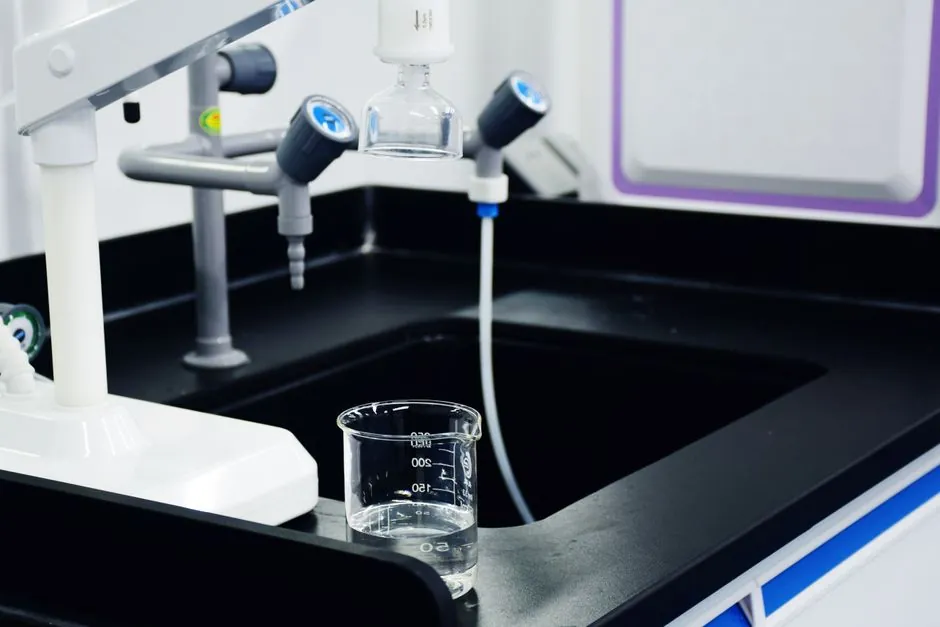
Twenty-seven in-line conductivity meters are listed on DirectIndustry across 12 manufacturers, with ABB, Bürkert and HORIBA Process & Environmental anchoring the process-automation tier [S1].
Separately, 17 medical/lab vendors field 24 portable and benchtop models on MedicalExpo, while Metoree lists 33 electrical-conductivity-meter manufacturers as of August 2026 [S4][S7].
Four supplier tiers, defined by measurement target
Industrial in-line conductivity meters serve continuous liquids in pipes, with the Bürkert Type 8222 using a two-electrode cell plus integrated Pt1000 temperature probe and selectable cell constants [S1]. Swan Analytical's AMI Solicon 4 uses a four-electrode principle specifically to stay insensitive to fouling in surface, cooling and effluent water [S1]. HORIBA Process & Environmental targets boiler/condensate with a 0.5 cell constant contacting sensor paired to a C53 analyzer, while its HE-200C line is designed to USP <645> pharmaceutical water conductivity [S1].
NDT and metal-conductivity suppliers form a separate tier aimed at solids: Helmut Fischer (Sindelfingen, founded 1953), NDT-KITS (Hong Kong, digital ultrasonic flaw detector since 1988), PCE Instruments (Florida, formed 1999) and NDT Supply (Kansas) cover eddy-current testing of alloy conductivity for aerospace and heat-exchanger tube sorting [S3]. Fischer also ships handheld XRF, coating-thickness and capillary-optics instruments alongside its metal conductivity meter [S3].
Cell constant, electrode count and range determine fit
Cell constant C directly sets the operating window: a 0.01 cm-1 cell suits high-purity water below 20 microS/cm, a 0.1 cm-1 cell covers 1 microS/cm to 1 milliS/cm, a 1.0 cm-1 cell handles 10 microS/cm to 100 milliS/cm, and toroidal or four-electrode cells reach up to 2 siemens/cm for chemical and caustic streams [S1][S4].
Two-electrode cells (Bürkert 8222) are simple and cheap but polarise at high conductivity; four-electrode cells (Swan AMI Solicon 4, Mettler LE703 covering 10 microS/cm to 200 milliS/cm) cut polarisation error and tolerate fouling [S1][S4]. For sizing logic, see the Conductivity Meter Sizing guide on cell constants and output selection.
Comparison across the four tiers
Process-automation OEMs (ABB Endura, Bürkert 8222, HORIBA C53, Swan AMI series) typically ship 24 V DC loop-powered or 4-20 mA + HART transmitters with two- or four-electrode sensors for chemical, pulp and paper, pharmaceutical and power applications [S1]. Benchtop and portable lab meters (Mettler Seven2Go, Hanna HI6321, YSI Pro1030) prioritise 0.001 microS/cm to 3000 milliS/cm autorange, IP67 housings, and multi-parameter pH/ORP/salinity/TDS in a single handheld [S4][S5].
Metal-conductivity suppliers (Helmut Fischer, NDT-KITS, PCE, NDT Supply) focus on eddy-current probes for non-destructive alloy sorting and material identification, not on aqueous conductivity [S3]. Chinese industrial analyzer vendors such as Supmea ship multi-parameter EC/TDS/resistivity online analyzers like the SUP-TDS210-B for boiler-feed and RO monitoring, with continuous 4-20 mA output and Modbus [S9]. Typical catalog conductivity ranges run from 0.001 microS/cm to 3000 milliS/cm autorange across 12 Fisher Scientific-listed products, while temperature limits cluster at -5 to +105 degrees C for 22 catalog entries and -30 to +130 degrees C for 10 others [S5].
Who each tier serves, and who it does not
A benchtop Mettler, Hanna or YSI handheld is the right pick for grab-sample QA/QC, drinking-water field work (YSI Pro1030 is EPA approved for drinking water), and laboratory titration support, with 7 in. color TFT and graphic LCD options common [S4][S5].
Helmut Fischer, NDT-KITS, PCE and NDT Supply are NOT a fit for aqueous water-quality loops, they are built to measure electrical conductivity in solid metal samples for alloy verification and heat-exchanger tube sorting [S3]. Conversely, the process-automation tier is overkill for a benchtop lab doing 20 samples a day; the Chinese industrial analyzer tier fits when a buyer needs a cost-effective 24 V DC multi-parameter online EC/TDS/resistivity transmitter with continuous 4-20 mA output for boiler-feed or RO monitoring [S9].
Output, interfaces and metrology hooks
Industrial in-line meters ship with 24 V DC power, 4-20 mA analog, HART 7, and increasingly Ethernet-APL or Modbus RTU/TCP, while lab meters add USB-C, RS-232 and Bluetooth for data export [S1][S5]. Temperature compensation is non-negotiable: Bürkert 8222 integrates a Pt1000 in the sensor, and Swan AMI Powercon Specific offers selectable temperature compensation for different sample qualities and alkalising agents with automatic on-board zero verification via an integrated high-precision resistor [S1].
Pharmaceutical water conductivity must comply with USP <645> stage 1/2 (HORIBA HE-200C is designed to this), and high-purity water resistivity loops need 18.2 megohm-cm-class flow cells with needle valves and digital sample flow monitoring (Swan AMI Rescon) [S1]. For pure-water and boiler cycles, two-electrode titanium cells are common, while 4-electrode designs dominate fouling-prone cooling and effluent service [S1].
Standards and selection guardrails
USP <645> governs pharmaceutical water conductivity, ASTM B193 covers electrical conductivity of nonferrous metals for NDT alloy sorting, and ASTM D1125 covers aqueous conductivity in the 0 to 200,000 microS/cm range for industrial and high-purity water [S1][S3]. Buyers specifying into a hazardous area should require ATEX/IECEx certification on the transmitter, not just the sensor, since loop-powered analytical devices often sit in zone 1 or zone 2 [S1].
IP rating matters in the field: Fisher Scientific's lab-meter catalog lists 22 IP54 and 16 IP67 instruments, with another 14 in the dataset marked None [S5]. Operating temperature for process sensors typically runs -5 to +105 degrees C, expanding to -30 to +130 degrees C for high-temperature boiler probes, while pressure rating is set by the flow-cell body and process connection (stainless steel 1.4404 / 316L being the default for high-purity loops) [S1][S5].
2026 supplier-side signals worth tracking

Watch for Supmea and other Chinese analyzer makers releasing Ethernet-APL and IO-Link variants of the SUP-TDS210-B platform, and for OEM tier-1 brands to push HART-IP and Ethernet-APL gateways that fold conductivity transmitters into plant-wide asset-management dashboards [S1][S9]. On the NDT side, track eddy-current conductivity probes with Bluetooth and on-device storage from Fischer and NDT-KITS as aerospace and heat-exchanger tube-sorting workloads move away from cabled handheld loggers [S3].
Specifications, conductivity meter technology, and supplier rankings in this map reflect public catalog data published up to August 2026, and the next signal to verify is Q4 2026 EPA drinking-water method updates and any new USP <645> stage 3 guidance that would change required cell constants and temperature compensation for pharmaceutical water loops [S1][S4][S5].
The underlying component specifications are covered under conductivity meter, construction machinery and equipment, and lamps and light fittings.