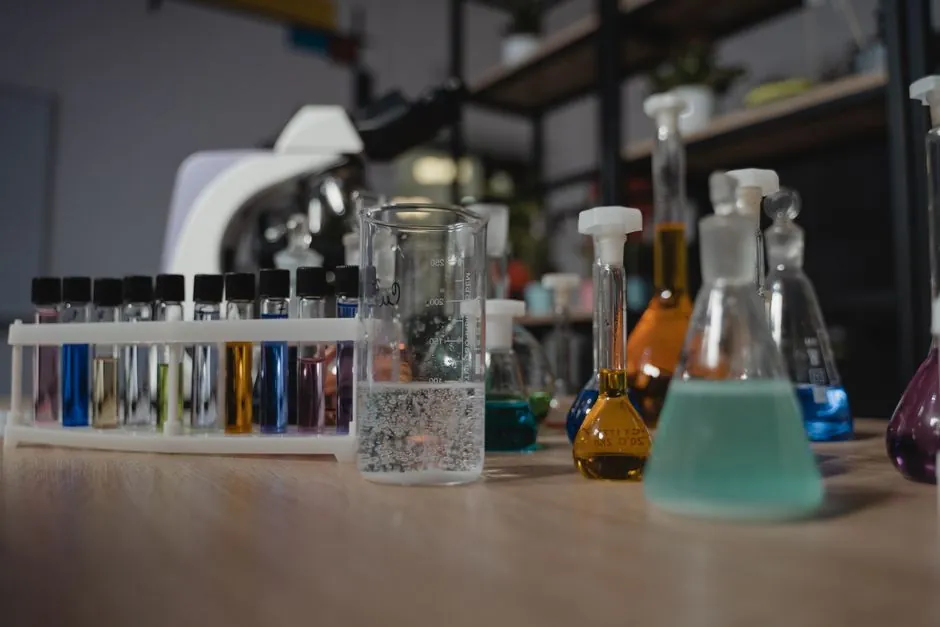
Conductivity meters and dissolved oxygen meters sit on the same water-quality bench, but they answer different questions: a conductivity meter reports total ionic load in µS/cm or mS/cm, while a DO meter reports oxygen activity as % saturation or mg/L using either a polarographic (membrane, Clark-type) or an optical (luminescent) probe [S5][S6].
Both classes now ship in handheld, benchtop, and inline process form factors, and several vendors, including Thermo Scientific with the Orion Star A329 (USD 3,580 list, three channels: pH/ISE, conductivity, RDO/DO) [S3], bundle them into one IP67-rated portable, which is the cheapest path when a field engineer needs both parameters in one trip.
What each instrument actually measures
Dissolved oxygen is the partial pressure of O2 in equilibrium with the water, expressed in mg/L or % saturation. At 20 °C and 100 kPa, oxygen-saturated clean water carries about 9 mg/L O2, dropping as temperature rises [S5]; in semiconductor wet benches HORIBA's HD-960L targets the ppb regime inside HF streams, far below the ppm range a standard aquaculture probe covers [S4][S1].
Sensing technology: two probe families for DO, one for conductivity
DO probes split into two camps. Polarographic (galvanic or Clark-type) sensors consume oxygen through a biased electrode behind a gas-permeable membrane and need a steady flow across the membrane plus periodic electrolyte and cap replacement [S1].
Optical (luminescent) DO probes, including the fluorescent-cap models sold for aquaculture and the RDO optical channel on the Orion Star A329 [S3][S1], do not consume O2, tolerate low-flow conditions, and ship with a quoted pressure rating on industrial-grade bodies (e.g. a 6 bar networked probe with 12 V RS-485 output is in current supplier catalogs) [S1].
Conductivity cells are almost always 2- or 4-electrode potentiometric designs; HORIBA's LAQUA EC210 handheld runs automatic calibration up to 4 points and manual up to 5 points, with salinity, resistivity, and TDS derived from the same cell reading [S2]. There is no real "optical vs polarographic" fork in conductivity the way there is in DO.
Selection criteria mapped to use case
Pick a conductivity meter when the decision is about total dissolved ion load: boiler feedwater, USP/Ph.Eur. purified water, RO/EDI outlet checks, demineralizer breakthrough, or process leak detection in a heat exchanger. A handheld like the LAQUA EC210 (waterproof, backlit LCD, foldable meter stand, shockproof casing) covers routine field rounds [S2].
Pick a DO meter when the decision is about biological activity or corrosion control: activated-sludge basin aeration (target 1.5-2.5 mg/L typical), aquaculture stock health, river/self-purification monitoring, or trace O2 in chemical and semiconductor process baths [S4][S5][S6].
Pick a bundled multiparameter (Orion Star A329, pH/ISE + conductivity + RDO/DO, IP67, 5000-point datalog) when one operator needs all three parameters on the same sample with synchronized time/date stamps, accepting the higher unit cost in exchange for one calibration routine and one cable kit [S3].
Direct comparison: conductivity meter vs DO meter on four criteria
Criterion 1, primary output: conductivity reports µS/cm or mS/cm (and derived TDS/salinity/resistivity) [S2]; DO reports % saturation or mg/L (and ppb on low-range models like the HD-960L) [S4]. They are not interchangeable on the same channel.
Criterion 2, sensing element: conductivity uses inert metal or graphite electrodes in a defined cell constant; DO uses either a polarographic membrane stack or an optical luminescent cap with a defined LED excitation wavelength [S1][S3].
Criterion 3, calibration cadence: conductivity calibration on the LAQUA EC210 is 4- or 5-point with standard solutions [S2]; polarographic DO probes need membrane/cap and electrolyte replacement on a 1-6 month cycle depending on service, while optical DO caps typically stretch to 12 months and avoid electrolyte handling [S1][S3].
Criterion 4, integration: inline DO probes commonly expose 4-20 mA plus RS-485 Modbus (e.g. the 12 V, 6 bar networked probe listed at 6 bar) [S1]; handheld conductivity meters are usually stand-alone with optional USB/IrDA, and the bench/portable tier adds Ethernet and printer output [S2][S3].
Where each technology is the wrong tool
A conductivity meter cannot read oxygen activity and will pass a de-aerated, low-ionic sample as "good" if the spec is purely resistivity-based; conductivity alone misses biological oxygen demand entirely [S5][S6].
A DO meter cannot replace conductivity for ion-load monitoring: a sample saturated with O2 but loaded with NaCl will read healthy DO while conductivity screams over-range, and conversely a low-ionic clean-water loop with a pinhole air ingress will show normal DO but rising conductivity from contamination.
Optical DO probes are also a poor fit for samples containing high concentrations of dissolved gases that quench the luminophore, or for slurries that foul the optical window; polarographic probes remain preferred in heavy biofilm or sulfide service, with the trade-off of higher maintenance [S1].
Standards, sourcing, and the price band you should plan around
For process water and wastewater the relevant method references are the standard APHA 4500-O series for DO and 2510 for conductivity; semiconductor fabs typically map ppb-level O2 in HF baths to vendor-specific SEMI guidelines and use dedicated low-range monitors like the HD-960L rather than general-purpose DO probes [S4].
On price, the public Fisher Scientific listing for the Orion Star A329 portable meter was USD 3,580 on the 2026-08 reference window (catalog 13-645-569) [S3], and the Orion Star A329 portable kit (13-645-571) lists alongside it as the field-ready bundle; general-purpose optical DO probes for aquaculture and water treatment sit materially below that, while semiconductor ppb-range DO monitors sit well above it [S1][S3][S4]. For a process engineer sizing a panel, expect a 4-20 mA industrial DO probe with RS-485 to be a separate line item from the transmitter, and budget probe-replacement consumables (membrane caps, electrolyte, optical caps) on a 12-month cycle as part of the TCO, not as a one-time capex hit. For projects where conductivity is the primary spec and flow side matters, the electromagnetic vs turbine flowmeter trade-off ties directly into the same ionic-load decisions that drive conductivity meter selection.
Track two signals into Q4 2026: optical DO probe refresh cycles against biofilm-heavy municipal aeration tanks, and how bundled multiparameter portables like the Orion Star A329 displace separate handheld fleets in regulated environmental labs; both will reshape the spec list on the next flow meter selection criteria round.
For component-level specifications, see oxygen detector.