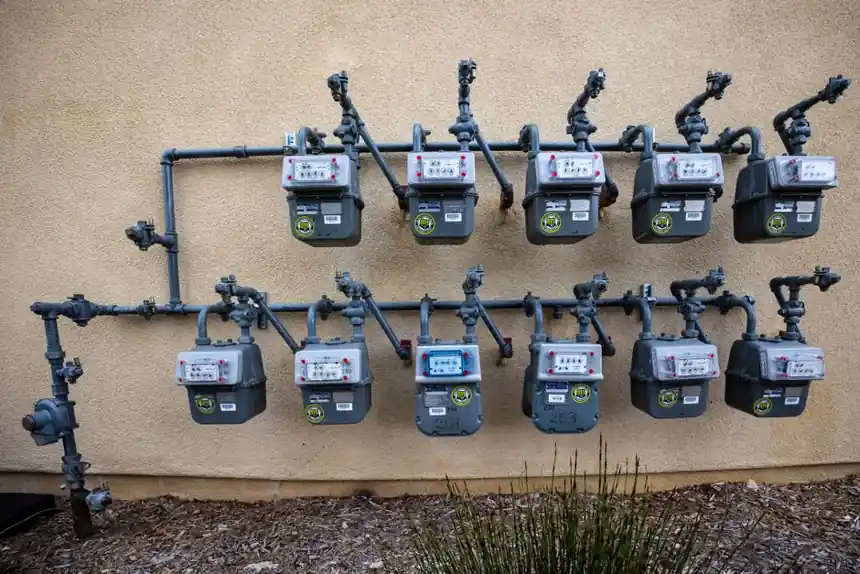
A spec-first flow meter selection in 2026 starts with four hard inputs: fluid conductivity, viscosity band, line size in NPS, and required turndown ratio, because each sensing principle has a physical regime where it is honest and a regime where it lies.
For a 4-inch DN100 water line at 0.3-3.0 m/s and 1.5% accuracy, an electromagnetic flowmeter is the default; for the same line carrying clean hydrocarbons above 1 cSt, a turbine flowmeter or vortex flowmeter replaces it, since the magnetic meter needs fluid conductivity above 5 µS/cm [S1].
Six Sensing Principles and Their Honest Operating Windows
Differential-pressure (orifice, Venturi, averaging Pitot), electromagnetic, Coriolis, vortex, ultrasonic (clamp-on and inline), and turbine cover roughly the full industrial envelope, and each is governed by a different physical law that sets its lower and upper usability [S1][S4].
Orifice / DP meters work on any clean single-phase fluid but typically need 25-100 kPa of permanent pressure drop at design flow; magnetic meters need conductive liquid (water, slurries, acids) with conductivity above 5 µS/cm and stay linear over 10:1 to 100:1 turndown depending on electronics [S1].
Coriolis meters measure mass flow directly and density simultaneously, deliver 0.05-0.10% accuracy, and tolerate two-phase / entrained gas better than any other technology, but the wetted price for a 2-inch unit commonly runs 5-10x an equivalent magnetic meter and pressure drop is higher for low-pressure services [S4].
Decision Criteria a Senior Engineer Locks First
Five criteria decide 90% of selections: fluid phase (gas / liquid / steam / slurry), minimum required accuracy in % of reading, Reynolds number band, available straight-pipe run upstream and downstream, and hazardous-area certification class.
KEYENCE's US selector ladder for process flow walks the user through pipe material, NPS, fluid temperature, and target flow rate as the four primary branches, illustrating the same precedence most OEM sizing software applies [S2].
Process-side constraints, including line size, flange class (ANSI 150/300/600), wetted material (316L SS, Hastelloy, PTFE liner for magmeters), and required output protocol (4-20 mA + HART, Modbus RTU over RS-485, FOUNDATION Fieldbus, IO-Link), narrow the candidate list further before a vendor is picked [S4].
Criteria-Based Comparison of the Six Main Types

Lining the principles up against four decision criteria makes the choice auditable rather than tribal: accuracy, turndown, pressure drop, and capital cost indexed to a 2-inch line.
Orifice / DP: 1-2% of reading typical, 3:1 turndown without stacked transmitters, 60-100% of inlet pressure absorbed at design flow, lowest capex [S3].
Magnetic: 0.3-0.5% of reading, 10:1 to 100:1 turndown, near-zero permanent pressure drop, mid capex; fails on hydrocarbons and on low-conductivity condensate [S1][S3].
Coriolis: 0.05-0.10% of reading, 50:1 to 100:1 turndown, 1-3 bar pressure drop depending on tube count, highest capex; succeeds on mass, density, and two-phase [S4].
Vortex: 0.75-1.5% of reading, 10:1 to 20:1 turndown, moderate pressure drop (one to two velocity-head losses), mid capex; needs a minimum Reynolds above roughly 10,000 to maintain stable shedding [S3].
Ultrasonic (inline transit-time): 0.5-1.0% of reading, 50:1 turndown, near-zero pressure drop, mid-high capex; needs an existing full-bore flow conditioner or 10D upstream / 5D downstream straight pipe on smaller services.
Turbine: 0.25-0.5% of reading, 10:1 to 20:1 turndown, one velocity-head pressure drop, low-mid capex; tolerates viscosities up to about 100 cSt only with body-compensation curves, and cavitating flow destroys the rotor [S3].
Who Should NOT Pick the Mainstream Option
Engineers defaulting to a magnetic meter for any liquid service should walk back the decision when the fluid is hydrocarbon, oil, or deionized water, because the conductive-fluid requirement is not a soft preference but a hard physical prerequisite for Faraday induction. [S1]
Engineers defaulting to a Coriolis flowmeter on cost grounds should be pushed toward vortex or magnetic when the service is clean steam, saturated water, or low-viscosity glycol below DN50, where the Coriolis premium buys no useful density data [S3][S4].
Engineers defaulting to clamp-on ultrasonic flowmeter retrofits on legacy carbon-steel lines should be pushed to inline magnetic or DP when the existing pipe wall is heavily scaled or internally corroded, because the ultrasonic transit-time signal attenuates on rough or gas-laden walls, and accuracy can drift from 1% nominal to 3-5% in the field.
Limitations, Failure Modes, and Standards Discipline
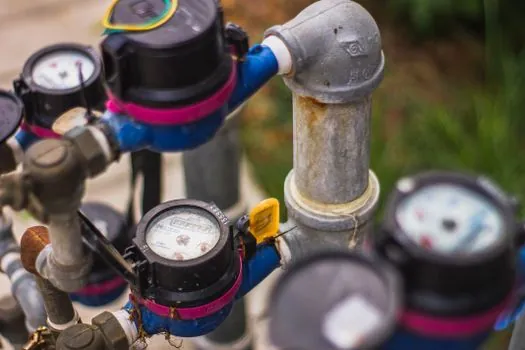
No single technology is universal, and the failure modes are predictable: cavitation damages turbine rotors and DP plates, gas slugs falsify vortex shedding below the cut-off velocity, magnetite scale builds up inside PTFE magmeter liners and biases the zero, and Coriolis tubes suffer erosion on abrasive slurries above roughly 3 m/s [S1][S3].
For an existing pressure transmitter rebuild on the same skid, the DP vs AP pressure transmitter: spec-driven selection for 2026 note maps which differential-pressure transmitters can share impulse lines with an orifice run, and the Pressure transmitter selection criteria for compressed air lines note treats the special case of gas service where Reynolds and density corrections drive the meter choice.
Sourcing, Production, and Total-Cost Signals
Mainland-China flow-instrument capacity at vendors such as ZYZL Instruments runs roughly 10,000 flowmeters per month and 5,000 pressure transmitters per month from a single 30+ year facility, which sets a useful lead-time floor of 2-4 weeks for non-catalog specials versus 8-12 weeks from European OEMs on equivalent specs [S4].
Flommit-class vendors holding ISO 9001, ISO 14001, ISO 18001, and ISO 17025 with CE mark typically price ultrasonic water meters for utility billing 20-40% below equivalent European or US-built units, while keeping MID / OIML R117 certification paths open for EU tenders [S1].
Track two signals into 2027: the rollout of Ethernet-APL (10BASE-T1L) at 10 Mbit/s over twisted pair into hazardous-area flowmeters, which lets a single field engineer commission and diagnose a meter from any PLC, and the cost-down of clamp-on transit-time electronics, which keeps eating share from inline DP installations on existing brownfield lines [S2][S4].