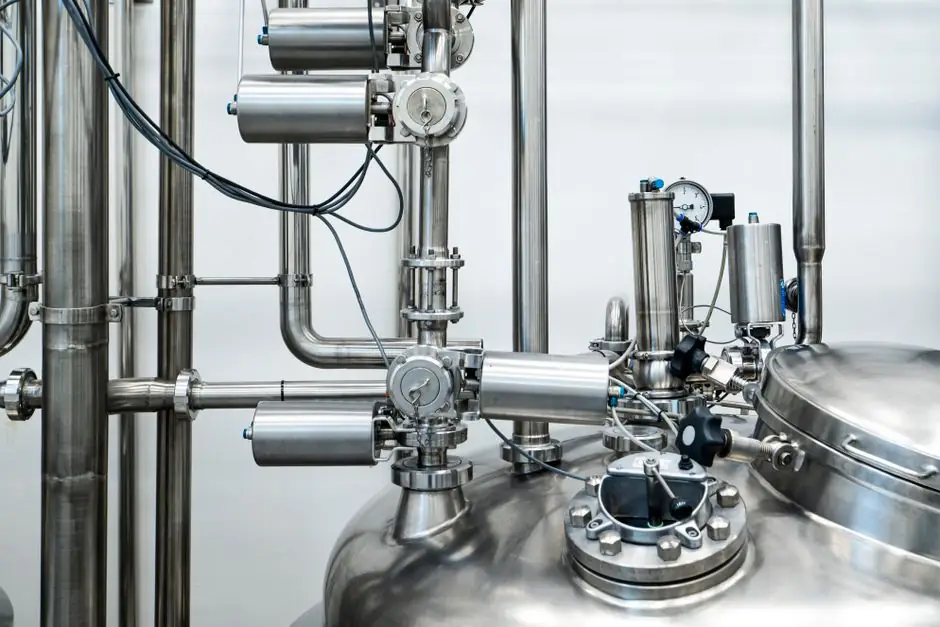
Pulp and paper plants typically favor segmented ball and V-port ball control valves rather than conventional globe valves because their rotary closure members suit erosive, fibrous, and scaling service [S7].
Selection must be assigned by mill area, including pulping, bleaching, stock preparation, papermaking, recycling, chemical recovery, and effluent treatment, with pressure, temperature, chemistry, velocity, and maintenance access driving the specification [S2][S3].
Map the valve to the mill service
A pulp mill exposes the same valve to materially different duties: steam and chemicals enter at the pulping stage, while stock, fibers, chemicals, water, and recovered liquor occupy downstream equipment areas [S2]. The application matrix in the 2025 DeZURIK paper covers six groups: pulping and bleaching, stock preparation, papermaking, recycling, chemical recovery, and effluent treatment [S2].
For steam and chemical dosing in pulping, quarter-turn V-port ball valves and rotary control valves are identified as strong-performance options, particularly when fitted with hardened trim [S2]. V-port segmented valves are recommended for flow-control services, while triple-eccentric disc valves are identified as a cost-efficient choice for large pipe sizes [S1]. These are service recommendations, not universal substitutions across the mill.
Control rather than isolation remains the governing distinction. Pulp and paper plants favor rotary valves for stock and slurry services [S7]. Selection should record whether the duty is isolation, control, mixing, or diverting before considering trim or actuator architecture [S3].
Compare the principal control-valve options
Pulp and paper plants favor segmented ball valves and V-port ball valves, whereas refineries have traditionally favored globe valves [S7]. A V-port segment creates a restricted flow area that can provide a near-linear relationship between opening and flow coefficient, although the exact characteristic and capacity still depend on trim geometry, valve size, and manufacturer data [S1][S7].
Control valves in pulp and paper manufacturing often face a harsh process environment in which scaling, corrosion, erosion, and controllability must be considered [S5].
Screen the process before selecting materials
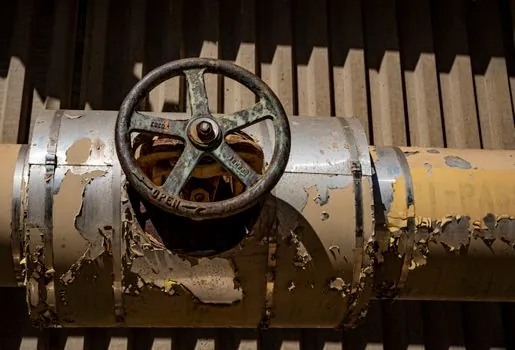
Every data sheet should be checked against maximum and minimum operating pressure, design temperature, required flow rate, fluid density or specific gravity, viscosity where relevant, and allowable fluid velocity [S3]. The paper-machine service also introduces scaling, corrosion, erosion, and carbon-footprint constraints, so control accuracy cannot be separated from mechanical durability and lifecycle cost [S5].
Material compatibility must cover both the production fluid and the cleaning chemistry used for boil-out or scale removal. Deposits may require solvents at the opposite end of the pH spectrum from the process liquid, so a wetted material that resists pulp liquor can still be unsuitable for the cleaning cycle [S3]. The specified body, trim, seat, stem, packing, actuator, and seal materials therefore need separate entries in the purchase specification.
Size for control range, not just line diameter
A practical sizing target places the control valve at approximately 60–80% open at the maximum required flow rate whenever the application permits that operating position [S8]. This gives the actuator and trim usable range at maximum load and avoids selecting a valve that is oversized, throttled near closure, or operating continuously close to its rated capacity [S8].
The valve sizing calculation must use the process fluid properties and the actual valve geometry. A nominal line size is not a control-valve size. Document minimum and maximum calculated flow, valve coefficient or flow characteristic, allowable velocity, shutoff pressure, and the actuator output required across that range.
Response speed is a process-control requirement, not an accessory detail. The valve, actuator, and positioner package should be checked for resolution, response time, predictable travel, and diagnostic or partial-stroke testing capability [S2][S3]. On fast steam-control loops, the same validation matters because sluggish travel can create temperature variation and contribute to boiler upsets [S5].
Match isolation and shutoff duties
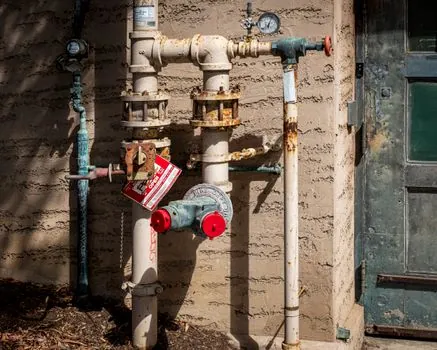
Isolation duties call for a clearly stated seat-leakage class, operating-pressure rating, stem arrangement, and operating mode [S3]. In stock-preparation and pulping areas, knife-gate and V-port ball valves are identified as common choices [S4]. A resilient-seated isolation valve can provide low leakage in cleaner service, but the seat material, media chemistry, temperature, and erosion conditions must be checked rather than treating seat softness as universally suitable.
The operating mode determines the maintenance burden. A modulating valve requires frequent or continuous movement and therefore a dynamic stem or packing solution suited to cycling; a simple isolation valve may not justify the same control trim or positioner. For critical mill service, assess whether double block-and-bleed isolation is required for lockout or confined-space entry [S3].
For stock and slurry systems, specify isolation strategy before ordering a replacement trim. Ball valve selection for pulp and paper provides a focused comparison of stock, trim, and seat choices, while the main control decision still depends on flow character, erosion rate, and shutoff requirement.
Build a procurement-ready specification
A purchase specification should identify at least 8 fields: valve function, service area and medium, maximum and minimum design pressure and temperature, flow range, valve size and type, wetted materials, seat-leakage requirement, and actuator, positioner, and control signal details. It should also state the required fluid velocity, cycling rate, allowable noise level, diagnostic test, and maintenance-access dimensions [S2][S3].
Model and material choices require traceable product data. A valve designated for pulp service is not proof of a particular trim alloy, seal arrangement, temperature rating, or cycle life. Require the manufacturer to state the operating limits and test basis for the offered configuration. For projects governed by pressure equipment or installation rules, the applicable code and edition must be fixed by project jurisdiction and the specified valve design.
Do not issue a generic globe-valve datasheet as the mill specification. The defensible shortlist is a V-port or segmented ball valve for the main flow-control duty, a rotary valve where steam or chemical service and hardened trim are priorities, a triple-eccentric disc valve for qualified large-pipe duties, and a globe control valve only where clean media and conventional control requirements justify its wetted-area and space penalties [S1][S2][S7].
The next control-room action is to compare the calculated minimum, normal, and maximum flows against each shortlisted valve's rated range, then verify the selected trim, seat, actuator torque, and material limits against the worst simultaneous pressure, temperature, velocity, and chemistry cases.