
Select an HVAC control valve by calculating its required Cv from design flow and pressure drop, then confirming that the valve has sufficient authority, the correct flow characteristic, and a compatible actuator.
This guide covers two-way and three-way valves for chilled water, hot water, steam, air handling unit coils, and constant-flow hydronic systems, with sizing limits for water, glycol, and steam service [S2][S3].
Start with the control duty and fluid conditions
The fluid, design flow, valve pressure drop, maximum temperature, and operating mode must be known before selecting a valve; pipe size alone does not establish the required control capacity [S3]. A modulating valve on a hydronic coil needs a calculated Cv, a suitable inherent characteristic, and enough available pressure differential for stable control [S2][S3].
For water and glycol circuits, the calculation must use the actual fluid properties and design pressure drop rather than a generic water rating. Belimo separates applications into two-position two-way control, modulating two-way coil control, two-way pump-pressure control, three-way flow control, three-way constant-flow temperature control, and steam service because each uses a different selection method [S2].
Two-position valves suit simple on/off control, while modulating valves are required where capacity must follow a continuous control signal. Two-way valves throttle flow for variable-flow systems; three-way valves divert flow in constant-flow systems [S1][S2].
Choose the valve architecture and flow characteristic
Two-way valves are normally used in variable-flow hydronic systems, while three-way valves serve constant-flow systems by diverting water between branches; using the wrong architecture can destabilize the loop before commissioning [S1]. An equal-percentage characteristic is the usual choice for coil service because HVAC coils have nonlinear heat-transfer behavior, with much of the heat transfer occurring at relatively low flow [S1].
The main HVAC options compare as follows:
Butterfly valves and globe valves are listed among the types of valves used in HVAC systems [S5].
Size from Cv, pressure drop, and flow characteristic

A control valve is selected for the flow it must pass at the available pressure drop, not for the nominal pipe diameter. Belimo publishes separate Cv tables for characterized ball, globe, and butterfly valves, with example coil pressure-drop inputs of 1 psi, 5 psi, and 10 psi and flow values expressed in gallons per minute [S2].
For a two-way modulating valve, determine the valve Cv at the required flow and design pressure drop, then select a valve whose characterized range includes the operating point. The sizing procedure must distinguish minimum stable control Cv from maximum full-open Cv; otherwise the valve may close too early or fail to pass design flow [S2][S3].
The design calculation should also account for fluid-specific data. Belimo provides a glycol specific-gravity table for correcting water-based Cv calculations, and a separate valve flow-loss table for the pressure loss associated with modulation [S2]. Steam requires a different calculation because steam density and pressure change with temperature and condition; Belimo provides vapor-pressure, cavitation, and specific-volume tables for that service [S2].
A chilled-water air handling unit should therefore be specified from coil design flow, coil pressure drop, available pump and system pressure, water or glycol concentration, and required control range. Matching only the existing line size can reproduce the wrong capacity and authority, while an existing replacement valve should be compared by Cv rather than by physical flange size [S4].
Verify authority, pressure assumptions, and system behavior
Authority is the valve pressure drop relative to the other resistance in the control circuit; if it is too low, the valve loses flow-control influence, while excessive authority can create noise and wasted pressure [S1].
One practitioner criterion for a chilled-water coil is 5–6 psi valve pressure drop at design flow, with valve drop greater than coil drop to support smooth modulation [S4]. That is a project rule of thumb, not a universal requirement: the governing check remains the calculated valve authority and the complete circuit pressure balance.
Pressure assumptions must reflect minimum pump head, pipe friction, coil curves, valves, and system operating conditions. A valve sized from nominal pressure or an arbitrary oversizing margin can hunt, consume energy, lengthen commissioning, and create noise or erosion [S1]. Pressure-independent control valves (PICVs) are listed among the types of HVAC valves [S5].
Match actuator, controls, and installation details
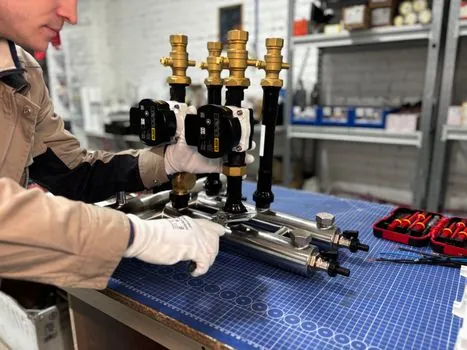
The actuator must match the valve function and the building control signal. Belimo groups the selection methods by two-position, modulating two-way, three-way, and steam duties, with actuator behavior treated as part of each system configuration rather than as a separate afterthought [S2].
Three application details deserve explicit treatment. First, HVAC equipment may use a 0–10 VDC control signal or a network-based electronic actuator, but the actuator, controller, and valve must be selected as a compatible set [S2]. Second, close-off pressure rating must exceed the maximum pressure the valve can encounter at shutoff, not merely the design pressure drop [S3]. Third, fluid temperature, glycol concentration, steam condition, and material compatibility must be checked against the valve construction [S2][S3].
Valve location also affects system behavior. Return-side installation is common in chilled-water systems, but it is not mandatory in every arrangement; in low-pressure or high-point systems, placing the control valve after the coil can help maintain full coil flow when the available pressure is low [S4]. The decision should be made from the coil and piping pressure profile rather than from location convention.
Apply the right valve for the actual service
A PICV is the stronger choice when system pressure varies materially or the design cannot reliably predict available valve pressure, because it limits and maintains flow rather than relying on a fixed Cv [S1]. A conventional characterized valve remains appropriate when pressure conditions are stable, authority can be demonstrated, and lower first cost is a project priority.
A modulating globe valve is generally the stronger choice for tight hydronic temperature control where throttling and frequent movement are required. A characterized ball valve is a practical alternative where compact size, low actuator torque, and two-way modulation are priorities. Butterfly valves are more defensible for large-flow equipment or packaging constraints when their characterized performance at the operating flow is verified. Angle-seat valve designs and other rotary valves should not be selected solely from nominal line size.
Three-way valves should not be chosen for a variable-flow two-way coil circuit without redesigning the hydraulic concept. Likewise, a two-position solenoid or zone valve is the wrong selection for a continuous output signal, while a modulating valve may be unnecessary complexity when the control sequence calls only for full-open or full-closed operation [S2][S5].
Turn the selection into a submittal-ready checklist
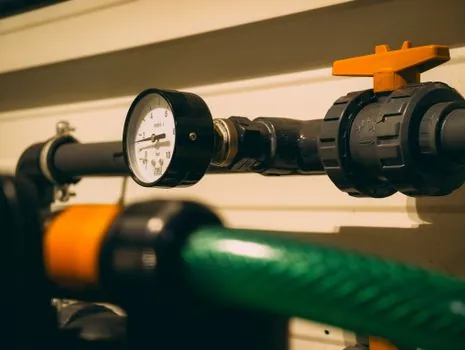
A complete HVAC control-valve submittal should state the service, fluid, concentration, design flow, design and minimum pressure drop, design temperature, control signal, valve authority, required Cv at minimum and maximum flow, pipe size, connection type, and actuator fail position [S1][S2][S3].
For a coil valve, request the characteristic curve, rated Cv range, maximum differential pressure, close-off capability, leakage class where specified, materials, and actuator stroke or rotation time. For a PICV, also require the selectable flow range, controller compatibility, and stated performance across the expected differential-pressure range [S1][S2].
The final shortlist is straightforward: use a two-way equal-percentage valve for a conventional variable-flow coil, a three-way valve for a constant-flow diversion circuit, and a PICV where pressure variation undermines conventional sizing. Close the selection only after the calculated Cv, authority, characteristic curve, actuator signal, and worst-case pressure conditions agree.