Coriolis mass flowmeters measure mass flowrate, density, and temperature simultaneously inside a closed, vibrating sensor tube, with typical accuracy between 0.05% and 0.5% of rate depending on model and size [S1].
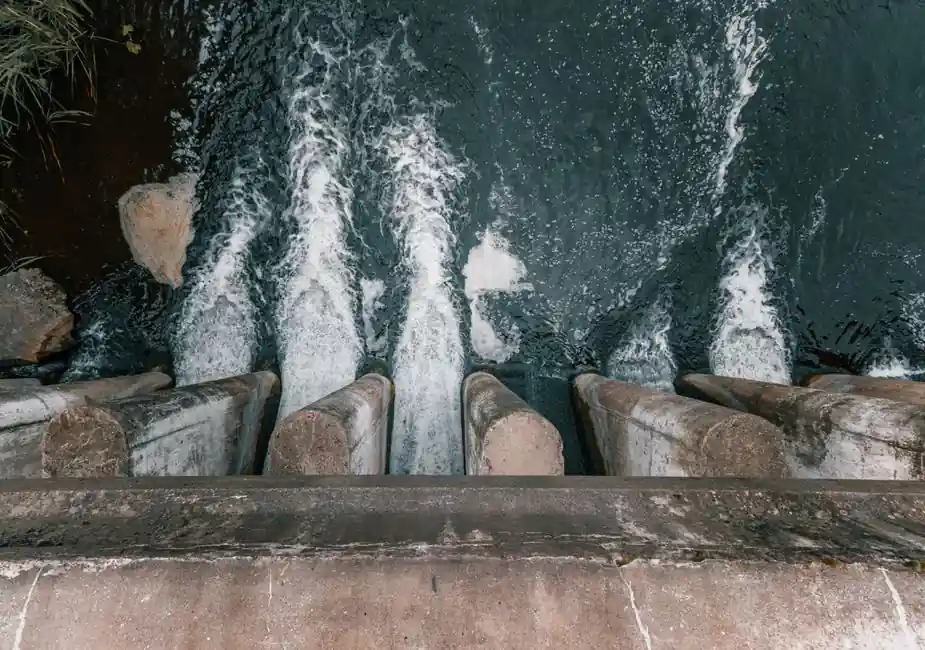
Open channel flowmeters are not flow sensors in the strict sense: they measure liquid level in a gravity channel, then convert that level to volumetric flow through a known primary device (weir, flume, or insert), with typical calculated-flow accuracy of 2% to 5% of rate under ISO 1438/ISO 4359 conditions [S1][S4].
Operating Principle and What Each Meter Actually Measures
A Coriolis flowmeter drives flow through one or more bent or straight tubes excited at their natural frequency; the inertial reaction of the fluid produces a phase shift between inlet and outlet pickoffs that is linearly proportional to true mass flowrate, independent of temperature, viscosity, or profile in single-phase service [S1]. Density is derived from the same tube's resonant frequency shift; temperature is read by an on-tube RTD, and the meter outputs mass flowrate (kg/h, t/h) plus density (g/cm³) plus temperature, with optional concentration and net-oil-water calculations for two-phase streams.
An open channel flowmeter is a level instrument (ultrasonic, radar, bubbler, or hydrostatic) plus a pre-characterised primary hydraulic structure. The level reading h is fed into the head-discharge equation Q = C·h^n of the installed weir or flume to derive volumetric flow, in m³/h or L/s, in a free-surface, atmospheric or near-atmospheric channel [S1]. The meter's stated accuracy therefore caps out roughly at the primary device's flow uncertainty (2-5%), not the sensor's mm-level level resolution [S4].
Decision Criteria: Pipe vs Channel, Mass vs Volume, Accuracy, Media
Use the four-criterion table below to shortlist. Install geometry is the first gate: if the process is a closed pipe or a pumped skid, Coriolis is on the table; if it is a free-surface channel, ditch, partially filled pipe, or a weir box, the open channel class is the only practical option [S1][S4].
Measurand is the second gate. Coriolis outputs mass flow directly and is the reference for mass-based batching, custody transfer of hydrocarbons, and reaction-feed stoichiometry. Open channel meters are inherently volumetric and depend on fluid density assumptions if mass is required, which is one reason the wastewater industry standardises on volumetric reporting in ML/day [S1].
Media compatibility is the third gate. Coriolis tolerates clean liquids, viscous oils, slurries up to a manufacturer's solids limit, and most non-Newtonian fluids, but it is not suited to very low-pressure gas or large line sizes above ~250-300 mm in standard skids. Open channel meters handle raw sewage, stormwater with debris, and irrigation water with sediment, because the wetted primary device is usually concrete, stainless, or HDPE and the level sensor is non-contacting [S1][S4].
Cost and footprint are the fourth gate. A 1.5-inch Coriolis transmitter for chemical service sits in the mid-thousands USD; an open channel ultrasonic or radar level probe plus a flume sits in the low-thousands USD and scales with channel civil works rather than line size, which is why the level instrument is a small share of total installed cost on water-plant projects [S1].
Comparison Matrix Across the Four Criteria
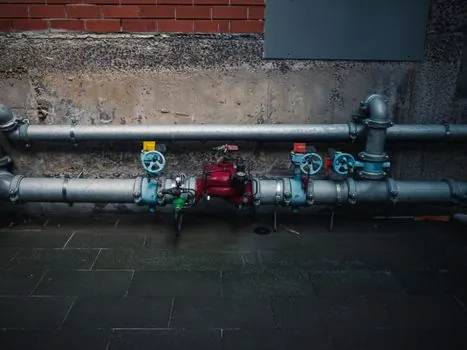
Across accuracy: Coriolis wins for closed-pipe mass service (0.05-0.5% of rate); open channel wins for closed-channel hydraulics (typically 2-5% of rate after ISO 1438/ISO 4359 calibration) [S1]. Across measurand: Coriolis provides mass flow, density, temperature in one device; open channel provides only level-derived volume. Across media: Coriolis handles clean-to-moderately-loaded process liquids and gases, but struggles with large solids and free-surface flow; open channel is purpose-built for raw water, sewage, irrigation, and stormwater with debris, and is unsuited to pressurised pipe service [S1][S4]. Across install footprint and cost: Coriolis is inline in the pipe with no upstream or downstream straight-pipe requirement in most cases, but is line-size priced; open channel needs a primary device (Parshall flume, V-notch weir, rectangular weir, Palmer-Bowlus) plus civil works and a non-contacting level sensor mounted above the water surface.
For a typical 2026 specification: a 50 mm Coriolis mass flowmeter for chemical dosing lists roughly in the 4,000-10,000 USD band before communications and verification; a DN100 Parshall flume in stainless or fibreglass plus a non-contacting ultrasonic or radar level probe plus a flow calculator typically lands in the 2,000-5,000 USD band, with the flume itself dominant. Neither number should be treated as a quote, but the order of magnitude is consistent with how engineering procurement budgets the two cases [S1].
Who Should Use Each, and Where Each Fails
Specifying a Coriolis flowmeter makes sense in five concrete cases: custody transfer of crude, refined product, or LNG requiring high mass accuracy and density-based API correction; mass-based batching and reaction-feed dosing where setpoint control is on kg/h rather than L/h; two-phase or three-phase measurement where a density cut separates oil/water/gas or detects entrained air; coriolis flow controllers on test stands and skids where flow setpoint accuracy of 0.5% or better closes a control loop; and any service where a single device must deliver mass flow plus density plus temperature on the same HART or FOUNDATION Fieldbus segment [S1].
Specifying an open channel flowmeter makes sense in a different five: municipal wastewater treatment plant influent and effluent channels where flow is reported in ML/day for permit compliance; combined sewer overflow and stormwater outfalls where a free surface and debris tolerance dominate; irrigation canals and agricultural distribution where a Parshall or cut-throat flume is the de-facto standard; industrial process water intake and discharge where the water authority bills on measured volume; and mining slurries in launders or open troughs where closed-pipe measurement would clog or wear out. In all five, the right primary device and its ISO standard (ISO 1438 thin-plate weirs, ISO 4359 flumes) carry the meter's accuracy budget, not the level probe [S1][S4].
Failure modes are mirror images. Coriolis fails in low-pressure gas, very large line sizes above the OEM's proven envelope, low-density two-phase mixtures with high gas fraction that the drive cannot keep stable, and any service where the process refuses to fully fill the sensor tube. Open channel fails in full pipes (the level reading saturates and the head-discharge equation no longer applies), in channels that are not hydraulically smooth upstream of the primary device, and in fluids that build up on the level sensor face, which is why non-contacting ultrasonic and radar are preferred over submerged probes in dirty water [S1].
Integration, Communications, and Verification
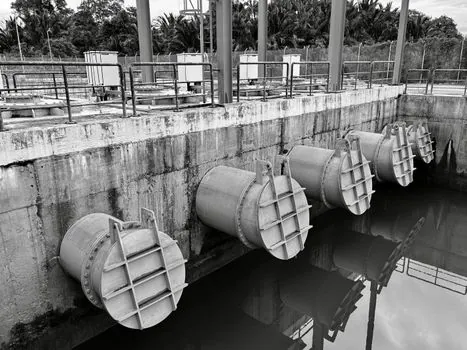
Coriolis transmitters are dense in industrial protocols: HART 4-20 mA with superimposed digital, FOUNDATION Fieldbus, PROFIBUS PA, Modbus, and on newer platforms Ethernet-APL and IO-Link for hygienic service, which makes drop-in replacement feasible for plant-wide standardisation. A typical verification path is a factory calibration certificate traceable to a national standard, optional in-situ verification using the meter's own drive characteristics as a reference, and on high-stakes custody transfer a prover loop run (per API MPMS 4.x family) for fiscal accuracy [S1].
Open channel flow transmitters historically offered HART or simple 4-20 mA plus relay outputs for sampling, and modern units add Modbus TCP, EtherNet/IP, and 4G/LoRa telemetry for remote site reporting. Verification is a site-level exercise: the primary device must be surveyed for throat width, crest elevation, and approach condition, and the level sensor zeroed against the structure's datum, with the calculated Q being auditable against the primary device's published equation and discharge coefficient tables [S1][S4].
For process engineers cross-shopping flow technologies, the broader flow meter family reference and the turbine flowmeter entry are useful adjacent reading when clean single-phase liquid measurement is the alternative; an electromagnetic flowmeter is the usual foil to Coriolis on conductive clean liquids, while the ultrasonic flowmeter reference covers the clamp-on and inline Doppler options that sometimes replace or complement both classes. A spec-first procurement pattern for non-custody water service is laid out in this ultrasonic flowmeter price and tier comparison for 2026, which shares the same level-instrument economics that dominate open channel bills of material.
Selection Workflow for a 2026 Spec
Run a five-step gate before signing the requisition. Step 1, geometry: is the flow in a closed pipe under pressure (Coriolis candidate) or in a free-surface channel (open channel)? Step 2, measurand: is the setpoint and the regulatory report on mass (Coriolis) or on volume (either, but open channel is the water-utility default)? Step 3, media: clean liquid, slurry with fines, or gas (Coriolis) versus raw water, sewage, stormwater (open channel)? Step 4, accuracy budget: does the project need better than 0.5% of rate on mass (Coriolis) or is 2-5% of rate on volume acceptable (open channel)? Step 5, install economics: is a flume or weir already in the civil scope (open channel is then the lowest incremental cost) or does the line have to be cut and a Coriolis spool installed with bypass and block valves? [S1]
A useful sanity check is to ask whether the site already runs a SCADA tag convention on mass flow. If the control system is built around mass-based control loops and the existing instruments are Coriolis or turbine flowmeter class, adding a Coriolis is the lowest-friction path. If the SCADA is built around level in a channel and the site team is comfortable with weir or flume hydraulics, the open channel path wins on integration cost even with its lower accuracy [S1].
Trackable signals to watch: revision activity on ISO 1438 and ISO 4359 (the open channel primary-device standards) and on API MPMS 4.x (Coriolis custody transfer chapters) for the rest of 2026, plus any plant-level audit findings on level-to-flow uncertainty that would force tighter discharge-coefficient documentation in municipal water and wastewater projects [S1].