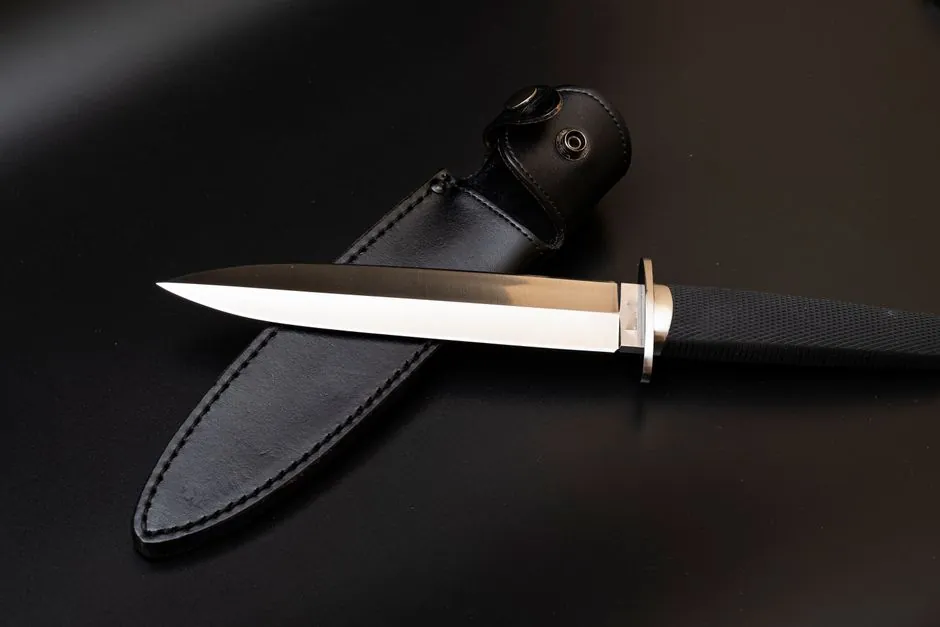
For long-run abrasive wear without corrosion exposure, CPM 10V is the stronger choice, while D2 remains practical where impact toughness, machining time, and lower material cost dominate [S1].
Wear Resistance and Hardness Comparison
These are comparative laboratory indices, not universal numbers of hours or cutting cycles.
The result depends on matching hardness before comparing wear. The relevant mechanism is CPM 10V’s high volume of hard vanadium carbide distributed through a powder-metallurgy matrix, whereas D2 relies on chromium carbides and can exhibit coarser carbide segregation [S2][S4].
Decision Matrix: Wear, Impact, and Machining
Compared with D2, CPM 10V has a higher abrasive-wear index and an application-specific wear life typically rated at 5x to 10x that of D2 [S6]. D2 is easier to machine and sharpen, has lower material and fabrication cost, and remains a reasonable choice when D2’s impact behavior and short lead time are more valuable than maximum wear life [S4][S7].
Treat those values as grade-specific test results, not universal guarantees for every component geometry or heat treatment.
Application Fit by Failure Mode
Use CPM 10V for long abrasive runs, high-wear forming dies, pelletizer blades, shredder blades, and similar duties where the part can tolerate a tougher operating discipline and higher fabrication cost [S1][S2][S6]. For glass-reinforced plastics and high-silica paper, the cited practical comparison gives CPM 10V wear life typically 5x to 10x that of D2 in abrasive applications [S6].
Use D2 for short-life cold-work tooling, general dies, punches, blades, and applications where impact or misalignment is likely. D2/SKD11 provides good abrasive wear, but coarse chromium carbides and carbide banding can increase chipping risk under impact or misalignment [S2]. D2 is also easier to sharpen, which can be valuable when the tool must be restored frequently [S7].
CPM 10V is not the automatic choice for every wear problem. In high-load pelletizing, impact and microcracking may dominate; the comparison identifies CPM 9V as the chipping-resistance leader among the steels, with CPM 10V selected when wear resistance is the priority [S2]. For steady-load duty with minimal impact, WC-Co carbide K10-K20 can outperform the steels in absolute abrasive wear and dimensional stability, although lower cobalt content increases chipping risk [S2].
Abrasive Wear Evidence and Limits
This supports the direction of the comparison, but a laser-clad coating result does not establish a universal service-life multiplier for solid CPM 10V parts.
Abrasive wear life depends on the abrasive itself, load, speed, temperature, geometry, lubrication, and failure criterion. A blade that dulls gradually may benefit from CPM 10V’s wear resistance, while a blade that fractures at the edge may fail earlier despite its lower abrasive wear index [S1][S2]. The cited high-load pelletizing comparison also notes that coatings such as TiCN for abrasive wear and TiAlN for elevated-temperature work can extend tool life, but coating selection must match the substrate and dominant failure mode [S2].
Manufacturing, Heat Treatment, and Regrinding
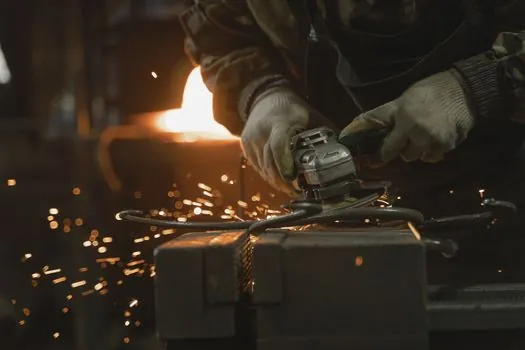
CPM 10V is harder to cut than D2, particularly in the annealed condition, because its vanadium carbide acts as an abrasive within the matrix. Tooling, speeds, feeds, and depth of cut must be selected for carbide volume rather than by applying a D2 machining recipe [S4]. Consistent chip load and rigid toolpath engagement reduce the risk of accelerating abrasive tool wear [S4].
CPM grades also add machining cost and lead time relative to D2 or A2, so the wear-life premium is economically justified when abrasive consumption, downtime, regrind frequency, or replacement labor dominate the job [S4]. The comparison of air-hardening versus oil-hardening grades is relevant to quench and distortion planning, but heat treatment must be specified for the actual grade and component geometry. The cited AISI D2 tool steel specification can serve as a reference point for the D2 side of a production drawing.
Selection Rules for Production Procurement
Specify CPM 10V when the duty is predominantly abrasive, the cutting edge is not exposed to severe shock or misalignment, and the expected wear life justifies higher machining and material cost [S1][S4]. For abrasive applications, CPM 10V has a wear life typically rated at 5x to 10x that of D2 [S6].
Specify D2 when impact resistance, rapid repair, easier sharpening, lower upfront cost, or short lead time outweigh maximum abrasive-wear life [S2][S7]. If the failure mode is unknown, run a controlled wear comparison using the production abrasive and geometry. Record cycles or mass loss, edge fracture, regrind time, and total cost per usable component rather than selecting on hardness alone [S3][S4].
The decisive trackable signal is the field result: compare CPM 10V and D2 tools under identical abrasive loading, then use measured wear life and fracture frequency to set the production alloy and machining budget [S1][S3].