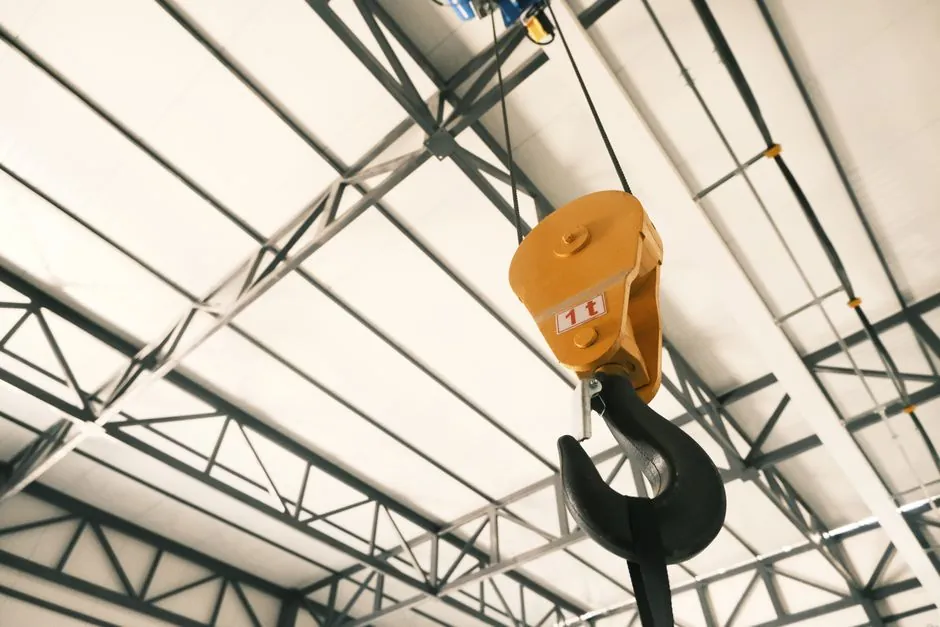
For foundries weighing overhead-crane loading against an automated mold transfer (AMT) or heavy-duty AGV feed onto a shakeout machine, the decision now sits on three numbers: flask weight, cycle repeatability, and floor footprint, not on whether automation is "modern."
The 2026 product range covers a clear split. Crane-based mold handling kits from suppliers such as Kuangshan still target single-girder EOT and double-girder foundry crane builds for lifts up to roughly 5 t per hook [S1]. On the other end, heavy-duty AGV mold transfer systems such as Lonyu's dual-drive, hydraulic-lifting, rack-diving unit are engineered for excavator-chassis-class molds in the 10–30 t band, moving them from smelting to sand-dropping without an overhead lift [S5]. A Hensen case study from 2026 documents a customized heavy AGV that cut changeover time on an injection-molding cell while reclaiming floor area previously blocked by crane swing radius [S7].
Where crane loading still wins: small flask, low frequency, mixed product
Overhead crane loading remains the right call when the heaviest mold on the floor is below 5 t, changeover cadence is below 4–6 cycles per shift, and the same hook serves multiple workstations. A foundry-grade EOT crane rated to the heaviest regular load (not the average) lets one operator stand the flask, index it over the shakeout, and clear it without dedicated automation [S1].
The 2026 Kuangshan product line explicitly lists foundry overhead cranes, ladle cranes, and cleanroom cranes as separate FEM-rated families, with double-girder EOT builds commonly used for castings in the 5–20 t band where a single-girder EOT is structurally insufficient [S1]. For green-sand jobbing shops running a casting mold mix that changes daily, that flexibility is hard to beat with any fixed-path AGV. Crane loading also stays compatible with existing shakeout geometries, because the hook position can be re-taught by the rigger in minutes, not re-commissioned.
Where automated mold transfer wins: heavy flask, fixed cycle, high duty
AMT/AGV systems earn their capex when three conditions stack: flask mass above 5 t, cycle time below 10–15 min per shakeout feed, and a flask geometry that fits a defined pocket or rack. Lonyu documents dual-drive AGVs with hydraulic lifting and narrow-rack diving specifically for smelting-to-sand-drop transfer of excavator chassis molds, eliminating the overhead-crane wait that gates every shakeout cycle [S5].
The practical ceiling on crane-based shakeout loading shows up first in dropped-load exposure, not in cycle time. Teetering a flask upright with an overhead crane to clear a mold base is explicitly flagged as crane misuse in industry guidance, because EOT cranes are designed for vertical lift, not controlled rollover [S3]. A 2023 Foundry Magazine piece on the Upender Inverter notes that purpose-built rollover devices are routinely offered up to 10,000 lb (about 4.5 t) standard and 50,000 lb (about 22.7 t) modified, which is roughly the envelope where a crane-only cell starts to look unsafe rather than just slow [S3].
Selection criteria: weight, cycle, footprint, safety case
A spec-first comparison needs four decision criteria: rated load, cycle repeatability, floor footprint, and the safety case for rollover or near-vertical transfers. Below is the 2026 matrix used by process engineers for shakeout infeed. [S3]
Crane loading (EOT or goliath) typically covers 1–32 t per hook, with cycle repeatability driven by the rigger and a swing radius that blocks 6–10 m of aisle per cell [S1][S8]. Heavy-duty mold transfer AGVs cover 5–50 t with ±10 mm repeatable positioning on a defined guide path, and reclaim 60–80% of the crane swing footprint because the AGV path is lane-narrow, not radius-swept [S5][S7]. On the safety axis, the crane path is the higher dropped-load exposure during rollover; the AGV path is the higher single-point-of-failure exposure if the guide path is blocked.
Cell layout and integration with shakeout, fettling, and riser cut
Cell layout, not the carrier choice, decides whether a shakeout line runs at nameplate. For an AGV-fed shakeout, the AGV lane, the fettling grinder discharge conveyor, and the riser-cut station need to share one straight spine, otherwise the AGV sits idle waiting for the next cell to clear. ASM International's molding-and-machines chapter notes that flaskless molding layouts are designed specifically so that molds can enter a rotary shakeout on a single linear axis, without any cross-traffic [S6].
For crane-fed shakeout, the crane runway has to clear the heat treatment furnace bay door swing, the sand blasting machine enclosure, and the riser-cut booth, which usually forces the shakeout to sit at the end of the bay. Die-handling guidance from 2026 reinforces that crane-vs-cart choice inside the cell is decided by rigging clearance, machine loading height, and floor markings long before the carrier is ordered [S8].
Who it is for, and who it is not
Crane loading onto a shakeout is for foundries running under 5 t per flask, fewer than 6 cycles per shift, and a product mix that changes week to week. It is not for plants that have already standardized on a flask size, run two or three shifts, and measure OEE per shakeout cell. AMT/AGV loading is for the second case: heavy, repetitive, layout-locked cells where crane waiting time is the binding constraint on shakeout throughput [S4][S7].
For an injection-molding retrofit, the threshold is similar but the metric changes. A 2026 retrofit guide on mold change cart layout notes that a cart or AGV becomes the right answer once "manual mold movement or crane waiting time is the real bottleneck," and once the cart height, direction, and capacity are matched to the machine bolster before the equipment is ordered [S4]. That same logic translates directly to foundry shakeout infeed, with flask weight and cycle time replacing mold weight and changeover time.
Limits, failure modes, and the realistic 2026 capex envelope
Two failure modes dominate the 2026 field reports. On the crane path, the recurring incident is the partial rollover: the flask is pulled past vertical on the hook, swings back, and the rigger loses control, which is the exact misuse case the Upender Inverter literature calls out [S3]. On the AGV path, the recurring incident is path blockage: a sand spill, a misplaced riser cutting machine chute, or a forklift left in the AGV lane stops the cell, and the upstream pour bay backs up within one cycle.
Capex framing is therefore a function of duty, not brand. A double-girder foundry EOT crane in the 10–20 t class, with FEM-rated hoists and variable-frequency drives, sits in the low-to-mid six figures USD installed, while a heavy-duty mold transfer AGV with hydraulic lift, dual-drive steering, and a defined guide path sits in the mid-to-high six figures per unit, before controls integration with the shakeout PLC [S1][S5]. The break-even calculation is straightforward: if crane waiting time costs more than the AGV lease over the cell's planned life, automate; if not, keep the crane and harden the rigging instead.
Trackable signals to watch through 2026: foundry-tier shakeout throughput per cell, reported as cycles per shift on OEM nameplate vs measured, and the number of AMT/AGV shakeout cells commissioned in the 10–30 t flask class, which Lonyu and Hensen both flag as their primary growth segment [S5][S7].