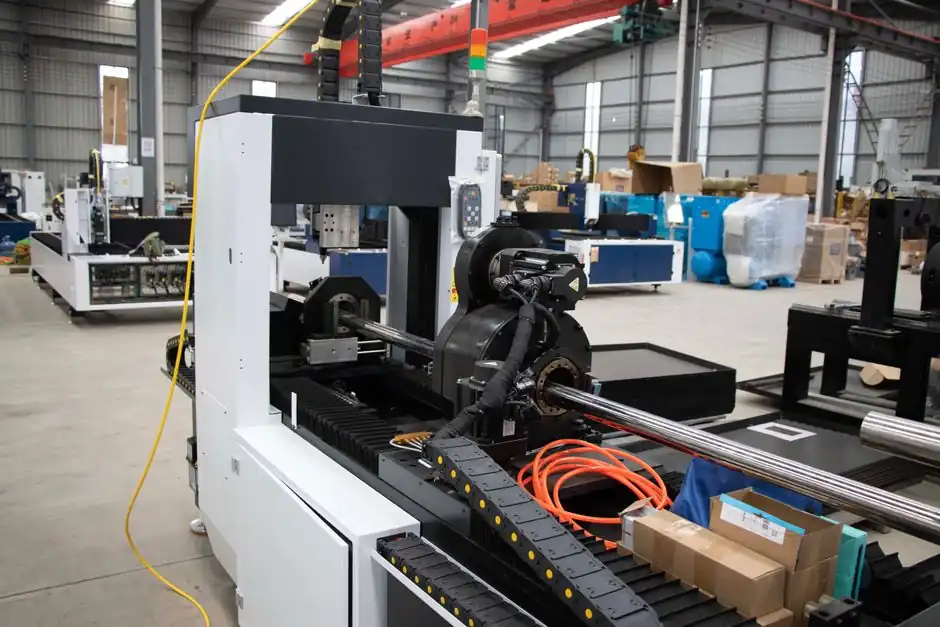
A crankshaft balancing machine with bob weights is the standard shop tool for hitting the sub-1 g·in residual imbalance that high-rpm engines demand, and current production kits cover journal diameters from 0.610" up to 3-1/8" with calibrated per-bob-weight ranges of 150-3600 g [S5].
Engine builders use bob weights to simulate the rotating big-end and reciprocating small-end mass of the rod and piston assembly, because the real components cannot be spun safely inside a dynamic balancing machine at balance speed. The simulated mass is bolted to each rod journal, the crank is spun, and the instrument reports a vector correction in two planes for inline fours, or in three planes (with "Third Plane Analysis") for V-6, V-8, V-10, and V-12 configurations [S2][S3].
How the Bobweight Number Is Calculated
The bobweight equals the rotating mass of the rod big end plus the reciprocating small end, pin, locks, rings, piston, and an oil-residual estimate, and for a typical Chevy smallblock the assembly lands near 1700-1830 g [S3].
Eagle's published example breaks the rod into big end (458 g) and small end (186 g) on a special roller-bearing jig, adds piston (416 g) + pin (118 g) + locks (2 g) + rings (35 g) + bearings (46 g) + 5 g of oil, and arrives at a 1770 g target bobweight for a 383 Chevy build [S3]. Because real assemblies land in a ±2% band around the target, an 1800 g target implies an actual swing of 1764-1836 g, which is why the machine shop has to measure and match rods and pistons to within ±0.2 g before spinning the crank [S3][S4].
Bob Weight Kits: Size, Range, and Coverage
Production V-8 kits such as Jamison Model 5097 cover 1-7/8" to 3-1/8" journals and ship with 10,413 g of precision-matched weights, giving a per-bob adjustable range of 1060-3600 g plus studs and wing nuts; the Mini V-6 kit 5099M covers 0.610" to 1.4" journals with 2100 g of brass at 150-500 g per bob [S5].
ABS Products, a 50-plus-year supplier of balancing supplies, ships single mini bob weights, speed nuts, V-6 kits, and V-8 kits under a dedicated bob-weights category, with optional steel balancing plugs and heavy-metal checking weights for the heavy-metal correction path [S1]. VTM Group's 9D715US machine ships with a set of 6 bobweights sized to balance V6, V8, V10, and V12 cranks on the same fixture, reflecting the trend toward one machine platform covering multiple engine families [S6]. Jamison also publishes a Universal Bob Weight that fits 1-3/4" to 2-5/8" journals in light (1350 g bare + 1000 g add-on) and medium (1800 g bare + 1000 g add-on) configurations, with model suffixes for brass weights (-B), calibrated speed nuts (-C), and plain speed nuts (-S) [S5].
Machine Capability: Spindle Load, Speed, and Correction Planes

CWT's Multi-Bal 5000 spins a 1,200 lb crank on its 5000HD variant, the 4090 lb cast base is resin-filled to kill residual vibration, and the bed cures for six weeks before CNC machining of the stanchion registers [S2].
The same platform adds "Third Plane Analysis" for V-configurations, an "HMV" Heavy Metal Analysis mode that vector-places heavy-metal slugs, and "PDQ" Precision Drill Qualifying, with software-side unlimited storage for bobweight, part number, and description so a repeat build can recall last setup in one tap [S2]. Real-time unbalance updating before the first cut is the headline throughput claim, with CWT stating a 2-4x speed gain over older analogue balancers on the same job mix [S2]. A typical three-planes V-8 correction reads the front, center, and rear throws, calculates heavy-metal placement in software, and lets the operator drill or mill to spec without re-spinning between attempts [S2][S7].
50% Factor vs Center-of-Gravity Methods
Ohio Crank Tech publishes a 50% factor method where bobweight equals (reciprocating weight × 50%) + rotating weight, giving 383.5 g from a 233 g reciprocating + 267 g rotating example, and pairs it with a connecting-rod center-of-gravity method for higher-rpm builds [S7].
The 50% rule approximates the inertial contribution of the small end at half stroke and is fast enough for street engines, while the CG method uses the actual rod big-end-to-small-end mass split and is the default for racing balance jobs where residual imbalance is pushed below 0.2 g [S4][S7]. For a full-race build, Galloway Engines documents residual unbalance under 0.2 g·in, which at 6000 rpm keeps bearing load under 1.35 lb, versus 17 lb for a well-balanced street engine and roughly 1985 lb from a 293 g rear imbalance on a stock 383 [S4]. The same physics that drives that 36x force multiplier from 1000 to 6000 rpm (force scales with the square of rpm) is the reason the choice between methods is not academic at high rpm [S4].
Internal vs External Balance, Heavy Metal, and Drilling Strategy
Factory "internal balance" cranks are corrected only on the rod throws, while "external balance" designs route part of the correction into the harmonic damper and flexplate/flywheel, and the machine has to know which scheme is in play before it suggests heavy-metal placement [S3][S8].
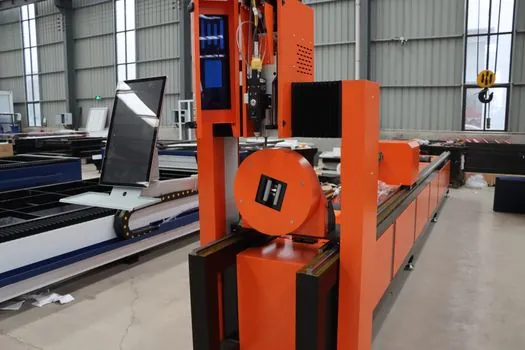
Manley Performance and Eagle both stress that the bobweight must be set below the crankshaft's target bobweight so the shop removes metal rather than adding it, and that heavy-metal slugging is a separate, billable operation outside the standard balance price [S3][S8]. When the cutting machine step is drilling the counterweight or rod journal, machine builders pair the balancer with a drill platform on linear roller rails and an air-clamp drill (or mill/drill) so the operator can position the spindle with fingertip pressure and lock it without re-spinning for true-position verification [S2]. For shops that handle V-6, V-8, and V-12 on the same line, choosing a machine with software-side vector placement (HMV) and a stored bobweight library avoids re-deriving the assembly weight for every job and keeps the coding machine cycle for serial-number engraving decoupled from the balance cycle [S2].
Component Matching, Tolerances, and the Floor Before Balance
Before the crank is ever spun, the rod set is big-end and small-end matched to ±0.2 g of the lightest rod, pistons are matched to ±0.2 g of the lightest piston, and rings, locks, pins, and bearings are weighed on the same scale so the calculated bobweight tracks the real assembly within the ±2% target band [S3][S4].
Oil residue is the one variable that cannot be pinned: Eagle uses 5 g for small-block and 15 g for big-block assemblies as an estimate, and notes the actual oil film varies cylinder-to-cylinder and run-to-run, which is one reason the balancer's two-plane or three-plane readout is the final arbiter rather than the calculated number alone [S3]. For a typical V-8 build that pushes reciprocating weight past the 50% factor, shops usually cross-check the calculated bobweight with the CG-method value and pick the heavier one as the target so the crank is corrected by removal rather than by heavy-metal addition, which keeps the bobweight kit's adjustable range (typically 1060-3600 g per bob on a V-8 kit) inside its mechanical envelope without specialty adapters [S5][S7].
Selection Criteria: Picking the Right Kit and Machine
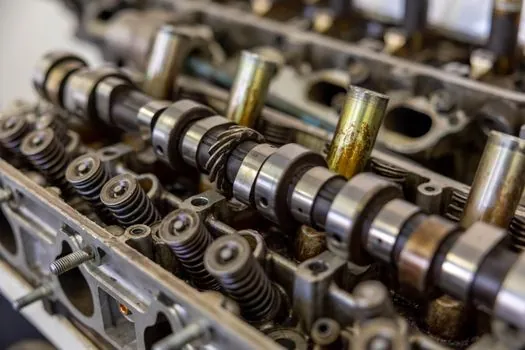
Match the journal diameter range of the bob weight kit to the largest and smallest rod journal in your engine mix; a V-8-only shop can standardize on a 1-7/8" to 3-1/8" kit with 10,413 g of matched weights, while a multi-config shop that also handles V-6 and mini V-6 needs the 0.610" to 2.25" coverage of the 5099/5099M pair [S5].
Pick the machine by maximum crank weight, number of correction planes, and software features, not by brand: a 4090 lb cast base with resin fill is a reasonable proxy for vibration stability on heavy industrial rotors, a 1200 lb crank capacity covers most V-8 diesel and industrial work, and three-plane analysis plus HMV (heavy-metal vector) is the minimum feature set for V-config builds that mix internal and external balance schemes [S2]. Material option is the third decision: brass matched weights (-B suffix) are the shop default because brass machines cleanly and matches the density of typical rod small ends, steel weights are specified for higher per-bob mass where the 1060-3600 g adjustable range is fully used, and calibrated speed nuts (-C suffix) cut setup time on repeat builds where the bobweight number is already in the software library [S5]. For shops weighing whether to bring balancing in-house or sub it out, the per-build savings of running an in-house filling machine-style production cell on the balance step is real, but only once the engine mix justifies a three-plane machine with stored bobweights, otherwise the sub-contract path wins on amortized capital.
Track for the next update: CWT and ABS both list current-generation bob-weight kits and Multi-Bal 5000/5000HD hardware as in-stock with 50-plus years of legacy part numbers still supported, and Jamison's 2026 catalog keeps the 5097, 5098-M, 5099, 5099M, and 5082 (Harley-Davidson) model numbers active with brass and calibrated-nut options.
For related coverage, see Film vs Digital Radiography: Per-Exposure Cost and Chemistry Stack.