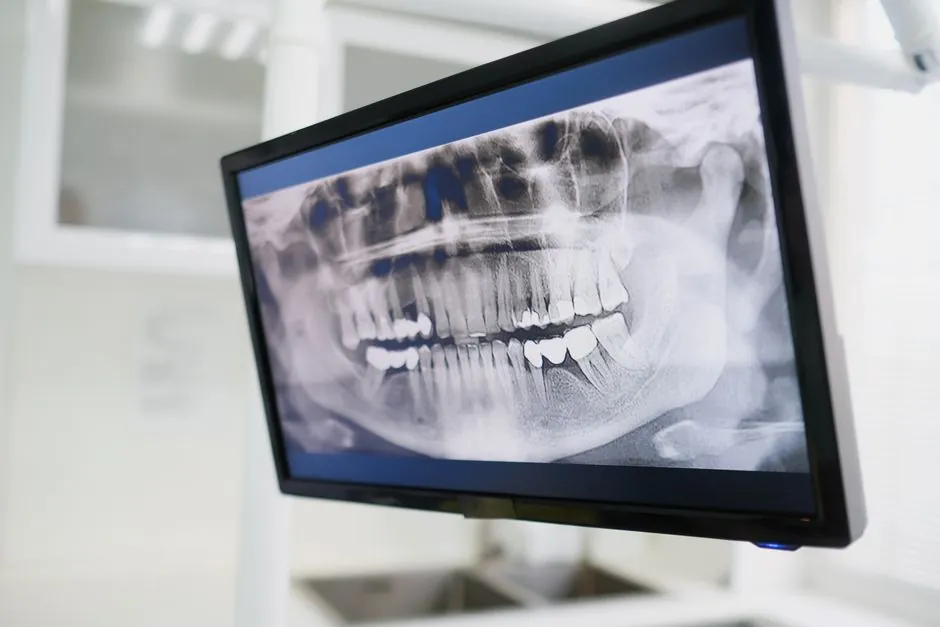
Across dental, medical, and industrial NDT workflows, digital radiography drives per-exposure cost down to roughly $0.10–$0.30 once the system is amortized, while film-and-chemistry workflows sustain $3–$5 per radiograph in consumables alone, with monthly chemistry spend of $200–$400 in a busy practice [S3]. Film's only remaining cost edge is the lower capital outlay for a basic wet-processing setup, typically 60–80% below a CR cassette reader or a direct digital (DR) panel.
The chemistry stack behind film, developer, fixer, stop bath, and rinse water, must be replenished on a fixed silver-content schedule and disposed of as hazardous waste; silver recovery from spent fixer can claw back 5–15% of chemistry cost, but it does not close the gap with digital. A practice running roughly 150 intraoral films per month spends about $5,000–$15,000 per year on film, chemistry, and processor maintenance, a figure that drops to under $1,500 per year for digital on storage, sensor replacement, and software [S2][S3].
Per-Exposure Cost Breakdown: Film vs Digital
Digital systems shift cost into depreciation and sensor wear, with intraoral sensor replacement cycles of 24–36 months at $3,000–$8,000 per sensor, which works out to $0.08–$0.25 per exposure over a sensor's life at typical daily volume [S3].
Industrial NDT film (ASTM E1815 Class I/II) runs higher, $8–$25 per sheet for 14×17 in format, with chemistry scaled to processor throughput; DR panels in radiography rooms push panel-only cost into the $80,000–$250,000 range but drive per-shot consumables to near zero [S2]. The break-even crossover for dental sits between 1,200 and 2,500 intraoral exposures per year, below which film remains cheaper on total cost of ownership.
Chemistry, Waste, and Throughput Variables
Film workflows consume 0.25–0.5 L of developer and fixer per 100 films processed, with silver loading of 8–12 g/L in spent fixer that triggers hazardous-waste pickup at $50–$150 per drum in most US jurisdictions [S2]. Processor maintenance adds another layer: roller cleaning, replenisher pump calibration, and anti-foam agents, with service contracts of $1,200–$2,400 per year on top of chemistry [S2].
Digital removes developer, fixer, stop bath, and rinse chemistry entirely, and eliminates darkroom HVAC load; energy draw on a CR reader is 200–400 W during scan, while a DR panel is largely passive until readout. Throughput is the hidden multiplier: digital delivers viewable images in 3–5 seconds versus 5–20 minutes for film, so a single operator can complete 3–5x more studies per shift, which often justifies the capital premium even where per-exposure cost is close [S3].
Selection Criteria: When Film Still Wins, When Digital Wins
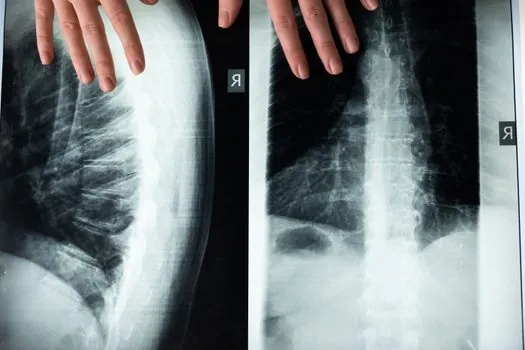
Film is the right answer when annual volume is below ~1,200 intraoral images, when site infrastructure cannot support a wired or Wi-Fi image network, or when long-term archival of physical originals is contractually required. Digital is the right answer when monthly volume exceeds ~100 films, when chair-time or scanner-time utilization matters, and when PACS / DICOM integration is already in scope [S3][S8].
For industrial NDT, the answer reverses at higher volume: DR panels in high-throughput weld-inspection cells pay back inside 12 months on chemistry savings alone, while mobile film setups remain standard for field pipeline crawlers where AC power is intermittent. The decision matrix is not film-versus-digital globally, it is per-image-cost versus per-shift-throughput, weighted against capital ceiling and waste-handling compliance burden [S8].
Comparison Matrix: Decision Criteria at a Glance
On capital outlay, film scores low (a manual processor sits at $4,000–$12,000 installed) and digital scores high (CR readers $25,000–$60,000; DR panels $80,000–$250,000). On per-exposure consumables, film scores $3–$5 and digital scores $0.10–$0.30 [S3]. On throughput, film sits at 3–6 images per operator-hour and digital at 40–80 images per operator-hour. On regulatory waste burden, film carries EPA/RCRA silver-loading reporting above 100 kg cumulative per year; digital carries none. On image-retrieval latency, film requires physical filing at 30–90 seconds per image, digital at under 1 second via PACS query.
The total-cost-of-ownership math depends critically on volume: at 200 exposures per month, 5-year digital TCO is roughly 2.5–3.0x film; at 800 exposures per month, 5-year digital TCO drops to 0.7–0.9x film, and at 2,000 exposures per month digital is at 0.3–0.4x film. This is why practices above 100 films per month almost always migrate, and why industrial NDT cells with continuous radiographic inspection have largely converted [S2][S3].
Migration Signals and What to Watch Through 2026
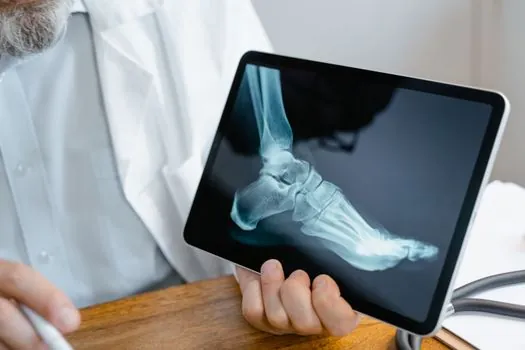
Two trackable signals: silver spot price, which at $0.80–$1.10 per gram in 2025–2026 narrows the gap between spent-fixer recovery credit and fresh chemistry cost, and CR reader end-of-life announcements as vendors push DR panel upgrades. Practices still on CR with readers over 7 years old should treat the next 18 months as the natural migration window, since service-part availability for older CR scanners is contracting. [S2]
A related cost dimension worth tracking: power and HVAC. Film darkrooms require exhaust ventilation and temperature control to within ±2 °C for chemistry stability, typically 1.5–2.5 kW continuous load; converting that room to dry storage or operator workstation typically cuts room-level energy use by 60–70%, a line item that does not appear on chemistry invoices but shows up on facility audits. As with the Coriolis vs thermal mass flow meter trade-off and the aluminum vs copper data center power decision, the right answer is driven by per-unit operating cost against throughput, not by sticker price.
For component-level specifications, see stretch film, digital multimeter, and digital panel meter.