Spray-applied concrete curing compound cuts water loss from fresh slabs to roughly 5% of mix water in 72-hour tests, well below the 10% boundary ACI 308.1 treats as critical for 28-day strength development [S1][S2].
Wax- and resin-base grades dominate highway, bridge and airport-pavement work, while water-based emulsions serve indoor slabs where solvent fumes and slip ratings rule out solvent cuts [S2]. ACI PRC-308.1 and ASTM C309 are the two spec anchors engineers fall back on for liquid-membrane curing, with ASTM C1315 governing higher-build, longer-retention systems [S1][S2].
ASTM C309 vs C1315: Where Each Spec Applies
ASTM C309 Type 1 (clear) and Type 2 (white-pigmented, ~63% TiO₂ by mass) define a minimum moisture-retention floor for liquid-membrane curing compounds, while ASTM C1315 raises the bar with a Type II alkali-resistant resin base and a chalk-resistance test that allows reuse of the slab surface [S1][S2]. In field practice, C1315 systems are specified on bridge decks, parking structures and canal linings where the white, light-reflective finish cuts surface heat during the first 24 hours and where 28-day cure retention must exceed 95% [S2].
Type 1-D clear curing compounds are typically used on architectural walls and columns where the contractor needs a near-invisible film and tolerance for a later applied coating is tight [S2]. A working engineer's rule of thumb: if the slab will receive a floor hardener, epoxy, urethane, MMA, VCT adhesive, paint or a bonded topping within 12 months, do not specify a wax or resin film; mechanical surface preparation costs will exceed the cure savings.
Moisture Retention Numbers Across Resin, Wax and Water-Based Types
Wax-based C309 systems typically hold moisture loss to 0.20–0.35 kg/m² in 72 hours, while standard resin-acrylic films run 0.30–0.45 kg/m² and high-build C1315 grades stay under 0.25 kg/m² under identical wind and sun load [S1][S2]. Water-based paraffin emulsions span 0.40–0.55 kg/m² at 200–250 mL/m² coverage, which is why contractors often up the spray rate to 300–400 mL/m² on hot-weather pours [S1].
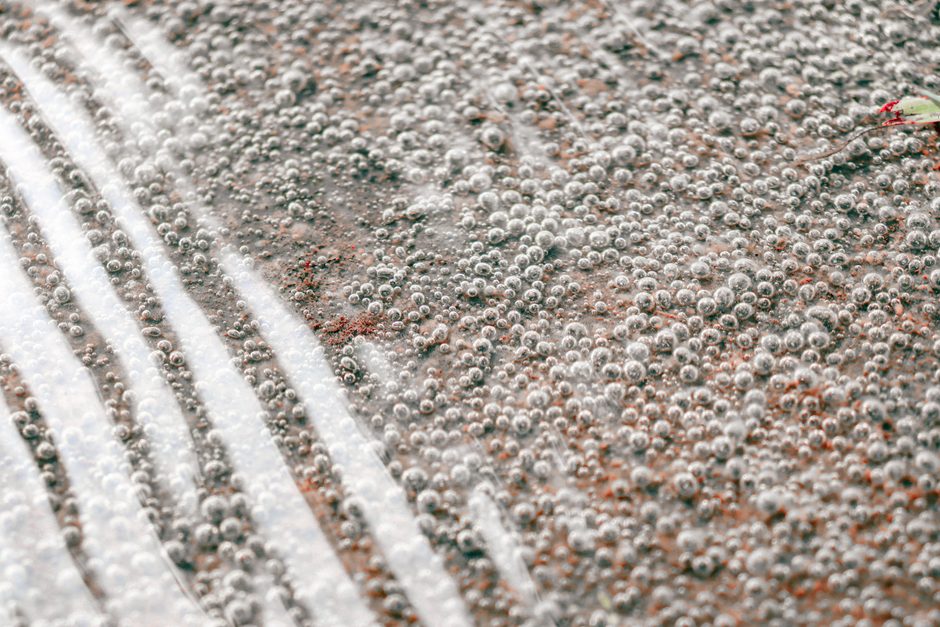
The hydration chemistry is the same in every case: Portland cement releases CO₂ as a gas during the first 24–48 hours, and that CO₂ must form a critical-radius bubble before it can rise through still-plastic concrete, leaving macro-pores that reduce final density and raise permeability [S1][S2]. A sealed membrane blocks that evaporative pathway and keeps internal relative humidity above the 80% threshold that portlandite and C-S-H formation need to progress past 7 days [S1].
Spray Rate, Coverage and Surface-Prep Spec Gates
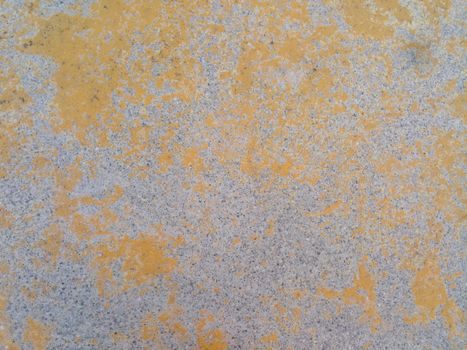
ASTM C309 sets the application-rate gate at 200 mL/m² (roughly 0.20 L/m²) on a steel-trowelled surface; rough broomed or vertical form-tie faces need 30–50% more to reach the same film build [S1][S2]. Coverage drops as the roughness of the laitance increases, which is why pre-spray surface profile is one of three fields that drive the placement rate on a quality-control sheet [S1].
For placement logistics, the pump-side concrete batching plant operator needs to know whether the slab will be hand-sprayed, ride-on-sprayed or misted through a tip that mounts to a concrete vibrator boom, because each method changes atomisation pressure and overspray losses. Application temperature gates are typically 4–35 °C ambient, and traffic on the sealed film should be held for at least 7 days on C309 systems and 14 days on C1315 systems before light foot traffic [S1][S2]. The companion installation brief at concrete curing compound installation specs walks through atomisation, dwell and storage-life details.
Failure Modes: Slip, Re-Emulsification and Bond Loss
Wax and resin films are the most cited cause of coating delamination on slabs destined for concrete admixture-modified overlays, because the film bonds tighter to the next layer than the substrate does to itself, and a 28-day peel test typically shows 0.5–1.2 MPa failure at the substrate interface [S1][S2]. Re-emulsification under ponded water within the first 7 days strips wax films on flatwork that lacks proper drainage, exposing fresh concrete to plastic-shrinkage cracking during afternoon winds [S1].
Slip resistance is a separate failure path: a wet wax film on a steel-trowelled surface can drop the coefficient of friction below 0.30, which is below the 0.50 value most OSHA fall-protection guidance treats as a safe walking level, so engineers usually specify a broom finish or a silica-broadcast over the cured film on pedestrian surfaces [S1]. UV-driven yellowing of Type 2 white-pigmented films also creates an unintended visual differential when only part of a slab is re-poured, which is why phased paving projects batch the entire slab volume from one supplier [S1].
Application vs Internal Water Curing: When the Membrane Loses
Internal curing with pre-saturated concrete fiber (lightweight fine aggregate, 30% absorption, dosed at 50–80 kg/m³) and water-absorbing polymers holds 85–90% relative humidity inside the paste for 7 days without any surface film, and outperforms C309 in thin toppings and bridge-deck overlays where film failures open the system to chloride intrusion [S1]. Fogging and wet-burlap cure hit 95% retention, but require a continuous water supply, a 7-day standing-water watch and labour that most highway paving schedules do not allow [S1].
Engineering judgment reduces to three gates: (1) Will the surface receive a bonded coating, topping or floor finish in under 12 months? Pick water cure or internal curing with fiber reinforcement trade-offs considered. (2) Is the slab a horizontal pavement, deck or canal with no follow-on coating? C1315 white-pigmented resin wins on heat-of-hydration control. (3) Is the pour in cold weather below 10 °C ambient with a tight calendar? Wax-base C309 with Type 2 white pigment raises surface temperature 4–6 °C above ambient in the first 24 hours, which is the same thermal benefit documented in standard cure-blanket practice.
Specifying the Right System: A Decision Matrix
Across the three spec-driven options — ASTM C309 Type 2 white, ASTM C1315 Type II and internal water curing — the four decision gates that drive selection are bond compatibility, moisture retention, traffic safety and per-m² installed cost [S1][S2]. On bond compatibility, internal cure scores highest because it leaves no film to remove; C1315 requires mechanical abrasion (shot-blast to CSP 3–4) before coatings; C309 Type 2 needs the same treatment at 2× the labour cost. On retention, C1315 holds 0.25 kg/m² loss, C309 Type 2 holds 0.40 kg/m² and internal cure tracks fogging at 0.55 kg/m² but compensates with internal RH stability [S1].
On traffic safety, water-cured slabs score 0.55–0.65 coefficient of friction when broom-finished, C309 wax films fall to 0.28–0.35, and C1315 white-pigmented systems sit at 0.40–0.50. On cost, C309 Type 2 lands at roughly $1.20–$1.80 per m² material-only, C1315 at $2.00–$2.80, and internal cure with pre-saturated lightweight fines adds $4.50–$6.00 per m³ of concrete plus a 24-hour pre-soak window [S1][S2]. A clean engineer-side trigger to track: 2026 revisions to ACI PRC-308.1 are expected to raise the minimum retention threshold for bridge-deck liquid-membrane cure from 95% to 97% in chloride-exposure environments, which will force many C309 Type 2 systems into C1315 territory on coastal and de-icing-salt bridges.
Two trackable signals close this out: monitor ASTM Subcommittee C09.22 ballots on retention thresholds and watch for state-DOT addenda that lower the slip-coefficient acceptance floor for curing films on pedestrian-bearing bridge decks. Engineers specifying white-pigmented Type 2 systems on phased paving should also batch the full slab volume from one supplier to avoid the yellowing differential flagged earlier in the failure-modes section.