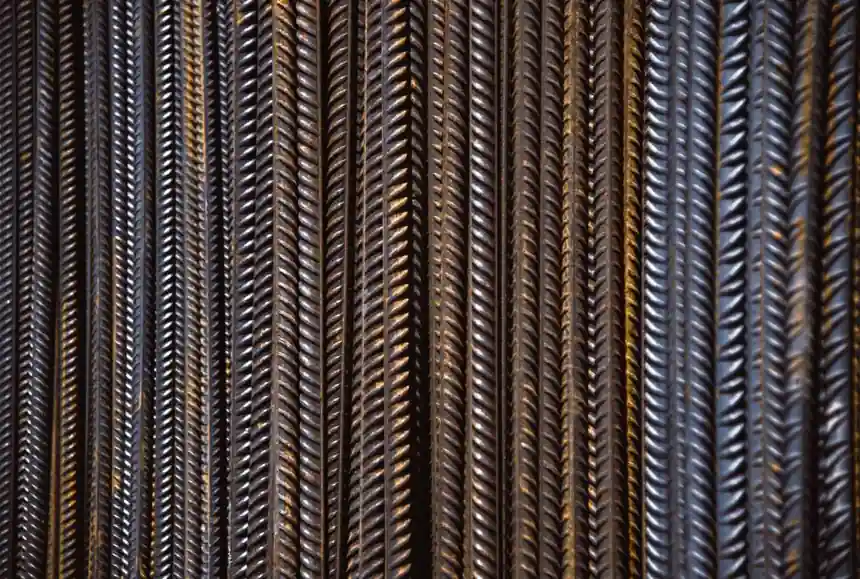
Deformed rebar carries two longitudinal ribs and evenly spaced transverse ribs (spiral, herringbone, or crescent), while plain round bar is a smooth circular section with no surface protrusions; this geometry difference is the root cause of every downstream behavioural gap between the two [S4][S5].
Deformed bar is manufactured to ASTM A615/A706, BS 4449, GB/T 1499.2, and ISO 6935, with diameter ranges from 6 mm to 50 mm in 5 m to 14 m straight lengths, while plain round bar is produced as small-diameter coils of ordinary low-carbon steel under the older GB/T 1499.2 cold-drawn family [S4][S5].
Surface Geometry and Rib Pattern
Deformed bar surface geometry is defined as two longitudinal ribs running the full length, with transverse ribs spaced uniformly along the bar in spiral, herringbone, or crescent shapes, hot-rolled into the section [S4][S5]. Plain round bar, by contrast, has a smooth uniform surface with no ribs or indentations of any kind, a geometry it shares with light-duty dowel and tie applications [S2]. The transverse rib shape is not cosmetic: it is what creates the mechanical interlock with the surrounding concrete, transferring shear across the steel-concrete interface rather than relying on chemical adhesion [S2][S10].
For procurement, the practical implication of the rib pattern is that a rebar order must specify the rib style alongside diameter and grade, because rib geometry affects pull-out capacity under seismic and cyclic load [S4].
Bond Mechanism: Adhesion vs Mechanical Interlock
Plain round bar transfers stress to concrete only through surface adhesion, a bond that fails under high tensile or shear demand and allows the bar to slip inside the concrete matrix [S2]. Deformed bar transfers stress through mechanical interlock, where the transverse ribs bear directly against the concrete aggregate and resist slippage along the bar axis [S2][S3].
The practical effect is that deformed bar achieves substantially higher bond strength, while plain bar shows a high slipping risk even at moderate service loads [S2][S10]. For horizontal bond-critical applications such as column ties, beam shear reinforcement, and slab-on-grade, this single mechanism difference is what excludes plain round bar from the structural rebar schedule in most modern codes [S2][S9].
Strength Grades and Standards Mapping
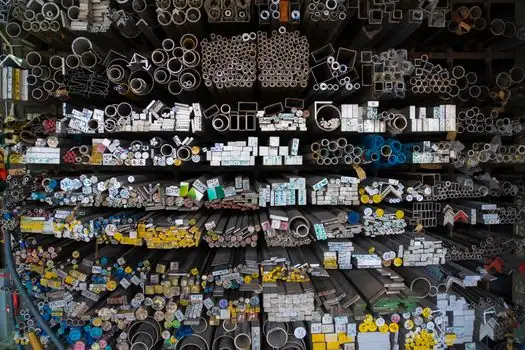
Deformed bar grades map to a clear yield-strength ladder: HRB400 at yield strength ≥400 MPa and tensile strength ≥540 MPa, HRB500 at yield strength ≥500 MPa, with seismic grades HRB400E and HRB500E carrying microalloy additions of vanadium or niobium for improved cyclic performance, all per GB/T 1499.2 [S5]. Plain round bar grades sit one tier lower: HPB300 at yield strength ≥300 MPa and tensile strength ≥420 MPa, and HPB335 at 335 MPa, both specified under the older cold-drawn family of GB/T 1499.2 [S5].
International equivalents follow the same gap: ASTM A615 Grade 60 (yield 420 MPa) for deformed bar versus Grade 40 (yield 280 MPa) for plain bar, and BS 4449 B500B/B500C for the deformed ribbed grades used across the UK, Oceania, and Southeast Asia [S5][S10]. When the designer writes rebar on a structural drawing, the grade letter (HRB vs HPB) is the contractually binding signal of which bond and strength regime applies [S5].
Comparison: Plain Round vs Deformed on Four Criteria
Across the four decision criteria that drive rebar selection, deformed bar wins on three and ties on the fourth, with the single plain-bar advantage being unit cost on small orders [S2][S10].
Bond mechanism: plain bar relies on adhesion only, deformed bar combines adhesion with mechanical interlock; slip resistance is rated high risk for plain bar and minimal for deformed [S2]. Tensile performance is moderate for plain round bar (300-335 MPa yield) versus high for deformed bar (400-500 MPa yield) [S5]. Typical applications split into light-duty (dowels, expansion joints, stirrups, temporary works) for plain bar and heavy-duty (foundations, columns, beams, bridges, high-rise cores) for deformed bar [S2][S9]. Cost per tonne is lower for plain bar, but the total installed cost on a structural job is usually higher for plain bar once anchor length, lap splices, and anti-slip detailing are added [S1][S10].
Where Each Bar Is Specified, and Where It Is Not
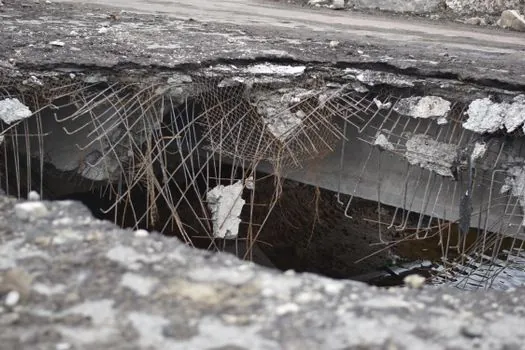
Deformed bar is the default specification for residential slabs, commercial columns, bridge decks, and high-rise shear walls, with HRB400E and HRB500E mandated in seismic regions where ductility and a tensile-to-yield strength margin of at least 10% are required by code [S2][S5]. Plain round bar remains in service for expansion-joint dowels across pavements, light stirrup ties, temporary works, small-scale masonry links, and as distribution steel in non-structural slabs where bond demand is low [S2].
Plain bar is the wrong choice for primary tension reinforcement in beams, for column longitudinals in any multi-storey frame, and for any member designed to resist seismic or wind reversal, because the adhesion-only bond cannot sustain the reversing slip demand these load cases impose [S2][S9]. For any member where bond demand is the design driver, the rebar coupler and rebar bender work-orders should be tied to the ribbed grade, not the smooth grade.
Failure Modes and Inspection Signals
The dominant failure mode of plain bar in service is bond slip: the bar pulls axially relative to the concrete, producing wide flexural cracks and loss of composite action before the steel itself yields [S2]. Deformed bar fails by steel yielding followed by concrete crushing in compression zones, a more ductile and code-expected mode that gives warning through visible cracking before collapse [S5][S9].
On site, undersized or off-grade deformed bar is rejected at inspection because the rib geometry, cross-sectional area, and mill certificate must all match the spec, with the Philippine construction market recording over 20 typhoons and roughly 150 felt tremors annually as the local driver for strict grade compliance [S9]. For straightening bent stock on site, a rebar straightener rated for the same diameter range on the cutting and bending schedule keeps the rib profile from being cold-worked flat, which would silently downgrade the bar to plain-bar bond behaviour [S3][S4].
Sourcing, Standards, and Procurement Checklist
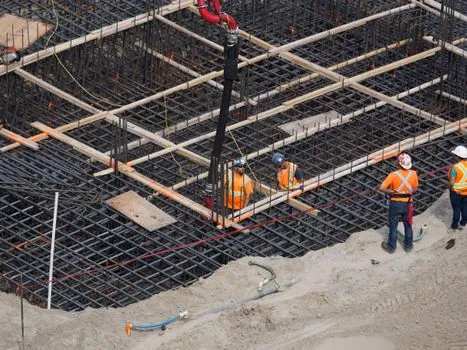
Deformed bar procurement should reference ASTM A615/A706, BS 4449, GB/T 1499.2, and ISO 6935 in that order of preference for international projects, with mill certificates showing yield, tensile, elongation, and chemical composition per heat [S4][S5]. Plain round bar sourcing should confirm the cold-drawn GB/T 1499.2 family or the equivalent HPB300/HPB335 designation, with diameter and coil weight matched to the dowel or stirrup schedule [S5].
Track the next signal: any project issued after Q4 2026 in a seismic zone will specify HRB400E or HRB500E rather than HRB400, and the mill certificate must show vanadium or niobium content to confirm the seismic-grade microalloying is present, not just claimed on the test report [S5][S9]. For shop-floor processing, match every rebar cutter blade and rebar bender pin diameter to the largest bar on the bar list, since mixing plain and deformed stock on the same bender pin is the most common cause of rib damage that downgrades deformed bar to plain-bar bond performance on site [S3][S10].
This topic is covered further in Selecting a Submersible Pump for Solids-Laden Municipal Wastewater.