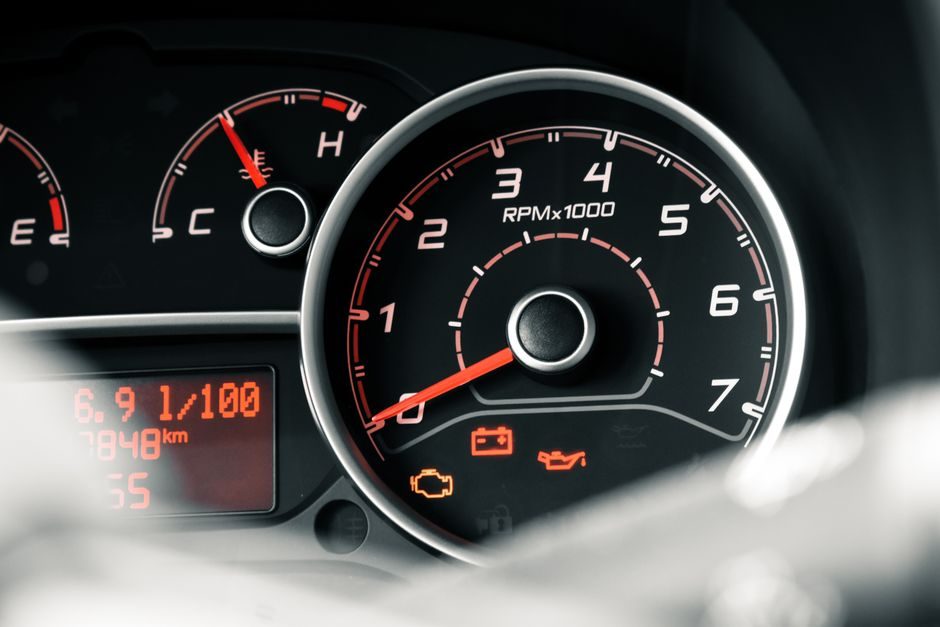
Choosing between a dial indicator and a roundness tester comes down to whether the inspection answers "how much did it move linearly" or "how round is the full circumference" — two distinct measurement intents that share spindle, contact-tip, and fixturing vocabulary but diverge sharply in resolution, datum strategy, and cost.
Spec engineers writing inspection plans for shafts, bores, bearing journals, and turned OD/ID features routinely name both instruments on the same drawing — yet the two rarely substitute for one another. A dial indicator is a manual or electronic comparator with a plunger travel typically from 0.8 mm to 25 mm and a graduated scale in 0.01 mm, 0.002 mm, or 0.001 mm increments [S3][S8]. A roundness tester rotates the part on a precision spindle below a fixed probe, sampling radial deviation across a full 360° turn and reporting cylindricity, concentricity, taper, and harmonic content that no single-point dial reading can reveal [S6][S8].
What a Dial Indicator Actually Measures
The dial indicator is a contact comparator: a spring-loaded plunger drives a gear train that magnifies linear travel into a pointer rotation across a graduated dial, with typical full-scale ranges of 0.8 mm, 2.5 mm, and 25 mm and resolutions of 0.01 mm, 0.002 mm, and 0.001 mm depending on grade [S3][S8]. Chicago Dial Indicator (CDI) has supplied US-made dial indicators, depth bases, contact points, and thickness gages since 1932, framing the device as a general-purpose American precision-measuring standard for shop-floor comparison work [S2][S8].
Cosine error governs the geometric accuracy of any plunger-style indicator: the axial component of plunger travel equals true displacement multiplied by the cosine of the angle between the indicator axis and the surface normal, so a 10° misalignment already costs roughly 1.5% of indicated value, which is why machinists tram vises and orient probes deliberately before taking a reading [S6]. Interapid-style and lever-style test indicators address this by offering low-measurement-force, swiveling contact geometries suited to tramming inside bores, while a 3D probe tester like the Tschorn SLIMplus accepts an indicator body and steps through X/Y/Z sweeps to log deviations for CNC datum-setting [S6][S7].
What a Roundness Tester Captures That a Dial Cannot
A roundness tester holds the workpiece on a high-accuracy air or mechanical spindle and reads radial position through a stationary probe, resolving the part's full circularity profile, then computes cylindricity, concentricity, taper, straightness, and harmonic content (lobing, odd/even-even orders) from the closed-loop data set [S8]. A single dial-indicator pass — even when the operator rocks the part by hand — cannot separate true circularity from a tapers of the same magnitude, nor can it decompose a 3-lobe (3 lobes per revolution) harmonic from a 4-lobe harmonic, because only one angular sample is recorded per setup.
Workpiece fixturing matters more on a roundness tester than the meter's intrinsic accuracy: a centerless V-block on a flat granite base can mask the very lobing pattern being measured if the part is not properly clocked, and concentricity between datum axis A and datum axis B still requires the metrology lab's calibrated reference spheres and mandrels. CDI's product line explicitly lists dial indicators, contact points, depth bases, and thickness gages — not roundness spindles — illustrating the practical boundary between hand-held shop-floor comparators and metrology-room instruments [S2][S8].
Selection Criteria: Range, Resolution, and Operator Skill
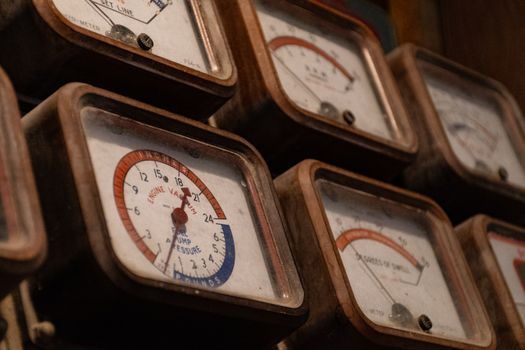
For short-run inspection on a manual lathe, turret, or bench, a 0.01 mm or 0.002 mm dial indicator on a magnetic stand delivers repeatable results, costs a small fraction of a roundness tester, and requires no special training. Made-in-China listings for dial-indicator testing stands show 5-piece minimum orders at roughly US$45 per piece in stainless-steel magnetic-base configurations — a price band that places fixturing well under the cost of a metrology spindle [S5]. When the part specification calls out cylindricity, circular runout under 0.005 mm, or harmonic-limited surface texture, that same dial indicator will under-resolve the data the spec demands, and a roundness tester becomes unavoidable.
Operator skill differs markedly: a dial-indicator operator must manage cosine error, indicator body orientation, magnetic-base drift, and part thermal growth, while a roundness-tester operator must additionally understand datum referencing, filter cutoffs (1-15 unfiltered or 1-500 upr for filtered traces), magnification, and centring routine. Chotest's SJ2100 dial-indicator testing machine packages the indicator workflow as a benchtop, automatic, data-logging calibration station, reflecting the fact that even a comparator needs a calibrated reference for traceability — a parallel need met on the roundness side by certified reference spheres and gauge blocks [S1].
Who the Dial Indicator Is For — And Who It Is Not
The dial indicator is the right tool for setup, tramming, runout checks on shafts and bores, comparator-based Go/NoGo inspection in production, and any application where the question is "is this dimension within ±0.01 mm of nominal". It is not the right tool when the drawing calls out roundness or cylindricity with a numerical tolerance, when the failure mode is harmonic lobing from a grinding wheel or a worn spindle bearing, or when the operator needs a third-party-certifiable roundness/circularity report. [S1]
The roundness tester is the right tool for first-article inspection of bearing journals, hydraulic spool bores, fuel-injector needles, and any part where a closed-loop radial profile is the contractual deliverable. It is not the right tool for high-volume 100% production checks because the rotation and probing cycle runs seconds to minutes per part, while a dial indicator in a comparator stand can deliver Go/NoGo decisions in milliseconds. Engineers building a new inspection cell therefore often keep both: the dial indicator on the shop floor for process control, and the roundness tester in the metrology room for first-article and periodic capability studies [S1][S2][S6][S8].
Decision Matrix: Dial Indicator vs Roundness Tester
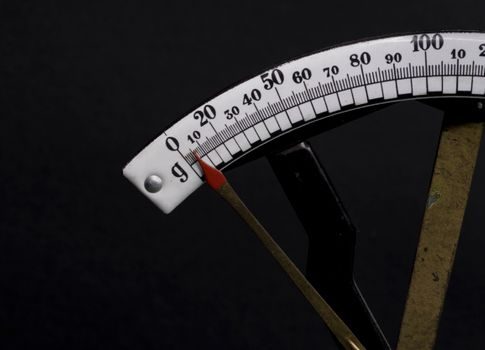
Decision criterion one is the measurement intent: linear displacement and comparator work map to a dial indicator; full 360° radial geometry maps to a roundness tester. Decision criterion two is the tolerance band: ±0.01 mm and coarser typically fit a dial indicator with a magnetic stand; tighter than ±0.005 mm on a circular feature requires a roundness tester. Decision criterion three is the production environment: in-process or end-of-line shop-floor work fits a dial indicator; first-article, capability, and customer-acceptance work fits a roundness tester. Decision criterion four is operator expertise: a dial indicator requires orientation discipline and cosine-error awareness [S6]; a roundness tester additionally requires datum, filter, and centring expertise.
Decision criterion five is capital and footprint: a dial indicator on a magnetic stand costs tens to a few hundred US dollars; a roundness tester with centring table, granite base, and calibrated reference spheres costs several multiples more, occupies a fixed metrology cell, and is rarely portable. Decision criterion six is traceability: both instruments rely on periodic calibration, but a roundness tester typically needs a reference sphere traceable to a national institute, while a dial indicator is usually calibrated against a gauge block set or a dedicated testing machine such as the Chotest SJ2100 [S1][S8].
Standards, Calibration, and Traceability Workflow
Dial-indicator calibration workflow is generally traceable to national length standards through a gauge-block or displacement-generator chain, with the testing machine itself (for example the Chotest SJ2100) recording the indicator's indication at multiple points across its range and reporting repeatability, hysteresis, and total error [S1]. Roundness-tester calibration relies on reference spheres of known roundness (often specified in the low nanometre range) and dedicated centring/leveling fixtures, with the spindle's radial and axial motion errors often characterised separately from the part's own geometry [S8].
When planning a calibration interval, engineers should note that the contact-tip wear rate on a shop-floor dial indicator is typically higher than the spindle-bearing drift rate on a metrology-room roundness tester, so the practical recalibration cadence differs even when the underlying length standard is the same. For setups involving CNC datum-setting, a 3D probe tester such as the Tschorn SLIMplus provides a fixed geometry into which an indicator body is clamped, allowing X/Y/Z sweeps to be logged against the machine table [S7].
Practical Spec-Engineer Notes and Failure Modes
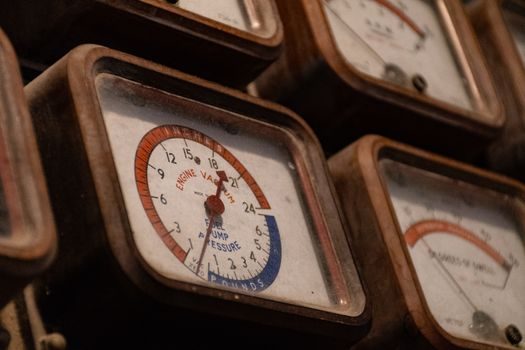
Common dial-indicator failure modes include cosine error from a tilted indicator body, magnetic-base drift on a non-deburred cast surface, plunger binding from contamination, and gear-train backlash when the same point is approached from opposite directions [S6]. Common roundness-tester failure modes include centring errors that show up as a 1-upr harmonic in the recorded trace, thermal growth of the part during slow rotation cycles that shows up as a slow-drift lobe, and contamination of the reference sphere used for self-calibration [S8].
On the shop floor, a common error is treating a dial-indicator runout reading as a roundness number: runout combines concentricity, cylindricity, taper, and form errors into a single total indicator reading, so quoting that TIR value as "roundness" is a specification error. The correct procedure is to record the part on a roundness tester and read the minimum radial separation between two concentric circles circumscribing and inscribing the trace — the minimum-zone (MZ) roundness — and report cylindricity as the radial separation of two coaxial cylinders enclosing the part's full length. Drawing callouts that ask for "roundness" without naming a datum or a filter must be clarified before the inspection plan is written.
Comparison Snapshot: Dial Indicator vs Roundness Tester
A direct side-by-side view: the dial indicator is a hand-held plunger comparator with 0.8–25 mm range, 0.01–0.001 mm resolution, US$10–500 typical price, and a shop-floor duty cycle measured in seconds per part; the roundness tester is a spindle-and-probe instrument with 0.1–500 µm selectable magnification, sub-micrometre resolution, a price band several multiples higher, and a metrology-room cycle measured in tens of seconds to minutes per part [S1][S2][S6][S8]. The dial indicator answers "is this diameter within tolerance"; the roundness tester answers "what is the closed-loop radial profile and its harmonic decomposition".
For an engineer drafting a new inspection plan, the safe default is to specify both where the drawing calls for circularity or cylindricity: the dial indicator for in-process Go/NoGo control on the shop floor, and the roundness tester for first-article, capability, and customer-acceptance submissions. Holding a deadweight tester on the calibration bench to verify the comparator stand's fixturing pressure, or a hardness tester on a related mechanical-strength sample, sits well outside the roundness/dial workflow — those instruments are referenced here only as a reminder that the same inspection cell may host a broader metrology kit.
Trackable next signals to watch: the next published CDI product catalogue revision (the home page at dialindicator.com frames CDI as American-made precision measuring products since 1932 [S8]); the next Chotest SJ2100 firmware or accessory release on DirectIndustry [S1]; and any new ISO 1101 or ASME Y14.5 interpretation note affecting how "roundness" and "runout" are distinguished on a controlled drawing.