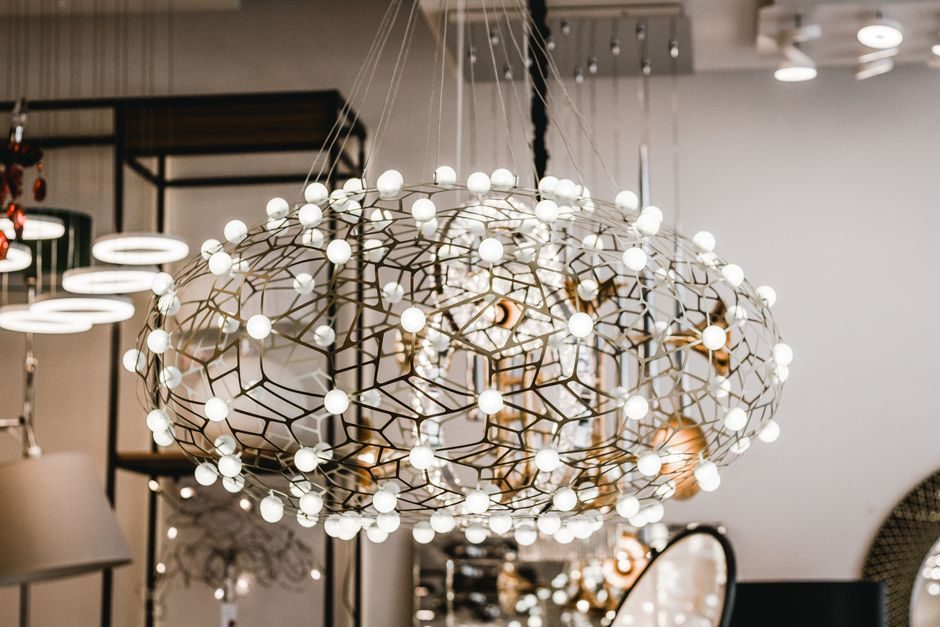
Lighting-fixture housings split cleanly between two casting routes: aluminum cold-chamber machines in the 160-630 t clamping range produce LED heat sinks, street-light bodies, and explosion-proof lamp enclosures, while hot-chamber zinc machines from 88 t up handle thin-wall trim, decorative caps, and small mounting hardware [S2][S3].
Bengbu Long Hua's 2026 catalog lists LH-120T through LH-1300T cold-chamber models, with LH-160T, LH-180T, LH-200T, LH-220T, LH-280T, LH-300T, LH-330T, and LH-350T covering the bulk of lighting-fixture tonnage demand; the same supplier pairs a hot-chamber zinc line with HPDC ratings up to 350 t for brass- and zinc-alloy trim [S3]. Tao Jin Machinery of Dongguan confirms the same split — hot-chamber 15-400 t, cold-chamber 125-1300 t — established in Taiwan since 1986 [S2].
Aluminum Heat-Sink and Street-Light Bodies: Cold-Chamber 160-630 t
High-bay, flood, and street-light bodies cast in ADC12 or A380 aluminum land almost universally in the 160-630 t cold-chamber band, with shot weights typically 1-8 kg per cycle [S2][S3]. Die-cast heat sinks, which carry the LED module and dissipate through finned geometry, need a minimum wall thickness of 1.5-2.5 mm and repeatable fill across thin-and-thick sections; that is why most fixture buyers reject hot-chamber aluminum machines outright — the steel pot and plunger are attacked by molten aluminum above 660 °C, and cold-chamber remains the only safe route [S2][S4].
Tonnage scaling follows projected area: a typical 300×300 mm high-bay heat-sink housing lands in the 200-300 t range, while a 600×600 mm roadway luminaire body climbs to 400-500 t [S2]. Warom's catalog of die-cast LED high-bay and street-light fixtures on the zm.warom.com product line demonstrates the geometry this tonnage is sized to fill — finned heat-sink cores, integrated driver compartments, and pole-mount brackets all cast as one piece [S1].
Zinc and Brass Trim: Hot-Chamber 88-400 t
Decorative bezels, lamp holders, conduit entries, and small mounting plates in Zamak 3, Zamak 5, or brass run on hot-chamber machines in the 88-400 t range, with Tao Jin and Long Hua both offering complete lines in this band [S2][S3]. Hot-chamber suits zinc because the melting point (419 °C for Zamak 3) keeps the iron pot and submerged plunger wetted by molten metal without attack, and cycle times drop to 30-90 s versus 2-4 min for cold-chamber aluminum [S4].
For lighting, hot-chamber zinc shows up in conduit hubs, junction-box covers, and the decorative collars used on commercial downlights; thin-wall capability down to 0.8 mm allows cast-in threads and fine surface detail without secondary machining [S2]. Brass hot-chamber work (copper-zinc alloy) is offered by Long Hua as part of the same machine family, with LH-HPDC 350T units shipping with online tech support and vacuum-assist options for higher-density parts [S3].
Magnesium and Vacuum Routes for Premium Fixtures
Magnesium-alloy fixture housings — used where weight matters (portable work lamps, vehicle-mounted scene lights) — use modified cold-chamber machines, often with SF6/cover-gas melt protection and vacuum-assist to cut porosity; cycle times run 15-30% faster than aluminum cold-chamber on equivalent shot weight [S2][S3]. Magnesium is roughly one-third lighter than aluminum at comparable stiffness, but the melt protection adds cost and machine complexity that only justifies itself for portable or weight-critical fixtures [S4].
Vacuum die casting enters the picture when the lighting fixture must pass IP66 or higher ingress ratings — the vacuum pulls air out of the die cavity before injection, dropping porosity below 1% and giving castings that hold pressure during water-jet testing [S3]. Long Hua's LH-HPDC 350T vacuum cold-chamber model is a representative specification in this category, and is the same tonnage class used for cast explosion-proof lamp enclosures that must not leak [S1][S3].
Cycle Time, Surface Finish, and Tooling Cost Trade-Offs
Cycle time on a 200 t cold-chamber aluminum machine for a typical street-light heat-sink body is 90-150 s including spray, close, inject, cool, and eject — yield rates of 95-98% are achievable with proper die temperature control (180-250 °C) and water/oil cooling lines routed behind heavy boss areas [S4]. For a 300 t hot-chamber zinc trim part, cycle drops to 30-60 s, but surface finish and tensile strength are both lower than cold-chamber aluminum; for structural parts the trade is not worth it.
Tooling cost scales steeply with cavity count: a single-cavity LED heat-sink die for a 300 mm high-bay housing starts in the USD 15,000-30,000 range, while a 4-cavity version for the same part climbs to USD 60,000-120,000 depending on slide action and cooling complexity [S4]. For low-volume custom lighting (architectural facades, museum-grade fixtures), single-cavity dies keep tooling amortisation low even at cycle times that are unfavourable for mass production; for OEM highbay runs above 10,000 pieces/month, multi-cavity dies plus 300-500 t cold-chamber are the standard answer [S2].
Explosion-Proof and Hazardous-Area Lighting: Why Vacuum and 500+ t Dominate
Explosion-proof lighting — fixed lamps for oil & gas, chemical plants, and mining — must meet IEC 60079-1 flameproof enclosure requirements, which demand cast walls thick enough to contain an internal ignition without rupture; this pushes the housing up to 4-8 mm wall thickness and tonnage into the 500-1000 t cold-chamber band [S1][S3]. Warom's RLEEXL608 and RLEEXL6120 explosion-proof solid-state lighting lines are representative castings in this class, with housings designed to dissipate 80-200 W of LED heat while containing any internal spark [S1].
These housings are not a job for hot-chamber zinc: the wall thickness and pressure-containment requirement rule out thin-wall casting, and the thermal mass of an aluminum or copper-alloy cold-chamber casting is part of the heat-path design [S1].
Supplier Landscape and Lead-Time Signals (2026)
The 2026 supplier base in China for lighting-fixture die-casting equipment is concentrated in three regions: Anhui (Bengbu Long Hua), Guangdong/Dongguan (Tao Jin Machinery, established in Taiwan in 1986 with the joint venture in Dongguan in 2004), and Zhejiang (Ningbo Die-casting Man Energy Co. — a lighting-fixture casting house rather than a machine builder) [S2][S3][S6]. Long Hua's average lead time is reported as one month in peak season and within 15 workdays off-season, with FOB and CIF Incoterms and LC, T/T, D/P payment terms typical for export buyers [S3].
Two procurement signals worth tracking: (1) demand for vacuum cold-chamber 350 t machines is rising as more lighting buyers move to IP66+ outdoor and explosion-proof product lines, with Long Hua's LH-HPDC 350T vacuum unit and online-tech-support variant both listed in current catalogs [S3]; (2) the shift to thinner, lighter heat-sink geometry for high-efficacy LEDs is pulling cycle-time demand toward faster cold-chamber, indirectly favouring 200-350 t machines over the older 500-800 t lines used for legacy street-light castings [S2][S3]. Specifiers who align machine tonnage, alloy, and shot weight to fixture function — rather than copying legacy specs — keep tooling cost and cycle time in line with 2026 production economics.
Component reference pages worth checking: die casting machine, aluminum die casting machine, and gravity die casting machine.
See also our earlier report, Belt Conveyor Selection for Retail Distribution: 2026 Spec Map.