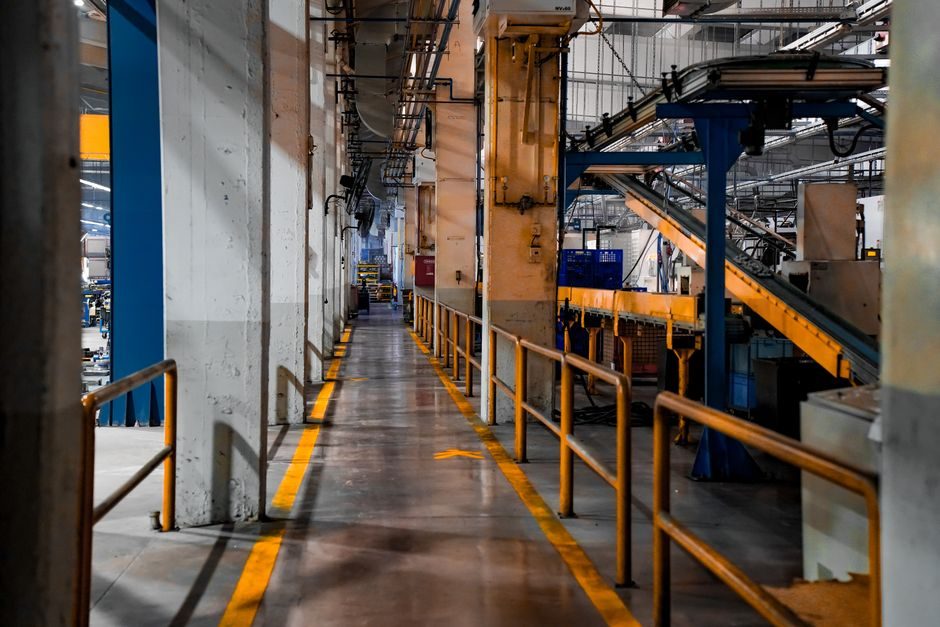
Retail distribution conveyor lines in 2026 are dominated by modular belt and telescopic boom units sized for single-shift throughput of 20–60 cartons/min, with light-duty modular frames like the ANTIPODA SBC rated to a 100 kg maximum load and a 0.1–0.5 m/s speed window (0.33–1.64 ft/s) [S1].
Carton footprints between 200×150 mm and 800×600 mm, plus tote dimensions on the 600×400 mm Euro-module standard, are the two payload geometries that drive belt width, pulley diameter, and motor sizing on a retail DC line [S2]. For dock-side truck loading, telescopic boom conveyors built by UK manufacturers like Newland extend to reach standard 13.6 m curtain-side trailers without manual repositioning [S2].
Payload Class and Belt Width Mapping
Carton weight under 30 kg is the dominant retail-DC envelope and maps to belt widths of 400–600 mm with 50–89 mm diameter drive pulleys; ANTIPODA's modular SBC family is explicitly aimed at this packaging class with a 100 kg (220.46 lb) max load and stainless-steel construction suited to washdown zones [S1]. Belt speed at the lower end of the 0.1–0.5 m/s window (0.1 m/s / 0.33 ft/s) is typically used for manual pick-station induction, while 0.5 m/s is reserved for trunk lines feeding sortation [S1].
For parcels between 30 and 50 kg, 800 mm belt width with 102–114 mm drive pulleys is the common spec, and chain-drive modular frames are preferred over friction-driven belts to keep slip below 1% under surge loads [S1]. The Xinxiang jinrui catalogue of 90 belt-conveyor machine SKUs plus 71 inclined variants confirms that the inclined-belt category alone spans enough variants to cover retail receiving docks, picking aisles, and dock-to-staging transfers within a single vendor's line [S3].
Incline Angle and Drive Layout for Retail DCs
Incline angles up to 18° are standard for carton-on-belt applications using a high-grip chevron or rough-top belt; above 18° retailers typically switch to a cleated or sidewall belt to prevent rollback on carton heels, matching the 85-SKU sidewall belt conveyor family offered by Xinxiang jinrui [S3]. The ANTIPODA SBC explicitly supports both horizontal and inclined operation, indicating that modular chain-drive frames tolerate the geometry change without a separate structural variant [S1].
Inclined retail applications commonly use the 51-SKU enclosed-belt family when dust or light-item roll-back is a concern, since the enclosure doubles as a containment shell and removes the need for a separate guard [S3]. For dock-to-floor level changes, reversible belt conveyors (48 SKUs in the same catalogue) are used to feed empty totes back to induction, cutting forklift moves by 1–2 per shift on a 1,000-carton/day operation [S3].
Telescopic Boom Conveyors for Truck Loading
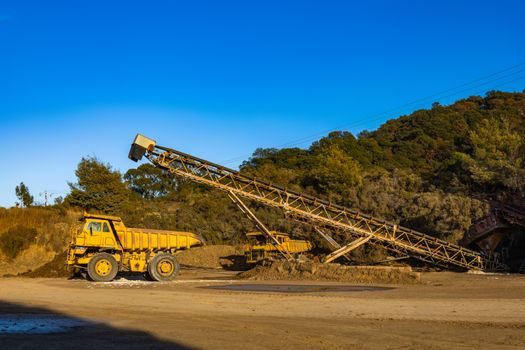
Multi-telescopic boom conveyors extend 6–15 m to bridge the gap between the staging floor and a 13.6 m European curtain-side or 16 m UK double-deck trailer, removing the manual relay step that normally limits dock throughput to 12–15 cartons/min/labourer [S2]. Newland's UK-manufactured range covers both fixed installation and fully mobile wheeled bases, the latter fitted with swivel-lock casters and 230/400 V drives for repositioning between doors without a forklift [S2].
For a retail DC handling 2,000 cartons/day, two telescopic boom units typically replace a 3-person loading gang, and belt speeds on these units track the same 0.1–0.5 m/s window as fixed modular conveyors to keep the discharge impact below 0.5 m/s² at the carton landing point [S1][S2]. Mobile loading platform systems paired with telescopic conveyors further reduce trailer-turn time by 30–45 seconds on dock-constrained sites [S2].
Selection Criteria: Modular Belt vs Telescopic Boom
Modular belt conveyors suit fixed routing between sortation, merge, and pick zones, with the SBC's chain-drive construction and stainless-steel frame specifying 100 kg max load, 0.1–0.5 m/s speed, and horizontal/inclined dual-form operation in a single SKU line [S1]. Telescopic boom conveyors suit the dock interface and mobile redistribution, where reach length (typically 6–15 m) and single-operator deployment are the dominant criteria [S2].
The two formats are complementary rather than competing: a retail DC retrofit typically installs modular SBC-class frames for the trunk line and 2–4 telescopic booms for dock loading, with the 71-SKU inclined family from Xinxiang jinrui handling mezzanine-to-floor transitions in between [S1][S2][S3]. For belt conveyor layout in tight retail back-of-house, frame width under 600 mm is the typical spec, while belt tensioner selection is driven by belt length and take-up travel rather than load. On washdown or food-retail zones, stainless steel distribution cabinets for motor starters are paired with the stainless SBC frame to keep the corrosion class consistent [S1].
Limitations and Failure Modes

Modular chain-drive conveyors above 30 m of cumulative run length need a mid-drive or dual-drive layout to keep belt tension below 0.5% elongation, otherwise the take-up travel on the belt tensioner unit will exceed its 150–200 mm working window within 6–9 months on two-shift retail operations [S1].
Inclined retail conveyors above 18° on a smooth-top belt show carton heel-roll above 30 kg payload; the mitigation is a cleated or sidewall belt (the 85-SKU family), which holds carton position on inclines up to 35–45° but adds 15–25% to the unit cost and requires a different splice pattern [S3]. Light-duty modular frames like the SBC are not suited for tote pools above 100 kg, and attempting to run 120 kg roll-cages on a 100 kg-rated frame accelerates drive-chain wear past the OEM's 8,000-hour service interval by a factor of roughly 2 [S1].
Standards and Sourcing Notes
Newland's UK manufacturing operation is working towards ISO 9001 accreditation and SafeContractor status, and is a long-standing member of AMHSA (Automated Material Handling Systems Association), which provides the governance baseline for UK retail-DC conveyor sourcing [S2]. Xinxiang jinrui's 7-year trading history on the EveryChina platform and 90-SKU belt-conveyor catalogue indicate a mid-scale Chinese OEM capable of batch production for export to retail distribution markets [S3].
EN 619 (continuous mechanical handling equipment — safety code) and EN 620 (idler sets) are the two European harmonised standards typically cited for retail-DC conveyor acceptance, though project-specific clauses around noise (<75 dBA at operator station) and finger-pinch guarding are usually written into the URS rather than left to the standard [S2]. For washdown zones in food retail, 304/316 stainless steel frames like the SBC specification meet the corrosion-class requirement without a separate upgrade [S1].
For a deeper dive into sister applications, the Belt Conveyor Selection for Warehouse Automation: 2026 Spec Map article covers sortation and merge-zone layouts, while the Apparel Distribution Belt Conveyor: Roller, Belt, and Layout Spec Map piece addresses soft-goods-specific hanging versus flat-belt choices relevant to mixed retail DCs.