
Process engineers routinely conflate dissolved oxygen (DO) measurement in liquids with moisture analysis in gases, yet the two instruments live in different phase domains, use different sensing principles, and answer different process questions: ppb-level O2 dissolved in water versus ppm-level H2O carried in a gas stream [S1][S2].
This comparison frames the decision by medium, concentration range, sensor technology, response time, and calibration regime, drawing on portable optical DO hardware (InTap class) and inline power-plant DO analyzers (Nikkiso 7118 class) as the working reference points [S1][S2].
Sensor Technology and Measurement Phase
Portable DO meters in the InTap form factor use an optical (luminescent) oxygen sensor, with the sensing foil responding to dissolved O2 partial pressure in the sampled liquid and reporting a reading tied to either % saturation or absolute ppb concentration [S1].
Inline power-plant DO analyzers such as the Nikkiso 7118 are designed for continuous measurement of dissolved oxygen in condensate and feedwater of boiler plants, where the oxygen target is in the low-ppb regime to prevent corrosion of economizer and condensate tubes [S2]. The dissolved oxygen meter and the moisture analyzer therefore cannot be substituted for one another; they answer different questions on different sides of the phase boundary.
Concentration Range and Detection Limit
The InTap portable DO meter targets ppb-level dissolved oxygen in liquid samples at-line, with the optical sensor specified for fast, minimal-maintenance reading in brewing and similar hygienic services [S1].
The Nikkiso 7118 is engineered for the same low-ppb regime but in continuous, in-pipe service on boiler feedwater and condensate return lines, where the typical control target sits in the 1-7 ppb range to limit dissolved-O2-driven pitting [S2]. Moisture analyzers in natural gas and instrument air commonly resolve to 1-10 ppmV water content and can read down to low-ppb H2O under lab conditions, but the gas-phase matrix and the absence of ionic conductivity mean the calibration curve, sample conditioning, and pressure correction are entirely different from a liquid DO cell. The oxygen detector reference page covers the wider %-O2 gas-space family, including zirconia flue-gas analyzers, which are not interchangeable with a moisture probe.
Response Time, Calibration, and Maintenance Burden
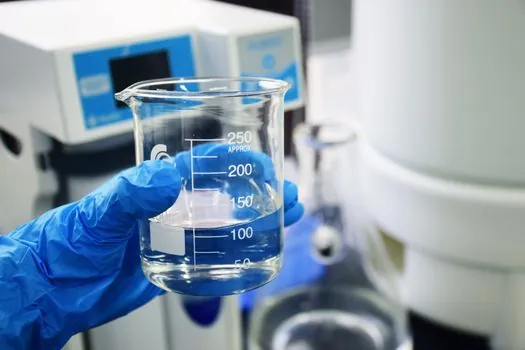
Optical DO sensors have largely displaced polarographic membranes in portable service because they do not consume oxygen, drift less between calibrations, and tolerate intermittent sampling without membrane poisoning [S1]. The InTap is specifically positioned as a calibration tool for inline optical DO sensors, which means its calibration regime is air-saturated water and nitrogen-purged zero, both of which can be performed at-line without removing the inline sensor [S1].
Inline amperometric or membrane-covered polarographic DO probes used in power-plant condensate service have a typical service interval of 2-4 weeks for electrolyte refill and membrane replacement, and a polarisation time of several hours after power-up before readings stabilise.
Application Fit: Brewing, Power, and Flue Gas
For brewing and beverage at-line control, the optical portable DO meter is the working instrument: pull a sample, dip or flow the optical cell through it, read ppb O2 in seconds, and use the same instrument to spot-check the in-line optical DO sensor fitted to the bright beer tank [S1].
For power-plant condensate and feedwater, an inline continuous DO analyzer with a flow-through cell, temperature compensation, and a low-ppb range is the engineered choice, with the Nikkiso 7118 representative of the class designed around boiler-water chemistry rather than hygienic service [S2]. For combustion flue gas, the instrument class is zirconia O2 analysis, which reports percent-level O2 on the wet flue gas stream to trim excess air; the Sogou encyclopedia entry for zirconia oxygen analyzers describes a temperature-stabilised electrochemical cell whose mV output tracks flue-gas oxygen concentration, a sensing principle that has no overlap with a liquid DO probe [S3]. The gas analyzer reference page groups these by phase and target analyte for the wider instrument selection work.
Decision Matrix: DO Meter vs Moisture Analyzer
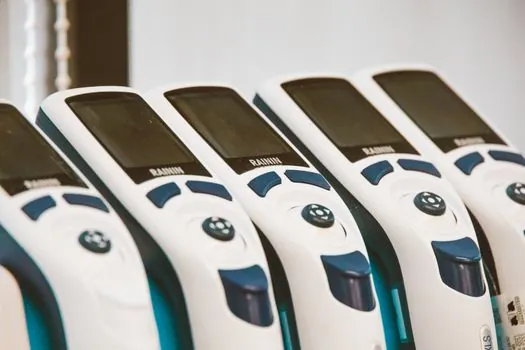
Four criteria separate the two instrument classes cleanly. First, the phase of the sample: a dissolved oxygen meter requires a liquid stream; a moisture analyzer requires a gas stream. Second, the target analyte: DO meters report O2 partial pressure or concentration; moisture analyzers report H2O in ppmV, lb/mmscf, or dew point. [S2]
Third, the typical detection regime: low-ppb O2 in condensate and brewing versus ppmV-to-dew-point H2O in natural gas, instrument air, and dryers. Fourth, the calibration mechanics: air-saturated water and N2 zero for DO, dry-gas or certified humidity-generator reference for moisture. The spectrum analyzer and vibration analyzer entries are not directly comparable but illustrate the same spec-first approach used to disambiguate adjacent instrument classes. Engineers specifying both an inline DO loop and a moisture loop in the same plant should expect different sample conditioning, different hazardous-area certification paths, and different vendor support models, even when the transmitters share a 4-20 mA plus HART interface.
When the Wrong Instrument Gets Specified
Specifying a moisture analyzer on a condensate line is a common procurement error, because both instruments can be ordered with low-ppb readout and 4-20 mA output, and both can be panel-mounted in the same control room. The failure mode shows up at commissioning: the moisture probe will not see a liquid sample at all, and any reading it produces is H2O partitioning into the headspace above the water, not dissolved O2 in the water itself. [S2]
The reverse error, dropping a DO probe into a dry gas line, fails the same way: the membrane dries out, calibration drifts, and the analyzer returns near-saturation readings that have no relationship to gas-phase oxygen. Inline power-plant DO analyzers are designed for the wet side, with flow cells, temperature control, and chemistry-tolerant housings [S2]; flue-gas zirconia probes are designed for the hot, wet, particulate side, with heated housings and reference-air provisions [S3]. The two instrument families meet only in a plant where the engineer is deliberately measuring both phases, and the spec sheets should be reviewed as separate line items rather than cross-substituted on price or panel cut-out.
For process engineers building a 2026 spec pack, the next step is to lock the phase and analyte per measurement point first, then narrow by range, response time, and calibration interval, and finally validate hazardous-area certification against the actual line classification. Trackable signals worth monitoring are vendor revisions to the optical-DO sensor membrane life claims and any updates to low-ppb DO analyzer accuracy specifications on condensate service [S1][S2].
For related coverage, see Optical comparator selection: 5 criteria that decide horizontal vs vertical.