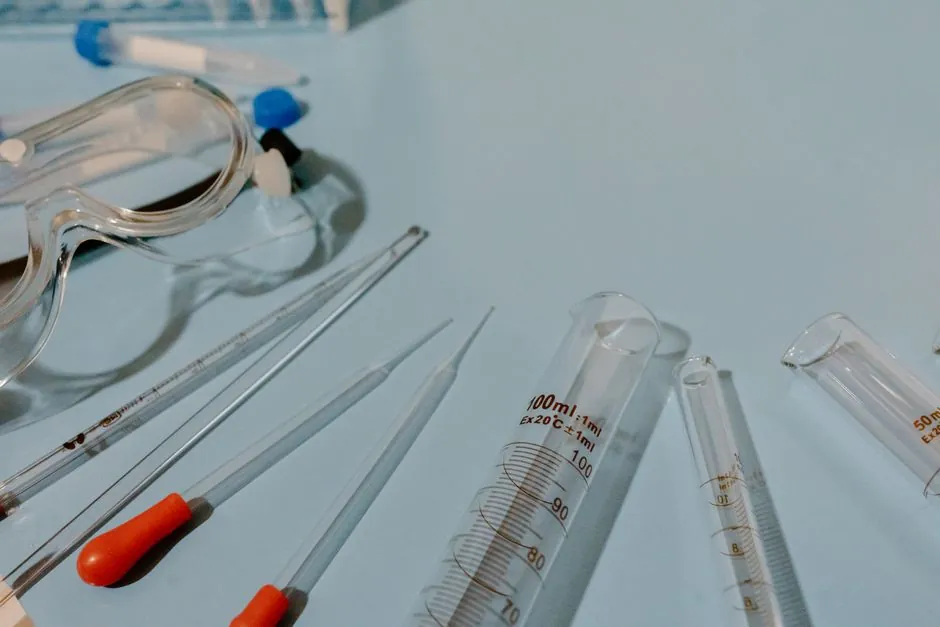
Polarographic and optical dissolved oxygen meters split the 2026 buying decision by response time, membrane maintenance, and trace-level capability, with HORIBA HD-960L covering μg/L class for HF chemistries and Mettler Toledo SG6 phased out since Nov 2014 [S2][S3].
Buyers in 2026 most often shortlist between handheld portable DO meters, benchtop laboratory meters, and inline process sensors, with the dissolved oxygen meter category cross-referenced against conductivity and pH/ORP analyzers when defining a water-quality panel.
Sensor Technology: Polarographic, Galvanic, Optical (Luminescent)
Polarographic and galvanic membrane probes remain the workhorse for general aqueous DO work, requiring electrolyte fill, membrane cap replacement on a 3-6 month cycle, and a flow or stirring dependence that the spec sheet lists in the technical notes [S2].
Optical (luminescent) DO sensors dominate new handheld and inline purchases because they avoid electrolyte refills, tolerate low-flow conditions, and recover faster after chlorine or CO2 exposure, with HORIBA HD-960L specified for low-concentration HF lines and automatic switching across three ranges from μg/L to mg/L order [S3].
Inline process DO sensors commonly pair with 4-20 mA plus HART output, and buyers comparing oxygen-detection platforms should review the oxygen detector reference for the gas-phase vs dissolved-phase distinction that procurement spec sheets often blur.
Range Classes: mg/L Process, % Saturation, and μg/L Trace
Three range tiers structure most 2026 shortlists: process-grade 0-20 mg/L with 0-200% saturation for wastewater aeration, 0-60 mg/L for aquaculture, and μg/L class for power-plant condensate and semiconductor DI water where HORIBA HD-960L's automatic switching delivers resolution at the trace band [S3].
Low-concentration selection must distinguish "trace DO" sensors that resolve to 0.1 μg/L from "low-range" sensors that bottom out at 0-2 mg/L, and the HORIBA HD-960L datasheet fixes the μA/ppm zero/span gas calibration workflow that field technicians use to verify this [S3].
Buyers mapping a multi-parameter panel should read the conductivity meter reference to understand how a low-range DO sensor's ppb-level resolution pairs with 0.055 μS/cm conductivity resolution in demineralized water loops, the common semiconductor wet-bench combination.
Process-Grade Criteria: Certifications, Output, and Hazardous Areas
Process-grade DO probes in 2026 typically require IP68 wetted materials, 4-20 mA plus HART 7 output for asset-management hooks, and either ATEX/IECEx Zone 1 for refinery service or hygienic 3-A / EHEDG for biopharma, with HORIBA HD-960L rated for HF chemistries at 15 mL/min minimum flow [S3].
Buyers importing or shipping DO meters into China must classify under HS 9023.00.90.00 (demonstration/other instruments) at 20% general tariff with 13% VAT, while digital multimeters and resistance meters that may share a procurement line fall under 9030.31.10.00 and 9030.33.20.00 with separate MFN and inspection routes [S1].
The 9023.00.90.00 line carries CIQ code 999 ("other ordinary equipment") with a 10-element declaration norm covering brand type, usage, model, GTIN, and CAS fields, meaning customs documentation for DO meter shipments needs every column populated to clear illegal-inspection holds [S1].
Selection Comparison: 4 Realistic Variants Against Decision Criteria
Four realistic 2026 variants line up against four decision criteria as follows: a portable luminescent handheld (0-20 mg/L, 0-200% saturation, IP67, USB-C) fits spot-check field use; a benchtop laboratory meter with BOD stirrer ports (0-60 mg/L, ATC 0-50°C) fits BOD5 and QC labs; a polarographic inline 12 mm probe with HART fits wastewater aeration tanks; HORIBA HD-960L with HF resistance and three-range auto-switching fits power-plant condensate and semiconductor wet benches [S3].
The HORIBA HD-960L specification sets minimum flow at 15 mL/min, supports both zero-gas and span-gas calibration, and the manufacturer (HORIBA Advanced Techno Co., Ltd.) publishes the three-band range list (μg/L to mg/L) on the product page, which is the spec to compare against any direct clone that quotes only a single 0-20 mg/L range [S3].
For process instrumentation panels that already include temperature measurement, spec engineers should cross-check probe dimensions against standard 12 mm PG13.5 sensor housings and compare the cable length to the thermocouple vs RTD decision tree when thermocouples are evaluated as a complementary input.
Use Cases and Who Should NOT Buy a Standard Handheld
Power-plant condensate polishing, semiconductor DI water, and pharmaceutical water-for-injection loops are the three end-uses where a generic 0-20 mg/L handheld fails: required resolution is ppb or μg/L, not mg/L, and any probe with a 0.1 mg/L display cannot resolve the 1-10 μg/L operating window [S3].
HF-bearing etch chemistries also rule out standard polarographic probes with glass reference internals, because the membrane body and reference junction dissolve within hours, and the HD-960L datasheet lists HF compatibility as the specific duty that drives its low-concentration variant [S3].
A buyer who only needs aeration-tank monitoring at 2-8 mg/L is overpaying if they specify HORIBA HD-960L or any ppb-class trace sensor, because the higher resolution drives cost and the low-flow requirement (15 mL/min) is harder to maintain in an aeration basin than in a slip-stream panel [S3].
Lifecycle, Standards, and Sourcing Signals
Mettler Toledo SG6 SevenGo pro DO meter is marked "phased out" with a stop-sale date of November 2014, so any 2026 quote on that model is service parts or used inventory, not new OEM stock [S2].
Standards that commonly govern DO meter deployments include ASTM D888 (dissolved oxygen in water methods A, B, C), ISO 17289 (oxygen in water by luminescence), and the harmonized 9023.00.90.00 HS classification for customs entries [S1].
Trackable signals for 2026 buyers: 9023.00.90.00 tariff line is the cleanest HS code for DO meters (with digital multimeters at 9030.31.10.00 and resistance meters at 9030.33.20.00 as adjacent lines that procurement must not confuse), and the ppb/μg/L low-range product family is the active R&D front for HORIBA, Mettler Toledo, and Hach competitors in mid-2026 [S1][S3].