
As of the May-June 2026 listings on Made-in-China.com, factory-direct dust collector system prices span roughly US$1,999 to US$40,000 per piece (1-unit MOQ) depending on airflow class, filter media and application [S5][S6].
The same listings show cement-plant baghouse units clustering between US$3,000 and US$7,999 per piece, while high-flow laser-cutting fume extractors at 9,000 m³/h are quoted around US$6,800-US$7,000 per piece [S5][S6]. Across the broader category, Chinese-built equipment now supplies both domestic and export channels, including some units re-branded as North American builds, a pattern that complicates landed-cost comparisons [S1].
Price Bands by Equipment Class on 2026 B2B Listings
The Made-in-China.com cement-plant category, sampled 2026-05-12, returns four distinct quotation tiers: a US$3,000-US$3,100 entry-level unit from a Shandong Diamond Member, a US$3,000-US$40,000 wide-band quotation from a Jiangsu supplier, a US$6,800-US$7,000 mid-range unit also from Shandong, and a US$1,999-US$7,999 spread from another Diamond Member [S6]. That price scatter reflects filter area, hopper capacity and fan motor kW, not raw steel content, so a spec-only comparison is misleading.
On the high-airflow side, a 9,000 m³/h fume extraction system built for laser cutting and welding is listed as a "hot product" in the Collector System wholesale index, confirming sustained demand for 8,000-10,000 m³/h-class extractors in 2026 [S5]. For buyers cross-checking baghouse vs cartridge vs wet designs, the entry thresholds on the same platform differ by roughly 2-3x for equivalent airflow, with cartridge units typically cheaper than baghouse at the same m³/h rating [S1].
What's Inside the Price: Filter Media, Housing and Cleaning Mechanism
A dust collector system is fundamentally a filter housing, a fan, a hopper, a cleaning mechanism and a filter media set, and the media choice is the single largest cost variable [S1]. Suzhou Forst Filter's product line separates three media families — pleated bag filter, panel air filter and air-filter cartridge — each with a different pleat count, area and replacement interval that drives operating cost, not just purchase price [S2].
Conventional cylindrical-bag designs with compressed-air pulse-jet cleaning handle dust loads up to roughly 204 °C (400 °F) and still represent 85-90% of the installed market, according to a long-running industry survey republished on Dust Collector Guide [S1]. That same source documents two design flaws still common in conventional units: cross-contamination of bags during the pulse-cleaning cycle, and inadequate filtration of sub-micron fume from thermal-spray and laser/plasma processes, both of which force buyers toward higher-spec (and higher-priced) "advanced technology" collectors when those processes are in scope [S1].
Selection Criteria: Airflow, Dust Load, Temperature and Combustibility

Selection starts with four numbers: required airflow (m³/h), inlet dust loading (g/m³), gas temperature (°C), and dust Kst/Explosion Severity class for combustible materials [S1]; a dust particle meter is typically used to verify inlet dust loading on-site before the final media set is locked in, because real-world loading routinely runs 2-5x above the generic process-sheet value. Welding, plasma and laser cutting tables are explicitly called out as "unique and difficult" applications where generic dust collection fails, because the sub-micron fume fraction and spark load defeat standard cartridge media [S1].
For combustible dusts — aluminum, magnesium, niobium, tantalum, titanium, zirconium — the design must integrate explosion isolation, venting panels and, on furnace-duty service, spark-arrestor / quencher stages, all of which add hardware and therefore price [S1]. Buyers specifying a furnace-duty dust collector for brass, zinc or tin-bearing melts need to budget for fire-suppression and explosion protection as separate line items, not bundle them into the headline unit price. A properly specified dust mask remains a mandatory PPE supplement to those engineering controls and should be tracked as a separate PPE budget line, not folded into the collector quote.
Comparison: Baghouse vs Cartridge vs Wet Scrubber on 4 Decision Criteria
The "advanced technology" dust collector category — pleated bags, high-entry cones, downward flow paths — exists specifically to fix the cross-contamination and sub-micron penetration issues of conventional cylindrical-bag designs, and it commands a meaningful price premium over 85-90% of installed units that still use the older architecture [S1]. For a buyer evaluating the total installed cost of a fume extraction arm versus a centralised baghouse, the Hydraulic Lift Table Price 2026: Capacity, MOQ and Sourcing Spread article's MOQ-spread analysis is a transferable model for reading B2B quotation tiers.
Use-Case Mapping: Cement, Laser, Shot Blast, Tire Recycling
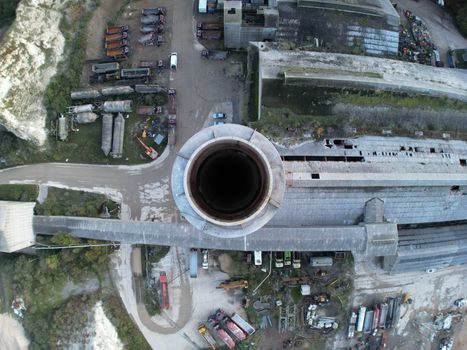
Four 2026-typical use cases map cleanly onto the price tiers. (a) Cement-plant baghouse: the dedicated sub-category on Made-in-China.com shows US$3,000-US$40,000 per piece, with most transactions falling into the US$3,000-US$7,999 band [S6]. (b) Laser/plasma/welding fume: 9,000 m³/h-class extractors cluster around US$6,800-US$7,000, reflecting the higher filtration area per m³/h for sub-micron fume [S5]. (c) Shot peener and abrasive blast: dust is unusually penetrative and abrasive, requiring lower dust penetration through the filter and advanced collector design rather than a generic unit [S1]. (d) Tire-recycling hammer-mill service: a documented case study shows blinded filter bags in a 60-bag advanced-technology baghouse collecting rubber, fibreglass fibre and metal slivers — a failure mode that drives both media specification and hopper/cleaning design choices [S1].
For facilities planning a new installation, the layout logic of adjacent equipment classes is well documented in Work Bench Selection Guide: Capacity, Worktop and Frame Logic and Mezzanine Platform Selection Guide: Load Class, Support Type and Layout Logic, both of which feed into the structural support and access-platform design around a dust collector hopper.
Limitations, Failure Modes and Sourcing Caveats
Three failure modes dominate the service-report data on Dust Collector Guide: blinded filter bags (rubber/fibreglass/metal sliver loading), filter-coating on arc-spray service where the spray metallises the cartridge, and conventional-bag cross-contamination that defeats the pulse-cleaning cycle [S1]. Each drives buyers toward higher-spec media, harder-cleaning-resistant housing, or alternative collector types — and each carries a measurable price delta over the headline B2B listing. A stack-mounted dust detector is the standard way to catch filter breakthrough before it becomes a compliance event, and the detector itself is a small line item relative to the avoided downtime.
Sourcing caveats are non-trivial: some manufacturers explicitly "claim and/or imply to be USA or Canadian built" while actually branding Chinese-built equipment, and the same 2016-era warning was still being carried on the Dust Collector Guide index as of the 2026-07-11 snapshot [S1]. Buyers comparing 2026 B2B quotations should therefore anchor on a verified country-of-origin, a stated media spec (grammage, surface treatment, antistatic rating for combustible service), and an explicit Kst/Class II Division 1 or ATEX zone classification, not on the headline unit price alone. A standard reference for combustible-dust facility design in North America is NFPA 652 / NFPA 654, and in the EU the ATEX 2014/34/EU equipment directive governs Category 1/2/3 zone selection; both are widely cited in 2026 dust-collector OEM documentation and should appear on any nameplate or datasheet that quotes an explosion-protected unit.