Electronic-grade quartz must meet impurity limits that protect piezoelectric frequency performance, while optical-grade quartz is selected for refractive-index uniformity, transmission, inclusion control, and surface quality.
The grades serve different functions: cultured electronic quartz forms frequency controls, filters, and timers, whereas optical fused silica serves imaging, UV, laser, and window applications.
Material Scope: Crystal Feedstock Versus Optical Glass
Electronic-grade quartz is manufactured industrial cultured quartz crystal, not natural mined quartz. It is used to make frequency controls, frequency filters, and timers in communications equipment, computers, television receivers, and consumer electronics. Virtually all quartz crystal used for electronics is cultured, while rejected cultured crystal may be recycled as feed material when its crystallographic condition permits [S1].
Optical-grade material is a different purchasing category. Fused Quartz, produced by fusing natural quartz at approximately 2,000 °C, retains moderate-purity characteristics. Optical-grade Fused Silica, produced by melting synthetic high-purity silica powder at approximately 1,700 °C, offers lower contamination and better optical homogeneity [S2].
The selection basis should therefore follow the finished function. Optical glass is the relevant category for imaging windows, lenses, and UV-transparent components; quartz material covers quartz forms and processing routes. Neither product name alone establishes the required purity.
Purity Targets Are Not Interchangeable
Ground high-purity quartz is typically defined as natural quartz containing less than 100 ppm total impurities, with additional limits for specified contaminants. Semiconductor-process fused quartz tubing has been produced with total contaminant levels below 25 ppm and alkali levels below 1 ppm, demonstrating that an overall SiO2 percentage does not describe every application requirement [S1][S4].
Commercial high-purity naming follows nines conventions: 3N denotes 99.9%, 4N denotes 99.99%, 5N denotes 99.999%, 6N denotes 99.9999%, and 7N denotes 99.99999%. One manufacturer’s material schedule specifies IOTA-STANDARD at 99.998% SiO2, IOTA-4 at 99.999%, IOTA-6 at 99.9991%, and IOTA-8 at 99.9992% [S5][S6].
Those labels describe silica purity, not the complete acceptance specification. Semiconductor-grade fused quartz is marketed with contaminant levels below 25 ppm, while Grade 224LD low-alkali tubing achieves a typical sodium level of 0.1 ppm compared with 0.7 ppm in normal tubing, removes up to 90% of naturally occurring alkalis, and virtually eliminates lithium [S4][S7].
Optical Performance Adds Requirements Beyond Chemical Purity
Optical-grade Fused Silica can transmit more than 80% at 185 nm, while conventional Fused Quartz cannot achieve that specified UVC transmission. Optical-grade Fused Silica is made by melting synthetically produced, high-purity silica powder at lower temperatures, usually around 1700 °C, and then allowing it to cool and solidify slowly, whereas Fused Quartz is manufactured from natural quartz crystals by high-temperature fusion, typically around 2000 °C.
Flatness and imaging accuracy drive the choice of optical quartz glass, while synthetic high-purity feedstock, controlled melting, and slow solidification support optical consistency [S2]. These requirements explain why optical purity cannot be judged from a generic 99.99% SiO2 statement: transmission, refractive-index uniformity, bubbles, inclusions, strain, and dimensional accuracy still require separate acceptance criteria.
For comparison, semiconductor optical components such as windows, cells, and containers may use high-purity quartz glassware, but semiconductor thermal processing adds its own contamination and thermal-stability requirements. The fused quartz material used in furnace tubes is not automatically interchangeable with optical-grade Fused Silica.
Decision Matrix for Cost, Performance, and Risk
Cost: conventional Fused Quartz is the economical option for sight glasses, UV lamp covers, and separation sheets in disinfection equipment. Optical-grade Fused Silica is more expensive because it uses synthetic high-purity powder and a different melting route. Generic labels such as “quartz glass” can conceal this distinction and produce misleading comparisons [S2].
Optical performance: Fused Quartz is adequate for many industrial sight-glass duties but has lower UVC transmission and poorer refractive-index homogeneity. Optical-grade Fused Silica is made by melting synthetically produced, high-purity silica powder at lower temperatures, usually around 1700 °C, and then allowing it to cool and solidify slowly.
Electronic performance: cultured quartz is selected for frequency controls, filters, and timers because its suitability extends beyond chemical purity to crystal orientation, crystallographic quality, and manufacturing consistency. USGS data list an as-grown cultured-quartz value range of USD 100–200 per kilogram in 2024 and lumbered quartz at USD 400–500 per kilogram, with electronic uses accounting for most industrial cultured-quartz consumption [S1].
Process risk: low-alkali semiconductor grades reduce mobile-ion contamination, and low-OH grades reduce sag and retard devitrification.
Use-Case Recommendations and Rejection Conditions
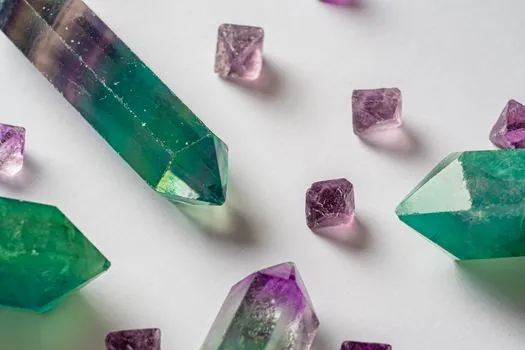
Specify cultured electronic-grade quartz for oscillators, resonators, frequency filters, timers, and other piezoelectric frequency-control devices. Require the supplier to define crystal orientation, defect and inclusion criteria, dimensional tolerances, and inspection requirements in addition to impurity data. A generic “high-purity quartz” description is not an adequate electronic-crystal specification [S1].
Specify optical-grade Fused Silica for precision imaging windows, UV and deep-UV components, optical cells, and other parts where transmission, refractive-index homogeneity, bubbles, inclusions, strain, flatness, or surface finish control performance. Do not approve it using total-purity wording alone [S2].
Specify low-alkali or low-aluminum semiconductor fused quartz for furnace tubes, diffusion and CVD chambers, wafer carriers, and push rods when contamination control or thermal stability is the dominant concern. Type 214 rod is offered in 1–20 mm diameters, while production tubing is available in diameters of 400 mm and larger with controlled wall thickness [S4].
Reject electronic quartz when the drawing lacks crystal and defect criteria. Reject optical material when the drawing omits wavelength, transmission, optical-homogeneity, inclusion, bubble, flatness, or surface-finish requirements. Reject semiconductor material when total contaminants below 25 ppm or the required alkali, aluminum, and OH limits are not addressed [S2][S4].
Procurement Specification and Supplier Qualification
Write the material form before the purity grade: cultured quartz crystal, fused quartz, or synthetic fused silica. Then state the application-specific performance requirements. For example: low-alkali fused quartz, total contaminants below 25 ppm, alkali below 1 ppm, and low-OH content below 10 ppm; or optical Fused Silica with transmission above 80% at 185 nm and defined refractive-index homogeneity [S2][S4].
Grade 4N quartz refined to 99.997% SiO2 has been used for Czochralski crucibles in silicon photovoltaic ingot production, while 4N5 material is associated with optical-fiber and precision-instrument uses and 4N8 with advanced lithography and high-power optics [S3][S6]. These examples show why “high purity” is a family of specifications, not one purchasing threshold.
Before purchase, request test methods and lot traceability for total impurities, specified alkali metals, aluminum, OH content, bubbles, inclusions, and optical properties where applicable. Commercial purity claims should be checked against the delivered product form because ground quartz, cultured crystal, and fused-glass products have different acceptance variables [S1][S4][S7].
The trackable procurement signals are the written impurity schedule, the measurement method for each critical element, and the defect and optical acceptance limits; a supplier’s broad “3N,” “4N,” or “optical grade” label is not enough.