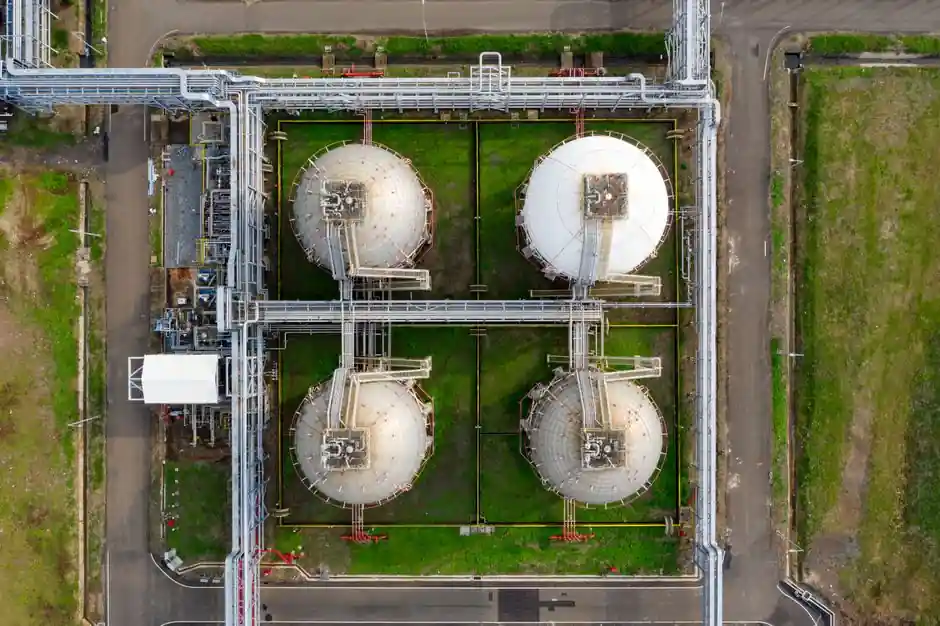
Flameproof emergency luminaires for oil and gas facilities are most commonly specified as Ex db IIC T6 Gb or Ex tb IIIC T80°C Db units with IP66 ingress protection, WF2 corrosion grade, and a minimum 60–90 minute battery backup, with available LED wattage tiers from 10 W to 100 W covering Zone 1, Zone 2, Zone 21, and Zone 22 [S1][S5].
The selection problem is not whether to buy a "flameproof" fitting, because that phrase is used loosely in marketing, but which certification (ATEX 2014/34/EU, IECEx, UL 1203 for Class I Division 1/2), which gas group (IIA/IIB/IIC), which temperature class (T1 to T6), and which autonomy window (90 minutes minimum, 2–3 hours for petroleum, 3–4 hours for offshore) actually fit the audited hazardous area [S2][S4][S7].
Hazardous-area scope: zones, groups, and temperature classes
Oil and gas emergency lighting must be rated for Zone 1 (continuous or frequent explosive atmosphere likely in normal operation) and Zone 2 (not likely in normal operation) for gas, plus Zone 21 and Zone 22 for combustible dust, per the IEC 60079 zone framework referenced across the supply chain [S1][S2][S4]. Within those zones, gas group IIC (hydrogen, acetylene) is the most demanding and is the default group cited on the most aggressive oil and gas product datasheets, while IIA (propane) and IIB (ethylene) cover the more common refinery and tank-farm service [S1][S2].
Temperature class selection is driven by the auto-ignition of the gas handled, and T6 (surface ≤85°C) is the strictest rating seen on explosion-proof emergency fittings intended for hydrogen-rich service, with T4 and T5 dominating standard refinery specifications [S1][S2]. One widely stocked model range covers temperature classes T1 through T6 inside a single certified housing, removing one variable from the specifier's checklist [S2].
Wattage tiers map cleanly to mounting height and area size: 10–18 W for sub-100 sq ft rooms at 2.5–3 m mounting, 18–30 W for 100–250 sq ft walkways at 3–4 m, 30–40 W for 250–600 sq ft production corridors, and 60–100 W for high-bay process halls and outdoor tank farms at 5–10 m mounting height [S4].
Electrical, photometric, and mechanical specification gates
Input voltage on the dominant Chinese-offered flameproof emergency family is 220 V/50 Hz or dual 110–260 VAC, with a constant-current driver, power factor cos φ ≥ 0.95, surge handling up to 30 A cold-start at 230 VAC, and luminous efficacy in the 120 Lm/W range with 2700–6500 K tunable color temperature [S1][S2]. CRI Ra ≥ 80 and a 50,000-hour working lifetime are the baseline published figures, with one BED60-IIA range covering 10 W to 150 W across four housing sizes and 1.2–18 kLm total output [S1].
Mechanical specification gates that consistently appear on compliant oil and gas emergency fittings: die-cast aluminum alloy housing with high-voltage electrostatic spray finish, exposed stainless steel fasteners, IP66 (or IP65 as a minimum) ingress, WF2 anti-corrosion grade, G3/4" cable entry accepting Φ10–Φ14 mm or Φ7–Φ12 mm cable, and a separate light-source and driver cavity to keep heat away from the emergency battery electronics [S1][S2]. Operating temperature window is commonly -40°C to +80°C on the LED head and -40°C to +40°C (24-hour average ≤+35°C) on the integrated emergency ballast, with relative humidity ≤ 95% at 25°C [S1][S2].
For NEC-aligned projects, UL 1203-listed LED fixtures deliver Class I Division 1 and Division 2 compliance and are described as meeting OSHA and NEC code requirements in upstream, midstream, and downstream oil and gas sites, while ATEX/IECEx dual-certified units are the default for European offshore and refinery work [S5][S7].
Battery backup, autonomy duration, and chemistry
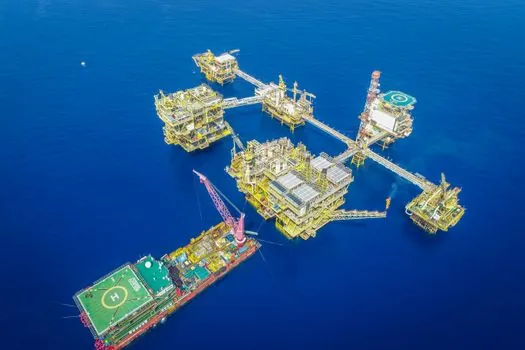
Emergency starting time on combined emergency devices is specified at ≤ 0.3 seconds from mains loss, with recharge time of 8–24 hours depending on cell chemistry and capacity, and minimum emergency lighting time of 60 minutes (basic) or 90 minutes (preferred), with 120 minutes and 180 minutes also called out for higher-risk plants [S1][S3][S4]. A 2025 engineering framework for hazardous areas specifically recommends LiFePO4 over older NiCd and lead-acid chemistries for cycle life, stable discharge, and high-temperature resilience in Zone 1 and Zone 2 emergency fittings [S4].
Autonomy duration is not one number: pharmaceutical plants are sized at 90–120 minutes, chemical production at 2 hours, petroleum and refinery at 2–3 hours, offshore and gas processing at 3–4 hours, and confined-space entries at 4 hours, on the published selection logic [S4]. This aligns with the minimum 90-minute baseline demanded by most safety codes and the operational reality that an offshore muster takes longer than a land-based evacuation.
Self-contained flameproof fittings trade higher per-unit cost for independence from a central battery and simpler wiring; central battery systems are cheaper per point but introduce a single point of failure and more complex Ex-rated cabling, so high-consequence sites usually mix self-contained units at egress points with central systems for area lighting [S4].
Decision matrix: fixture type vs application
Comparing the four dominant fixture types for oil and gas emergency duty on cost, coverage, battery, and best-fit application: (1) flameproof portable emergency lights at 30/60/100 W with 60-minute backup and 8-hour charge suit maintenance turnarounds and confined-space work where a fixed fitting is overkill; (2) flameproof LED emergency tubelights at 18 W with Li-ion backup suit corridors, MCC rooms, and labs under 100 sq ft; (3) flameproof LED emergency floodlights or high-bays at 60–100 W suit process halls, offshore modules, and tank-farm perimeters; (4) combined emergency LED spotlights at 10–150 W with built-in 60/90-minute pack suit walkways, platforms, and exit routes on a single SKU [S1][S3][S4].
Coverage ceiling matters: portable units are limited to about 120° viewing angle and 15 kg without trolley (20 kg with), so they are not a substitute for fixed-area emergency lighting in any large refinery space [S3]. For offshore and downstream chemical sites, the practical specification is a fixed 60–80 W flameproof LED emergency fitting with 2–3 hour LiFePO4 backup, mounted at 5–7 m on 8–10 m centres along escape routes, with portable 60–100 W units held on the tool-room shelf for turnaround use [S3][S4].
Certifications, standards, and audit pitfalls
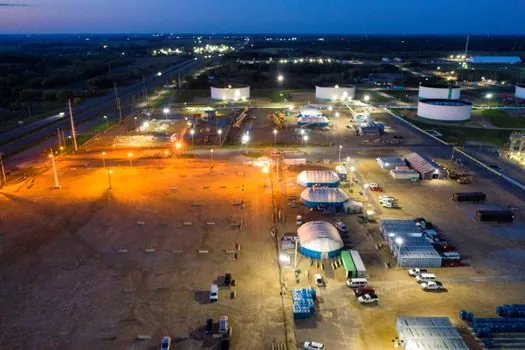
Compliant oil and gas emergency luminaires carry ATEX (2014/34/EU) and IECEx certification for international projects, with UL 1203 plus NEC Class I Division 1/2 listing for North American sites, and CCC, CE, RoHS, and ISO 9001 documentation on most Chinese-origin units [S1][S5][S6]. The relevant product standards explicitly cited in vendor datasheets are IEC 60079 (explosive atmospheres, general), IEC 61241 (combustible dust, legacy reference), UL 8750, and EN 61347-1 / EN 61347-2-13 for the LED driver and EMC compliance to EN 61000-3-2 [S1][S2].
Audit pitfall one: a fitting can be ATEX-certified for gas group IIC but still fail if its temperature class (T4/T5/T6) is not matched to the gas handled at the specific point of installation; certificate scope, not just certification presence, decides pass or fail [S4]. Audit pitfall two: standard emergency lights (non-flameproof) are not legal in Zone 2 regardless of their IP rating; only explosion-protected luminaires are permitted, and inspectors will red-line the substitution [S4]. Audit pitfall three: a 10 W fitting in a 110 m corridor will pass paperwork but fail the evacuation-time test, as a 2024 Maharashtra solvent-plant shutdown case showed when a fleet of under-specified 10 W units was upgraded to 60 W LiFePO4 flameproof units and evacuation time fell from 6 minutes to 120 seconds [S4].
For correlated selection work on the same plant, the industrial buzzer spec map for oil and gas follows similar zone-and-group logic and is worth reading in parallel when an alarm tone has to be heard under the same emergency-lighting envelope.
Who flameproof emergency lighting is for, and who should not specify it
This equipment is specified for: oil refineries, drilling rigs, compressor stations, tank farms, offshore platforms, chemical plants, LPG storage, solvent processing units, battery charging rooms, spray booths, and gas stations where flammable vapours or combustible dusts may be present in normal operation [S1][S2][S7]. It is also the right call for any indoor or outdoor Zone 1 / Zone 21 hazardous area where the loss of normal lighting would impede safe shutdown or evacuation [S4][S5].
It is over-specified and uneconomic for: non-hazardous industrial areas (use standard IP65 emergency fittings), Zone 2 only sites where a certified Ex-nA or Ex-ec non-sparking fitting at one third the unit cost will meet code, and outdoor general area lighting where an LED floodlight with 50,000-hour life and no emergency function is the correct choice [S2][S4]. It is also the wrong tool for portable task lighting in unclassified spaces; a rechargeable LED worklight is lighter, cheaper, and code-compliant for that duty [S3][S9].
Trackable signals for specifiers watching 2026 sourcing
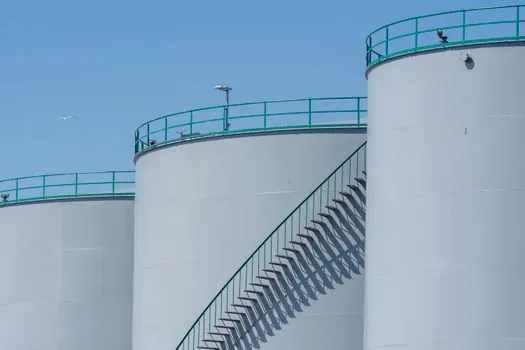
Three signals worth monitoring: (1) the migration from NiCd to LiFePO4 in factory-default emergency packs, which is being driven by the 2025 engineering guidance and is visible on most new 2026 datasheets [S4]; (2) the consolidation of ATEX/IECEx dual certification as a baseline expectation on Zone 1 emergency SKUs, with single-jurisdiction units losing bid share in international tenders [S5][S6]; (3) the spread of 60–100 W LED replacements for legacy 200 W metal-halide flameproof floods, with 120 Lm/W efficacy and 50,000-hour published life as the new baseline that a competing 100 W halogen-spec quotation must beat to remain in spec [S1][S2].
The underlying component specifications are covered under lamps and light fittings, emergency light, and oil seal.