
Explosion-proof industrial buzzers in oil and gas service must clear three non-negotiable gates: hazardous-area certification (ATEX/IECEx Zone 1 or Class I Div 1), sound output (110-120 dB at 1 m to cut through compressor and pump noise), and ingress protection at IP66 or higher to survive salt spray, hydrocarbon mist, and high-pressure wash-down [S1].
The category covers a wide output range; the ProAlert XPA explosion-proof audible and visual alarm line for oil and gas environments offers 120 dB output options, which represents the upper end commonly specified for refinery and offshore platform installations where ambient noise routinely exceeds 90 dB [S1]. Oil and gas instrument makers also publish full pressure, level, and temperature portfolios alongside the audible/visual alarm segment, confirming the buzzer is a sub-system inside a broader measurement and safety stack [S2].
Hazardous-Area Classification and Certification Gates
ATEX 2014/34/EU and IECEx are the two certification schemes that govern equipment placement in oil and gas classified areas, and the certificate number must be checked for the exact gas group (IIA/IIB/IIC) and temperature class (T4/T5/T6) [S1]. A Zone 1 buzzer is rated for areas where an explosive atmosphere is likely to occur in normal operation, while Zone 2 is for areas where it is not likely and, if it does, only for short periods. Selecting the wrong zone rating is the most common audit finding on upstream sites.
For North American projects, the equivalent route is Class I Division 1 or Division 2 under the NEC/CEC, and dual-certified units (ATEX + IECEx + cULus) simplify cross-border skid packages [S1]. The enclosure itself must also meet NEMA 4X or IP66 minimum for outdoor or wash-down locations, and NEMA 7/9 for explosion-proof housings that contain an internal ignition.
Sound Pressure, Tone Pattern, and Tone Count
Sound pressure level is measured at 1 m on axis; 110 dB is the practical floor for compressor shelters, 115 dB is typical for process areas near pumps, and 120 dB covers refinery coker decks and offshore drilling floor locations [S1]. Tone count matters because it lets one device serve multiple alarm states: a 32-tone buzzer can deliver continuous, warble, sweep, and intermittent patterns mapped to fire, gas detection, ESD, and process trips, reducing the number of field devices.
Two-stage alarms (pre-alert then full-output) and three-stage alarms are common in oil and gas fire and gas systems, with stage selection driven by voltage-free contact or 24 VDC trigger from the F&G controller [S1]. Operators in fire and gas applications also require the buzzer to retain synchronisation when several units are wired in parallel on the same loop, so the device list must specify synchronisation across at least 10 units.
Supply Voltage, Current Draw, and Wiring Topology

Industrial buzzers for oil and gas ship in three supply families: 24 VDC (battery-backed systems and solar-powered wellhead skids), 110/120 VAC, and 230/240 VAC at 50/60 Hz [S1]. Current draw at full output sits between 200 mA and 1.5 A depending on dB and tone, and that number feeds both the power supply sizing and the cable voltage-drop calculation on long offshore runs.
Wiring topology is usually 2-wire for simple single-tone horns and 4-wire or 6-wire for multi-tone units with separate stage-selection lines; some modern units add an optional relay-output pair to drive a beacon or a shutdown contactor [S1]. When the buzzer is integrated into a fire and gas system, the loop must be supervised (line-monitoring resistor or addressable loop) so a cable break is itself alarmed, not silently disabling the device.
Enclosure Material, Ingress, and Corrosion Resistance
Stainless steel 316L is the default on offshore platforms where salt spray and H2S exposure attack coated aluminium and cast iron within months; GRP (glass-reinforced polyester) is acceptable on onshore upstream sites where weight and cost matter more than mechanical impact [S1]. For arctic, desert, or refinery coker service, ambient temperature rating of -55 deg C to +85 deg C is available on explosion-proof lines and is the spec to ask for, not the commercial -25 to +70 deg C rating that most general-purpose buzzers ship with.
IP66 (powerful jets) is the floor, IP67 (temporary immersion) is preferred for deck-level and sub-sea manifold installations, and IP66K adds high-pressure, high-temperature jet resistance for wash-down zones [S1]. Stainless hardware, silicone gaskets rated to -55 deg C, and salt-fog tested to IEC 60068-2-52 severity 1 or 2 separate the real oilfield product from a repainted industrial-grade unit.
Integration with Fire, Gas, and ESD Systems
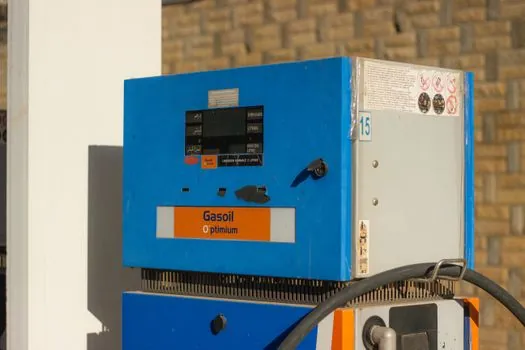
Industrial fire and gas systems in oil and gas typically layer four notification technologies: smoke, heat, flame, and gas detection, with horn-and-strobe notification forming the final layer of the alarm chain [S3]. The buzzer is normally driven from a fire and gas controller (F&G), a safety PLC (SIL 1/2/3), or a dedicated addressable fire panel, and the trigger logic is tested as part of the loop validation.
Integration with an emergency shutdown (ESD) system is the test pattern to look for: a properly designed system will fire the buzzer, then time-out, then initiate shutdown if the operator does not acknowledge, and that sequence must be visible in the F&G cause-and-effect matrix [S3]. On offshore platforms, the same buzzer is often asked to be voice-capable for evacuation messages, which raises the spec to a voice sounder rather than a tone-only horn and adds an amplifier and line-loudspeaker dimension to the engineering pack.
Comparison of Buzzer Categories for Oil and Gas Duty
Four common buzzer types compete for the same panel space on a process skid, and the right pick depends on the question being asked at the engineering review. The table below lines up the realistic options on the four criteria that decide the bill of materials: maximum SPL, hazardous-area rating, tone count, and typical installed cost. [S1]
Comparison: piezo buzzer (110-115 dB, Zone 2/Class I Div 2, 1-3 tones, lowest cost) versus motorized siren (115-120 dB, Zone 1/Div 1 on certified units, 1 tone, mid cost) versus electronic multi-tone sounder (110-118 dB, Zone 1/Div 1, up to 32 tones, mid cost) versus voice sounder (110-120 dB with voice, Zone 1/Div 1, multi-tone plus pre-recorded messages, highest cost) [S1]. A reasonable selection rule is: piezo for control-room panels in non-classified indoor spaces, motorized siren for outdoor general alarm, multi-tone sounder for F&G panels needing stage mapping, and voice sounder for manned platforms with public-address integration.
Inspection, Maintenance, and Reliability Engineering
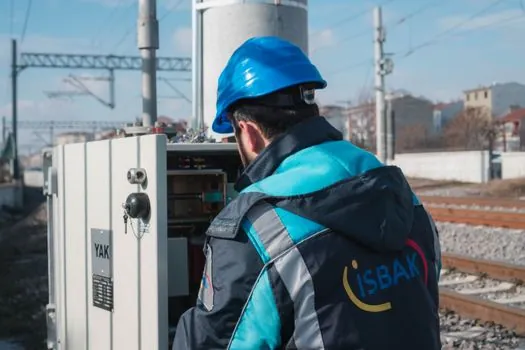
Best-practice maintenance for fire and gas systems on oil and gas sites includes routine inspection and testing, with the alarm and monitoring subsystem on a documented test interval (commonly monthly for critical paths, quarterly for non-critical) [S3]. A typical PM task is the functional test: apply the trigger, record the dB reading at 1 m with a sound-level meter, and compare to the baseline; a 6 dB drop on the same tone usually means the diaphragm is failing.
Loop testing covers line-monitoring integrity, beacon synchronisation, and battery-backed power-supply autonomy; oil and gas operators also verify foam concentrate quality and fire-pump performance in the same inspection window because these subsystems feed the same incident [S3]. The two common failure modes in the field are diaphragm corrosion (drive to higher dB rating and 316L enclosure) and cable gland failure (spec stainless steel glands with IP68 rating rather than zinc-plated industrial glands), both of which are predictable on the engineering drawing long before they appear in service.
Sourcing, Documentation, and Standards Discipline
The certifiable paperwork required for each explosion-proof buzzer includes the ATEX or IECEx certificate of conformity, the installation drawing showing zone coverage, and the material traceability certificate for wetted parts; missing any one of these blocks the procurement gate on most oil and gas EPCs [S1]. The instrument supplier's own published literature typically lists hazardous-location pressure, level, and valve products alongside the audible and visual alarm segment, confirming that the buying decision is a system-level review, not a single-device decision [S2].
Two engineering watch points: (1) confirm the unit is dual-certified for both ATEX and IECEx if the site ships internationally, and (2) cross-check the temperature class against the gas group of the service (methane is Group IIA, hydrogen is Group IIC) [S1]. A follow-up worth tracking through Q4 2026 is the convergence of multi-tone sounders with addressable loop technology, which is starting to simplify the F&G loop drawings on greenfield LNG projects.
For adjacent spec work on the same plant, see Tank Container Selection for Port and Terminal Operations: A 2026 Spec Map for storage-side design gates, and Time Relay Sizing and Selection: Function, Range, Contact, and Supply for the relay-output stage of the alarm chain. A broader reference on the alarm category sits in the industrial buzzer encyclopedia entry, and the application context is summarised under industrial gas for the surrounding process envelope. Related measurement and switch gear used upstream of the buzzer is covered at lamps and light fittings for the visual alarm pairing.