
Industrial emergency stop push-button list prices observed in mid-2026 fall into a tight band of €40-€50 ex-works for 22 mm panel-mount plastic mushroom switches, with a 30 mm ATEX/IECEx sealed safety device from IDEC priced in the low hundreds of euros through industrial channel listings [S1][S2][S3][S4].
Three spec tiers govern the spread: (1) general-purpose 22 mm plastic illuminated or non-illuminated IP66 units at roughly €44-€46 list [S1][S3]; (2) branded safety-stop modules with LED and global approvals at the upper end of the same band [S4]; (3) explosion-protected 30 mm devices carrying ATEX, IECEx and Class I Zone 1 ratings, priced materially higher and quoted per configuration [S2].
General-purpose 22 mm plastic E-stops: €40-€50 list band
New Elfin's 020PTFALR4 illuminated 40 mm mushroom, twist-pull release, 22 mm panel-mount, with a 45 mm yellow disc, lists at €44.80 ex-VAT with a 5-day availability window and 42 g unit weight [S3]. The 020PTFALR6 variant, mechanically identical but with a larger 60 mm yellow background disc, lists at €46.20 and 44 g [S1]. Both carry IP66 and IK 03 ratings, HS code 85365080, and belong to the SM2 Ø 22 family [S1][S3].
For cost-down builds, New Elfin's non-illuminated 020PTFARP02 and the 020 series with-guard versions sit in the same SM2 catalogue bracket, indicating that the €40-€50 band is structural for 22 mm IP66/IP69K plastic mushroom stops rather than a single SKU anomaly [S1]. IP69K-rated spring-return and selector switches in the same family push the catalogue to higher IP tiers without changing the price architecture materially [S1].
Branded safety modules: PIT es3s and the LED premium
PILZ's PIT es3s E-stop, 22.3 mm mounting hole, IP65, illuminated, with CE / UKCA / cULus Listed / EAC / TÜV approvals and a yellow LED, is the typical next step up from generic plastic E-stops [S4]. It uses LED illumination rather than incandescent, which raises MTBF expectation and shifts the device into the safety-component category that machine builders usually prefer for CE-marked assemblies under EN ISO 13850 [S4].
The PIT es3s is treated as a branded safety-component listing on DirectIndustry rather than a price-tagged commodity SKU, which is standard for safety-rated devices sold through authorised distribution [S4]. For process engineers, the practical takeaway is that swapping a generic IP66 plastic mushroom for a PILZ-class unit commonly moves the unit price by 2-3x, with the gap recovered through documentation, approval set, and longer mechanical life rather than raw sealing class [S4]. Compare this with the lighting-side build decisions in signal-tower-light selection, where the same "spec tier drives cost" logic applies to stack-light columns.
Explosion-protected 30 mm E-stops: ATEX and IECEx premium
IDEC's EU2B Series 30 mm safety devices are fully sealed so that released electrical energy cannot ignite surrounding gases, and carry ATEX, c-UL, UL/NEC 505 Type 4X, Ex de IIC T6 Gb, Class 1 Zone 1 and Division 2 approvals [S2]. They accept up to 3 contact blocks and offer lever or key selector options with IP20 finger-safe screw terminals, and are positioned for oil and gas, wastewater, petrochemical, semiconductor, pharmaceutical and food-processing lines [S2].
ATEX/IECEx-rated 30 mm E-stops are consistently priced several times above the 22 mm plastic baseline because the housing, contact block certification and potting path each add cost; explosion-proof button assemblies in this class routinely reach the low-hundreds-of-euros range ex-works before options [S2]. For background on the device category and the broader emergency stop button taxonomy, the EU2B sits firmly in the hazardous-area tier rather than the panel-tier.
Cost-driver breakdown: what moves the price
Across the four OEM data points surveyed, four cost drivers explain almost all the spread observed [S1][S2][S3][S4]:
1. Sealing class — IP65 vs IP66 vs IP69K. The 22 mm plastic tier is dominated by IP66 / IP69K, with the LED-indicator premium limited to roughly €1-€2 between the 020PTFALR4 (€44.80) and 020PTFALR6 (€46.20) [S1][S3].<br>2. Approvals set — CE-only vs cULus + TÜV + EAC. PILZ PIT es3s carries the wider global set, which is the main reason it is sold as a safety component rather than a price-tagged SKU [S4].<br>3. Hazardous-area certification — ATEX, IECEx, UL/NEC 505, Class I Zone 1. IDEC's EU2B crosses into the explosion-protected bracket, which lifts unit cost by an order of magnitude versus the 22 mm plastic baseline [S2].<br>4. Contact block count and illumination. 1NC vs 2NC blocks and integrated LED vs non-illuminated heads add incremental cost on top of the housing class [S2][S3].
Where to source: distribution channel and lead time

Lead time for the 22 mm plastic tier is short: New Elfin lists both 020PTFALR variants as "ready in 5 days" through DirectIndustry's RFQ channel [S1][S3]. Branded safety modules (PILZ, IDEC) are typically quoted through authorised distributors with longer lead times and minimum-order quantities, especially for ATEX-rated configurations [S2][S4].
For end-of-life or replacement buys, the secondary market still trades legacy enclosures — eBay listings in mid-2025 show ABB CP1-10G-10 (green, non-standard E-stop) two-packs at around US$40.93 plus US$55.00 shipping, illustrating the freight-vs-unit-cost inversion that occurs on low-volume spares. For new builds, the OEM channel (DirectIndustry, RS, Pepperl+Fuchs, Quisure) dominates: AS-Interface Safety at Work catalogues from Pepperl+Fuchs explicitly bundle emergency stop pushbuttons with safety light curtains and door interlock switches on a single bus, which is the route panel builders use when they need to cut wiring cost on long conveyor lines [S6].
Who each tier is for — and who it is not for
The €40-€50 22 mm plastic tier fits conveyor OEMs, packaging machinery builders, and small panel shops that need an E-stop on every station and prioritise unit cost and IP66/IP69K sealing [S1][S3]. It is not for ATEX zoned lines, semiconductor wet-benches, or any process area where a third-party certification audit will check the approval set on the E-stop itself [S2].
The branded safety tier (PILZ PIT es3s and equivalents) is the right pick for CE-marked machines sold into multiple jurisdictions, where the EN ISO 13850 documentation chain and the LED-based life indication matter more than the €10-€20 saving per station [S4]. The ATEX/IECEx tier is mandatory for Zone 1 / Division 2 hazardous areas — specifying a 22 mm plastic mushroom here is a documentation failure even if the device would mechanically function, because the approvals chain on the E-stop must match the area classification [S2].
Process engineers weighing capex vs compliance should map the line drawing against the area classification before choosing the tier; for the explosion-proof button tier the unit-price multiple versus the plastic tier is the smallest part of the total cost — the bigger cost is the documentation, third-party audit, and the contact-block certification path behind each device [S2].
Build vs buy: when a panel E-stop is not enough
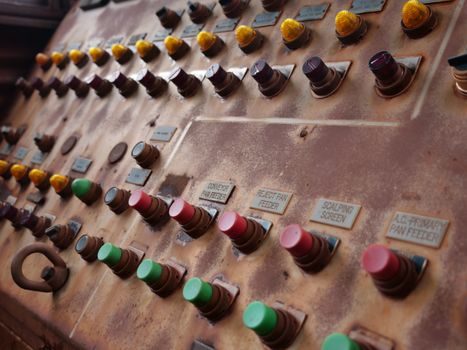
For one-off or short-run builds, RS Components stocks a deep catalogue of emergency stop push buttons including illuminated, key-release, twist-release and 60 mm push-pull variants with CCC, CE and RoHS markings, typically sold via RFQ rather than at a fixed list price. AliExpress channels list automotive-style start/stop and kill switches at US$1.18-US$1.73 each, but these are 12 V vehicle switches — not industrial E-stops and not suitable for EN ISO 13850 duty. [S1]
The cost spread observed across RS, Quisure, DirectIndustry and AliExpress shows that the genuinely industrial E-stop market is gated by approval set and sealing class; below that, the products diverge into automotive, motorcycle and hobby accessories that share the form factor but not the safety function.
Next node: confirm the line's hazardous-area classification and required approval set before pricing the E-stop — the cheapest 22 mm plastic mushroom becomes the most expensive line item if it is misapplied on a Zone 1 conveyor, and the explosion-protected EU2B-class device becomes a budget error if specified on a packaging line that does not need ATEX [S2]. Track signals: IECEx scheme bulletin updates, EN ISO 13850 revision status, and the next DirectIndustry list-price refresh for the 020 series [S1][S3].