
Electro-absorption modulated laser (EML) chip supply is the binding constraint on AI optical interconnect capacity in 2026, with 200G EMLs (the devices required for 1.6T DR8/FR4 modules) materially tighter than 100G parts and lead times extending beyond 2027 [S3][S4].
The shortage stems from a concentrated InP fab base, Nvidia's pre-allocation of capacity at the main suppliers (Lumentum, Coherent/Finisar, Mitsubishi, Sumitomo, Broadcom), and a 2.6x demand step-up to ~63 million 800G-and-above transceiver shipments projected for 2026 versus 24 million units in 2025 [S3].
Capacity by Supplier: 2025-2026 EML Output
Lumentum's 2025 EML chip plan is approximately 60 million units, of which 200G products (needed for 1.6T) account for only about 2 million units, with the bulk ramping in the second half of 2025 [S4]. Mitsubishi's capacity is around 40 million EMLs in 2025, expanding to roughly 50 million in 2026; Sumitomo runs about 80 million total lasers with EMLs at 20%–30% and the balance as CW (continuous wave) products; Broadcom's EML output is 20–30 million units, rising toward 30 million in 2026 [S4].
Against that supply base, the demand math is unforgiving: an 800G DR8/2xFR4 module requires 8 EMLs (one per channel), and a 1.6T module requires 8 x 200G EMLs, so 24 million 800G-class transceivers alone consume on the order of 190 million EML channels, before any 1.6T allocation [S3][S4]. Laser technology is the single most expensive part of an optical transceiver, roughly 50% of the module's total cost, so an EML shortfall translates directly into module ASP (average selling price) inflation [S1].
EML vs. VCSEL vs. CW Laser: Decision Criteria
VCSELs operate at 850 nm over multimode fiber for short-reach links up to ~300 m at 10 Gbps and remain the workhorse for in-rack SR4/SR8 modules, with low cost, very low power, and a mature supply chain [S1]. EMLs operate in the C-band (1470–1610 nm, ~1550 nm typical) over single-mode fiber, support >25 Gbps per lane with >40 GHz bandwidth and stable low-chirp output, and reach 10–80 km (up to 40 km typical for 100G) with very low chromatic dispersion; the trade-off is high cost and, as of 2026, allocation [S1].
CW lasers emit a steady unmodulated beam at 1310–1550 nm, with the data encoding done externally on a silicon photonics chip (typically a Mach-Zehnder modulator); reach is 10–40+ km, cost is medium, and supply is broader because the laser is simpler than an EML and the modulator rides standard foundry processes [S1]. A practical comparison for procurement:
- Short-reach (<300 m, cost-driven): VCSEL, lowest cost and power, mature supply, but limited to multimode and per-lane speeds that are still scaling past 100G [S1].
- 800G/1.6T AI interconnects (DR8, 2xFR4): EML, best signal integrity at >25 Gbps/lane and the lowest dispersion at 10–40 km, but supply-constrained and expensive, with EML module power exceeding 4.5 W in some designs [S1].
- 1.6T with CW + SiPho: CW laser + external modulator, leverages foundry-scale SiPho and broader CW capacity, with simpler laser structure but higher insertion loss than InP EMLs and a reliability regime (die-cut, aging test) that has its own capacity ceiling [S3][S5].
SiPho-based transceivers are increasingly capable of supporting 200 Gb/s per lane in 8-channel arrays on a single chip, and benefit from standard semiconductor foundry scaling, lower cost, lower power, higher yield, and better integration with electronic systems; EMLs retain the edge in long-distance, low-insertion-loss links and in any spec where signal quality dominates [S5].
Why the Shortage Is Structural, Not Cyclical
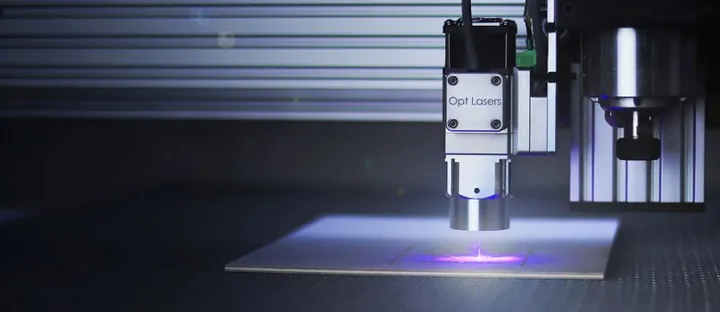
EML production is gated by the number of qualified indium phosphide (InP) fabs, multi-channel manual assembly, and the difficulty of yielding these devices, all of which limit how fast capacity can be added [S5]. EMLs combine a DFB (distributed feedback) laser and an electro-absorption modulator on a single InP chip, a structure that is hard to make at the volumes AI cluster builds now require [S3].
Nvidia's silicon photonics and CPO (co-packaged optics) roadmaps have advanced more slowly than anticipated, keeping the industry dependent on pluggable EML-based modules for GPU cluster expansion; to secure supply, Nvidia pre-allocated a large portion of EML capacity at the major suppliers, which extended lead times past 2027 and squeezed availability for other regions [S3]. Optical module manufacturers and CSPs (cloud service providers) are now qualifying second-source EML vendors and re-architecting around CW + SiPho to escape the allocation [S3].
CW Lasers and Silicon Photonics: The Partial Release Valve
CW lasers paired with silicon photonics modulators are the main alternative route for CSPs facing EML shortages, because the CW laser structure is simpler (no integrated modulator) and the modulator wafer runs in standard CMOS foundries, broadening the supplier base [S3]. SiPho also cuts module cost at scale, lowers power in high-density designs, and integrates more cleanly with switch ASICs (application-specific integrated circuits) [S5].
CW production is not unlimited, though: long equipment lead times restrict expansion, and strict reliability standards require labor-intensive die-cut and aging tests, steps that many vendors outsource, which itself becomes a downstream bottleneck as the CW ecosystem approaches its own capacity ceiling [S3]. In practice, silicon photonics is a release valve, not a like-for-like replacement, and remains a partial substitute for the harshest 800G/1.6T AI link requirements [S4].
Adjacent Pressure: Photodiodes, InP Epitaxy, and Switch Silicon
Optical modules also need high-speed photodiodes (PDs) to receive signals, and leading vendors (Coherent, MACOM, Broadcom, Lumentum) are releasing 200G PDs to enable 200G-per-channel transmission; PDs are manufactured on InP epitaxial wafers, the same upstream material as EMLs and CW lasers, so any laser fab expansion has to compete for shared InP epitaxy capacity [S3]. As laser makers prioritize epitaxy for lasers, more InP epi is being outsourced to specialists like IntelliEPI (iET) and VPEC, a notable spillover for Taiwanese compound-semiconductor foundries [S3].
The 1.6T ramp is gated not just by optics but also by 1.6T-capable switch platforms (Tomahawk6-class), which can cap deployable port count independent of laser supply, and 800G demand remains robust at roughly 40 million units in 2026 but is increasingly viewed as transitional as hyperscalers push to migrate to 1.6T wherever supply and infrastructure allow [S4]. CPO carries long-term promise but stays in validation through 2026 on reliability, serviceability, and supply-chain concentration, so it is an incremental complement by 2028, not a near-term replacement for pluggables [S4].
Procurement Signals to Track in 2026
Trackable nodes into 2026: (1) the 200G EML ramp at Lumentum, where the 2-million-unit 2025 baseline has to multiply to clear the 1.6T module pipeline; (2) Mitsubishi's 40M-to-50M EML expansion, which is one of the few single-vendor capacity moves large enough to move the market; and (3) the CW + SiPho qualification cadence at hyperscalers, which determines how much EML demand gets structurally replaced rather than just deferred [S3][S4].
The Credo acquisition of DustPhotonics in May 2026 consolidates SiPho IP under a US-headquartered supplier at exactly the moment CSPs are diversifying away from EML allocation, a signal that the bottleneck is being arbitraged through M&A as much as through fab build-out. For buyers sourcing 1.6T OSFP224 hardware, expect a two-tier market into 2026: EML-based modules remain premium-priced and allocation-controlled, while CW + SiPho parts become the volume workhorse for any link spec that does not push the 10–40 km, low-dispersion envelope where EML still wins [S1][S2][S3].
The underlying component specifications are covered under optical comparator, optical glass, and laser level.