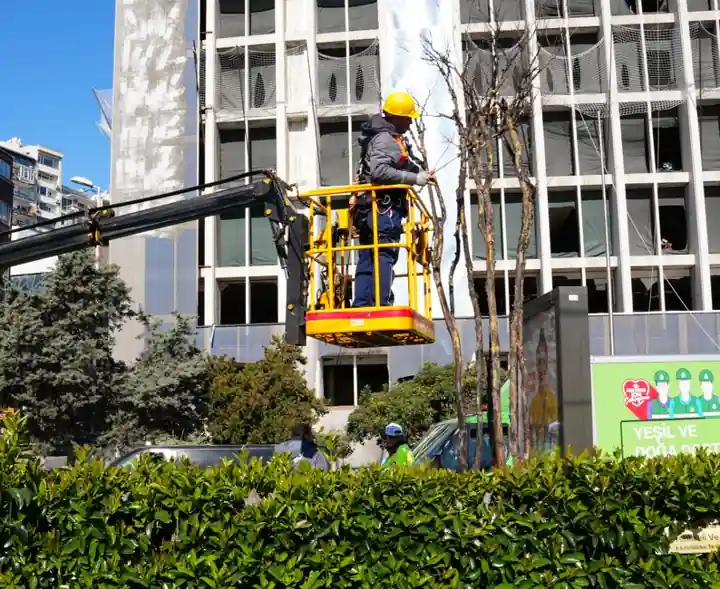
EN 12492 helmets must keep their chinstrap intact above 500 N of pull, while EN 397 chinstraps, where fitted, are required to release between 150 N and 250 N, a deliberate inversion that defines who each standard is for [S2][S9].
EN 397 targets industrial ground work with crown-only impact testing; EN 12492 covers climbing and work at height with crown, front, rear, and side impact zones plus a mandatory retention system, and the UK Health and Safety Executive recognises EN 12492 specifically as the work-at-height helmet standard [S1][S2].
Scope and Intended Use of Each Standard
EN 397 is the European standard for industrial safety helmets used in construction, manufacturing, mining, and similar ground-level trades where the dominant hazard is a falling object striking the crown [S1][S4]. The test regime is built around a single vertical impact zone, with optional lateral rigidity tested as a slow, progressive force rather than a dynamic strike [S2].
EN 12492 was written for mountaineers but is now routinely applied to rope-access, tower, wind, and arborist work, because the activity profile includes swinging falls, pendulum impacts, and repeated oblique contact with rock, steel, or composite structure [S1][S2][S6]. The same article-by-article test method is applied to helmets that share an EN 12492 certificate and a work-at-height task list on the same datasheet, so a procurement line that simply says "climbing helmet" is usually an EN 12492 line in disguise.
Impact, Penetration, and Chinstrap Test Numbers
EN 397 shock absorption drops a 5 kg striker from 1 m onto the crown and limits transmitted force to 5 kN, with a 3 kg conical striker dropped from 1 m for penetration and no contact allowed with the headform [S1][S2]. Flame resistance is required: the shell self-extinguishes within 5 seconds after a 10-second flame exposure [S1].
EN 12492 shock absorption uses two 5 kg strikers, a hemispherical one dropped from 2 m onto the crown and a flat one dropped from 0.5 m onto front, rear, and side zones with the headform tilted to 30°, and the force transmitted through the neck of the headform must stay under 10 kN in all four positions [S2]. Two penetration tests with a 3 kg pointed striker are performed within a 50 mm radius of the crown, again with no contact permitted against the headform [S2].
Chinstrap behaviour is the single clearest differentiator: EN 12492 straps must not break or stretch at 500 N, while EN 397 optional chinstraps must release between 150 N and 250 N so a snagged worker is not strangled or pulled into machinery [S2][S9]. EN 12492 also mandates an internal impact liner for side protection, a feature EN 397 does not require [S2].
Decision Matrix: EN 397 vs EN 12492 vs Dual-Certified
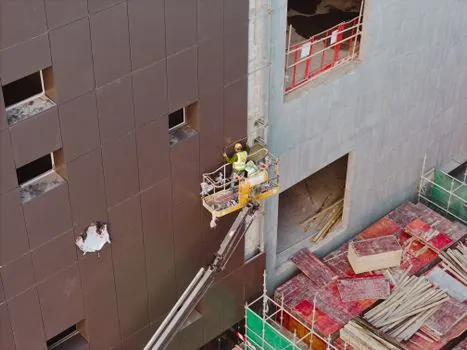
Against the criteria that drive real specification choices: EN 397 has crown-only impact and 5 kN force limit, optional chinstrap releasing at 150-250 N, no mandatory side-impact liner, and electrical insulation to 440 V as an option [S1][S2]. EN 12492 has crown plus front/rear/side impact at 10 kN limit, mandatory chinstrap holding above 500 N, mandatory internal impact liner, and no flame or electrical-insulation requirement [S2][S9].
Dual-certified helmets, such as the JSP EVO5 Dualswitch and EVO Vista Dualswitch lines, are tested and certified to EN 397 and EN 12492 simultaneously and to EN 50365 for electrical work, using a switch on the chinstrap harness to move the release force between the two regimes [S2]. For sites where crews move between ground work, scaffold erection, and rope access in the same shift, the dual-certified plus EN 50365 combination removes the need to swap helmets and removes the audit finding of "wrong standard for the task" [S2].
Who Each Standard Is For, and Who It Is Not For
EN 397 is for workers whose head is at risk of being struck from above by tools, bricks, or material on a construction site, factory floor, or warehouse, where the worker stays on a fixed surface and the helmet can come off in a snag without causing a secondary injury [S1][S4]. It is not for anyone whose head can hit a wall, rung, or steel member during a swing fall, and it is not for any task where the helmet staying on the head is the primary safety function.
EN 12492 is for anyone working at height where an inverted fall or pendulum can occur: tower climbers, rope-access technicians, wind turbine crews, arborists, and rescuers [S1][S2][S3][S8]. It is not the right pick where the dominant hazard is molten metal splash, live low-voltage work above the 440 V / Class 0 boundary without EN 50365, or hot-work spark showers, because EN 12492 does not require flame resistance or electrical insulation [S1][S2].
For procurement, the rule of thumb is straightforward: if the method statement contains the words "climb," "rope access," "tower," "aerial work platform," "turbine," or "rescue," default the spec line to EN 12492 or dual-certified EN 397 + EN 12492 [S1][S2][S8]. The wider safety helmet range from the same manufacturer will usually include a base industrial model and a work-at-height model sharing the same shell and accessory mounts, which simplifies visor and aerial work platform integration.
Optional Markings and Common Add-Ons
EN 397 supports a set of optional, letter-stamped markings that buyers frequently see on the shell underside: MM for molten metal resistance, LD for lateral deformation, 440 V for electrical insulation, and -30 °C or +150 °C for very low or high temperature ratings [S1][S2]. EN 12492 has fewer optional codes and does not encode flame or electrical performance, which is why EN 50365 is paired with it for live-line work rather than added to it [S2].
Accessory integration is where the standards begin to converge in practice: chinstrap-mounted headlamps, slot-mounted ear defenders, and visor brackets are now engineered for both EN 397 industrial shells and EN 12492 climbing shells, so a fleet decision can be made on hazard profile rather than accessory availability [S2][S8]. Where headlamp brackets double as the chinstrap anchor point, the 500 N EN 12492 retention test covers the combined system, which removes a recurring failure mode seen on retrofitted industrial helmets [S2].
Limitations, Failure Modes, and Common Audit Findings
The most common spec failure on work-at-height sites is an EN 397 hard hat issued for a climbing task, justified internally by "it has a chinstrap fitted", but the chinstrap on an EN 397 helmet is the 150-250 N release type by design and will part under a fall load, dropping the helmet exactly when it is needed [S2][S9]. The reverse failure, EN 12492 issued to a welder or to a crew working near exposed conductors above the EN 50365 limit, leaves the worker without flame resistance or guaranteed electrical insulation [S1][S2].
Penetration performance is the second audit hotspot: both standards use a 3 kg pointed striker, but EN 12492 runs two drops within a 50 mm radius of the crown and explicitly checks front, rear, and side zones, while EN 397 tests the crown only [S1][S2]. A shell that passes EN 397 can still fail the side-penetration geometry required for climbing-style work, and that is the engineering reason dual-certified products run the full EN 12492 test sequence rather than a subset [S2].
For a structured look at how retention force, impact zones, and electrical class interact in adjacent safety spec decisions, the Emergency Stop vs Emergency Hold decision map is a useful parallel: both standards look similar on a nameplate but resolve to very different behaviour under load, and a wrong default in either case shows up only during an incident, not during routine inspection.
Track the next two signals: any update to the EN 12492 side-impact or retention test method published by CEN/TC 158, and any HSE position statement tightening the work-at-height default from "EN 12492 accepted" to "EN 12492 required" for specific task classes such as rope access and tower work, since the UK regulator's framing of EN 12492 as the work-at-height standard is the single biggest driver of specification lines in 2026 procurement documents [S1].
For component-level specifications, see height gauge.