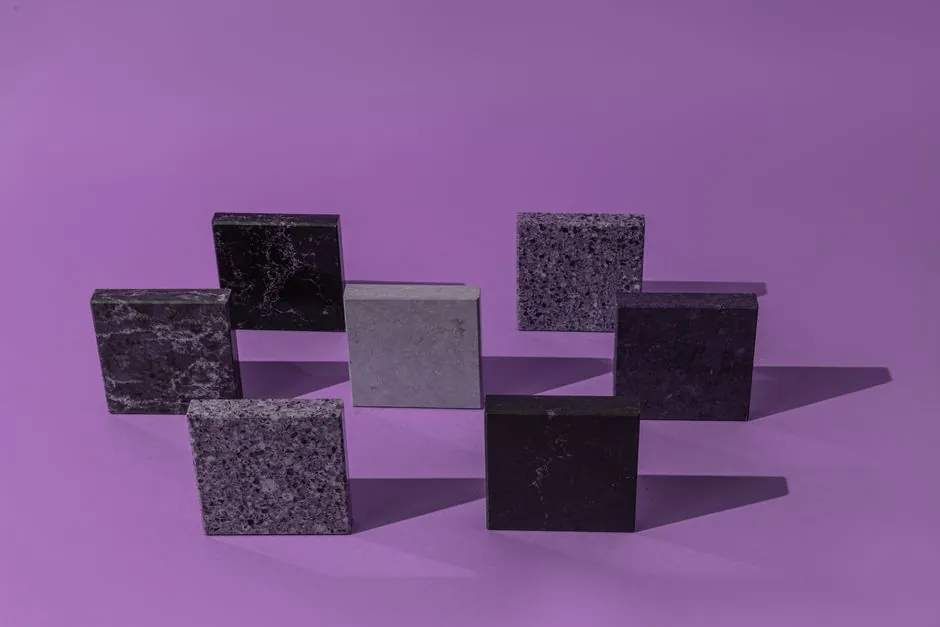
CEM I under EN 197-1 contains at least 95% clinker and no more than 5% of other materials, making it the highest-strength, highest-heat, and highest-clinker option in the European family [S5]. CEM II, the Portland-composite cements, allows 6% to 35% of a single main constituent such as limestone (L/LL), siliceous fly ash (V), calcareous fly ash (W), burnt shale (T), silica fume (D), or blast-furnace slag (S), split into A (6-20%) and B (21-35%) sub-types [S2][S3].
CEM III is the blast-furnace cement family, divided into A (36-65% slag), B (66-80% slag), and C (81-95% slag) classes, while CEM IV covers pozzolanic cements (V and W additions) and CEM V mixes Portland clinker with both slag (S) and pozzolana (P, Q, V, W) at combined 36-80% [S2][S5]. For spec writers, the short version: the family letter tells you the binder chemistry, the number behind the slash tells you the additive load, and the 32.5/42.5/52.5 strength class plus the N or F early-strength suffix defines mechanical performance at 28 days [S5].
Clinker and supplementary constituent ranges that drive the spec
The EN 197-1 family boundary is the clinker percentage, since that figure is the single best proxy for both CO2 footprint and concrete temperature rise during hydration [S4].
Strength class, not family letter, is what drives the 28-day mortar prism result: 32.5, 42.5, and 52.5 are the three EN 197-1 classes, with N (normal) and F (fast) subdivisions for early strength [S5].
Strength class, early strength, and how to read the CE marking
EN 197-1 strength classes are tested on mortar prisms at 28 days and labelled 32.5, 42.5, or 52.5 (compressive strength, MPa, lower limit), with an N or F suffix: 32.5N, 32.5R, 42.5N, 42.5R, 52.5N, 52.5R [S5]. A 42.5R reaches its 2-day early strength threshold for rapid-hardening use, while a 32.5N is a normal-hardening general-purpose binder, and the same family letter can be ordered in any of the three classes depending on the mill.
For a side-by-side decision, line the families up against four criteria: clinker content, typical strength class availability, characteristic heat of hydration, and main service sweet spot. CEM I sits at 95-100% clinker, ships in 42.5N to 52.5R, runs hot in the pour, and is the default for high-rise columns, precast, and cold-weather winter pours [S3]. CEM II/A covers 80-94% clinker, ships in 32.5R to 42.5R, runs warm, and is the UK / EU default for ready-mix structural concrete, with CEM II/A-L and CEM II/A-LL now dominant due to lower CO2 and stable supply [S6]. CEM III/A holds 36-65% slag, ships in 32.5N to 42.5N, runs cool, and is widely chosen for sulfate exposure, water-retaining structures, and foundations; CEM III/C drops to 5% clinker, ships in 32.5N, runs coolest, and is the binder of choice for mass concrete and marine-grade durability where slow strength gain is acceptable [S2][S5].
Application mapping: which family for which job
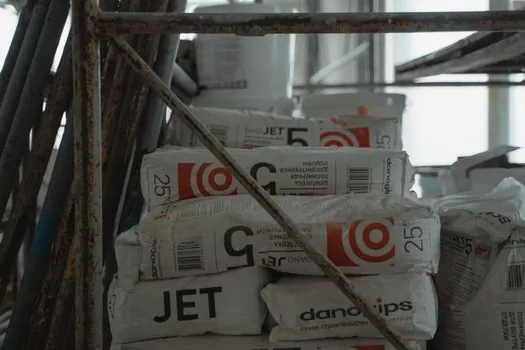
For a structural building frame, slab, and column in normal exposure, CEM II/A-L or CEM II/A-LL at 42.5N is the common European ready-mix choice and tracks well with BS 8500 concrete designations in the UK market [S6]. For a basement or pile cap in sulfate-bearing ground, step up to CEM III/B or CEM III/A to take advantage of the slag dilution, which lowers C3A-driven sulfate attack risk and reduces heat in thicker pours [S3].
For mass concrete (dam blocks, raft foundations 1.5 m or thicker, nuclear shielding), the same low-heat logic pushes selection toward CEM III/C or a low-heat CEM IV, accepting that 28-day strength will be lower than CEM I but that thermal-crack control is the binding design variable [S3][S5]. For precast, where steam curing and early stripping drive the schedule, CEM I 52.5R or a high-fineness CEM II/A 42.5R remains the standard pick because strength gain in the first 24 hours directly affects mould turnaround [S3]. A handy working rule from a process engineer's desk: the family letter fixes the chemistry, the A/B/C (or A/B for CEM II) sub-tag fixes the additive load, and the 32.5/42.5/52.5 class fixes the strength budget. If two of those three are wrong for the exposure, the third will not save the pour.
Limits, failure modes, and what EN 197-1 does not cover
EN 197-1 specifies common cements, so it stops at composition, mechanical class, setting time, and durability requirements; it does not cover composition with minor additional constituents beyond 5%, nor does it address placing practice, curing, or aggregate selection, all of which dominate in-situ durability more than the family letter does [S2]. CEM III at high slag content (B and C) will under-perform CEM I in early strength and in cold-weather stripping time, so specifying CEM III/C for a fast-track slab without re-checking the formwork striking schedule is a common mistake that turns into a 3-day delay.
CEM II/A-LL with 6-20% limestone filler is an excellent general-purpose binder, but it does not deliver the sulfate or chloride resistance of CEM III; selecting it for a coastal pile cap on a low-CO2 argument without checking the exposure class is the mirror-image failure [S7]. EN 197-1 also recognises sulfate-resisting common cements (SR-Cements) and low early strength common cements as sub-categories with tighter chemical limits, so a project with a published DS-3 or DS-4 sulfate class should follow those sub-class requirements rather than the generic family [S2]. Cross-check your exposure class against BS 8500 in the UK or the equivalent national concrete standard before locking the family, not after.
Standards landscape, revision signal, and where the family is heading
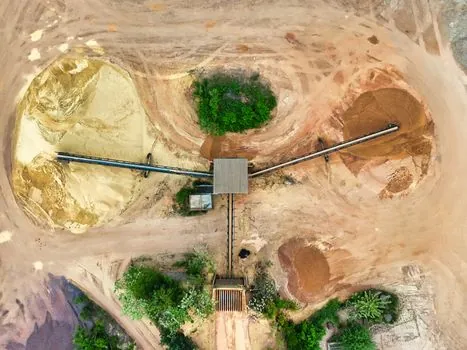
EN 197-1 is the European common-cement composition standard, with the prEN 197-1 revision having been circulated as a CEN enquiry draft in June 2014 and intended to supersede EN 197-1:2011 once finalised [S2]. The Vicat FAQ, the iteh.ai catalogue page, and the Concrete Society UK fingertips note all converge on the same family boundary and the same five main types, which is the engineering baseline: CEM I (Portland), CEM II (Portland-composite), CEM III (blast-furnace), CEM IV (pozzolanic), and CEM V (composite) [S1][S2][S6].
A 2025-08-31 industry comparison confirms EN 197-1 as the European reference and contrasts it with ASTM C150 (Type I to V) and Iran's ISIRI 389, so the EN 197-1 family letter is only meaningful when the spec is also being read against a European concrete-production standard such as BS 8500 or EN 206, not against an ASTM framework [S4]. The Cemminerals technical note also flags an emerging CEM VI designation for cements with clinker content below the CEM II range, part of the wider decarbonisation push in factory cement lines, though this is not yet in the main EN 197-1 type table [S5]. For procurement and tender documents, the engineering baseline to lock now is family + sub-type + strength class + early-strength suffix, with SR and low-heat tags applied only where the exposure class demands them. Two signals to track over the next planning cycle: the formal publication date of the EN 197-1 revision (the 2014 enquiry draft has not yet been confirmed as a published EN), and any further uptake of CEM VI if carbon-pricing pressure in the EU ETS pushes clinker content below 65% as the new default in factory blends. For a worked example of how a cement-family decision ties back to a valve or coating spec on the same project, see the FBE vs liquid epoxy for gate valve bodies decision guide, and for a parallel spec-by-spec comparison pattern read the EPDM vs NBR vs FKM butterfly valve seat temperature limits reference.
For the relevant spec sheets and selection criteria, see cement concrete, special cement, and cement.